7th October 2023

Overcast throughout, with a blustery south-west wind and temperatures reaching 18 degrees C. While the local airstream was unchanged, developing high pressure over Scandinavia resulted in a north-easterly wind establishing at higher latitudes – the result, the autumn’s first appreciable thrush arrival. A total of 6600 Redwings arrived during the day, with movement continuing throughout daylight hours; these were accompanied by two Jack Snipe and four Fieldfare. Additional ‘vis mig’ migrants, albeit ones that almost certainly originated from closer to home, included 365 Goldfinch and 168 Lesser Redpolls flying south-west off the headland. Continuing the passerine theme, the year’s second Marsh Tit visited a garden near South Landing.

Seawatch highlights included six Goosanders south, two Little Gulls, single Arctic Skua, Bonxie and Puffin, a Great Northern Diver south and a Sooty Shearwater north. Two Velvet Scoters were off South Landing late afternoon.

Three Barnacle Geese, 28 Pink-footed Geese, a Jack Snipe, a first calendar-year Caspian Gull, a Marsh Harrier, four Brambling and five Lesser Redpolls flew south-east at RSPB Bempton Cliffs. A first calendar-year Yellow-legged Gull flew north-west over the reserve, as did 116 Redwing. Three Short-eared Owls were in residence, while grounded migrants included 18 Goldcrests.

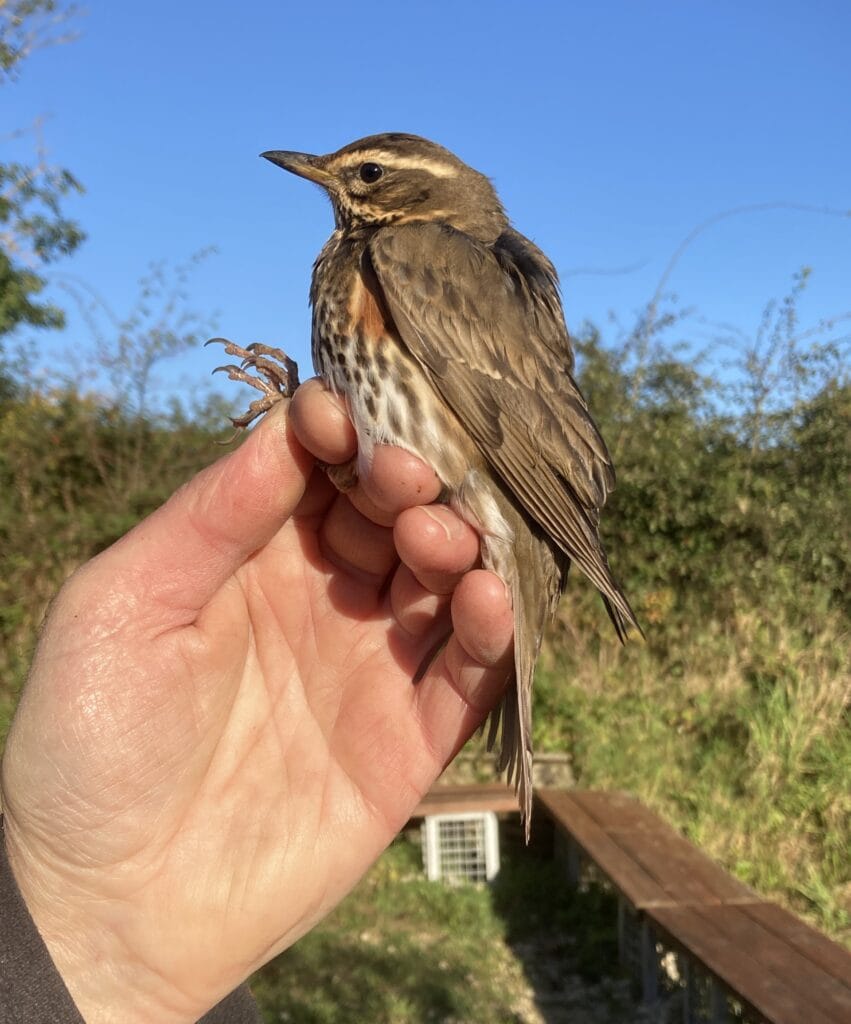
Redwing, South Dykes, by Craig Thomas

8th October 2023

It was overcast throughout, with brief spells of very light drizzle and occasional mist; the light/moderate wind was initially from the east before switching to a southerly. While predicted by many, the day proved as good as anyone could hope for and resulted in a very significant fall of migrants from the east.

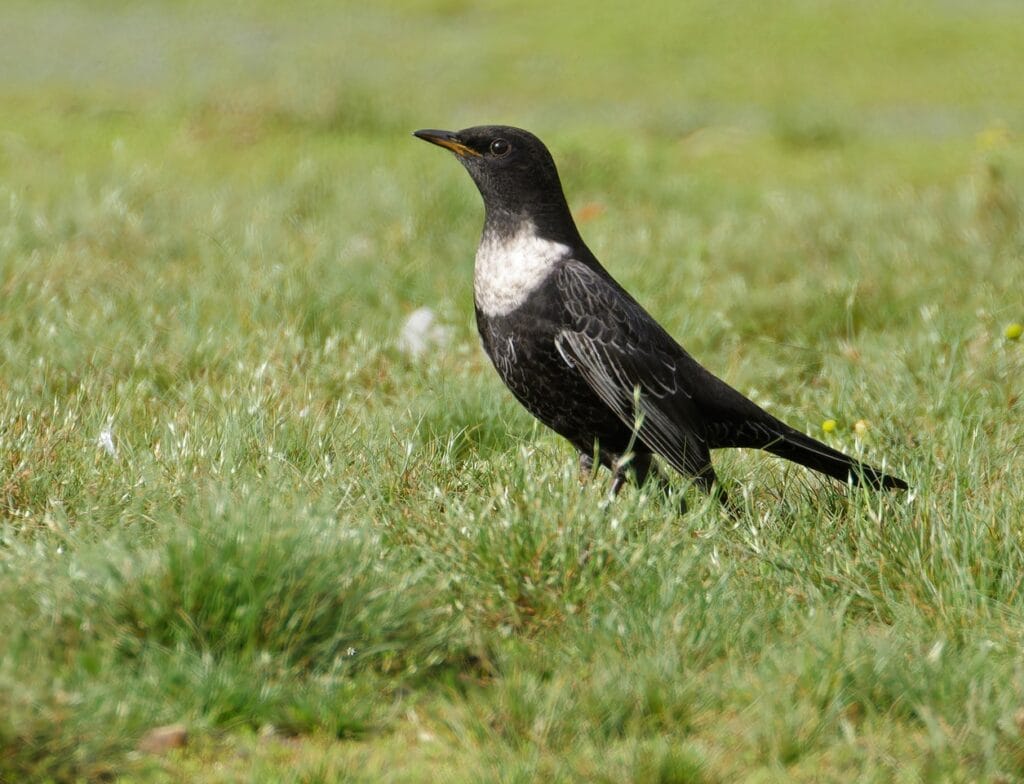
Headlines included Flamborough’s fourth ever Glossy Ibis that eventually flew south over the outer head and a Cetti’s Warbler ringed at South Landing. A vocal Radde’s Warbler was discovered at Thornwick early afternoon, while seven Yellow-browed Warblers arrived on the outer head during the afternoon, as did a Little Bunting. A Dotterel overflew Old Fall, while three Woodcock, four Jack Snipe, a Long-eared Owl and no fewer than nine Short-eared Owls all made landfall during the day. Other migrant totals included 28,380 Redwing, 1790 Song Thrush, 660 Fieldfares, 18 Ring Ouzels, a Jay, 1500 Goldcrests, 450 Meadow Pipits, 44 Chiffchaffs, 20 Blackcap, one Common Whitethroat, a Garden Warbler, a Spotted Flycatcher, one Pied Flycatcher, 70 Robins, a Whinchat, three Common Redstarts, 210 Brambling and a Hawfinch. Unfortunately, the origin of a Treecreeper that briefly appeared on cliffs below the lighthouse early afternoon remained unknown. Seawatch highlights included 78 dark-bellied Brent Geese and a Velvet Scoter flying south.

RSPB Bempton Cliffs was also busy, with notable records including three Barnacle Geese, 108 Wigeon, four Pintail and a Grey Plover. A Jack Snipe was fresh in, as were 14 Snipe. A ringtail Hen Harrier lingered over cliff top fields, while five Short-eared Owls included two in off. Three Yellow-browed Warblers were present, along with 150 Goldcrests, 3219 Redwing, six Ring Ouzels, 30 Robins and 79 Brambling.

Cetti’s Warbler, South Landing, by Tony Hood

9th October 2023

Skies gradually cleared after an overcast start, with light westerly winds and temperatures peaking at a warm 22 degrees C. Migrants were in reduced numbers compared with the previous day, although scores of Goldcrests were scattered across suitable habitat. Wildfowl interest included 135 Teal, a Pintail and a Shoveler on North Marsh. A ringtail Hen Harrier flew south over the Lighthouse Grassland at dawn, a Marsh Harrier headed in the same direction over Oceanview and two Short-eared Owls remained. The Thornwick area hosted three Water Rails, while five Jack Snipe were scattered across the outer head. Migrant passerines included a Garden Warbler, one Reed Warbler, a Lesser Whitethroat, four Yellow-browed Warblers, 13 Ring Ouzels, five Whinchat, a Common Redstart, a Spotted Flycatcher and three Hawfinch.

Two Yellow-browed Warblers remained at RSPB Bempton Cliffs, where three Short-eared Owls and a Snow Bunting were also recorded.

Ring Ouzel, Thornwick, by Lee Johnson

10th October 2023

The day started overcast and damp, but brighter intervals eventually established; there were light south-westerly winds throughout and a top temperature of 21 degrees C. Nine Red-breasted Mergansers flew south during the morning’s seawatch, three Pale-bellied Brent Geese headed east past South Dykes and a Marsh Harrier flew west over the village.

RSPB Bempton Cliffs hosted two local scarcities in the form of a Woodlark briefly in the car park and three Bearded Tits (one male, two females) on the cliff top that eventually flew off south-east. Equally notable, a Basking Shark swam east past the cliffs and, latterly, Thornwick close inshore.

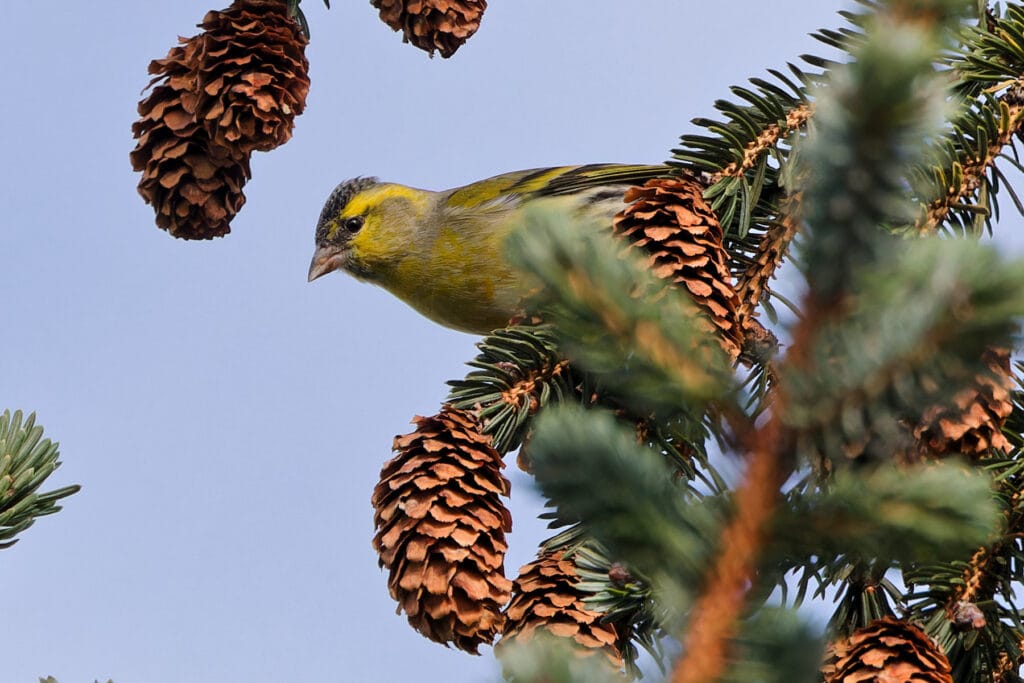
Siskin, Flamborough village, by Rob Little

11th October 2023

There were overcast skies throughout, south-west winds and temperatures of 17 degrees C early on, before a band rain arrived with winds then switching to the north-west and temperatures dropping to 12 degrees C. A Goosander flew south during a morning seawatch that also featured a Common Tern and two Arctic Skuas. Thornwick Lakes attracted eight Mute Swans, 33 Tufted Ducks and a Little Grebe, while the nearby Pools held 17 Teal, a Water Rail and ten Snipe. Small numbers of birds made landfall including a Short-eared Owl, while 97 Golden Plovers and a Ring Ouzel headed west.

Sightings from RSPB Bempton Cliffs included three Short-eared Owls, 50 Goldcrests, a Yellow-browed Warbler and 90 Redwing moving north-west.

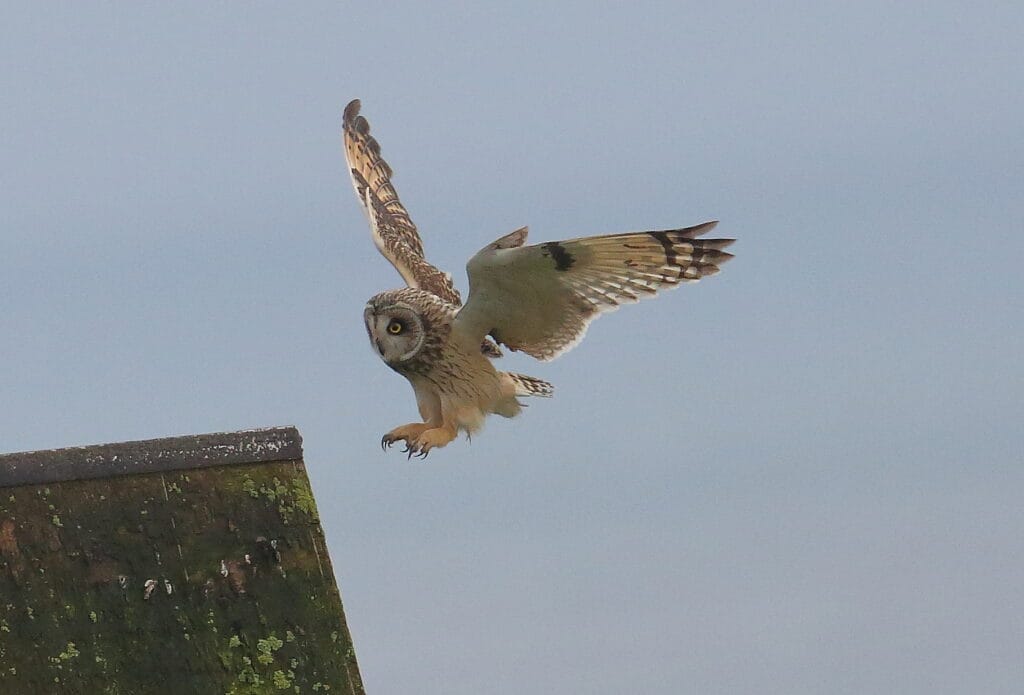
Short-eared Owl, RSPB Bempton Cliffs, by Dan Howe

12th October 2023

Noticeably cooler than of late, despite sunny skies and relatively light winds; temperatures reached 14 degrees C. The morning’s seawatch was rewarded with 11 Pomarine Skuas flying north, including a flock of six birds; 24 Arctic Skuas also flew north. Two Sooty Shearwaters headed in the same direction, as did a Mediterranean Gull, while 32 Little Gulls were also recorded on the seawatch. A total of 37 Whooper Swans moved south past the outer head in the late afternoon.

Six Barnacle Geese flew south at RSPB Bempton Cliffs, where two Short-eared Owls were still present.

Little Egret, Thornwick Pool, by Don Hustings

13th October 2023

An overcast day, with long spells of rain, a light westerly wind and temperatures that reached a high of 14 degrees C. Seawatch highlights included a Whooper Swan flying north (potentially the same bird was later on fields near North Marsh), a Yellow-legged Gull south and two Arctic Terns. There was evidence of an arrival of passerines after the rain, including four Yellow-browed Warblers at various locations, while 81 Redwing and 12 Song Thrush were in the Gorse Field.

Another Yellow-browed Warbler was at RSPB Bempton Cliffs, where three Short-eared Owls were still in residence. Passage over the nearby village included 115 Golden Plovers moving east and eight Snipe west.

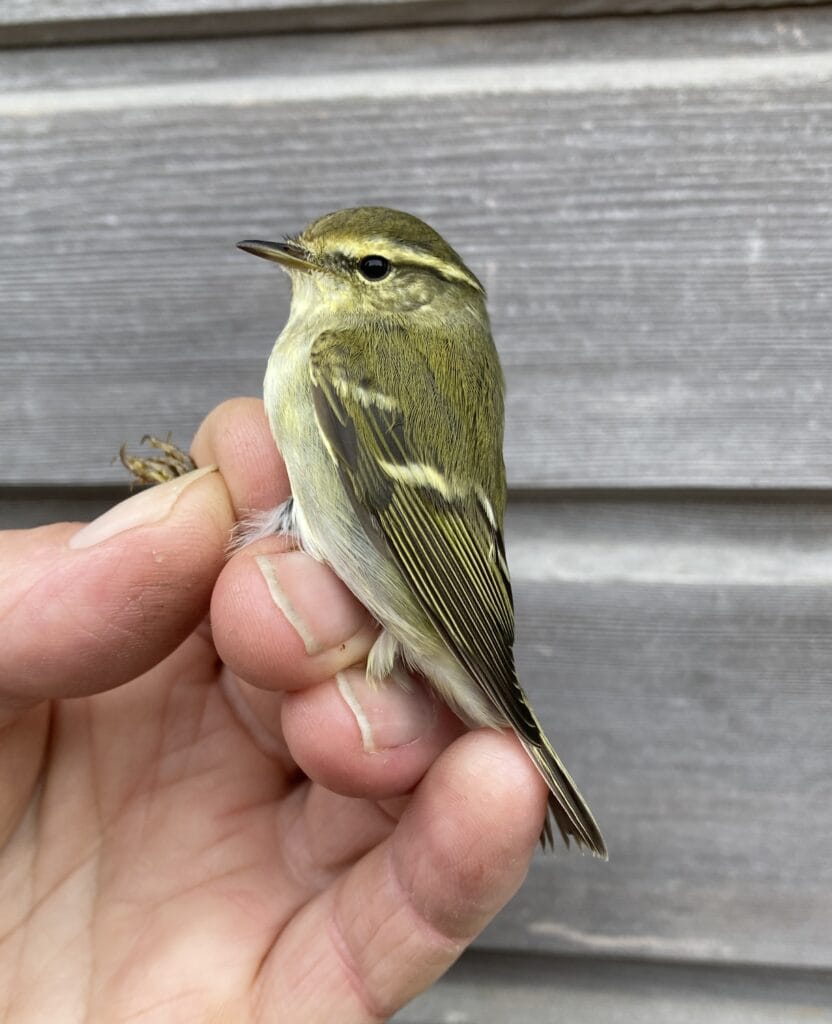
Yellow-browed Warbler, Oceanview, by Andy Hood (9/10)

14th October 2023

The first day of Migweek 2023 was sunny throughout, with a gusty west-north-westerly wind and temperatures reaching 12 degrees C. The cooler conditions were reflected in the species mix recorded on the seawatch, with five Whooper Swans, a Great Northern Diver, 11 Bonxies, eight Arctic Skuas and 12 Pomarine Skuas all moving south; the latter tracking past the outer head in the afternoon. Another Great Northern Diver and a Sooty Shearwater also flew north.

An additional 64 Whooper Swans went south during the afternoon. A Merlin flew past the Fog Station and a creamcrown Marsh Harrier frequented the outer head; two Short-eared Owls were also present, with singles at North & South Landing. A single Yellow-browed Warbler remained, lingering at the northern end of Old Fall hedge, while additional migrants included a Ring Ouzel and a Common Redstart.

Ringing sessions centred at South Landing proved rewarding with over 60 birds rung, including eight Goldcrests.

Sightings from RSPB Bempton Cliffs included 270 Pink-footed Geese and 13 Whooper Swans south and a Merlin.

Short-eared Owl, RSPB Bempton Cliffs, by Jim Atkinson

15th October 2023

A bright day, with prolonged sunny spells and a moderate north-westerly wind which pegged temperatures back to a high of 11 degrees C. Seawatching predictably proved to be rewarding, with sightings including: 14 Pomarine Skuas (two south in the morning, 12 north in the afternoon), a juvenile Long-tailed Skua, five Great Northern Divers, two Barnacle Geese, two Long-tailed Ducks, 23 Sooty Shearwaters and four Little Gulls all moving north.

Five Whooper Swans overflew the outer head, where 172 Teal were present. The Merlin and Marsh Harrier continued to hunt the outer head, as did a lone Short-eared Owl. A Jack Snipe was on Thornwick Pools, a Curlew Sandpiper on the beach at South Landing, where two Velvet Scoters were offshore. Passerine interest included a Yellow-browed Warbler in the village and a Ring Ouzel.

Sightings from RSPB Bempton Cliffs included single Arctic Skua, Short-eared Owl and Merlin, 52 Skylarks, 20 Goldcrests, 42 Redwing, 13 Redpoll, five Twite, seven Siskin and a Brambling.

Redwing, South Landing, by Jo Hood

16th October 2023

A bright day, with light, variable winds and temperatures reaching ten degrees C. A total of 16 Pomarine Skuas moved north during a morning seawatch that also featured five Barnacle Geese, two Red-breasted Mergansers, 16 Little Gulls, eight Bonxies, ten Arctic Skuas, a Puffin and 16 Sooty Shearwaters. A Whooper Swan toured the outer head where the Merlin continued to show well. Two Velvet Scoters and a Goosander were recorded from South Landing. Elsewhere, a Short-eared Owl flew in off the sea and two others hunted cliff top fields between the outer head and South Landing. Further evidence of birds starting to make landfall once again included a Woodcock, 385 Redwing, 47 Fieldfare and 16 Brambling.

Only the third ever reserve record of Cetti’s Warbler was discovered at RSPB Bempton Cliffs. A single Short-eared Owl was also present, while 26 Redwing, four Fieldfare and a Brambling were recorded there.

Kestrel/Sparrowhawk at Oceanview, by Andy Hood

17th October 2023

An easterly wind developed after a calm start, with occasional sunny intervals and a top temperature of 14 degrees C. A Grey Phalarope on the sea off the Fog Station headlined a productive morning seawatch that also featured a Red-necked Grebe, five Little Gulls, a first calendar-year Caspian Gull, six Pomarine Skuas and a late adult Long-tailed Skua that flew north. Later, a juvenile Glaucous Gull flew past the outer head in the early afternoon.

The day’s highlight was a showy Radde’s Warbler along Hartendale Gutter; present for its second day, it was relocated mid-afternoon and remained until the evening. Three Yellow-browed Warblers were fresh in (one at South Landing and two at North Landing), as were a Cetti’s Warbler (Thornwick reedbed), 275 Fieldfares, 45 Redwing, a Ring Ouzel, three Brambling and five Twite.

Thornwick Pools hosted two Water Rails and Jack Snipe. A ringtail Hen Harrier flew west over the Dykes, where it joined another at RSPB Bempton Cliffs. The long-staying Merlin continued to frequent the outer head. Further sightings from Bempton included 45 Pink-footed Geese and 35 Skylarks moving south-east, with 56 Redwing, 21 Fieldfare and a Twite heading north-west. Grounded migrants included 15 Goldcrests and two Brambling.

Radde’s Warbler, Hartendale Gutter, by Andy Hood
Radde’s Warbler, Hartendale Gutter, by Rob Little
Yellow-browed Warbler, South Landing, by Jo Hood

18th October 2023

Strong east-south-easterly winds featured throughout a day that started with overcast skies followed by occasional sunny intervals in the afternoon; temperatures peaked at 14 degrees C. Seawatch highlights included three dark-bellied Brents and one pale-bellied Brent Goose flying south, as did a juvenile Long-tailed Skua.

The undoubted highlight of the day was the mid-afternoon discovery of a moulting summer-plumaged adult White-billed Diver off South Landing. It then spent two hours gradually swimming east close inshore and was last seen off Old Fall.

Additional ‘casual’ seabird records from birders walking the headland’s cliff top included two Velvet Scoters and a Long-tailed Duck with Common Scoters off the South Cliffs. Two Great Northern Divers flew north over the outer head; 53 Eiders, another Light-bellied Brent Goose and a juvenile Pomarine Skua that cut across the headland and overflew Thornwick all moved north.

A lone Whooper Swan and a dark-bellied Brent Goose lingered on the outer head, where the Merlin continued to entertain and a Short-eared Owl frequented North Marsh. Notable waders included a Jack Snipe and a Grey Plover, while larid interest was confined to a first-winter Caspian Gull on newly ploughed fields near Old Fall. Visible migration recorded 1060 Redwing, 1395 Fieldfare, 102 Brambling and four Hawfinch all heading west, while grounded migrants included an ‘Eastern Lesser Whitethroat’, 65 Goldcrests and a Ring Ouzel. In addition, yesterday’s Radde’s Warbler remained in situ at Hartendale, albeit it was typically elusive.

Sightings from RSPB Bempton Cliffs included 50 Pink-footed Geese, 13 Eiders, a Merlin, 12 Goldcrests, 146 Redwing, 60 Fieldfares and 38 Brambling.

White-billed Diver, South Landing, by Rob Little
White-billed Diver, South Landing, by Ian Howard

19th October 2023

There were blustery winds throughout, with the direction varying between due east and the south-south-east. It was a relatively overcast day with spells of mainly light rain, while temperatures peaked at 14 degrees C. The easterlies in combination with heavy overnight rain produced a sizeable fall, albeit mainly of thrushes.

A very busy seawatch witnessed a substantial wildfowl movement: three Shoveler, 616 Wigeon, two Pintail, 651 Teal, 18 Tufted Ducks, a Velvet Scoter, eight Goldeneye and a Red-breasted Merganser flew south. Wader interest involved 42 Golden Plovers and two Grey Plovers also flying south. Sixteen Little Gulls were offshore, the year’s first Black-throated Diver flew north, as did a Great Northern Diver. Yesterday’s adult White-billed Diver flew east along the South Cliffs early morning, but wasn’t relocated, while the Long-tailed Duck and two Velvet Scoters remained. Fourteen Brent Geese also flew ‘north’ along the South Cliffs/lighthouse. Late afternoon, a tardy Black Tern fed amongst Black-headed Gulls off Sewerby.

The lone Whooper Swan once again toured the outer head, where two Great White Egrets flew south. Raptor interest included a ringtail Hen Harrier hunting the outer head for much of the afternoon, the long-staying Merlin and a Red Kite.

The day’s highlight was the discovery of a Siberian Stonechat at North Marsh that unfortunately soon filtered further west. The fall featured waders making landfall and included counts of 49 Lapwing, 145 Golden Plovers, 11 Woodcock and six Jack Snipe. A lone Long-eared Owl graced Old Fall early evening, while three Short-eared Owls were scattered across the outer head. One of the day’s features was a significant movement of 514 Skylark, with many noted heading ashore over the sea and moving off south-west. A total of 3725 Starlings were recorded, while significant numbers of thrushes arrived off the sea. Although some counts are still to be received, provisional figures are: 6400 Redwings, 705 Blackbirds, 960 Fieldfare, 510 Song Thrush, three Mistle Thrush, four Ring Ouzel, one Northern Wheatear, one Firecrest, 45 Goldcrests, 14 Blackcap, two Lesser Whitethroats, six Chiffchaff and 220 Brambling.

A Great Grey Shrike briefly on the cliff top at RSPB Bempton Cliffs was an excellent find. A Great White Egret also overflew the reserve, where additional records included two Grey Plovers, two Woodcock, 800 Redwing, 100 Song Thrush, a Mistle Thrush, 200 Blackbirds, 30 Fieldfare, two Ring Ouzels, five Chiffchaffs, seven Blackcaps, five Chiffchaffs, 20 Robins and a Black Redstart.

Siberian Stonechat, North Marsh, by Rob Little

20th October 2023

The day was all about Storm Babet, with gale force easterly winds and heavy rain producing spectacular seas. The conditions also proved conducive for seabirds, with petrels in particular displaced.

Four Leach’s Petrels and two Storm Petrels flew north past the Seawatch Observatory, with an additional two petrels sp. evading specific identification. Also moving were a dark-bellied Brent Goose, two Grey Plovers, 2000+ Kittiwakes, 160 Little Gulls (north), six Bonxies, four Pomarine Skuas (three north, one south) and four Sooty Shearwaters.

Searching for passerines proved nigh on impossible given the conditions, although 65 Fieldare heading west out of a village garden towards dusk hinted as some immigration.

Sightings from RSPB Bempton Cliffs included 65 Blackbirds, 25 Redwing, a Ring Ouzel, eight Goldcrests and two Brambling.

Brambling, South Landing, by Alan Walkington
RSPB Bempton Cliffs by Dan Howe

21st October 2023

An overcast day, with persistent but mainly light rain throughout the morning; there were light south-west winds and a temperature peak of 11 degrees C. However, it wasn’t today’s weather that defined the birding quality, but that of the easterlies and heavy rain associated with Storm Babet over the previous 36 hours.

The highlight was the discovery of a Black/Red-headed Bunting at North Marsh. The same individual had been glimpsed two days previously, but the finder was then distracted by the simultaneous discovery of the Siberian Stonechat which was also relocated today. Incredibly, a Little Bunting was also found in the very same spot early afternoon.

Two Cranes flew south-east over the headland having first been seen over RSPB Bempton Cliffs and, latterly, the outer head. Three Great White Egrets did a similar double, firstly seen moving south-east over Bempton before crossing the headland near North Landing. Two ringtail Hen Harriers also hunted the latter area for much of the day, being seen alongside three Short-eared Owls and the long-staying Merlin. An adult Iceland Gull that flew west along the South Cliffs was particularly notable given the early date, while a Waxwing flew west over the outer head.

Visible migration over the Dykes recorded 1600 Starling, 1245 Redwing, 860 Fieldfare, 135 Skylark, 110 Song Thrush, 82 Blackbirds, 57 Brambling, 18 Redpolls, 14 Siskin, two Crossbills, a Swallow, 215 Pink-footed Geese moving north-east and a Great Northern Diver cutting the headland and flying north. Grounded migrants included 17 Woodcock, one Jack Snipe, a Firecrest, a Reed Warbler, three Ring Ouzels, a Tree Pipit, three Wheatears and a Lapland Bunting.

A late Wood Warbler at RSPB Bempton Cliffs was an excellent late record. Additional sightings from the reserve included 19 dark-bellied Brent Geese, 160 Pink-footed Geese, 50 Golden Plovers, three Woodcock, two ringtail Hen Harriers (potential overlap with outer head), six Blackcap, two Ring Ouzels, eight Brambling, eight Redpoll and 11 Siskin. A Firecrest was located along Hoddy Cows Lane, Buckton, where 200 Pink-footed Geese rested on fields.

Wood Warbler, RSPB Bempton Cliffs, by Will Scott
Black-headed/Red-headed Bunting, by Rob Little

22nd October 2023

A relatively bright day, with a light west-south-westerly wind and temperatures peaking at 14 degrees C. The first-winter Red-headed Bunting remained in the North Marsh area, albeit it disappeared for a significant portion of the afternoon. In addition, the Siberian Stonechat and Little Bunting were also still present.

Pink-footed Geese were on the move, with 1200 over North Landing in the evening, presumably having earlier been feeding on fields on the northern side of the headland; additional skeins containing 420 ‘Pinkies’ moved south during the morning. Four Barnacle Geese were caught up in the same movement, as were 17 Whooper Swans. Two Cranes toured the headland once more and were seen over Bempton and the outer head.

Two ringtail Hen Harriers, a Marsh Harrier, the Merlin and two Short-eared Owls hunted the outer head, while the late Black Tern was off South Landing. Increased observer coverage resultant from the bunting twitch unearthed three ‘continental’ Coal Tits that flew west from Bay Brambles, one Ring Ouzel, a male Black Redstart, a Twite and three Crossbills. A Green Woodpecker that flew over South Landing early morning was an excellent local record.

Two ringtail Hen Harriers were still in residence at RSPB Bempton Cliffs, where notable records included 800 Pink-footed Geese, a Barnacle Goose and three Short-eared Owls.

Cranes, North Landing, by Craig Thomas
Red-headed Bunting, North Marsh, by Rob Little

23rd October 2023

It was a relatively bright day, with spells of hazy sun through high cloud, a light onshore wind developing and temperatures that reached 14 degrees C. The juvenile male Red-headed Bunting remained in residence, albeit it roamed from North Marsh to the Golf Course Willows, but spent the majority of its time at the former site. The Siberian Stonechat also lingered at North Marsh, where additional sightings included single Water Rail, Hen Harrier, Reed Warbler, Wheatear and Lapland Bunting. Sightings from South Dykes/Hartendale included a Ring Ouzel and 13 Crossbills. The White-billed Diver was reported off nearby South Landing, but unfortunately was flushed by a kayak. A Long-tailed Duck was off the same location, where a Jack Snipe was on cliff top stubbles. Skylarks were on the move, with a total of 570 recorded, with many heading south. Meanwhile, Thornwick Pools attracted 159 Teal, two Water Rails and 24 Snipe; five Whooper Swans flew east over the village. The morning’s seawatch was rewarded with a Pintail, 18 Little Gulls and four Mediterranean Gulls.

A Richard’s Pipit was an excellent discovery at RSPB Bempton Cliffs adjacent to North Dykes. Sightings from the reserve also included 2000 Pink-footed Geese, three Hen Harriers and four Short-eared Owls.

Red-headed Bunting, North Marsh, by Tom Hines

24th October 2023

Overcast skies throughout, with persistent but mainly light rain for the majority of daylight hours, and a top temperature of 12 degrees C. Both the first-winter male Red-headed Bunting and the Siberian Stonechat lingered at North Marsh. However, a new arrival of passerines was also evident, including a Firecrest (Old Fall Hedge), a Waxwing (North Marsh), two Hawfinch and 12 Mealy Redpolls. Migrant totals also included four Woodcock, six Swallows, 250 Redwing, 15 Song Thrush, 385 Fieldfare, 65 Blackbirds, a Ring Ouzel, 55 Robins, six Blackcap, nine Chiffchaff, 68 Goldcrests and 12 Brambling. Seawatching produced a ‘heinei’ Common Gull and a first calendar-year Yellow-legged Gull, but was otherwise quiet.

Six Mealy Redpolls were also recorded at RSPB Bempton Cliffs, where grounded migrants included four Chiffchaffs, three Blackcap, 44 Goldcrests, 45 Redwing, 35 Fieldfare, 20 Robins and five Brambling. In addition, 177 Redwing, 20 Blackbirds, 123 Fieldfares and six Brambling flew north-west. A total of 400 Pink-footed Geese were present on cliff top fields, along with the long-staying Merlin and four Short-eared Owls.

Ring Ouzel, by Dan Howe

25th October 2023

Overcast skies, spells of relatively light rain throughout, and light winds resulted in another significant fall. A Pallas’s Warbler at RSPB Bempton Cliffs was the most notable new arrival, along with a brief Siberian Stonechat at Hartendale; both the long-staying Siberian Stonechat and Red-headed Bunting also remained at North Marsh.

Thrushes arrived en masse including 6700 Fieldfares, 6900 Redwings, 1890 Blackbirds and 270 Song Thrush. Amongst these were 12 Woodcock, three Water Rails, three Ring Ouzels, 105 Goldcrests, two Siberian Chiffchaffs, a Yellow-browed Warbler, a Water Pipit, 12 Waxwings, a Northern Wheatear, a Black Redstart, 16 Mealy Redpolls (plus 22 Redpoll sp.), 34 Bramblings, a Hawfinch and a Snow Bunting. Unfortunately, a Swift sp. evaded specific identification. Three Short-eared Owls and a Long-eared Owl also made landfall, while a ringtail Hen Harrier hunted the outer head. Pink-footed Geese headed north from the Humber to feed on cliff top fields, with 3690 geese noted during the first couple of hours of the day.

In addition to the aforementioned Pallas’s Warbler, six Waxwings flew west over the reserve, as did 775 Redwings, 85 Blackbirds and 726 Fieldfares. Two Short-eared Owls, a Merlin, 45 Goldcrests, six Brambling and a Mealy Redpoll were grounded there. Seven Waxwings also flew west from Bempton village.

Pallas’s Warbler, RSPB Bempton Cliffs, by Ian Howard
Waxwings, Bempton, by Will Scott
Long-eared Owl, outer head, by Craig Thomas

26th October 2023

An overcast day, with sporadic rain that was heavier towards the evening, a moderate south-easterly developing and temperatures that reached 12 degrees C. Ever popular, the Red-headed Bunting remained at North Marsh throughout.

Twelve Barnacle Geese flew south during a morning seawatch that also saw 64 Wigeon and 43 Teal flying south and a Little Gull heading north. Thornwick Pools attracted 193 Teal, a Jack Snipe, 15 Snipe and a Mealy Redpoll. Three Mealy Redpolls were also at North Landing, with another at North Marsh. Additional sightings included four Whooper Swans south, three dark-bellied Brent Geese north, single Great Northern Diver and Long-tailed Duck off South Landing and a Short-eared Owl. Passerine migrants included 550 Redwing, 960 Fieldfare, one Ring Ouzel, a Black Redstart at South Dykes and a Crossbill over the village.

A total of 4890 Pink-footed Geese frequented cliff top fields around Bempton. Four Whooper Swans flew south-east over the reserve, along with 12 Golden Plover, 406 Redwing, 167 Fieldfare and five Brambling. The Pallas’s Warbler remained, as did a Hen Harrier, a Waxwing, 45 Goldcrests, two Twite and three Mealy Redpolls. A Little Gull flew south-south-east over Bempton village.

Pink-footed Geese, RSPB Bempton Cliffs, by Alan Walkington

27th October 2023

Winds remained light throughout, mainly onshore, with overcast skies and heavy showers during the afternoon; temperatures reached 12 degrees C.

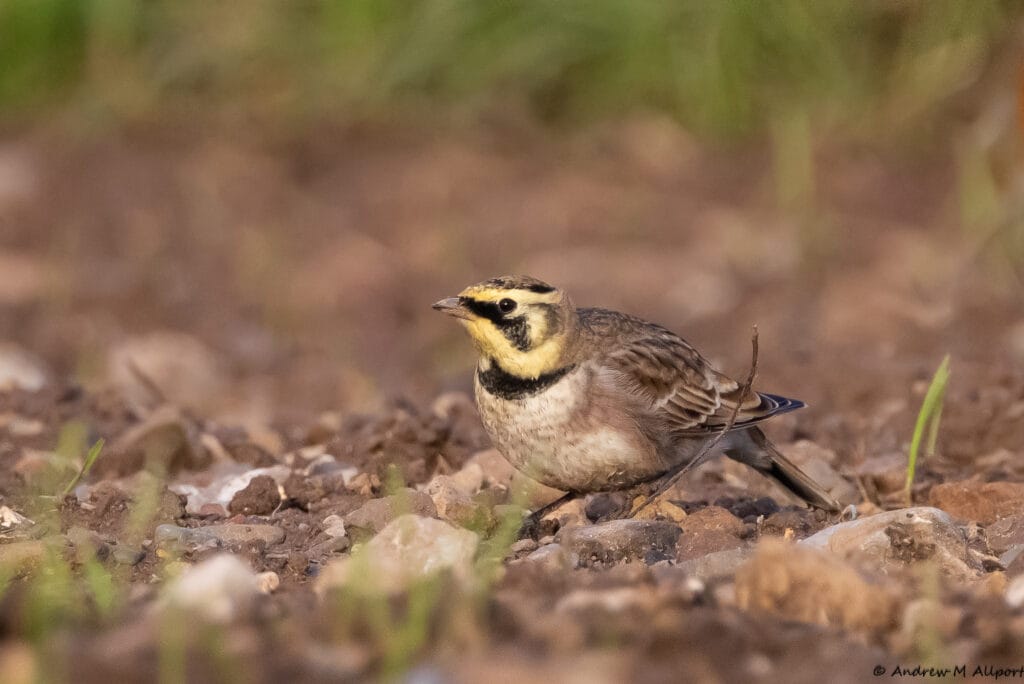
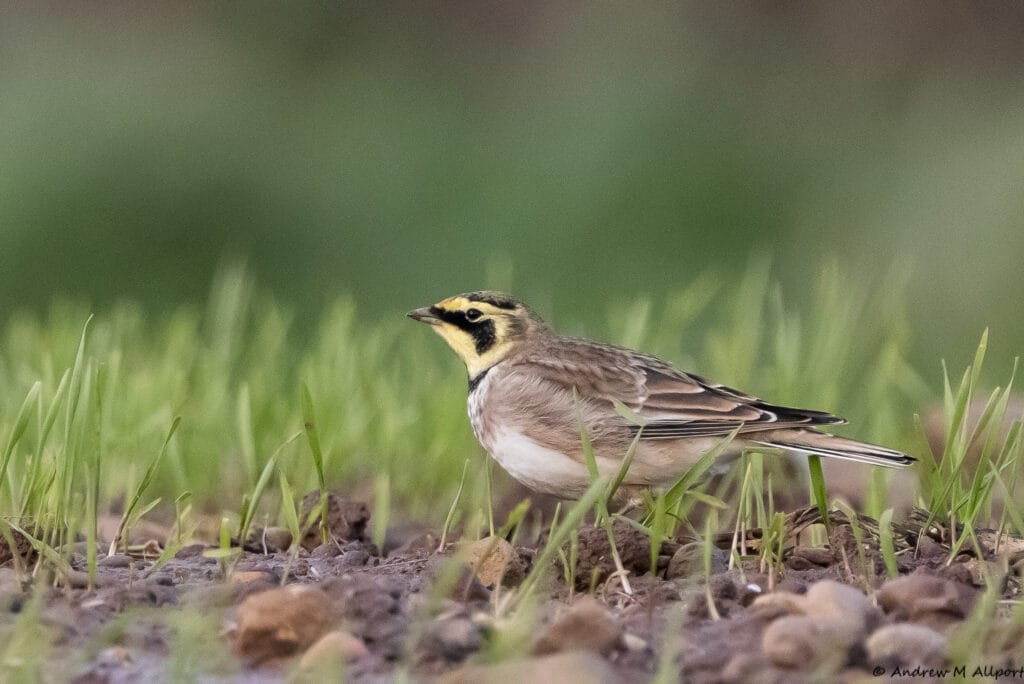
It was another fantastic day’s birding, with photos showing a Two-barred Warbler was present in the Lighthouse Grassland. Found by visitors early afternoon, the warbler was present for at least two hours and part of an amazing arrival within a 250m radius that included single Dusky Warbler, Radde’s Warbler, Pallas’s Warbler and two Siberian Chiffchaffs. Concurrently, a Shore Lark also appeared in an adjacent field. In addition, the long-staying Red-headed Bunting remained at North Marsh, where two Cranes rested in adjacent fields.

A significant arrival of commoner migrants also took place, in particular thrushes with totals including: five Woodcock, three Swallows, 21,845 Fieldfare, 7890 Redwing, three Mistle Thrush, 1415 Blackbirds, 1110 Song Thrush, ten Ring Ouzels, 900 Starlings, 175 Robins, a Black Redstart, five Waxwings, 340 Goldcrests, a Cetti’s Warbler, 22 Chiffchaffs, a Willow Warbler, six Blackcaps, three Lesser Whitethroats (at least one ‘eastern’), 19 Siskins, eight Mealy Redpolls, five Lesser Redpolls, 226 Bramblings, two Hawfinch and ten Crossbills. In addition, a late Osprey flew north over South Dykes, four Short-eared Owls were in residence, and a ringtail Hen Harrier and creamcrown Marsh Harrier hunted the outer head.

Highlights from RSPB Bempton Cliffs included 6270 Pink-footed Geese dropping onto cliff top stubbles to feed, 395 Redwing, 550 Fieldfare and 18 Brambling flying south-east, while four Hawfinch were recorded; one grounded and three moving through north-west. The Pallas’s Warbler remained on the reserve, where it was joined by a Firecrest and three Mealy Redpolls. Sightings from Hoddy Cows Lane, Buckton included a ringtail Hen Harrier, a Merlin, 350 Fieldfare, 110 Redwing, 40 Song Thrush, 130 Blackbirds, 23 Goldcrests, a Wheatear and two Mealy Redpolls.

Short-eared Owl, RSPB Bempton Cliffs, by Don Hustings

28th October 2023

A relatively cloudy day, with occasional brighter intervals, light southerly winds and temperatures that peaked at 12 degrees C. To the delight of a great many visiting birders, the Two-barred Warbler remained in the Lighthouse Grassland and showed exceptionally well. The Pallas’s Warbler and Dusky Warbler also remained in the same area. An additional Dusky Warbler was located along Hartendale Gutter, interestingly in the exact same place as the Radde’s Warbler earlier in the month. The first-winter male Red-headed Bunting continued in residence at North Marsh.

A Pallid Swift flying south-west over the Dykes headlined a ‘vis mig’ watch that also featured 12,130 Redwing, 5205 Starlings, 6765 Fieldfare and 24 Siskin moving west, while 3860 Pink-footed Geese flew north.

Nineteen Woodcocks represented a notable increase, a Water Rail was near the lighthouse, two ringtail Hen Harriers toured the outer head and three Short-eared Owls included one in off. Passerine migrants included a Waxwing, ten Ring Ouzels, a Cetti’s Warbler (Thornwick roost reedbed), two Siberian Chiffchaffs, three Yellow-browed Warblers, a ‘continental’ Coal Tit, two Northern Wheatears, three Black Redstarts, a Hawfinch, two ‘northern’ Bullfinch, three Mealy Redpolls, six Crossbill, one Twite, two Lapland Buntings and a Snow Bunting.

A Jay, two Hawfinch and a Waxwing were recorded at RSPB Bempton Cliffs. Other sightings from the reserve included 6970 Pink-footed Geese, single Merlin and Hen Harrier, a Jack Snipe, three Short-eared Owls, one Ring Ouzel and a Mealy Redpoll.

Two-barred Warbler, Lighthouse Grassland, by Ian Howard
Two-barred Warbler, Lighthouse Grassland, by Brett Richards
Two-barred Warbler, Lighthouse Grassland, by Rob Little

29th October 2023

The day began with heavy rain that preceded generally overcast skies with occasional brighter intervals; winds were generally fairly light and variable in direction and temperatures peaked at 11 degrees C. An array of rarities entertained legions of birders including a Pallid Swift, the Two-barred Warbler, a Pallas’s Warbler, two Dusky Warblers and the Red-headed Bunting.

A Great Northern Diver flew south, while the Velvet Scoter remained off South Landing. Small mammals needed to be nervous with a Marsh Harrier, a ringtail Hen Harrier and five Short-eared Owls hunting the outer head fields; six Woodcock and a Jack Snipe were also present in the same area. Hirundines were represented by six Swallows and a House Martin. Passerine migrants included four Blackcap, 24 Chiffchaffs, a Siberian Chiffchaff, six Ring Ouzels, four Northern Wheatears, a Pied Flycatcher, eight Waxwings and three Snow Buntings. An influx of finches, almost certainly originating from Scandinavia, was evident during an early morning ‘vis mig’; birds streaming west off the headland included a record-breaking 1161 Siskin, 290 Redpoll sp., four Mealy Redpolls, 60 Chaffinch and 14 Bramblings.

In excess of 3000 Pink-footed Geese fed on cliff top stubbles between North Marsh and RSPB Bempton Cliffs; six Short-eared Owls were also recorded from the reserve, along with a ringtail Hen Harrier, a Ring Ouzel, 52 Siskin, 72 Chaffinch and 15 Bramblings.

Pallid Swift, Fog Station, by Andy Hood
Pallid Swift, Fog Station, by Jo Symons
Dusky Warbler, Bay Brambles, by Lee Johnson
Waxwing, outer head, by Phil Cunningham

30th October 2023

The weather consisted of overcast skies, relatively light winds from the north and a top temperature of ten degrees C. Lingering from previous days were the Two-barred Warbler, Pallas’s Warbler, two Dusky Warblers and the Red-headed Bunting.

A Great Northern Diver flew north during the morning’s seawatch, while two Velvet Scoters were on the sea off the South Cliffs. A total of 15 Waxwings were recorded; a party of ten toured the outer head, four flew west over the Dykes and a lone bird came in off the sea late morning. Single Hawfinch and Twite were on the ‘motorway’ hedge south of the lighthouse, while single Woodcock and Ring Ouzel were in Holmes Gut; another Ring Ouzel appeared near North Dykes. Single Woodcock and Jack Snipe dropped into the lighthouse grassland cover crop, while three Snow Buntings were on nearby Cattlemere. A Firecrest was located at Hartendale near one of the aforementioned the Dusky Warblers.

Hen Harriers were recorded at Buckton and Bempton, while four Short-eared Owls hunted the reserve.

Two-barred Warbler, Lighthouse Grassland, by John Beaumont
Waxwing by Lee Johnson

31st October 2023

Overcast throughout, with persistent rain, light easterly winds and a top temperature of nine degrees C. The best of the morning seawatch was a Sooty Shearwater and a Goosander flying north and a Red-breasted Merganser moving south. Twelve Velvet Scoters were recorded off the South Cliffs, as were 312 Common Scoters. A total of 260 Teal on the headland was an impressive local tally, while the Goldeneye remained on Thornwick Pools. Three Jack Snipe included one at the latter site, where 23 Snipe were present. A total of 5400 Pink-footed Geese again visited cliff top fields to feed during daylight hours.

The Dusky Warbler at Hartendale and Red-headed Bunting remained, although there was no sign of the latter in the afternoon. Forty-six Waxwings represented a record headland count and included a flock of 21 birds feeding in the centre of the village. Other records included a Merlin, eight Woodcocks, a Ring Ouzel, a Firecrest and a Crossbill.

Waxwings, Flamborough village, by Andrew Allport

1st November 2023

The day began with heavy rain followed by dryer but overcast skies, a blustery southerly wind and temperatures that reached 12 degrees C. Seawatch highlights included 116 Wigeon, 85 Teal, a Tufted Duck, 141 Common Scoters and two Goldeneyes flying south, with a Long-tailed Duck and a Red-breasted Merganser moving north. Ten Little Gulls and a Mediterranean Gull were also recorded. Elsewhere, two Long-tailed Ducks and a Velvet Scoter were off South Landing/Hartendale, together with a Mediteranean Gull and four Gadwall.

The two Dusky Warblers remained (Golf Course Willows & Hartendale), but the day’s main feature was a mass arrival of Blackbirds: 4160 flew west off the headland in a mere 30 minutes between 1623-1653hrs. The north side of the headland between Holmes Gut and Sixpenny hosted 450 grounded Blackbirds, along with two Chiffchaffs and two Twite. Additional sightings included five Woodcock, ten Waxwings, a Siberian Chiffchaff (Golf Course Willows), a Ring Ouzel, ‘northern’ Bullfinch and two Snow Buntings.

Buckton hosted single Merlin and a ringtail Hen Harrier.

Hen Harrier, by Dan Howe

2nd November 2023

Blustery easterly winds developed after a relatively calm start, with heavy rain preceded by showers, while temperatures reached 12 degrees C. Seawatch highlights included two Long-tailed Ducks and two juvenile Pomarine Skuas moving south, with a Sooty Shearwater and Sandwich Tern north; 74 Little Gulls and two Little Auks were also recorded.

A total of 2960 Pink-footed Geese were recorded on the outer head, with the majority moving to cliff top fields west of the Dykes. The freshwater sites in the Thornwick area hosted ten Mute Swans, 144 Teal, 14 Tufted Ducks, a Goldeneye, a Little Grebe, two Water Rails and a Cetti’s Warbler. Migrants included five Woodcock, 195 Blackbirds and a Ring Ouzel, while the Red-headed Bunting re-appeared at North Marsh.

A flock of 1000 Pink-footed Geese at RSPB Bempton Cliffs included a single Ruddy Shelduck.

Dusky Warbler, Hartendale, by Tony Dixon (1/11)

3rd November 2023

The weather consisted of sunny intervals, blustery westerly winds and temperatures that peaked at 12 degrees C. A juvenile Pomarine Skua flew south during a morning seawatch that also featured a Long-tailed Duck north, two Red-breasted Mergansers south, 27 Little Gulls, a lone Puffin, and two Bonxies.

A total of 59 Whooper Swans flew south during a day that also saw thousands of Pink-footed Geese feeding on cliff top stubbles, while a Red Kite and a Merlin were seen over the outer head. Migrants included one Woodcock, a Hooded Crow (Cattlemere), a Swallow, two Black Redstarts (Fog Station), a late Common Redstart, a Mealy Redpoll (Lighthouse) and two Snow Buntings. The Dusky Warbler remained at Hartendale, showing in the hedgerow immediately south of the WwTW, while the Cetti’s Warbler was still at Thornwick Fishing Lake. Unfortunately, a swift sp. over the Lighthouse Grassland was only seen briefly and remained unidentified.

Elsewhere, a ringtail Hen Harrier appeared at Bempton.

Red Kite, outer head, by Andy Hood

4th November 2023

Relatively light easterly winds established during a day that started brightly, but mainly light rain arrived from early afternoon; temperatures reached 11 degrees C. Seawatching was relatively busy, with four Scaup flying south, a juvenile Sabine’s Gull north, a late juvenile Long-tailed Skua, 34 Little Gulls, an Arctic Tern and a Black-throated Diver north. Single Merlin, Black Redstart and Snow Bunting were around the Fog Station.

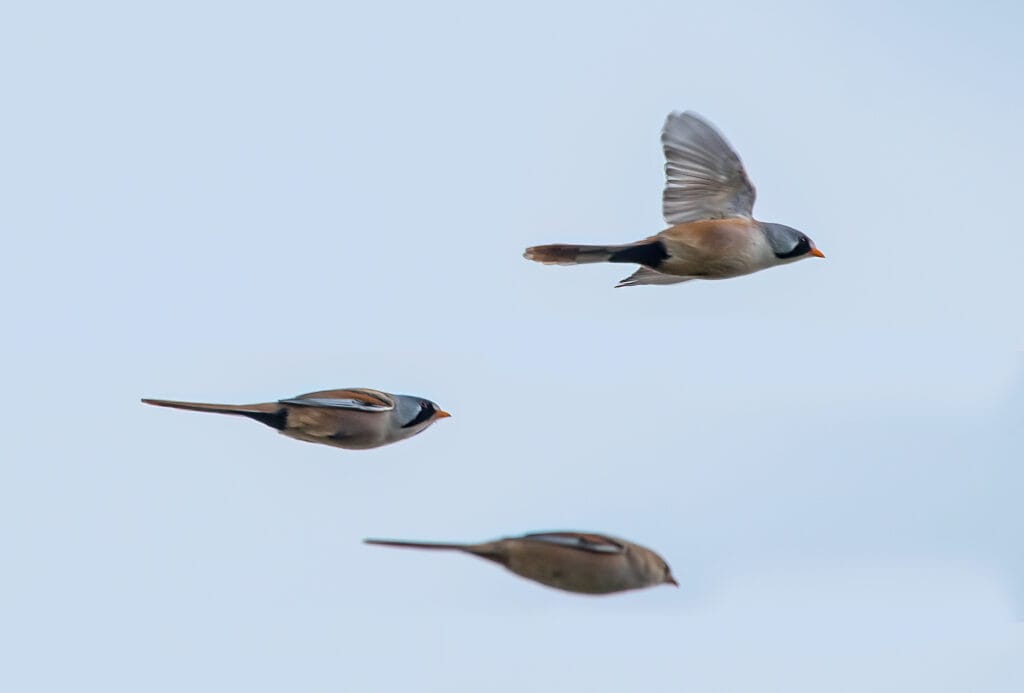
A total of 23 Whooper Swans flew south, while a Shoveler and a Little Egret were on the outer head. A ringtail Hen Harrier flew south-east high over the Dykes, while 212 Skylarks included 162 moving south. The day’s highlight was the mid-morning doscovery of six Bearded Tits in the Bay Brambles. Other passerine interest included three Brambling, a Snow Bunting and two Lapland Buntings.

Large Pink-footed Geese flocks toured the northern side of the headland once again, with at least 5000 birds present, mainly between RSPB Bempton Cliffs and North Dykes. A single European White-fronted Goose , a Barnacle Goose and a dark-bellied Brent Goose were also present. Other sightings from the reserve included a Little Gull, three Short-eared Owls, six Siskin and two Snow Buntings.

Bearded Tits, Bay Brambles, by John Beaumont
Pink-footed Geese with Ruddy Shelduck, RSPB Bempton Cliffs, by Alan Walkington (2/11)

5th November 2023

Rain for the first few hours eventually eased, as did the strength of the north-north-westerly winds, while temperatures reached ten degrees C. Seven Mediterranean Gulls moving south during the morning seawatch were unusual; a juvenile Pomarine Skua south, a Scaup north, 19 Little Gulls, a Common Tern, a Sooty Shearwater north and a minimum of 32 Bottlenose Dolphins were also recorded during the same session.

A total of 47 Whooper Swans flew south over the outer head, where single Merlin and Woodcock were present. The Dusky Warbler lingered near Hartendale WwTW, albeit it remained elusive; three Waxwings briefly dropped into trees there, while three more overflew the lighthouse. Passerine interest also included a Jay (South Dykes), five Blackcap, five Chiffchaff, three Lesser Redpolls and three Brambling.

Nineteen Whooper Swans flew south-east through RSPB Bempton Cliffs, while 4000 Pink-footed Geese again fed on cliff top fields between the reserve and North Dykes; lone White-fronted, dark-bellied Brent and Barnacle Geese were still in the flock. Twenty-one Redshank flew south-east at Bempton, along with four Mediterranean Gulls, while 163 Fieldfares headed in the opposite direction. Three Snow Buntings were also recorded, along with a Woodcock and two Short-eared Owls.

Cormorant, Thornwick Pools, by Jim Atkinson

6th November 2023

A relatively blustery westerly wind developed during a day of sunny intervals, occasional light showers and temperatures that reached ten degrees C.

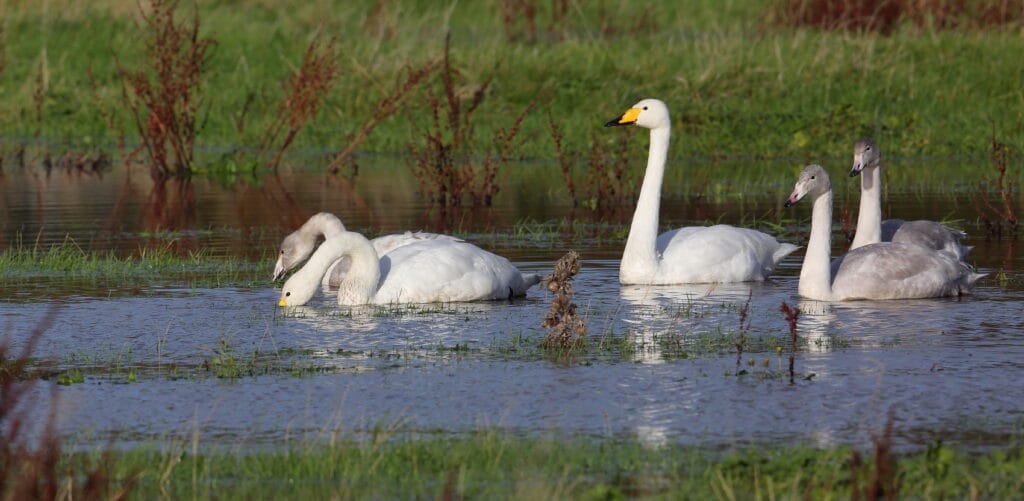
Seawatch highlights included 34 Whooper Swans and four Goosanders flying south, with 11 Little Gulls and an Arctic Skua lingering offshore. Five Whooper Swans also visited the flood adjacent to Water Lane. Four Woodcock included a single in off, while two Jack Snipe were also on the outer head. Two Shore Lark rested on the recently tilled field at Cattlemere, with other migrants including two Swallows, six Waxwings, a Black Redstart, 17 Siskins, a Crossbill, two Twite and three Snow Buntings.

A ringtail Hen Harrier hunted the cliff top at RSPB Bempton Cliffs, where a Siberian Chiffchaff was also present.

Shore Lark, Cattlemere, by Andrew Allport
Whooper Swan, Water Lane, by Alan Walkington

7th November 2023

A day of sunny intervals, a light/moderate westerly wind and temperatures that reached 12 degrees C. The day’s highlight was a Red-flanked Bluetail ringed at South Landing early morning, perhaps surprisingly the year’s first record; there were no futher signs a few minutes after release. Nine Whooper Swans flew south over the outer head, where 49 Purple Sandpipers roosted over the high tide. Migrants included six Woodcock, a Merlin, three Shore Larks (Cattlemere), a Waxwing, 17 Siskin and a Snow Bunting.

Two Whooper Swans and nine Grey Partridges were along Cliff Lane, Bempton, with a ringtail Hen Harrier recorded at Buckton.

Red-flanked Bluetail, South Landing, by Jo/Tony Hood

8th November 2023

Blustery south-west winds eventually relented after a morning of persistent rain, with sunny intervals following. A Mediterranean Gull and three ‘northern’ Herring Gulls were the most notable sightings of a quiet seawatch. The Thornwick area hosted ten Mute Swans, 103 Teal, 15 Tufted Ducks and a Little Grebe. Elsewhere, a late Sandwich Tern was off Cattlemere, where the juvenile Little Gull remained; a Woodcock was also at Old Fall.

Merlin, Cattlemere, by Alex Holt

9th November 2023

There were relatively light south-west winds throughout the majority of daylight hours, occasional sunny intervals and a top temperature of nine degrees C. Two Velvet Scoters, a Little Gull and a Great Northern Diver flew south during a morning seawatch that also saw a Mediterranean Gull and a Long-tailed Duck moving north.

A ringtail Hen Harrier flew south over the Lighthouse Grassland, while a Short-eared Owl frequented the cliff top at North Landing. Two Water Rails and two Woodcock were in residence, the Little Gull remained on Cattlemere and two first calendar-year Caspian Gulls included a green darvic-ringed individual. Migrant passerines included a Jay, one Brambling, 23 Siskin and 18 Snow Buntings.

Elsewhere, three Barnacle Geese associated with the Pink-feet at RSPB Bempton Cliffs.

Kestrel, Fog Station, by Brett Richards
Sprawler, South Landing, by Andrew Allport (1st Flamborough record)

10th November 2023

Moderate north-north-westerlies established by late morning on a day of sunny intervals, occasional showers and a top temperature of nine degrees C. A Tundra Bean Goose flew south during a seawatch that also featured two late first-winter Common Terns, a Little Gull and an Arctic Skua.

Away from the sea, five Whooper Swans overflew Mid Dykes, while four Woodcock, a Grey Plover and four Grey Partridge were also on the outer head. Sixteen Waxwings included 15 near South Landing, with additional passerine interest including five Chiffchaffs, 21 Siskin, ten Twite and a Snow Bunting.

Snow Bunting, by Phil Cunningham

11th November 2023

The weather consisted of moderate north-westerly winds, frequent showers in the morning followed by sunny intervals and temperatures reaching ten degrees C. Seawatch highlights included a Little Auk and two Sooty Shearwaters flying north and a late Common Tern feeding offshore. Three Snow Buntings flew in off the sea before settling down to feed in front of the Seawatch Observatory. Two Woodcock were on the outer head, while 53 Siskin were almost certainly newly arrived in off the sea. However, an ‘eastern Lesser Whitethroat’ in the village was likely to be the individal first seen on 27th October.

Three Short-eared Owls remained at RSPB Bempton Cliffs.

Snow Buntings, Seawatch Obs, by Craig Thomas

12th November 2023

Winds remained light and variable in direction throughout a day of sunny intervals, increasing cloud and temperatures that reached ten degrees C. Seawatch highlights included a pale-bellied Brent Goose, eight Little Gulls, a Mediterranean Gull, a Pomarine Skua, two Great Northern Divers, two Sooty Shearwaters and a Manx Shearwater.

Waxwings were very evident once more, with a total of 37 birds: six flew in off the sea during the seawatch, a flock of 30 flew south over the outer head and a lone bird frequented Thornwick. The Eastern Lesser Whitethroat remained in the village, while six Snow Buntings included a flock of five at Cattlemere.

Six hundred Pink-footed Geese at RSPB Bempton Cliffs were accompanied by a Bar-headed Goose.

Grey Wagtail, Hartendale, by Jo Hood

13th November 2023

A day that featured strong southerly winds, driving rain and temperatures that reached 13 degrees C. Seawatch highlights included 89 Teal south, three Eiders, a Velvet Scoter, eight Little Gulls and a Sooty Shearwater moving north. There was plenty of evidence of an influx of late autumn migrants, including four Woodcock and 200 Blackbirds located on the extreme outer head during a dryer interlude.

A Bearded Tit flying north-west through RSPB Bempton Cliffs represented the day’s highlight, with 149 Blackbirds grounded indicating the extent of the influx; a Short-eared Owl was also present.

Cormorant, by Brett Richards

14th November 2023

A much calmer day with light a light north-westerly though there were prolonged periods of rain and a maximum temperature of 11°C.

Ducks dominated seawatching interest with 118 Common Scoter north and 65 south while 13 Eider and 5 Tufted Ducks added variety. Twenty-four Red-throated Divers also passed.

A Great White Egret started the day at Water Lane and 27 Siskins and a Brambling were also seen aroung the village as 50 Common Scoter were offshore at South Landing. The Outer Head produced four Woodcock, three Blackcap and six Snow Buntings were at Cattlemere.

A ring-tailed Hen Harrier, a Merlin and three Short-eared Owls were all hunting in the fields at Bempton Cliffs RSPB.

Bar-tailed Godwit, South Landing (Alan Walkington)

15th November 2023

A dry day with maximum temperature of 11°C and a moderate to fresh westerly.

The main feature of seawatching was wildfowl again. Eighty Pink-footed Geese passed south in addition to 23 Wigeon, 38 Teal, single Goldeneye and Velvet Scoter and 153 Common Scoter (also 40 north).

Six Siskin were still near South Landing where 26 Common Scoter were offshore.

The ring-tailed Hen Harrier remained at Bempton Cliffs RSPB as did at least two Short-eared Owls.

Short-eared Owl, Bempton Cliffs RSPB (Alan Walkington)

16th November 2023

A relatively overcast day, with light easterly winds and a top temperature of nine degrees C. After an absence, the first-winter male Red-headed Bunting re-appeared at North Marsh having advanced its moult which was presumably responsible for its recent low profile. Four Woodcocks were also on the outer head, while Little Grebes were at North Marsh and Buckton Pond.

A Velvet Scoter, four Goldeneye, a Red-breasted Merganser and 16 Little Gulls were recorded on the morning seawatch.

Redwing by Dan Howe

17th November 2023

A relatively bright day, with light winds and temperatures that reached nine degrees C. The morning seawatch was busy and included two Scaup, 67 Eiders, 307 Common Scoters, a Long-tailed Duck, a Red-necked Grebe, 33 Little Gulls, two Sandwich Terns, a Common Tern and a Great Northern Diver. In addition, a Merlin overflew the Fog Station, as did two Snow Buntings.

A Long-tailed Duck joined 145 Common Scoters off the South Cliffs, while a Short-eared Owl overflew the Golf Course. There was evidence of passerines arriving from the east, including a flock of six Shore Larks that flew west over stubble fields near South Landing. Waxwings were again evident, with flocks of 11 and 19 touring the village, and a single bird lingering late afternoon. Additional migrants included six Woodcock and 20 Siskin.

A total of 450 Pink-footed Geese frequented fields around RSPB Bempton Cliffs, where three Short-eared Owls remained. Seven Grey Wagtails were also recorded at the reserve, where a lone Snow Bunting flew south-east.

Waxwing, by June & Malcolm Fox

18th November 2023

The day began with heavy rain and strong southerly winds, before dryer conditions established including occasional sunny intervals; temperatures reached a maximum of 13 degrees C. A juvenile Pomarine Skua flew north on a seawatch that also featured three Velvet Scoters, 37 Wigeon, 164 Teal, eight Goldeneyes and a Little Gull. The year’s first Egyptian Goose flew south-west over the village early afternoon, while additional wildfowl interest on the headland’s freshwater sites included ten Mute Swans, six Tufted Ducks, 135 Teal, 30 Wigeon and 65 Mallard. Six Waxwings toured the village, while additional migrant interest included two Woodcock and increased numbers of thrushes, including 115 Blackbirds in off over North Marsh alone.

Song Thrush, by Dan Howe

19th November 2023

There were relatively light south-west winds throughout a day that began with sunny intervals and ended with light rain; temperatures reached 12 degrees C. Two Black-throated Divers flew north during a morning seawatch that also featured eight Shovelers, a Pintail, 19 Little Gulls and a Great Northern Diver. Six Whooper Swans rested on fields near Old Fall and 49 Pink-footed Geese moved south over South Dykes. A record-breaking 46 Waxwing total included a flock of 40 west over South Landing, while the ever elusive Red-headed Bunting re-appeared at North Marsh. Eighteen Siskin continued their good late autumn showing.

Two Shore Larks flew north-west through RSPB Bempton Cliffs, as did 69 Lapwing. A total of 343 Pink-footed Geese were also present, along with three Short-eared Owls and as Merlin.

Red-headed Bunting, North Marsh, by Brett Richards

20th November 2023

A dull day with a light westerly and a temperature maximum of 11°C.

The Red-headed Bunting was again in its favoured spot on Northcliff Marsh, seven Whooper Swans were on the fields at Old Fall and a Woodcock was near South Landing where a Long-tailed Duck was offshore. Passerines were represented by two Goldcrests, a Brambling, four Siskins and a Lesser Redpoll.

Seawatching was quiet with seven Eider and four Little Gulls being the highlights.
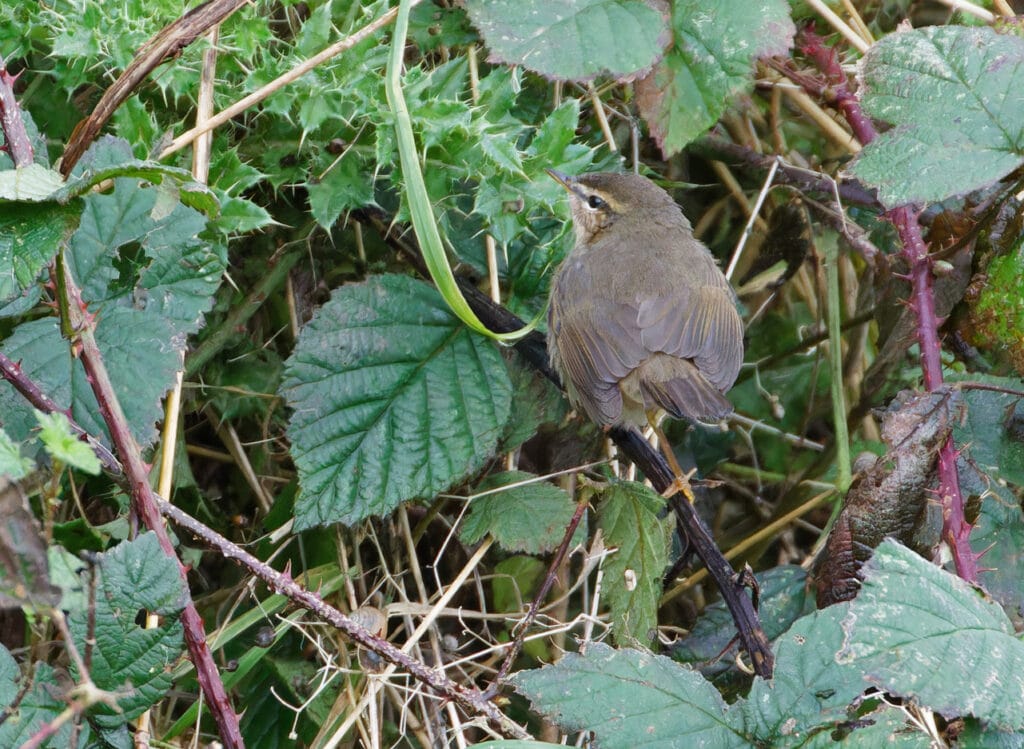
Two Short-eared Owls and a Water Rail were at Buckton.

Red-headed Bunting, Northcliff Marsh (Andy Hood)

21st November 2023

A moderate to fresh northerly kept the temperature to a maximum of 10°C.

Two Little Auks, a Great Northern Diver and four Sooty Sheawaters enlivened an otherwise quiet morning seawatch.

Single Woodcocks were noted at Old Fall and Bempton Cliffs.
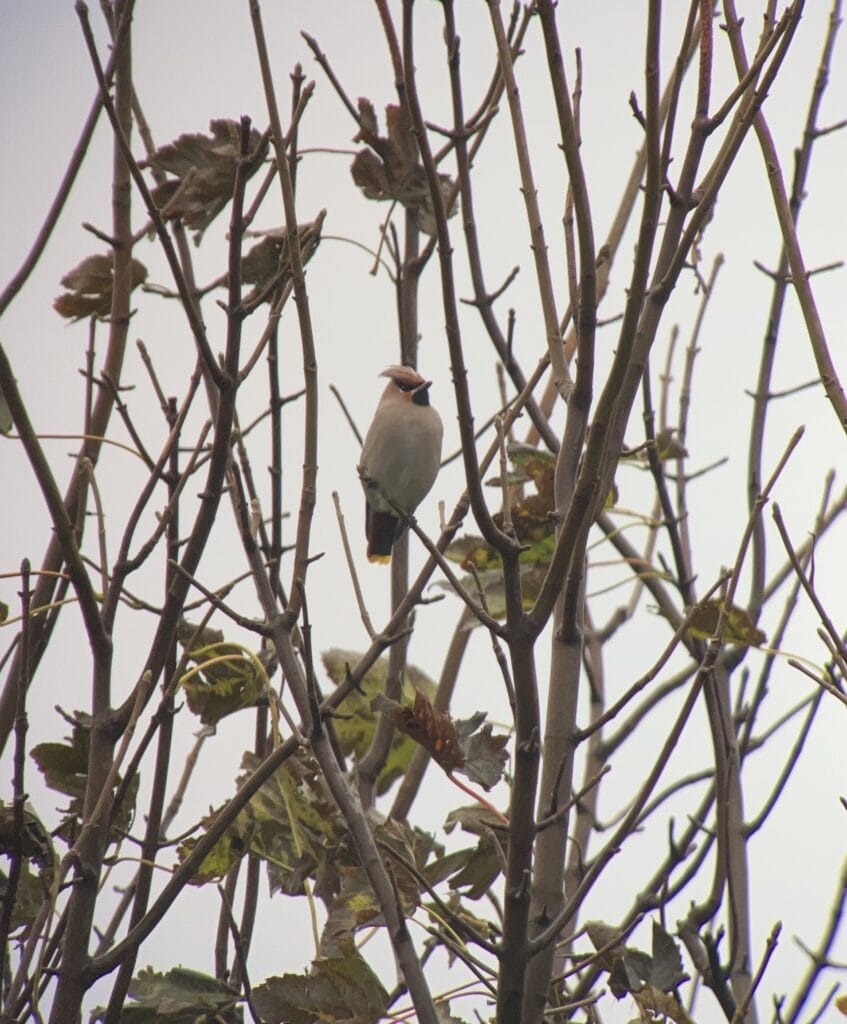
Woodcock, Outer Head (Rob Little)

22nd November 2023

Another dull day with a strengthening westerly and relatively mild with a maximum temperature of 12°C.

A drake Long-tailed Duck, 6 Goosander, one Red-breasted Merganser, 49Common Scoter, 12 Eider and a Woodcock in off were the best of the seawatch.

A Jay visited Thornwick Pools while two Woodcock and a Merlin were seen elsewhere on the Outer Head. At South Landing, the first-winter Long-tailed Duck remained offshore and two Red-breasted Mergansers flew past.

Long-tailed Duck, South Landing (Phil Cunningham)

23rd November 2023

A mild day with the temperature rising to 14°C despite a strong westerly.

The morning seawatch was subdued but improved in the afternoon with two Great Northern Divers, 89 Pink-footed Geese, 2 Whooper Swans and three Little Gulls.

Three Siskin were near South Landing where a very late House Martin flew west while a Little Egret was at Thornwick Pools briefly.

Rock Pipit, South Landing, by Andrew Allport

24th November 2023

The weather changed overnight with astong north-westerly setting in limiting the afternoon temperture to 7°C though feeling much colder.

A lengthy seawatch provided highlights of four each of Sooty and Manx Shearwaters as well as four Pomarine Skuas, a single Little Auk and a Great Northern Diver. Ducks were represented by two Velvet Scoter and four Long-tailed Ducks. Unusually, a single flock of 1550 Woodpigeons were seen to head south-east out to sea.

At South Landing, two Velvet Scoters and a Long-tailed Duck remained with the flock of Common Scoter while fresh waters on the north side of the Head held 106 Teal and 34 Wigeon.

A Sooty Shearwater was also seen off Bempton Cliffs and a Siberian Chiffchaff was in Bempton village.

Common Scoter, South Landing (Alan Walkington)

25th November 2023

A moderate to fresh north-westerly kept the temperature to a maximumof 6°C.

Seawatching again was the order of the day and it provided highlights of two Grey Phalaropes, 25 Little Auks with one being taken by a Merlin, two Great Northern Divers and one each of Sooty and Manx Shearwaters. In addition, eight Little Gulls, 135 Common Scoter, two Long-tailed Ducks and a Goldeneye also passed.

Away from the Fog Station, the Red-headed Bunting was seen again at Northcliff Marsh. There were two Long-tailed Ducks at South Landing and a Goldeneye at Thornwick Lakes. Two Woodcocks were seen on the Outer Head along with 38 Siskin.

A Little Auk also passed Bempton Cliffs RSPB where 500 Pink-feet, 2 Whooper Swans, two Great Northern Divers and one Twite were also seen. Ten Snow Buntings also passed over Cliff Lane.

Little Auk, South Landing (John Beaumont)
(Library Image)