
Winds remained light throughout, mainly onshore, with overcast skies and heavy showers during the afternoon; temperatures reached 12 degrees C.
It was another fantastic day’s birding, with photos showing a Two-barred Warbler was present in the Lighthouse Grassland. Found by visitors early afternoon, the warbler was present for at least two hours and part of an amazing arrival within a 250m radius that included single Dusky Warbler, Radde’s Warbler, Pallas’s Warbler and two Siberian Chiffchaffs. Concurrently, a Shore Lark also appeared in an adjacent field. In addition, the long-staying Red-headed Bunting remained at North Marsh, where two Cranes rested in adjacent fields.
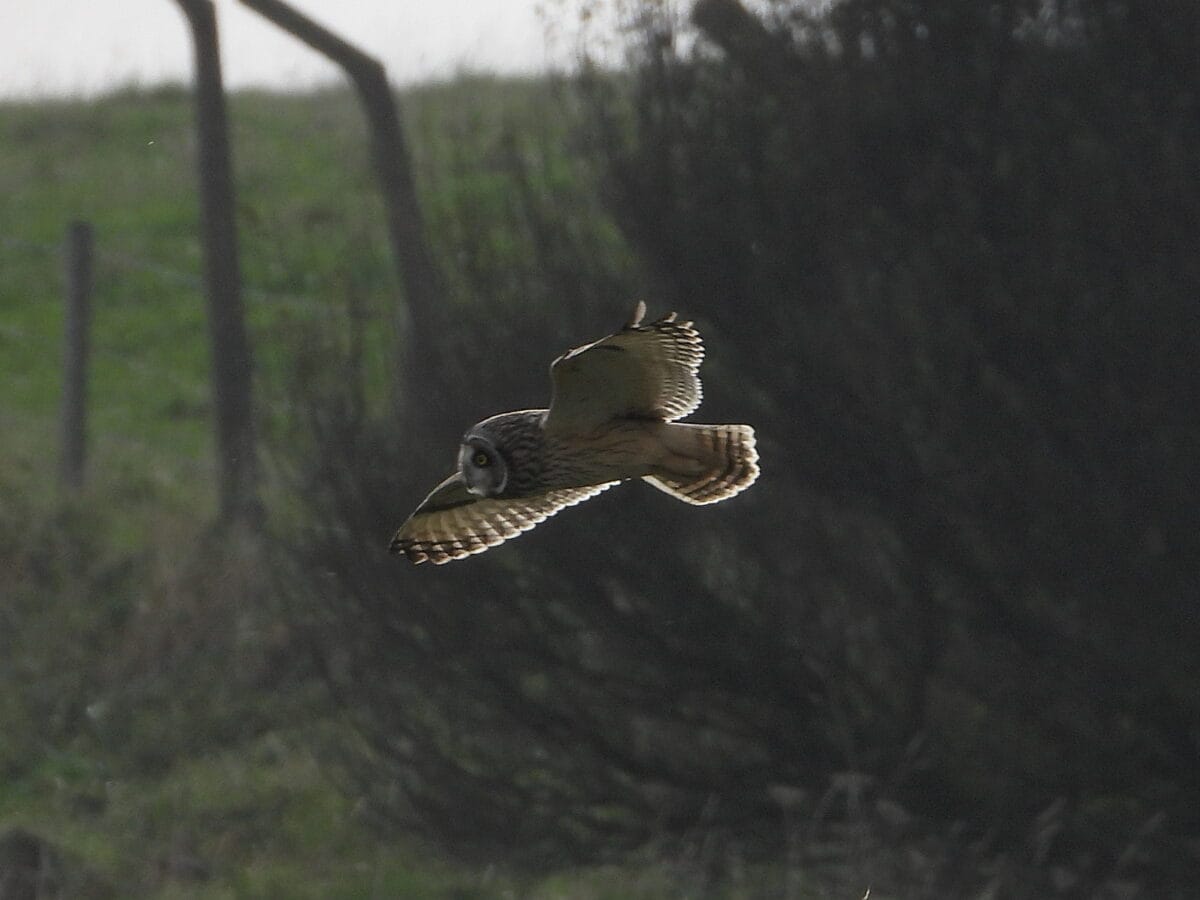
A significant arrival of commoner migrants also took place, in particular thrushes with totals including: five Woodcock, three Swallows, 21,845 Fieldfare, 7890 Redwing, three Mistle Thrush, 1415 Blackbirds, 1110 Song Thrush, ten Ring Ouzels, 900 Starlings, 175 Robins, a Black Redstart, five Waxwings, 340 Goldcrests, a Cetti’s Warbler, 22 Chiffchaffs, a Willow Warbler, six Blackcaps, three Lesser Whitethroats (at least one ‘eastern’), 19 Siskins, eight Mealy Redpolls, five Lesser Redpolls, 226 Bramblings, two Hawfinch and ten Crossbills. In addition, a late Osprey flew north over South Dykes, four Short-eared Owls were in residence, and a ringtail Hen Harrier and creamcrown Marsh Harrier hunted the outer head.
Highlights from RSPB Bempton Cliffs included 6270 Pink-footed Geese dropping onto cliff top stubbles to feed, 395 Redwing, 550 Fieldfare and 18 Brambling flying south-east, while four Hawfinch were recorded; one grounded and three moving through north-west. The Pallas’s Warbler remained on the reserve, where it was joined by a Firecrest and three Mealy Redpolls. Sightings from Hoddy Cows Lane, Buckton included a ringtail Hen Harrier, a Merlin, 350 Fieldfare, 110 Redwing, 40 Song Thrush, 130 Blackbirds, 23 Goldcrests, a Wheatear and two Mealy Redpolls.
