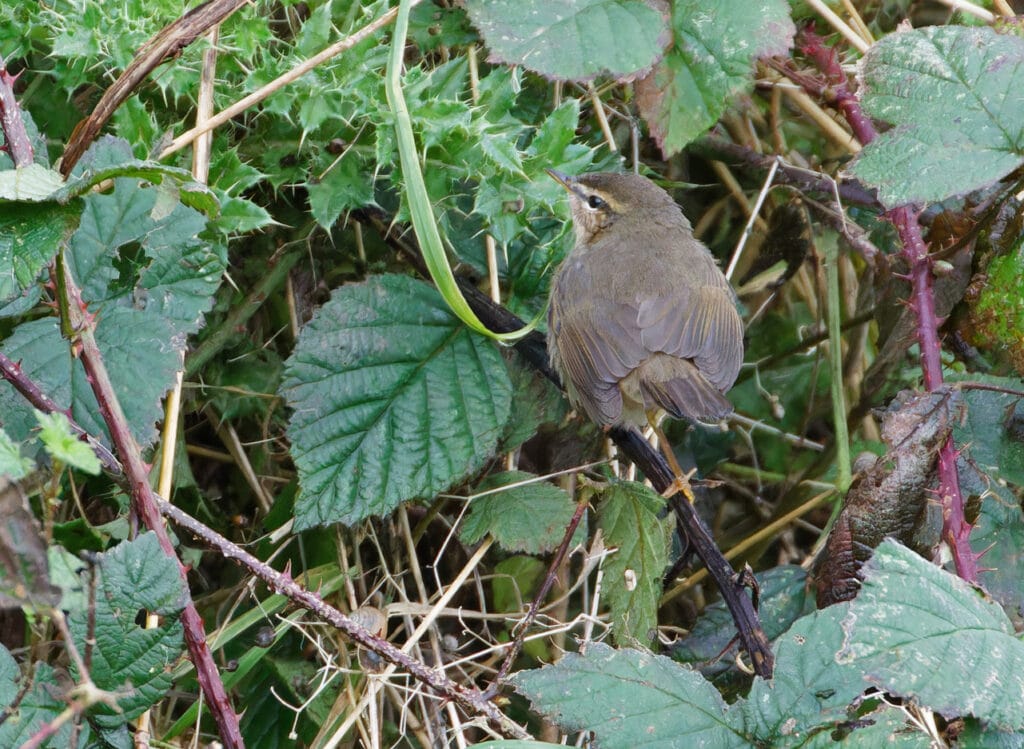
The day began with heavy rain that preceded generally overcast skies with occasional brighter intervals; winds were generally fairly light and variable in direction and temperatures peaked at 11 degrees C. An array of rarities entertained legions of birders including a Pallid Swift, the Two-barred Warbler, a Pallas’s Warbler, two Dusky Warblers and the Red-headed Bunting.
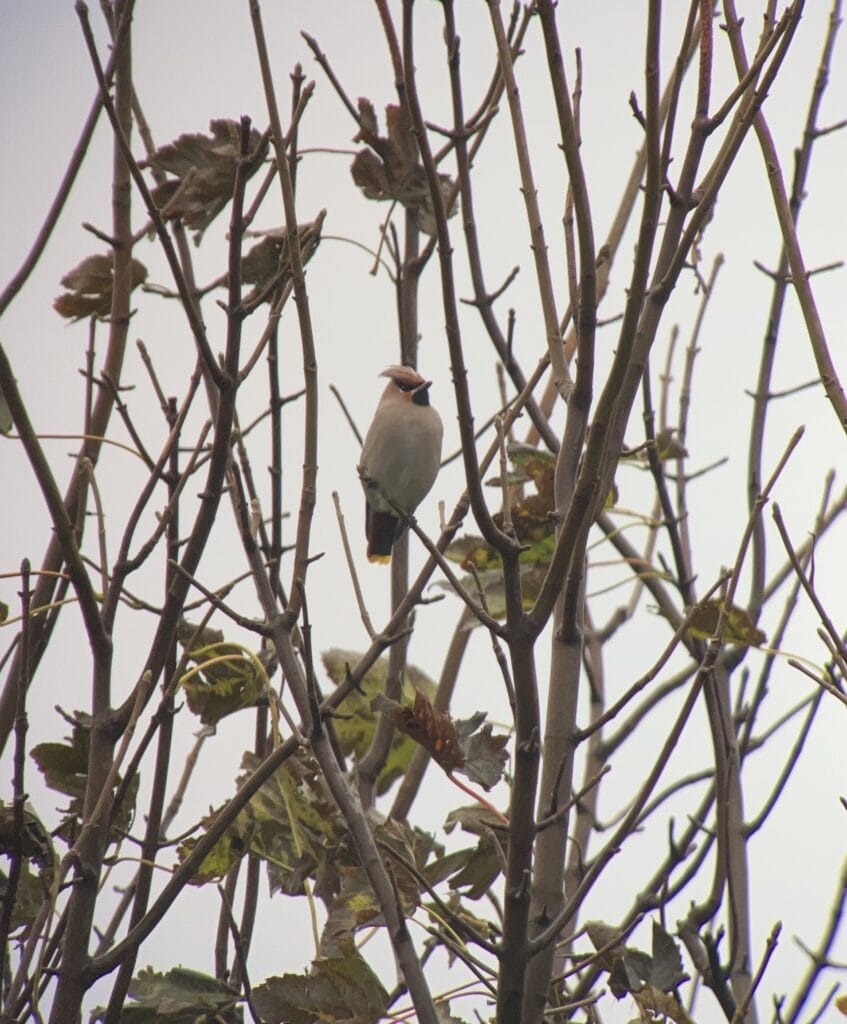
A Great Northern Diver flew south, while the Velvet Scoter remained off South Landing. Small mammals needed to be nervous with a Marsh Harrier, a ringtail Hen Harrier and five Short-eared Owls hunting the outer head fields; six Woodcock and a Jack Snipe were also present in the same area. Hirundines were represented by six Swallows and a House Martin. Passerine migrants included four Blackcap, 24 Chiffchaffs, a Siberian Chiffchaff, six Ring Ouzels, four Northern Wheatears, a Pied Flycatcher, eight Waxwings and three Snow Buntings. An influx of finches, almost certainly originating from Scandinavia, was evident during an early morning ‘vis mig’; birds streaming west off the headland included a record-breaking 1161 Siskin, 290 Redpoll sp., four Mealy Redpolls, 60 Chaffinch and 14 Bramblings.
In excess of 3000 Pink-footed Geese fed on cliff top stubbles between North Marsh and RSPB Bempton Cliffs; six Short-eared Owls were also recorded from the reserve, along with a ringtail Hen Harrier, a Ring Ouzel, 52 Siskin, 72 Chaffinch and 15 Bramblings.