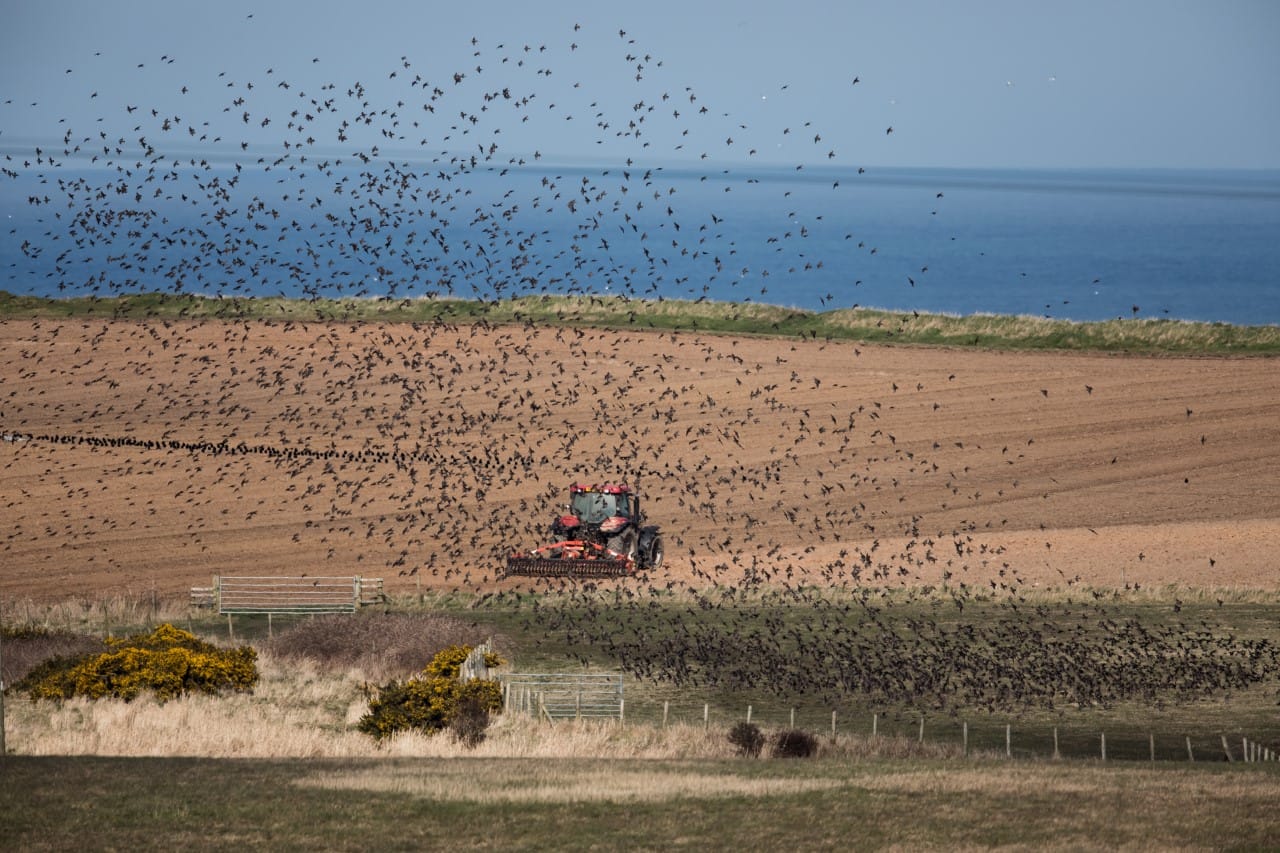
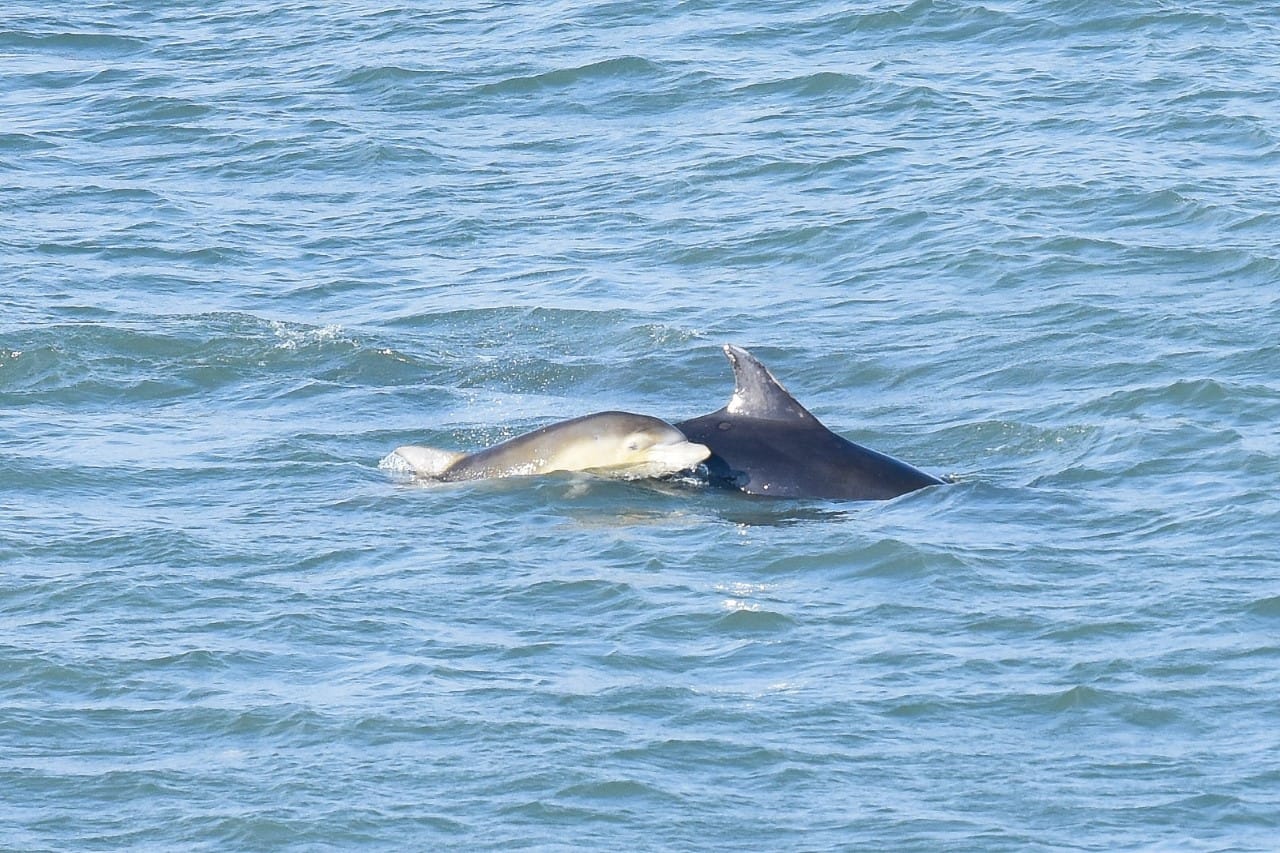
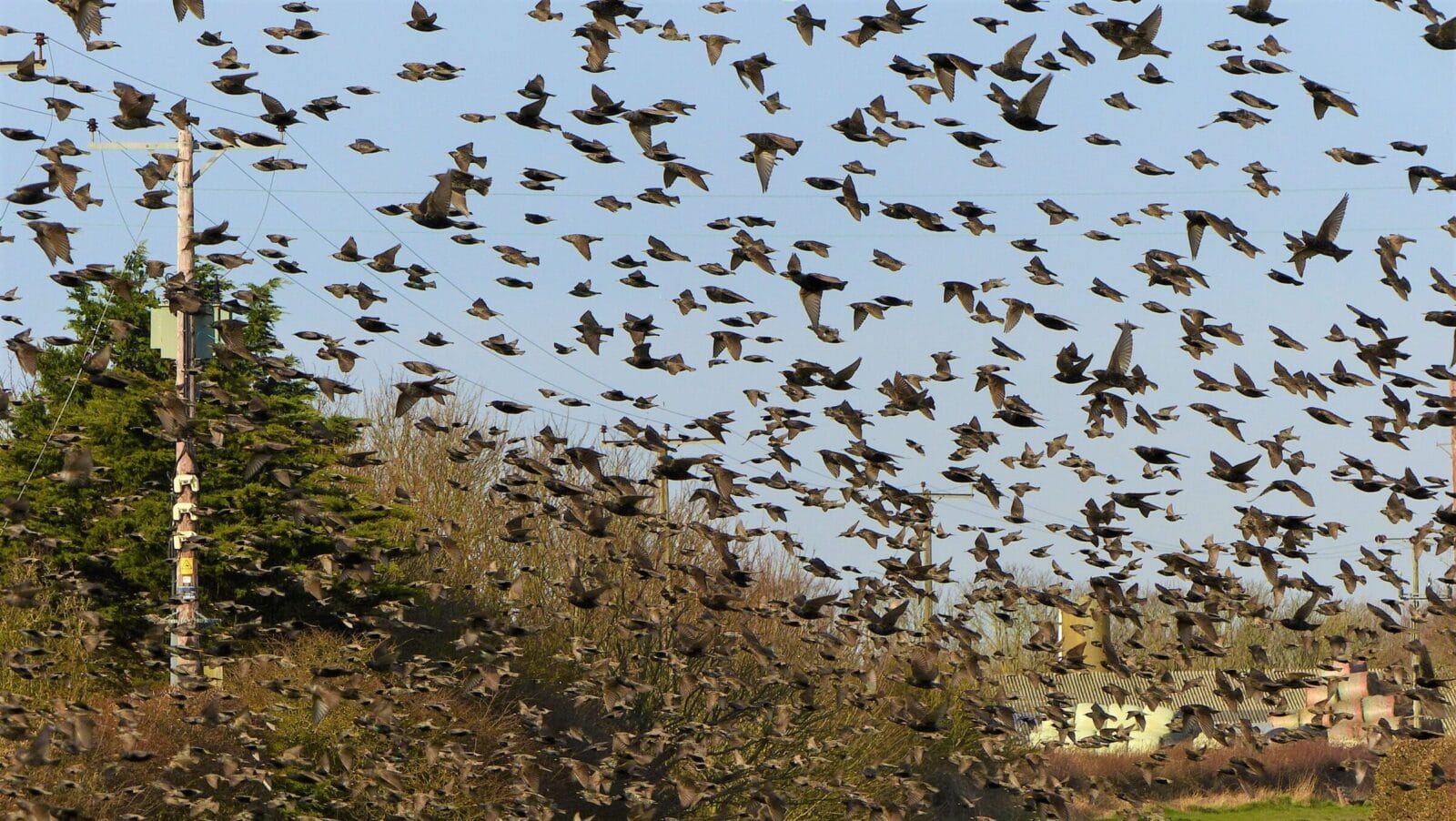
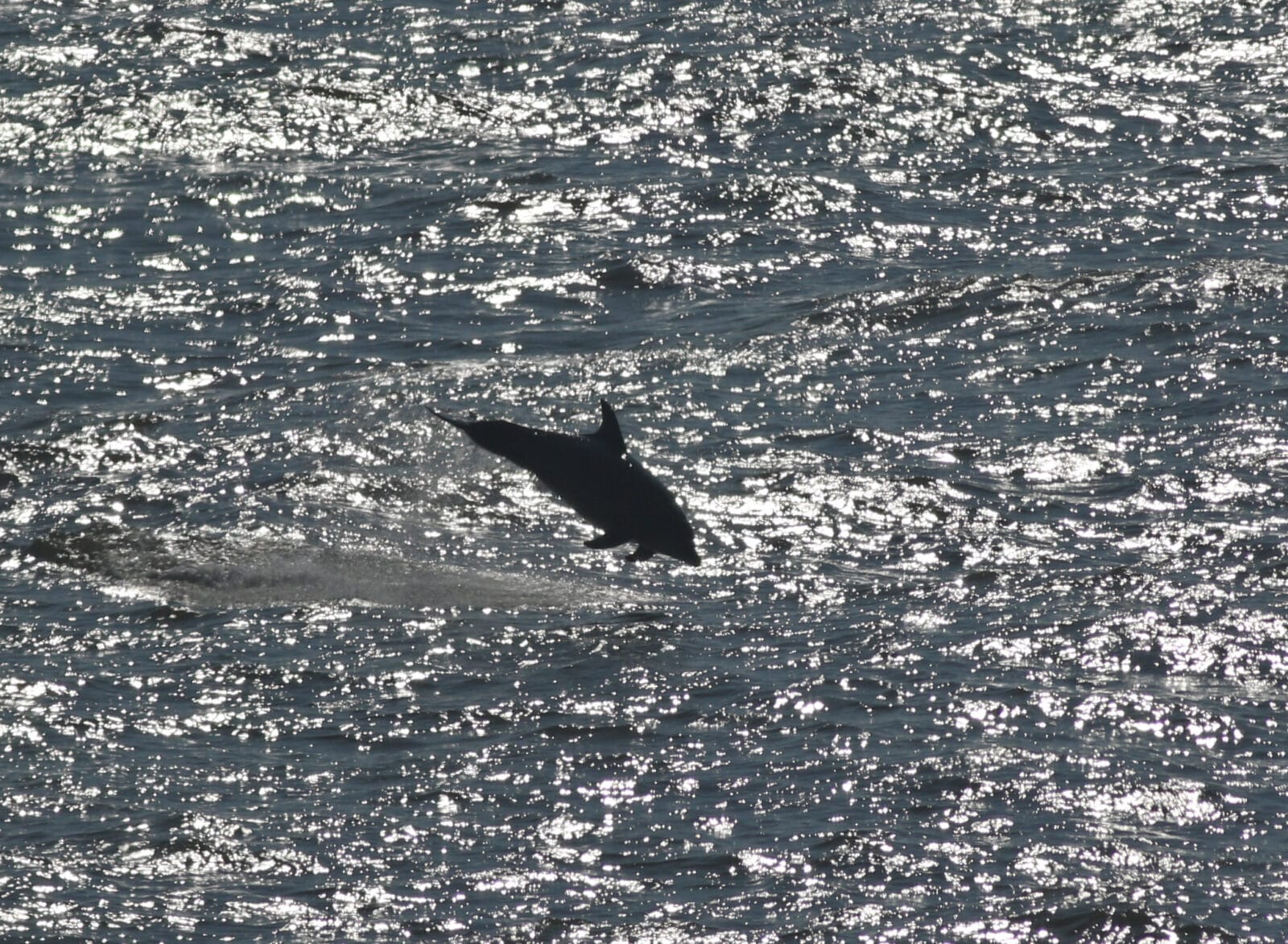
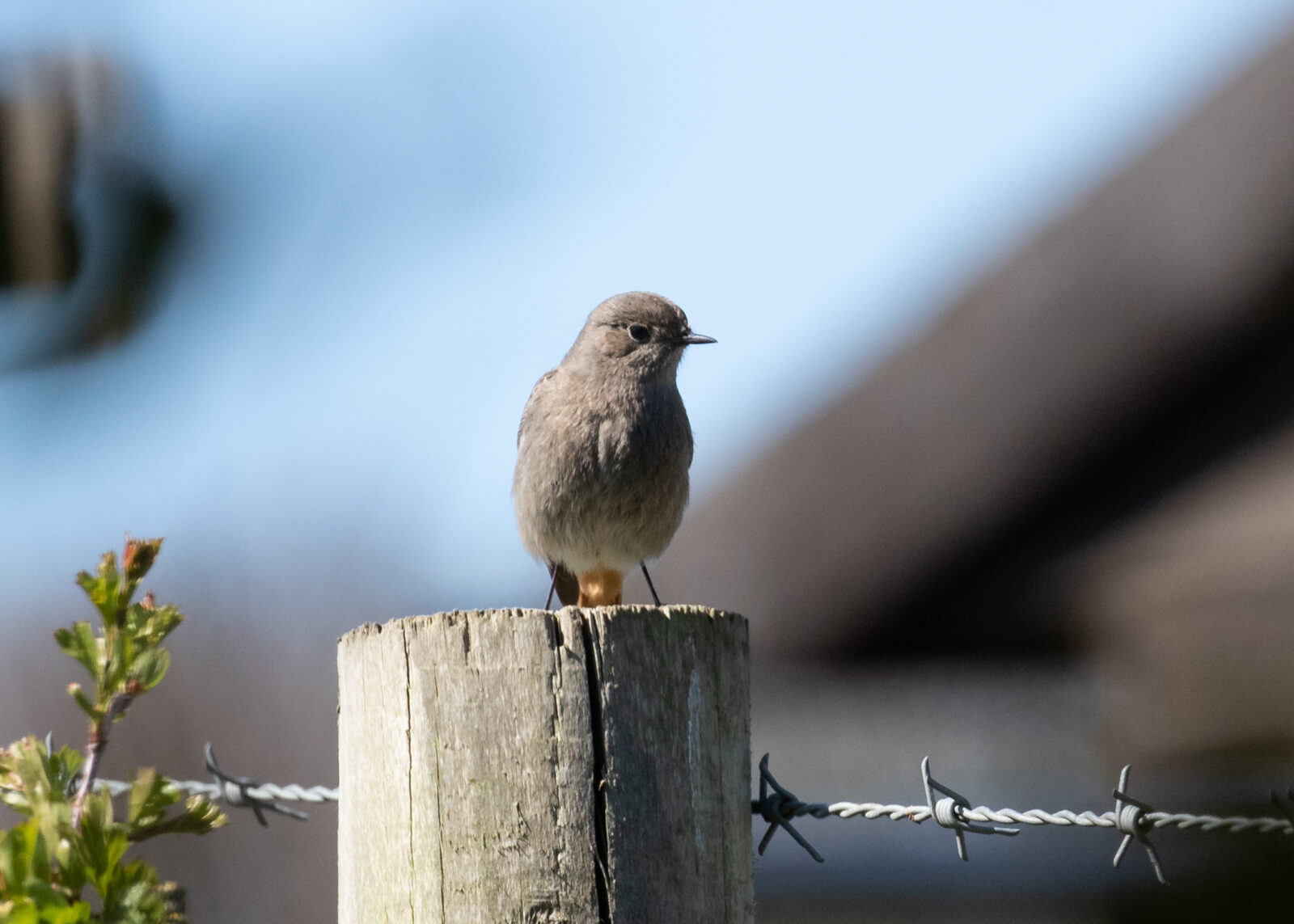
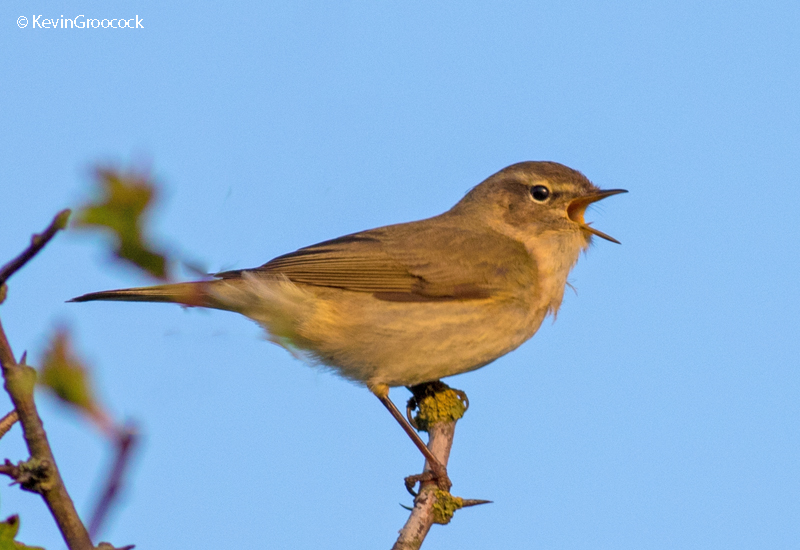
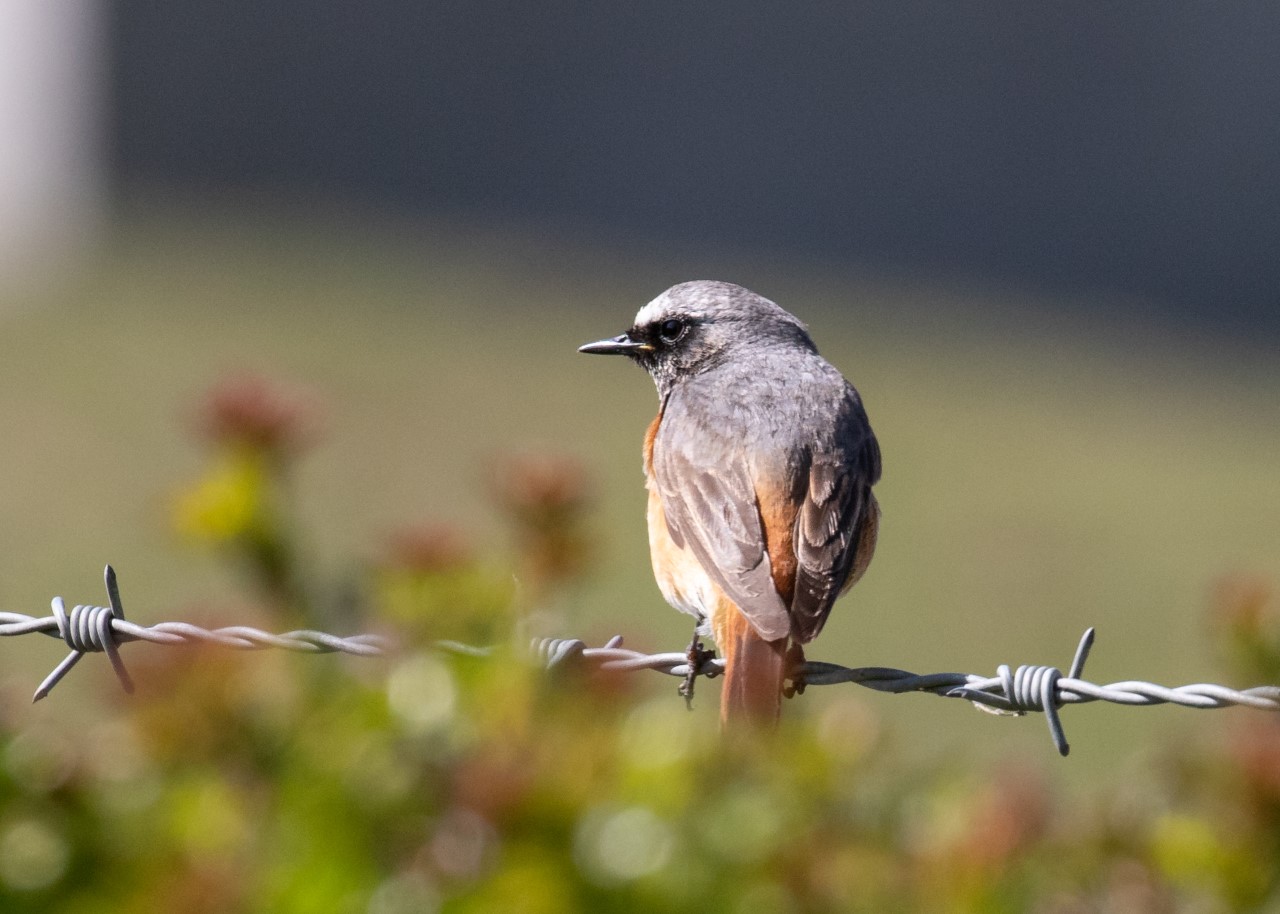
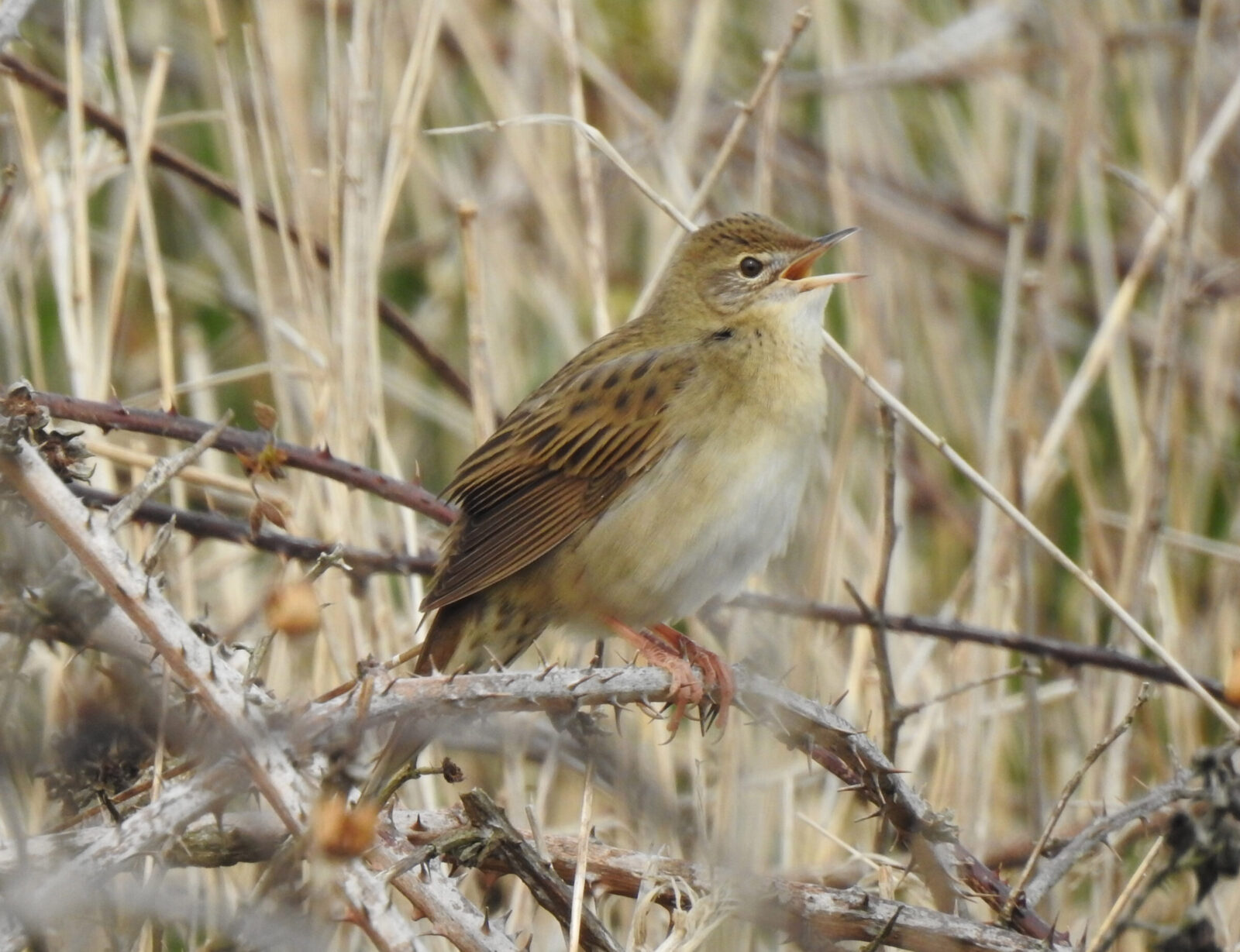
The weather consisted of relatively overcast skies during the morning, with sunny intervals later and a moderate south-west wind. Migrant passerines included 2000 Starlings on the outer head, three Chiffchaffs, three Stonechats, a Black Redstart in the Gorse Field and a Hooded Crow that overflew South Landing; Thornwick attracted six Corn Buntings. Once again, 15 Bottlenose Dolphins entertained as they swam south past RSPB Bempton Cliffs and, latterly, the outer head.
Starlings, North Marsh, by Andrew Allport (16/3)Bottlenose Dolphins, outer head, by Andy Hood
An overcast day, with temperatures dropping from seven to five degrees by mid-afternoon in light north-west winds. Five Pink-footed Geese lingered, whereas newly arrived migrants included the year’s first two Wheatears on the Golf Course; additional sightings included five Chiffchaffs, the female Black Redstart in the Gorse Field and three Stonechat. The pod of 15 Bottlenose Dolphins swam past South Landing at midday.
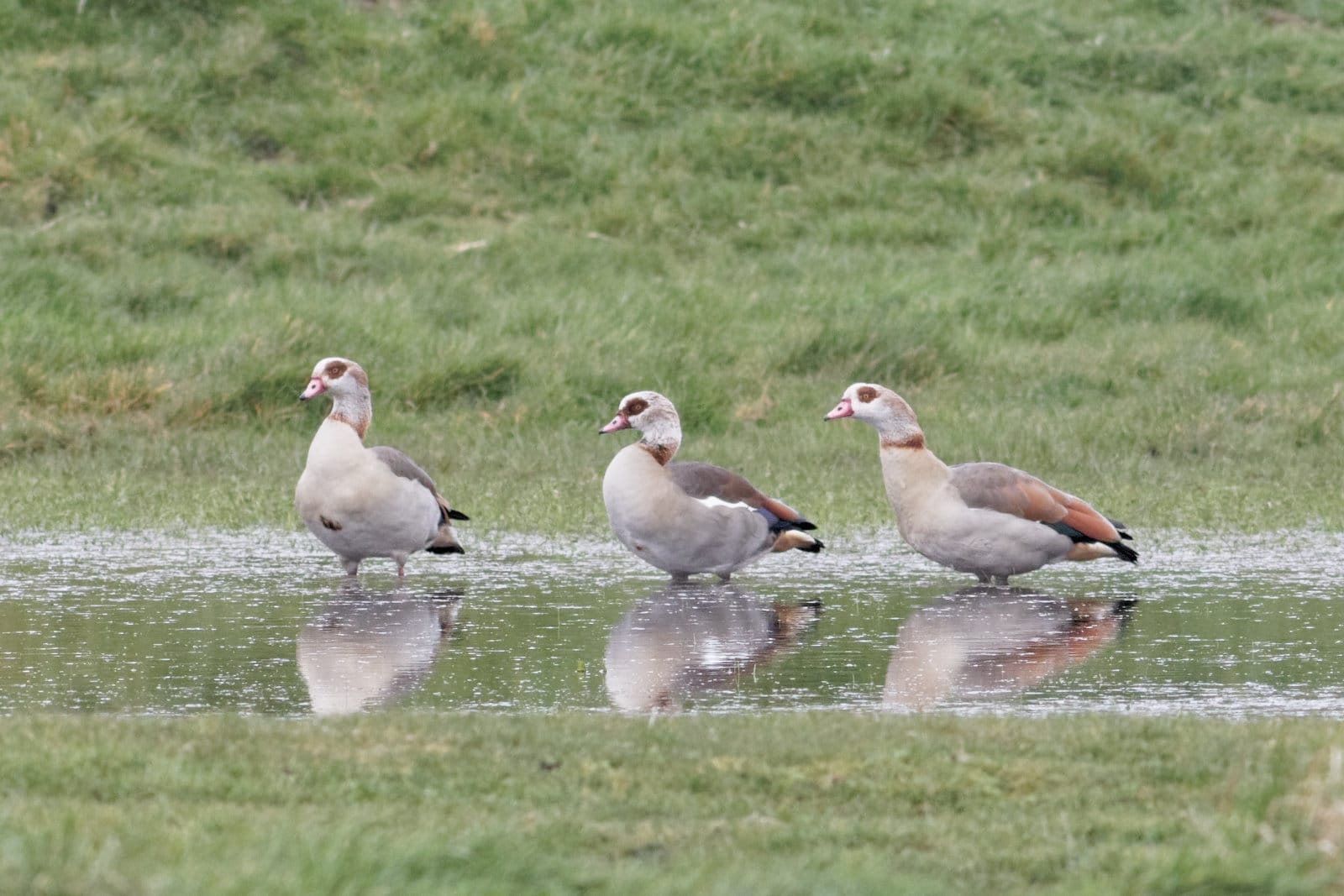
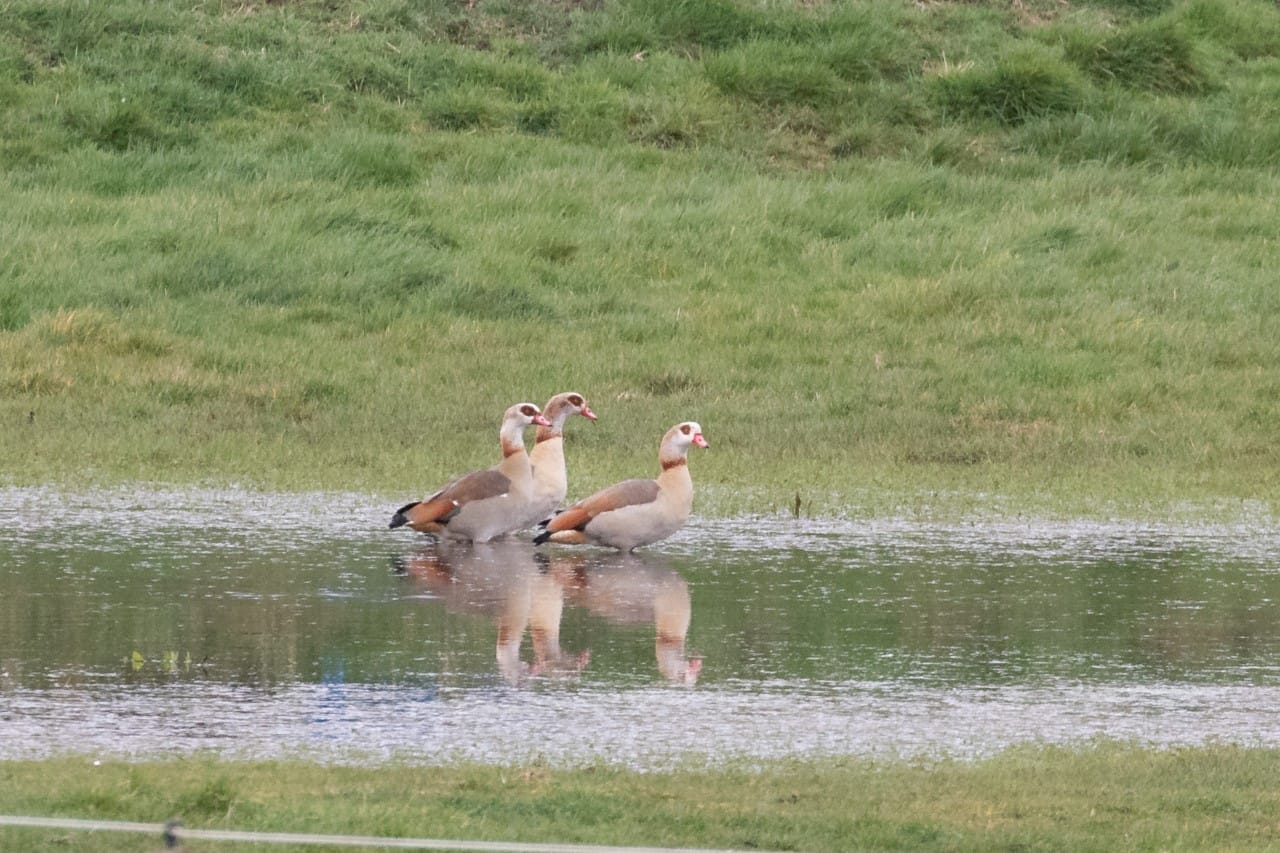
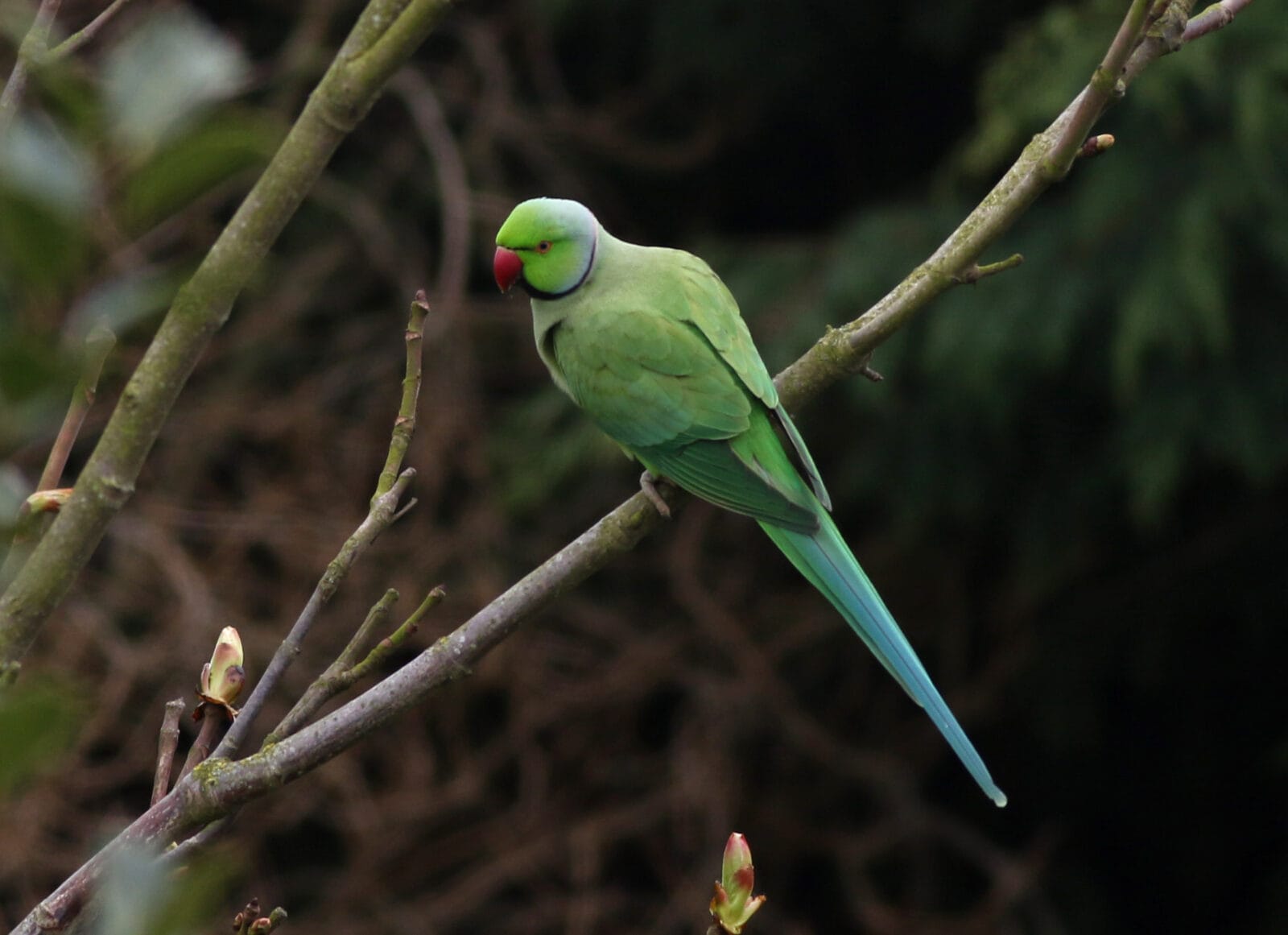
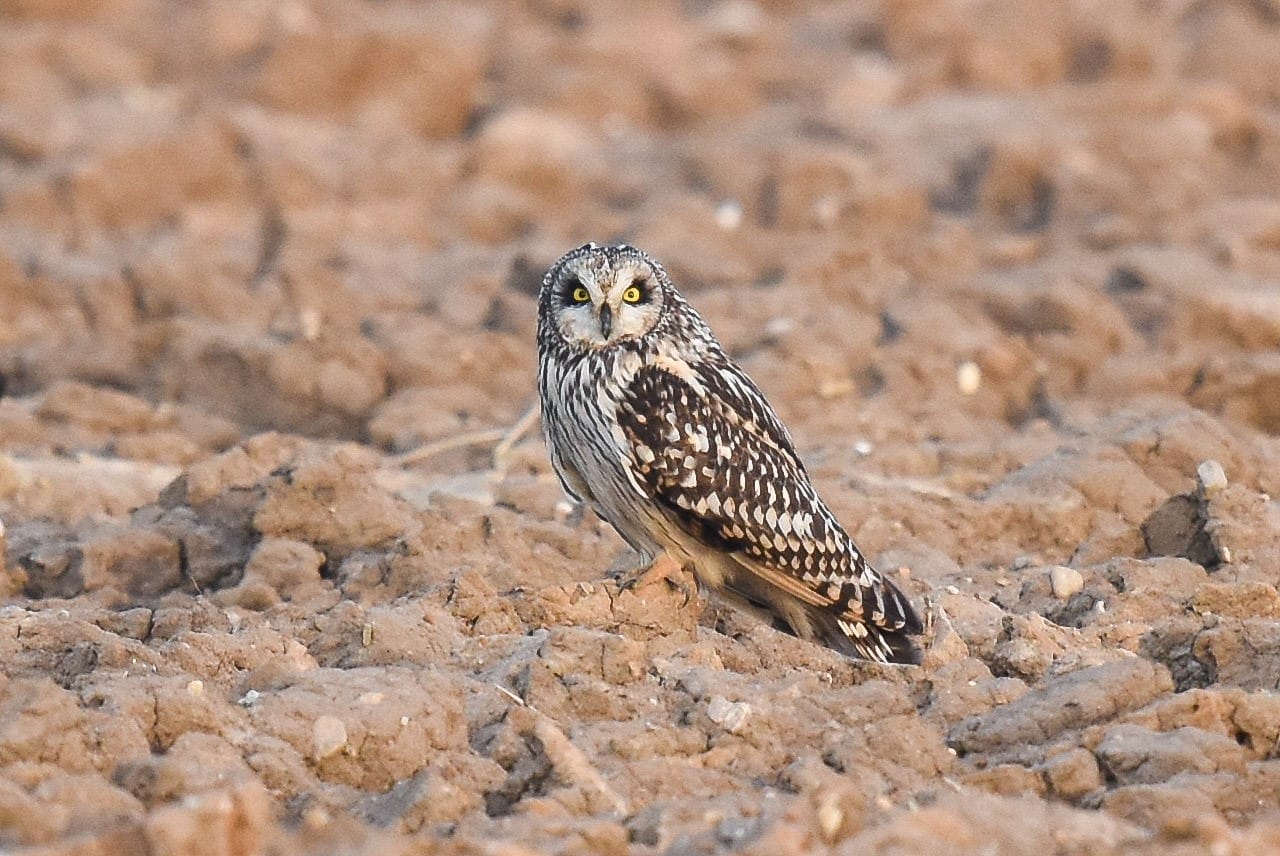
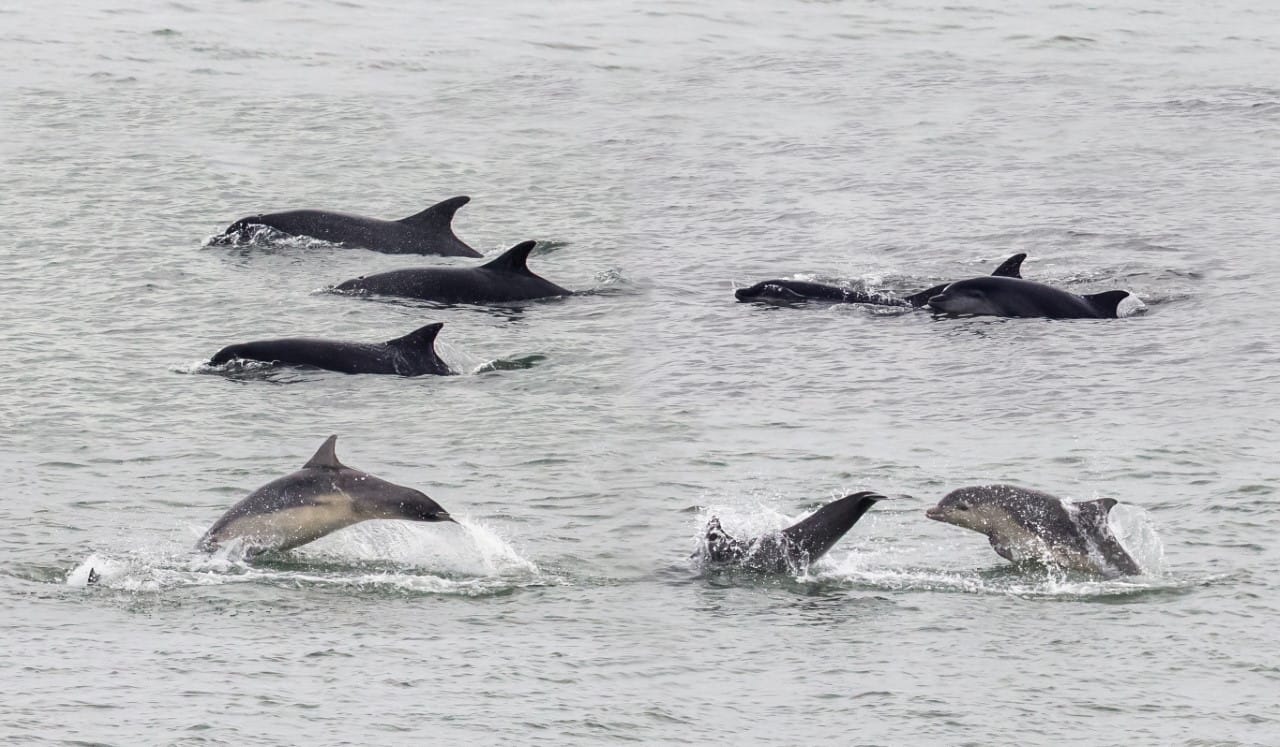
The weather consisted of sunny intervals, light north-west winds and temperatures that peaked at seven degrees C. Three Egyptian Geese flew north past the Seawatch Observatory before u-turning south and eventually settling on flashes adjacent to Water Lane. One Short-eared Owl showed well between Old Fall and South Landing, with a second bird at RSPB Bempton Cliffs. A Ring-necked Parakeet that frequented gardens on the southern edge of the village added to the day’s exotic theme. Elsewhere, the Black Redstart remained in the Gorse Field, whilst 13 Corn Buntings congregated on setaside near Thornwick. The pod of 15 Bottlenose Dolphins swam north past South Landing, the Seawatch Observatory and latterly RSPB Bempton Cliffs.
Egyptian Geese, Water Lane, by Rob LittleEgyptian Geese, Water Lane, by Jo HoodRing-necked Parakeet, Flamborough village, by Craig ThomasShort-eared Owl, South Cliffs, by Andy HoodBottlenose Dolphins, South Landing, by Andrew Allport (composite)
A sunny day, with a moderate north-easterly wind and temperatures reaching a mere seven degrees C. During the seawatch, ten Common Scoters, a Bonxie and 32 Puffins flew north.
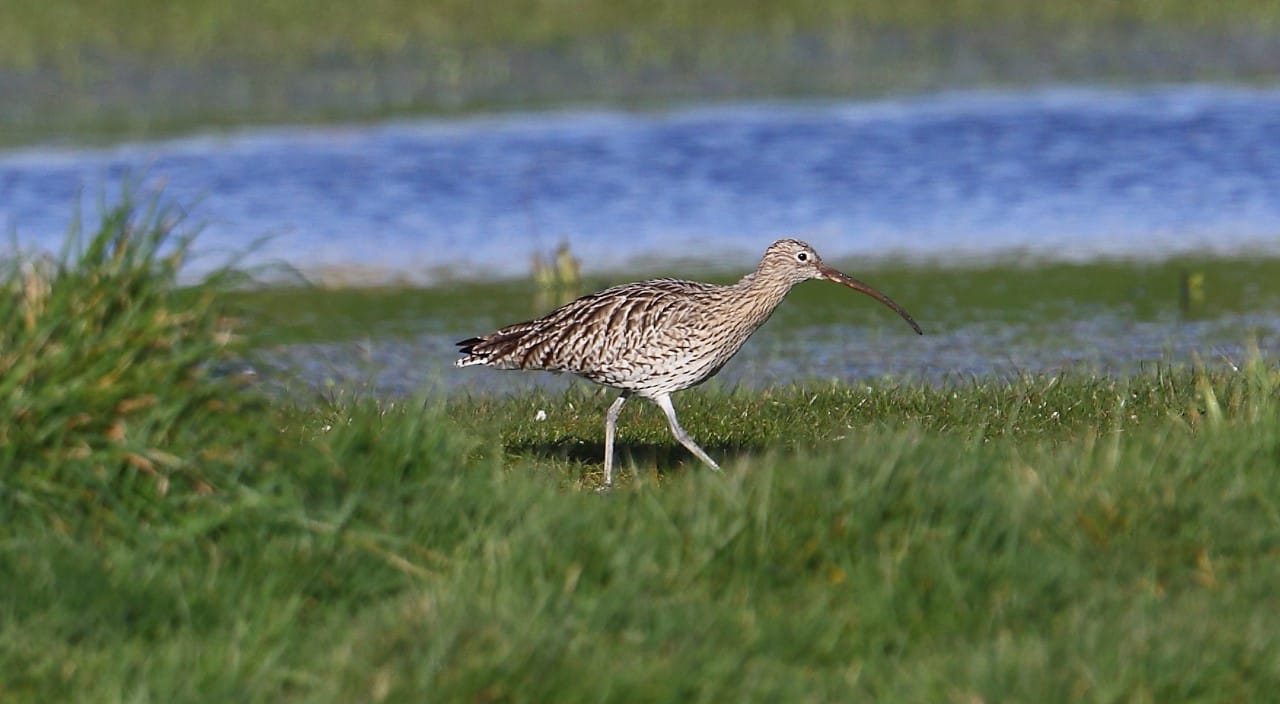
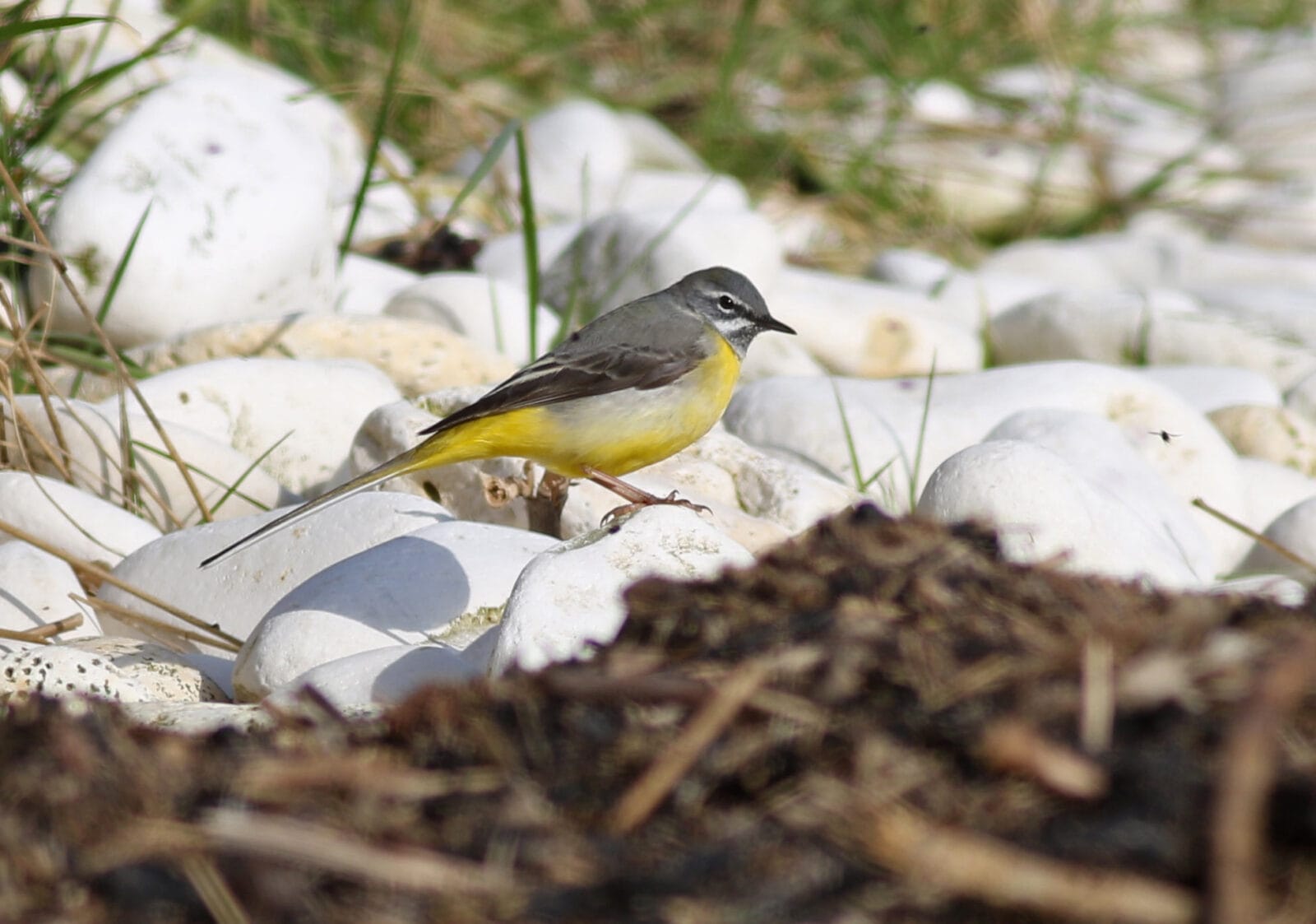
Wildfowl and wader interest included a Pink-footed Goose, 59 Teal (45 North Marsh, 14 Thornwick Pools) and 11 Wigeon, whilst a lone Snipe and 21 Curlew were also located. A singing Cetti’s Warbler discovered early afternoon was still present in Thornwick reedbed (near the cliff top cafe) until dark. Meanwhile, after several days with no sightings, the ever elusive Richard’s Pipit showed again near North Landing. Three Black Redstarts included two birds in the Gorse Field, with the other near the village green. Additional sightings included the year’s first Sand Martin at Thornwick Pools, six Goldcrests, seven Chiffchaffs, two Wheatear on the Golf Course, a Redwing, 16 Pied Wagtails, a Grey Wagtail and a Scandinavian Rock Pipit; the latter at South Landing.
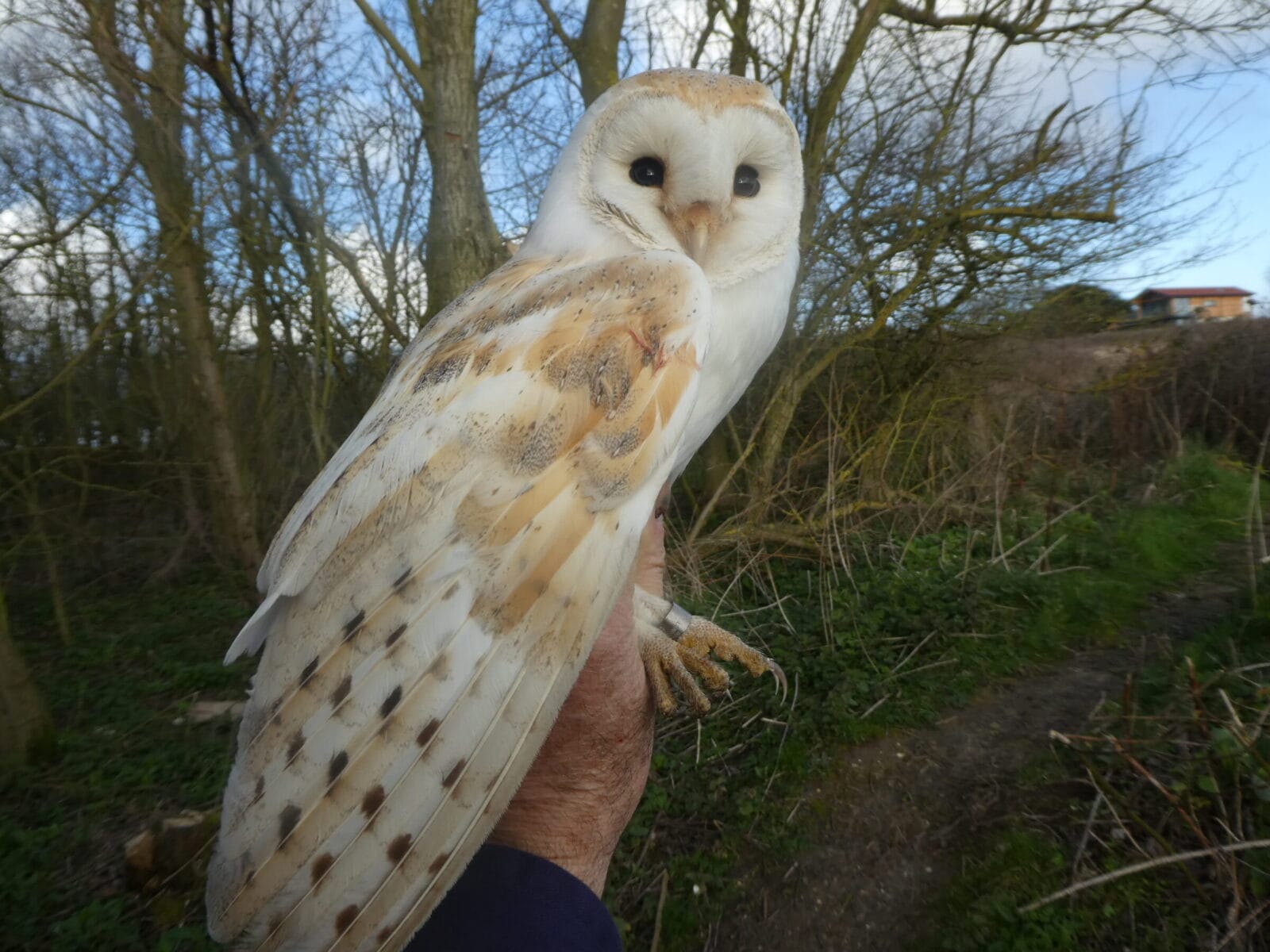
The first ringing session of spring resulted in 24 birds being caught and ringed, including a Barn Owl and three Goldcrests.
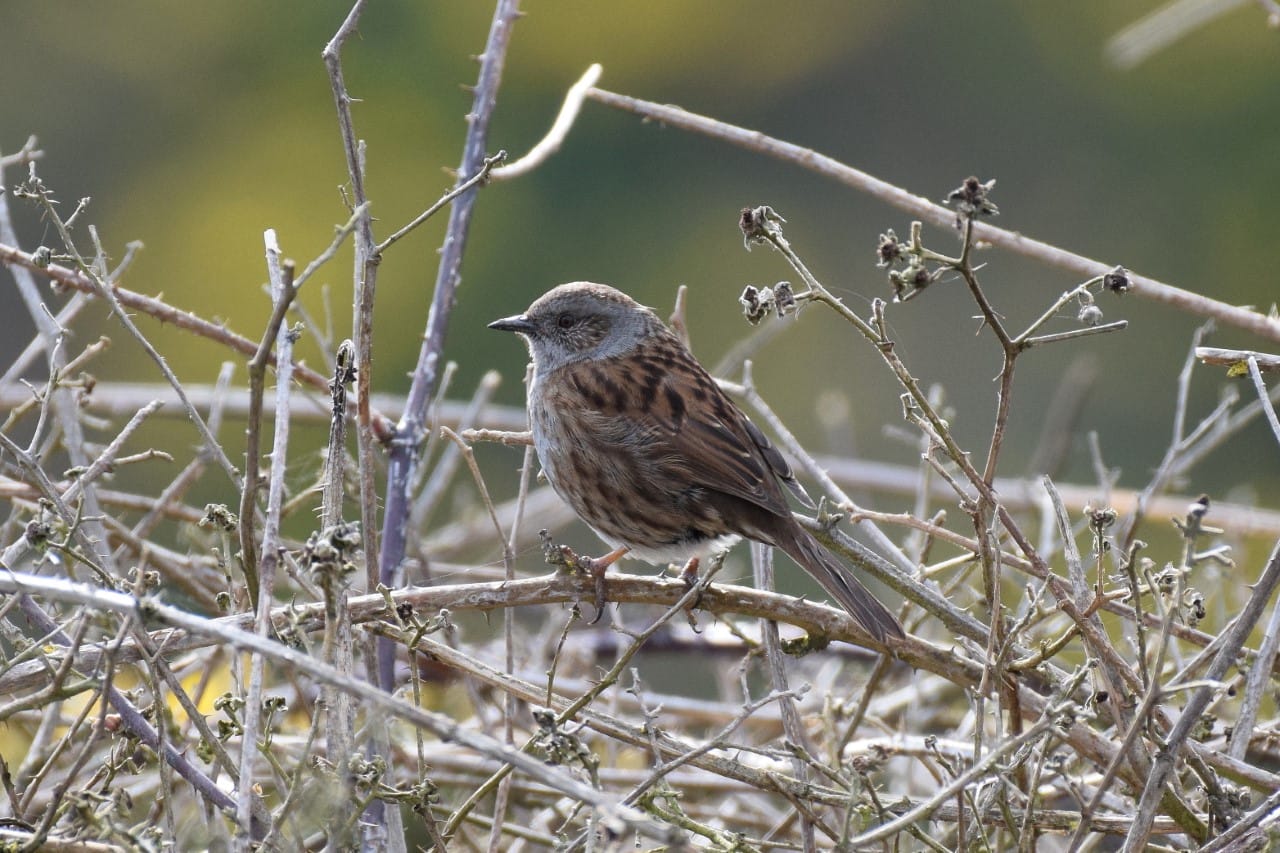
Barn Owl, South Landing, by Jim MorganDunnock, South Landing, by Don Hustings
Moderate/strong east-south-east winds were a feature throughout a day that ended overcast after a bright start; temperatures peaked at nine degrees C late morning, before dropping to six degrees by mid-afternoon. A Grey Plover that flew south during the morning’s seawatch represented the year’s first.
One Pink-footed Goose lingered, 12 Wigeon were on flood near North Marsh and a female Tufted Duck was present on Thornwick Pools; fields north of Thornwick attracted a pair of Grey Partridge. The Cetti’s Warbler relocated to the Thornwick roost reedbed, whilst four Chiffchaffs and eight Goldcrests were also recorded. Four Stonechat were spread across the headland; a pair of which in the Gorse Field showed plumage features associated with the rubicola subspecies found in continental Europe; the same area again hosted a Black Redstart. A male Grey Wagtail frequented the beach at South Landing, the year’s first two White Wagtails were near Old Fall, while 33 Pied Wagtails represented an influx. The Richard’s Pipit continued its stay near North Landing, with a Scandinavian Rock Pipit at South Landing. Twelve Siskins overflew the outer head, 35 Yellowhammers were seen near the Grange, whilst 12 Corn Buntings were at Thornwick. Sightings at Buckton included three Stonechats and Bempton Chalet Park attracted a White Wagtail.
A moderate/strong south-south-east wind, sunny intervals developing after an overcast start and temperatures reaching six degrees C. A typically quiet March seawatch, with two Eiders flying north and a Lesser Black-backed Gull south.
One Pink-footed Goose remained, whilst a Goosander flew south over the headland. Passerine interest included the singing Cetti’s Warbler in the reedbed near Thornwick Bay and a Black Redstart still in the Gorse Field; additional sightings included two rubicola-type Stonechats in the Gorse Field, a Wheatear, two Scandinavian Rock Pipits at South Landing, a Grey Wagtail, 49 Pied Wagtails and a White Wagtail.
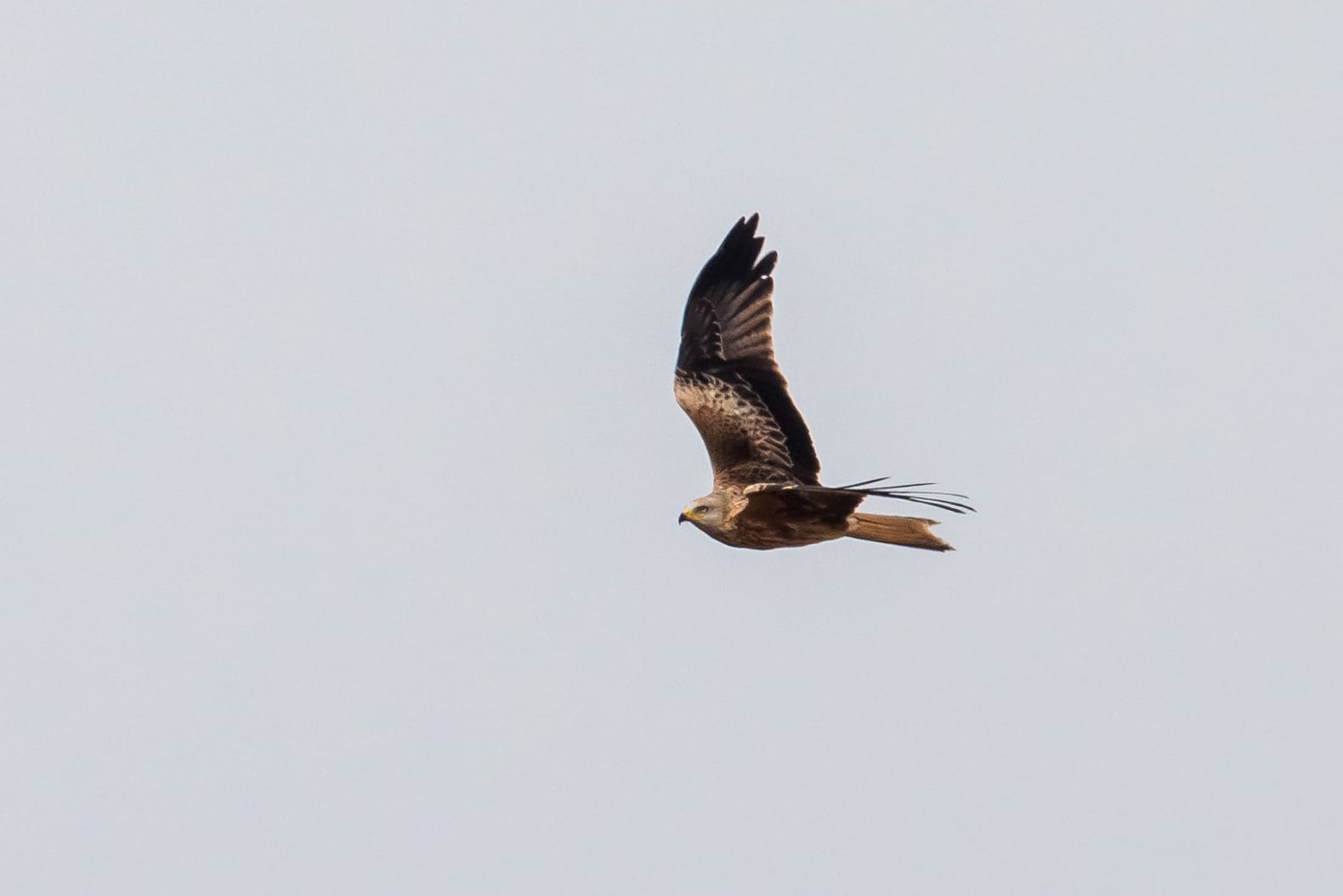
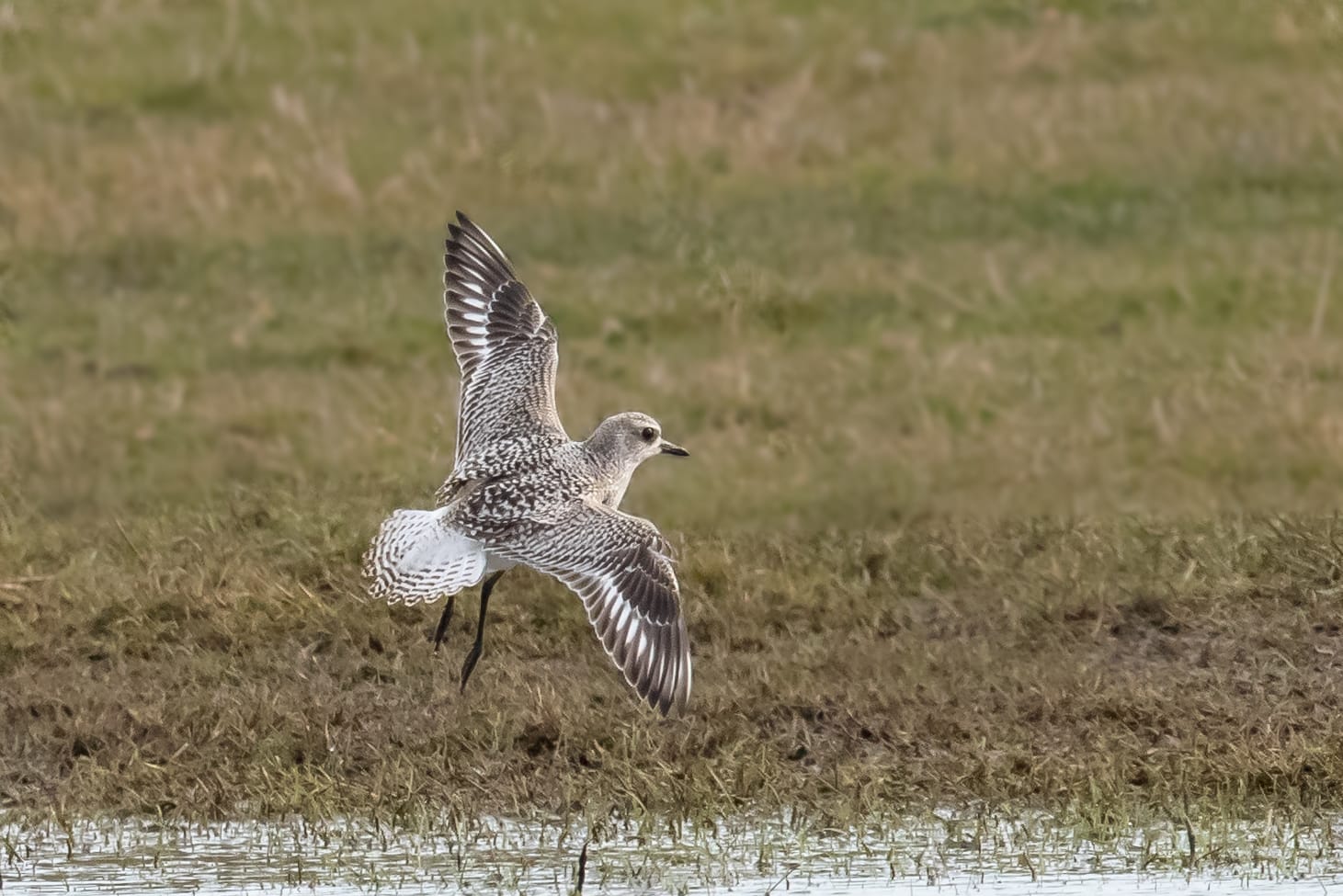
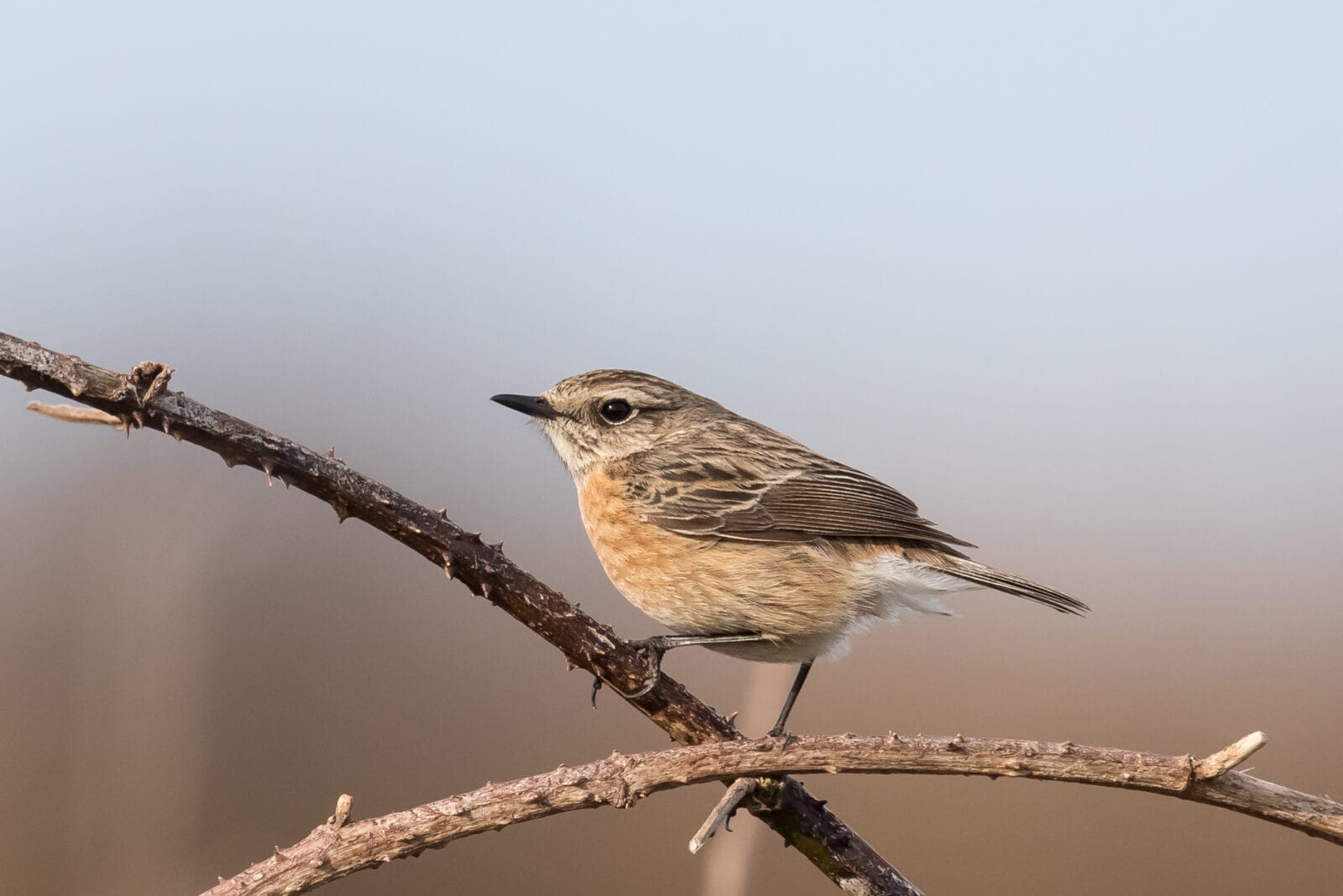
A day that felt cold due to strong south-east winds and temperatures pegged back to seven degrees C, despite sunny intervals. During the morning’s seawatch, two Pintail, 14 Common Scoters, four Little Gulls and two Lesser Black-backed Gulls flew south. Raptor interest was provided by two Marsh Harriers heading south, three Red Kites and a male Merlin, whilst a Grey Plover visited flooded fields. Passerine interest included 2500 Starlings, seven Chiffchaffs, four rubicola-type Stonechats, a Black Redstart, a White Wagtail, four Siskin and 30 Yellowhammers; the latter at Hartendale. Two Goldcrests, a Chiffchaff and 12 Siskin were recorded at Buckton.
Red Kite, outer head, by Andrew AllportGrey Plover, outer head, by Andrew AllportStonechat, High Holme, by Andrew AllportStarling, Lighthouse Road, by Phil Buxton
The following only summarises the records from our resident birders’ health walks and garden sightings; consequently, it provides a mere snapshot of the true scale of spring migration.
A largely sunny day, with a moderate/strong south-south-westerly wind and temperatures that rose markedly during the afternoon to a peak of 12 degrees C. During the morning’s seawatch, six Eider, two Great Crested Grebes, 55 Black-headed Gulls and 132 Common Gulls flew south.
A Little Ringed Plover that visited Thornwick Pools was the first of spring. Two Black Redstarts frequented the outer head and 1000 Starlings gathered at North Landing; Hartendale attracted a Brambling and 30 Yellowhammers.
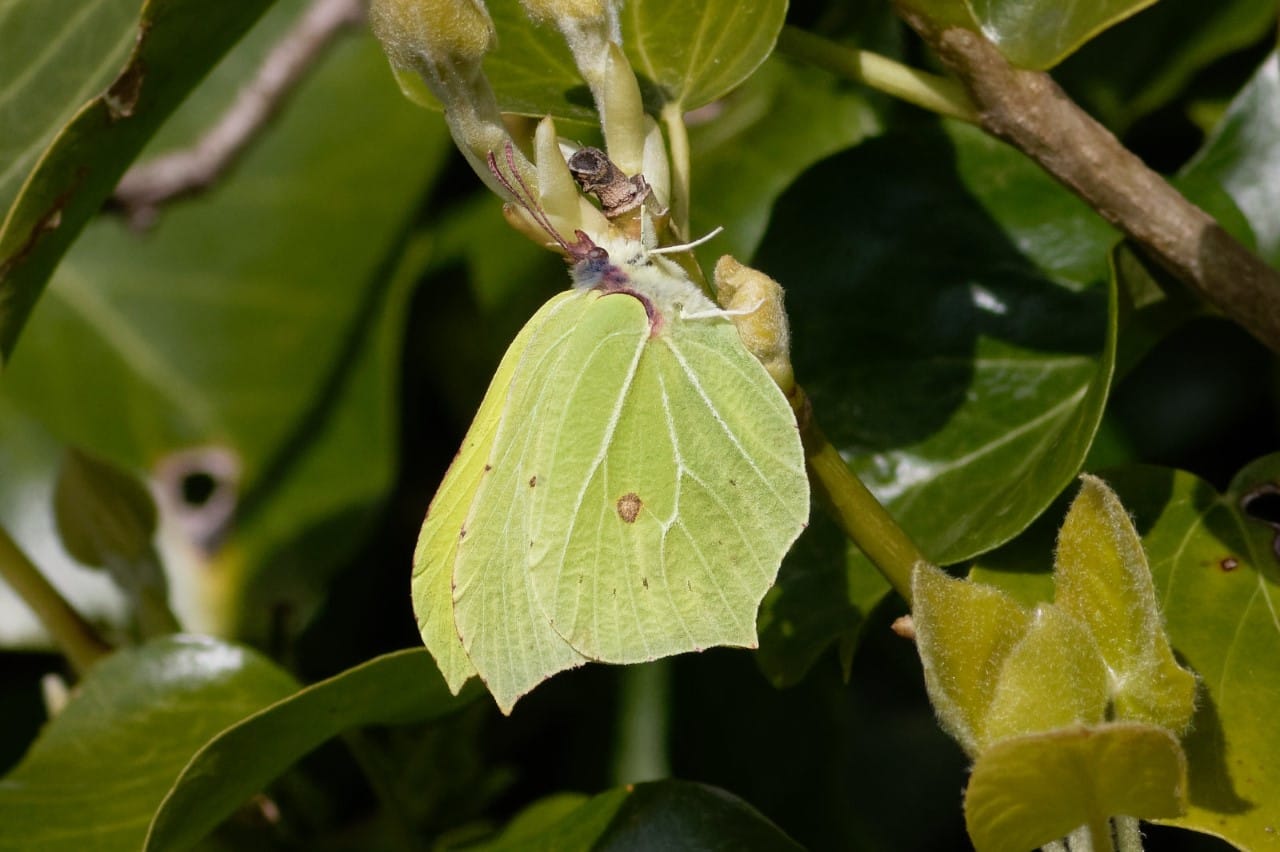
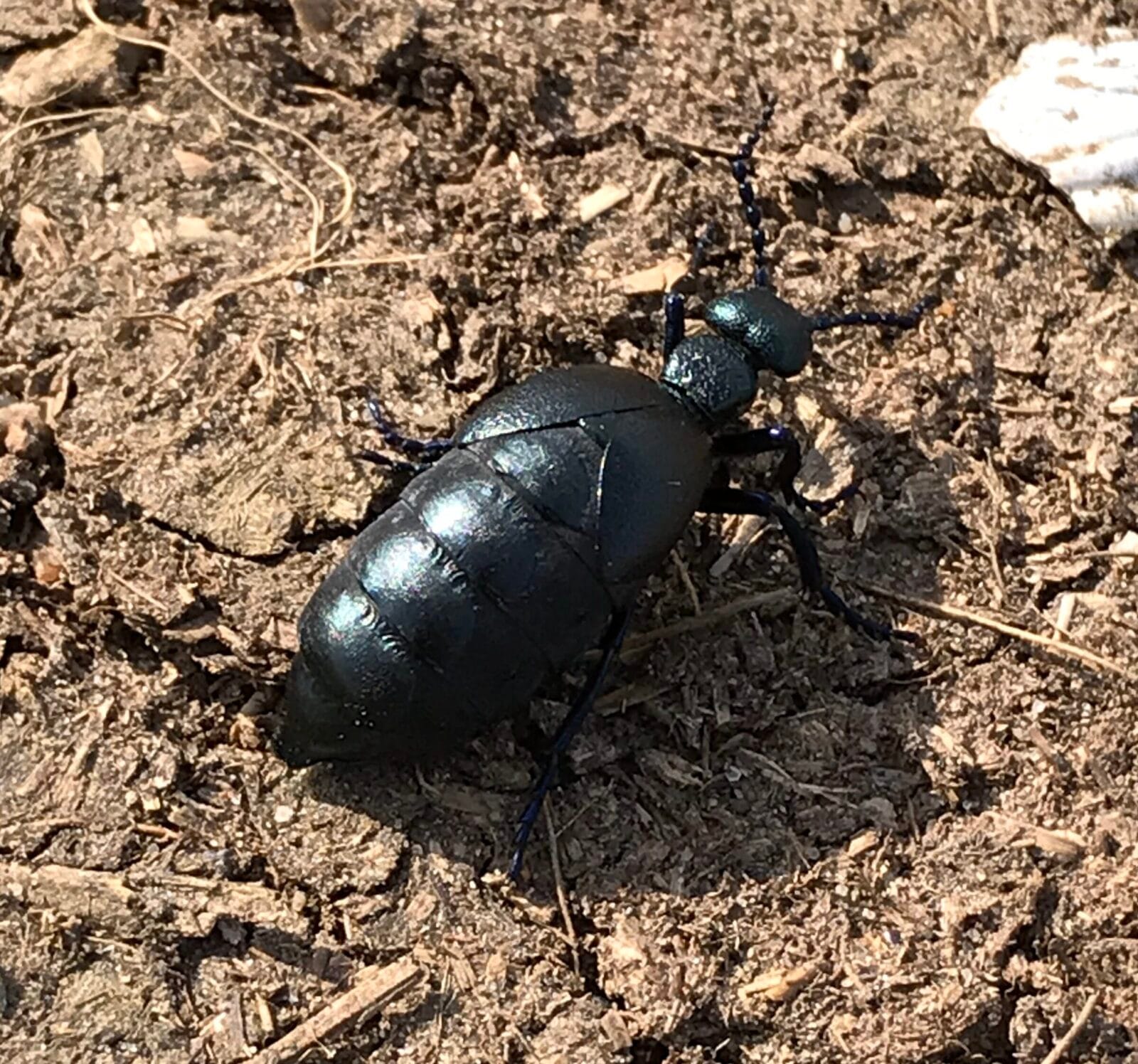
Brimstone, South Landing, by Rob LittleBlack Oil Beetle, Flamborough, by Jo Hood
The following only summarises the records from our resident birders’ health walks and garden sightings; consequently, it provides a mere snapshot of the true scale of spring migration.
Moderate winds initially from the south-west backed south-east during the afternoon; sunny skies throughout, with temperatures reaching ten degrees C. An adult Mediterranean Gull provided the highlight of the morning’s seawatch; only the second of the year.
A Pink-footed Goose remained on the headland, as did 12 Wigeon, four Grey Herons and two Grey Partridge. A Red Kite flew south-west over the outer head mid-morning. Passerine interest included the year’s first Swallow, a Nuthatch, ten Chiffchaff, nine Redwing, three Black Redstarts, a Wheatear, three White Wagtails, two Siskin, 60 Yellowhammers and 12 Corn Buntings.
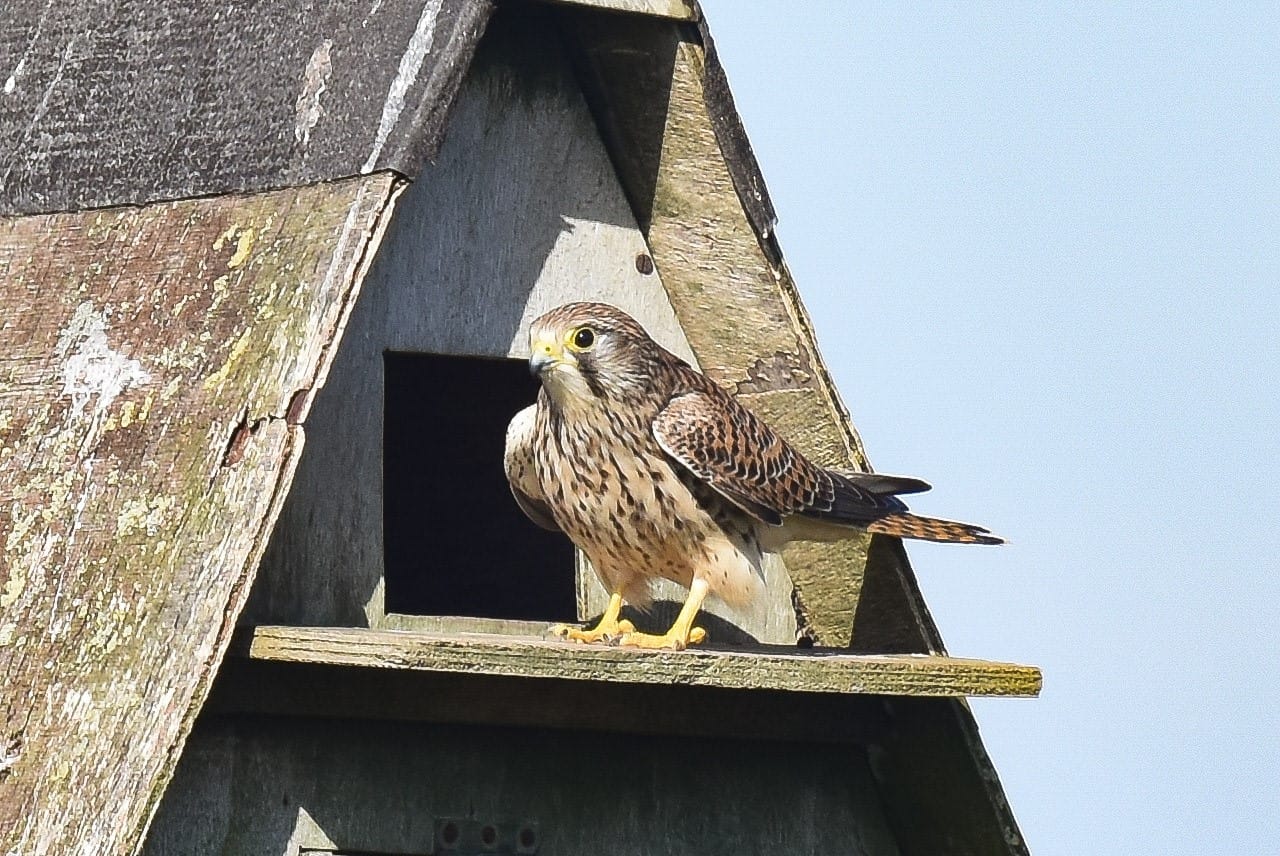
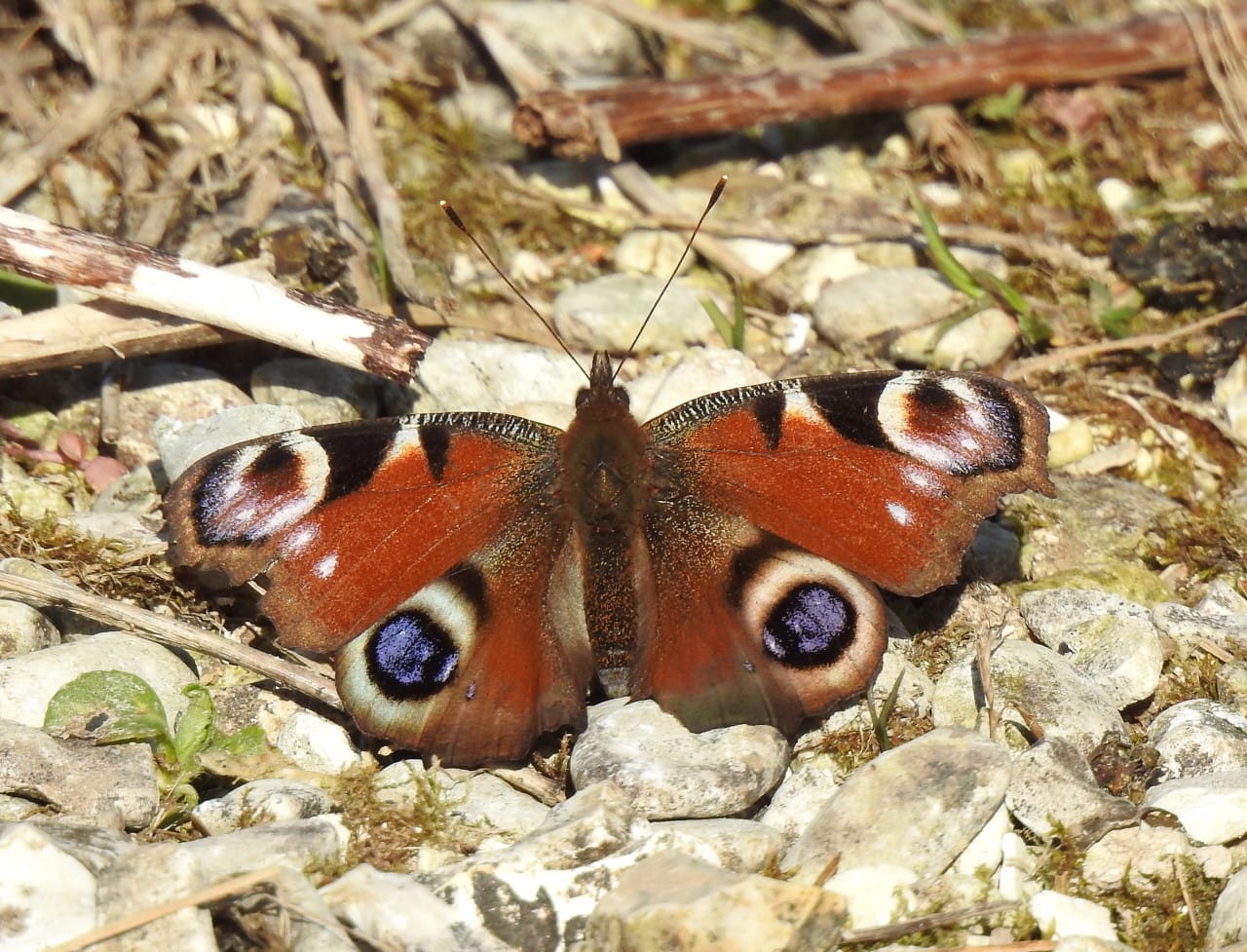
Kestrel, Oceanview, by Andy HoodPeacock, Thornwick, by Brett Richards
The following only summarises the records from our resident birders’ health walks and garden sightings; consequently, it provides a mere snapshot of the true scale of spring migration.
Sunny throughout, with a light easterly wind and temperatures that peaked ten degrees C. During the morning’s seawatch, eight Pale-bellied Brent Geese, seven Eider, a Manx Shearwater and 290 Common Gulls flew south.
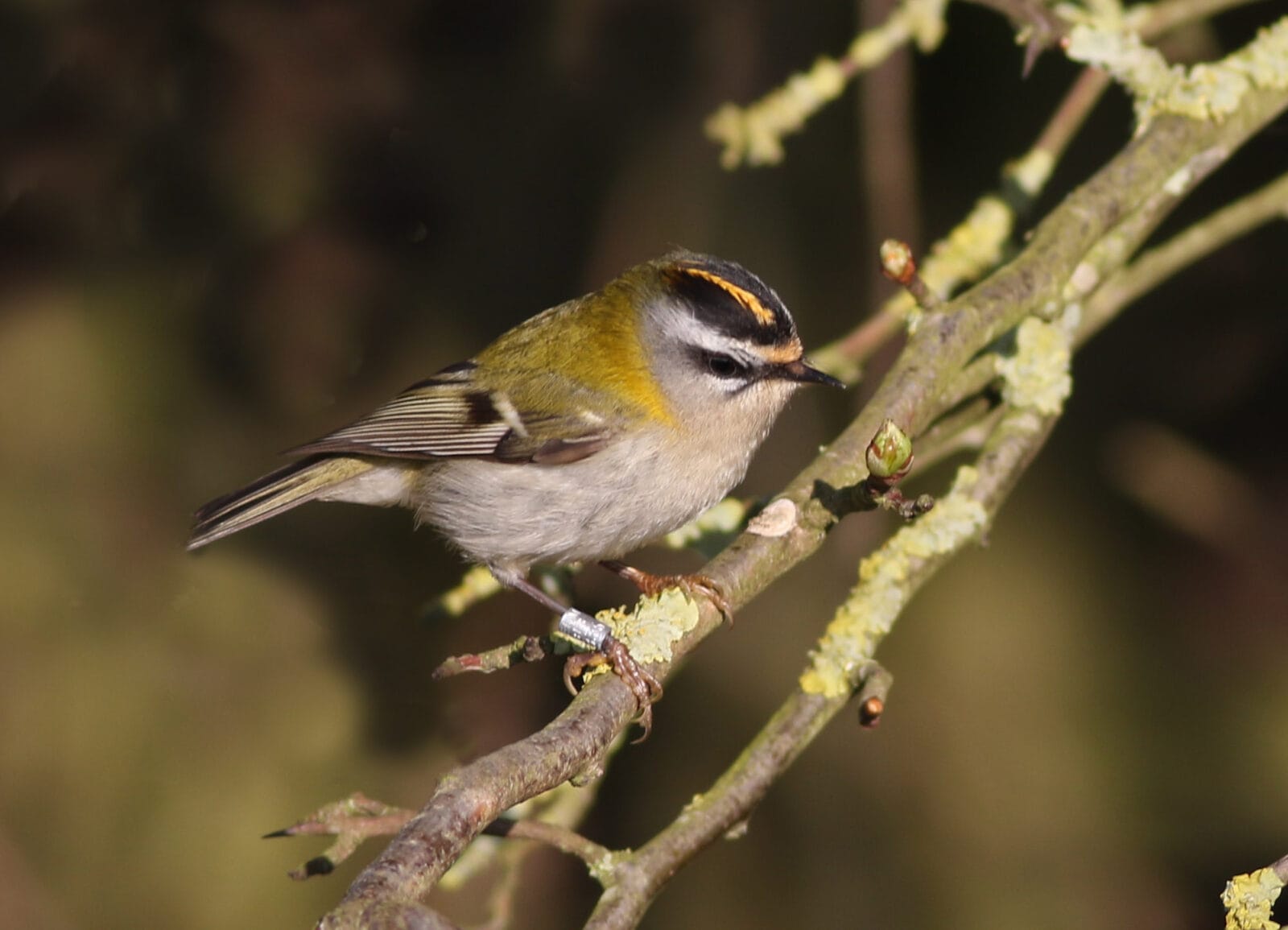
On the headland, migrants included five Snipe, nine Chiffchaffs,the year’s first two Firecrests, five Goldcrests, five Redwing, a Fieldfare, four Black Redstarts, two Stonechats, a Wheatear and three White Wagtails. The long-staying Richard’s Pipit remained near North Landing, with additional sightings including two Brambling, two Siskin and a Snow Bunting.
The following only summarises the records from our resident birders’ health walks and garden sightings; consequently, it provides a mere snapshot of the true scale of spring migration.
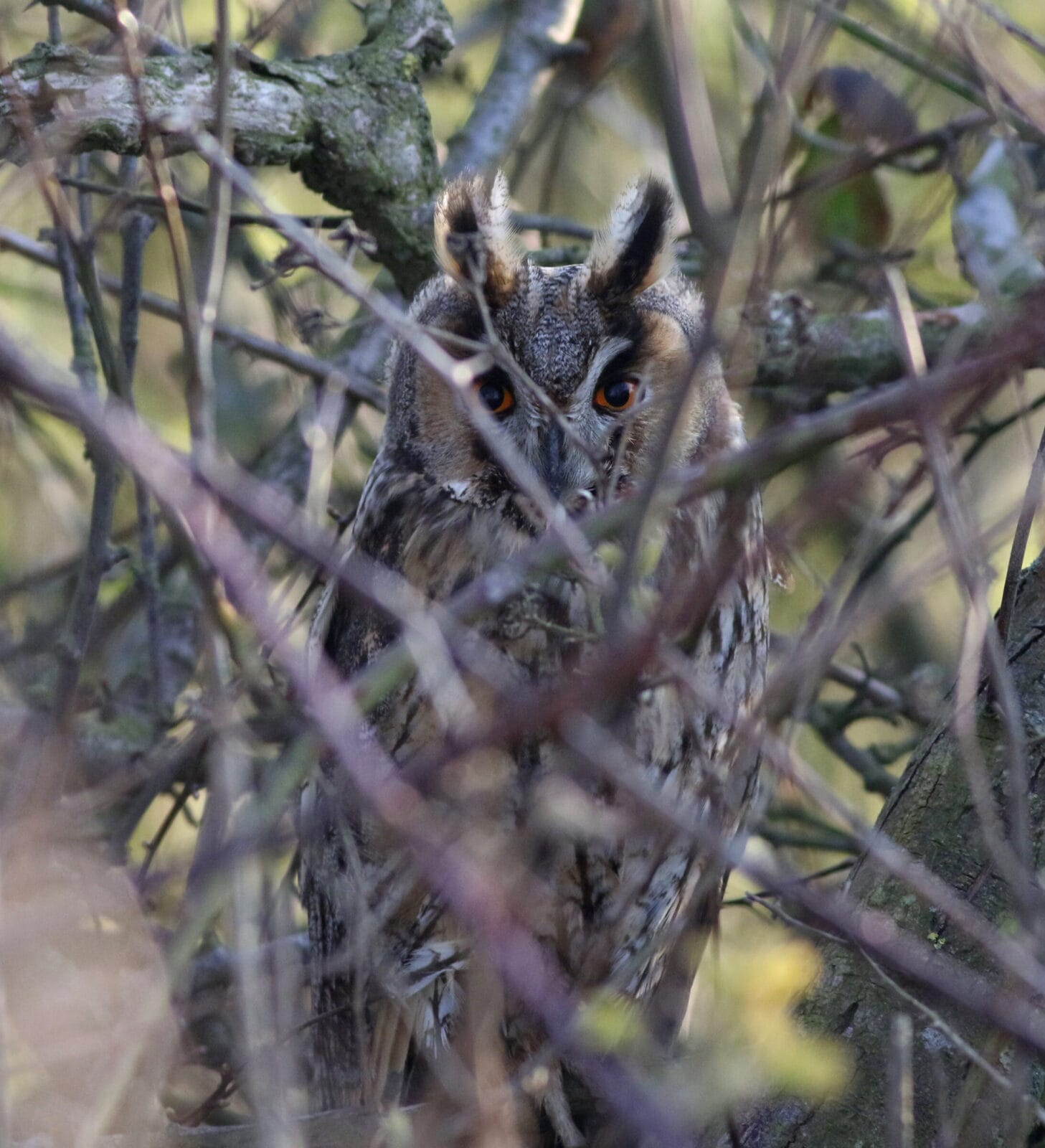
Sunny throughout, with a light/moderate north-easterly wind and temperatures that peaked at eight degrees C. Sightings included two pairs of Shelduck, 46 Teal, 12 Wigeon, two Snipe and a Jack Snipe. A typical early spring migrant, a Long-eared Owl was new for the year. Additional records included six Chiffchaff, a Firecrest (new individual), two Fieldfare, two Black Redstarts and a Brambling. Fifteen Bottlenose Dolphins lingered off the south side of the headland during the morning.
Long-eared Owl, Flamborough, by Craig ThomasBottlenose Dolphin, South Cliffs, by Craig Thomas
The following only summarises the records from our resident birders’ health walks and garden sightings; consequently, it provides a mere snapshot of the true scale of spring migration.
The main feature of the weather were strong northerly winds, coupled with sunny intervals and temperatures that reached eight degrees C. During the seawatch, two Common Scoter and four Puffins flew south, a Knot lingered on the outer head; there were relatively few auks in residence, with none on the cliffs. A pod of at least eight Bottlenose Dolphins swam south and three Eider sheltered off South Landing.
A lone Pink-footed Goose accompanied the Greylags and Thornwick Pools attracted 14 Teal and a Snipe. However, passerine migrants were thin on the ground due to the conditions, with two Chiffchaffs, one Goldcrest and a Stonechat meagre pickings.
The following only summarises the records from our resident birders’ health walks and garden sightings; consequently, it provides a mere snapshot of the true scale of spring migration.
Force seven north-north-east winds, temperatures that barely reached seven degrees C and occasional hail/sleet showers; it felt a long way from spring. During the morning’s seawatch, three Common Scoter, 246 Fulmars, a Manx Shearwater and a Bonxie all flew north. Thornwick Pools hosted a Shelduck, 13 Teal and a Snipe. Elsewhere, a Scandinavian Rock Pipit remained along the North Cliffs.
The following only summarises the records from our resident birders’ health walks and garden sightings; consequently, it provides a mere snapshot of the true scale of spring migration.
Strong north-westerly winds again featured during an overcast day with temperatures reaching eight degrees C. During the morning’s seawatch, 261 Fulmars and a Manx Shearwater flew north; only a single Puffin was seen. Bottlenose Dolphins appear to be in semi-residence, with at least ten present offshore; presumably the sightings relate to the pod of 15 present over recent weeks.
A Great White Egret visited Northcliff Marsh late morning. Passerine interest included two Mistle Thrushes and nine Chiffchaff.
The following only summarises the records from our resident birders’ health walks and garden sightings; consequently, it provides a mere snapshot of the true scale of spring migration.
An overcast day, with light north-north-east winds and temperatures that only reached six degrees C. Highlights of the morning seawatch included five Eider, a Blue Fulmar, one Lesser Black-backed Gull and 40 Puffins flying north. Sightings on the headland included a Pink-footed Goose, six Common Buzzards, a Goldcrest, seven Chiffchaffs, a Blackcap, two Nuthatch, a Black Redstart, one Grey Wagtail, 54 Meadow Pipits and 33 Yellowhammers.
The following only summarises the records from our resident birders’ health walks and garden sightings; consequently, it provides a mere snapshot of the true scale of spring migration.
An overcast day, with a light west-north-west wind and temperatures that reached eight degrees C. The morning’s seawatch was quiet, with two Eider and a Lesser Black-backed Gull flying north. Auks were back in force after the clear out earlier in the week due to the northerly gales; 172 Puffins were recorded off the North Cliffs.
Four Goosander flew ‘north’ past South Landing, with a Red-breasted Merganser on the sea off Hartendale. Notable sightings on the headland itself included two Water Rails together, two Snipe, a Hooded Crow, three Goldcrests, five Chiffchaff, a Blackcap, a Black Redstart and five White Wagtails.
Two Grey Partridges and two Snipe were noted at Buckton, whilst a Sand Martin flew east at Sewerby.
The following only summarises the records from our resident birders’ health walks and garden sightings; consequently, it provides a mere snapshot of the true scale of spring migration.
A south-westerly wind strengthened during a day of sunny intervals and temperatures peaking at 13 degrees C by mid-afternoon. Overnight, six flocks of Common Scoters overflew the village from 2240hrs on 1st onwards; Wigeon, Teal, Coot, Snipe and Redwing were also recorded during the same ‘nocmig’ session.
During this morning’s seawatch, a Goosander flew north and 73 Puffins headed south; the Red-breasted Merganser also lingered off Hartendale. Thornwick Pools attracted five Shelduck, ten Teal, two Coot and two Little Ringed Plovers. Two Marsh Harriers frequented the outer head, with additional sightings including a Hooded Crow, one Goldcrest, four Chiffchaffs, a Black Redstart, five White Wagtails, 35 Yellowhammers and three Corn Buntings.
Two Grey Partridges and six displaying Lapwing were seen along Cliff Lane, Bempton.
The following only summarises the records from our resident birders’ health walks and garden sightings; consequently, it provides a mere snapshot of the true scale of spring migration.
The weather consisted of sunny intervals, but also prolonged overcast skies, with a light/moderate westerly wind and temperatures reaching 11 degrees C after a cold start. The previous evening seven flocks of Common Scoter headed over the village from 2227-2249hrs.
Single Eider and Goosander flew south during this morning’s seawatch, whilst an estimated 15-20 Bottlenose Dolphins lingered off the headland. Elsewhere, sightings included a single Pink-footed Goose, the Red-breasted Merganser, three Shelduck, 33 Teal, a Marsh Harrier, 14 Curlew, one Hooded Crow, three Redwing, one Fieldfare, a singing Firecrest, six Goldcrest, 15 Chiffchaffs, four Black Redstarts, a White Wagtail and a singing Corn Bunting.
The following only summarises the records from our resident birders’ health walks and garden sightings; consequently, it provides a mere snapshot of the true scale of spring migration.
Winds remained light throughout, backing south-south-east after starting south-westerly; there were prolonged sunny intervals and temperatures reached 11 degrees C. Single Manx Shearwater and Lesser Black-backed Gull flew north during the morning’s seawatch.
Single Red-breasted Merganser and Great Crested Grebe loafed on the sea off Hartendale, whilst two Little Ringed Plovers and a Redshank frequented Thornwick Pools. A juvenile Iceland Gull along the South Cliffs represented the day’s highlight. There was also evidence of an increase in migrants with a Swallow, seven Chiffchaffs split between South Landing and Old Fall alone, three Blackcaps, 11 Fieldfare, five Redwing and four Wheatear.
The following only summarises the records from our resident birders’ health walks and garden sightings; consequently, it provides a mere snapshot of the true scale of spring migration.
A sunny day, with a moderate south-easterly wind and temperatures reaching ten degrees C. Sightings included the long-staying Red-breasted Merganser and Pink-footed Goose, one Water Rail and a Golden Plover. A further increase in spring migrants was apparent, with: four Swallows, four Sand Martins, a Hooded Crow, three Goldcrests, 13 Chiffchaff, three Blackcap, two Fieldfare, the first Ring Ouzel of the year, a Black Redstart and three Wheatear.
Another Hooded Crow frequented fields alongside Cliff Lane, Bempton.
The following only summarises the records from our resident birders’ health walks and garden sightings; consequently, it provides a mere snapshot of the true scale of spring migration.
A spring-like day, with moderate south-westerly winds, prolonged sunny intervals and temperatures reaching 16 degrees C. During the seawatch, 11 Teal and a Manx Shearwater flew north, whilst 11 Common Scoter, two Knot and five Lesser Black-backed Gulls headed south; 19 Purple Sandpipers were still in residence on rocks near the Fog Station.
The day’s most notable record related to a drake Garganey that graced the headland, together with a male Marsh Harrier. The warmer conditions initiated an influx of hirundines, involving eight Swallows, eight House Martins (first of the year) and three Sand Martins. Further passerine sightings included 20 Chiffchaff, three Blackcap, single Fieldfare and Redwing, eight Wheatear, the year’s first Yellow Wagtail, two Siskin, one Brambling, a Lapland Bunting and one Corn Bunting.
The Hooded Crow remained on Cliff Lane, Bempton.
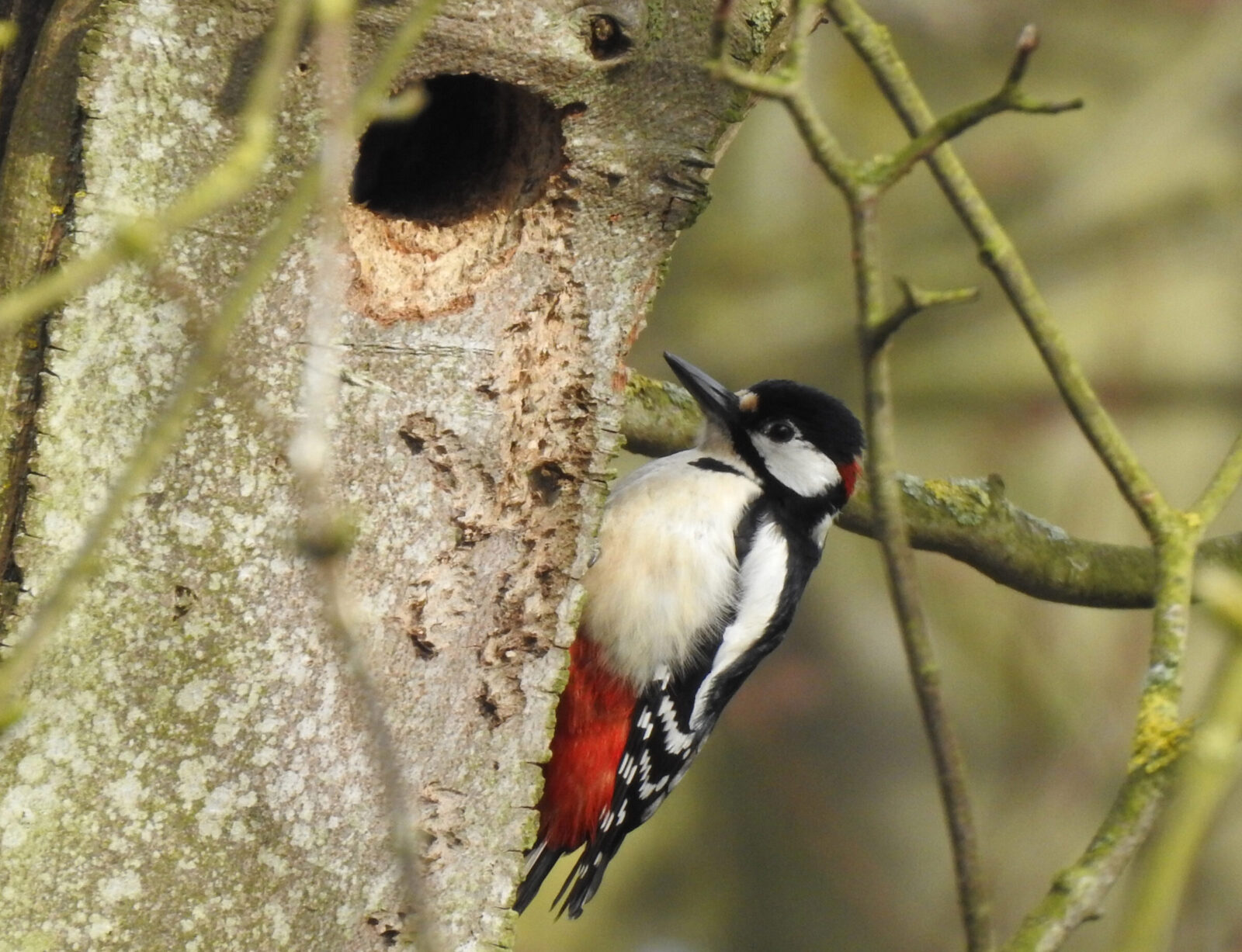
Great Spotted Woodpecker, Flamborough, by Brett Richards
The following only summarises the records from our resident birders’ health walks and garden sightings; consequently, it provides a mere snapshot of the true scale of spring migration.
A sunny day, with a moderate south-easterly wind developing in the afternoon and temperatures reaching 12 degrees C. During the morning’s seawatch, four Eider and 32 Common Scoters flew south. The semi-resident pod of 15 Bottlenose Dolphins also re-appeared off the outer head.
A Red Kite overflew Mid-Dykes late morning, but it was the arrival of migrant passerines that provided the most interest. Totals included 17 Sand Martins, four Swallows, a Firecrest, nine Goldcrests, 11 Willow Warblers, 42 Chiffchaffs, 39 Blackcap, a reeling Grasshopper Warbler, a Ring Ouzel, nine Redwing, three Fieldfare, male Common Redstart, a Black Redstart and three Wheatear.
The following only summarises the records from our resident birders’ health walks and garden sightings; consequently, it provides a mere snapshot of the true scale of spring migration.
A light, variable wind eventually backed south-east during the afternoon; sunny intervals throughout and temperatures reached 14 degrees C. The standout of the morning’s seawatch related to the year’s first Sandwich Tern that flew north.
Sightings on the headland included a Little Grebe, six Teal, two Little Ringed Plovers, a Snipe, eight Sand Martins, a Swallow, three Goldcrests, nine Willow Warbler, 18 Blackcap, 25 Chiffchaff, a Ring Ouzel, two Wheatear, a Yellow Wagtail and the year’s first Hawfinch. A Wheatear was present at Buckton, with a Ring Ouzel along Cliff Lane, Bempton.
The following only summarises the records from our resident birders’ health walks and garden sightings; consequently, it provides a mere snapshot of the true scale of spring migration.
A cold day, with temperatures only reaching eight degrees C by mid-day in light/moderate north-easterly winds; the morning was foggy, with mist prevailing until mid-afternoon. Two Shelduck and eight Common Scoters flew north during the morning’s seawatch; Bottlenose Dolphins showed well off the South Cliffs once more.
There were relatively few noteworthy sightings on the headland, partially as a result of the reduced visibility during the morning, but it was also obvious that many migrants had cleared out. Five Eider were off South Dykes, whilst a Whimbrel that flew north was new. Passerine migrants included a House Martin, three Willow Warblers, three Blackcaps, a Wheatear and a Yellow Wagtail.
The following only summarises the records from our resident birders’ health walks and garden sightings; consequently, it will be a mere snapshot of the true scale of spring migration.
The weather consisted of cold south-south-easterly winds, mainly overcast skies, with temperatures increasing during the afternoon to a high of ten degrees C. Seven Red-throated Divers, nine Sandwich Terns and only 11 Puffins were recorded during the morning’s seawatch.
Elsewhere, sightings included a Pink-footed Goose, one Little Grebe, a creamcrown Marsh Harrier, one Ringed Plover, two Little Ringed Plovers, a Whimbrel, one House Martin, 22 Sand Martins, a Swallow, a Redwing, three Ring Ouzels, one Wheatear, a pair of Stonechat, a male Common Redstart and a White Wagtail.
The following only summarises the records from our resident birders’ health walks and garden sightings; consequently, it provides a mere snapshot of the true scale of spring migration.
After an overcast start and showers at first light, prolonged sunny intervals developed and temperatures reached 15 degrees C; winds remained light and variable, although an onshore breeze developed mid-afternoon.
Highlight of the morning’s seawatch included a Jack Snipe flying south and a second calendar-year Glaucous Gull moving north. Sightings from the headland included a drake Garganey, three Gadwall, a Little Grebe, two Lapwing, two Golden Plover and one Dunlin. The warmer weather prompted an arrival of passerines: five House Martins, two Swallows, a Hooded Crow, three Goldcrests, 40 Willow Warblers, three Ring Ouzels, 21 Redwing, 22 Fieldfare, ten Wheatear, a Tree Pipit, four Yellow Wagtails, two Brambling and a Hawfinch.
The following summarises only the records from our resident birders’ health walks and garden sightings; consequently, it provides a mere snapshot of the true scale of our spring migration.
A sunny and calm start to the day, although cloud built from mid-morning and a moderate northerly wind established; temperatures reached 12 degrees C. During the seawatch the year’s first six Common Terns flew north; four Red-throated Divers and 14 Sandwich Terns were also recorded.
Notable sightings on the headland included a drake Garganey, a pair of Pintail flying north, one Green Sandpiper, a Ring-necked Parakeet, 13 Swallows, 15 Sand Martins, four House Martins, 18 Willow Warblers, the year’s first Sedge Warbler, one Hooded Crow, four Ring Ouzels, two Fieldfare, one Redwing, a Common Redstart, 23 Wheatears, five Yellow Wagtails, a Siskin and two Corn Buntings.
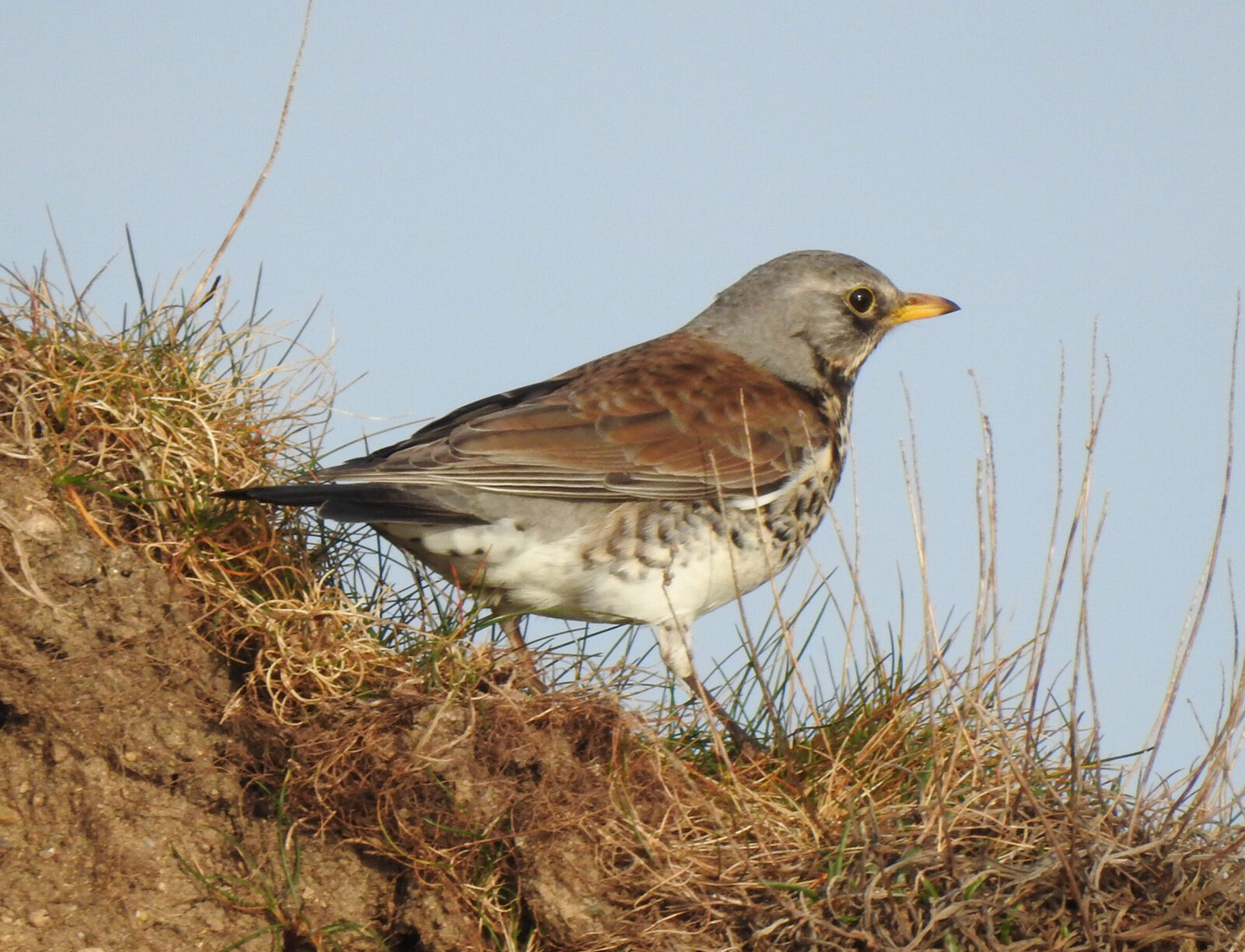
Fieldfare, Flamborough, by Brett RichardsRing Ouzel, Flamborough, by Brett Richards
The following summarises only the records from our resident birders’ health walks and garden sightings; consequently, it provides a mere snapshot of the true scale of our spring migration.
An overcast and cold day, with a strong north-north-east wind and temperatures reaching a mere six degrees C by late morning. Four Red-throated Divers, two Manx Shearwaters and five Sandwich Terns were recorded during the seawatch. In addition, a dark-bellied Brent Goose flew north past the North Cliffs, whilst a Water Rail lingered. Passerine interest in difficult conditions included three Hooded Crows and two Wheatears.
The following summarises only the records from our resident birders’ health walks and garden sightings; consequently, it provides a mere snapshot of the true scale of our spring migration.
A largely sunny day after an overcast start, with a light/moderate north-west wind and temperatures that peaked at eight degrees C. Seawatch highlights included a Goosander, four Red-throated Divers, 233 Fulmars, a Manx Shearwater and four Sandwich Terns flying north; a Common Tern headed south.
Sightings on the headland included one House Martin, two Swallows, a Hooded Crow, three Goldcrests, 22 Willow Warblers, a Sedge Warbler, three Redwing, a Ring Ouzel, one Wheatear, a Grey Wagtail, one Yellow Wagtail and a Brambling. In addition, a Swallow, two House Martins and 17 Sand Martins were recorded between Sewerby and South Dykes.
Late news concerns the exciting discovery of a Large Tortoiseshell butterfly photographed on the southern side of the headland on 12th April; part of an influx of this migratory species into southern England, this represents the most northerly record by some distance.
The following summarises only the records from our resident birders’ health walks and garden sightings; consequently, it provides a mere snapshot of the true scale of our spring migration.
A sunny day, with light south-west winds and temperatures peaking at 14 degrees C. Sightings included a Little Grebe, one Water Rail, a Jack Snipe, 56 Sand Martins, a Redwing, male Common Redstart, two Wheatears and two White Wagtails. Highlights from Buckton/Bempton included a Short-eared Owl, two Grey Partridges and two Ring Ouzels.
The following summarises only the records from our resident birders’ health walks and garden sightings; consequently, it provides a mere snapshot of the true scale of our spring migration.
The weather consisted of relatively light northerly winds, sunshine throughout with temperatures reaching ten degrees C. During the seawatch, a Manx Shearwater, four Sandwich Terns and 58 Puffins flew north, with a Common Tern moving in the opposite direction.
Away from the sea, notable records included a drake Garganey, one Little Grebe, two Avocet, a Bar-tailed Godwit, one Green Sandpiper, two Grasshopper Warblers, the year’s first three Common Whitethroats, two Fieldfare, three Wheatear, two Common Redstarts, two Yellow Wagtail and three Brambling. The scale of arrival of migrant warblers over the last week was evident in 13 singing Blackcaps, 16 Chiffchaffs and 17 Willow Warblers being located between Mid and North Dykes.
The following summarises only the records from our resident birders’ health walks and garden sightings; consequently, it provides a mere snapshot of the true scale of our spring migration.
A day of moderate easterlies, sunny intervals and temperatures that peaked at ten degrees C. During the seawatch, a Blue Fulmar flew north and other notable sightings included ten Eider, 14 Sandwich Terns and 11 Common Terns.
Sightings on the headland itself included a Little Grebe, one Green Sandpiper, a Sedge Warbler, the year’s first Lesser Whitethroat, a Grasshopper Warbler, one Ring Ouzel, nine Wheatear and a Common Redstart.
The following summarises only records from our resident birders’ health walks and garden sightings; consequently, it provides a mere snapshot of the true scale of our spring migration.
The weather consisted of light/moderate north-north-easterly winds, overcast skies during the morning followed by sunny intervals and temperatures that reached ten degrees C. A Blue Fulmar flew north during the seawatch, with 16 Sandwich Terns and 105 Puffins heading south.
Sightings on the headland itself included three Shelduck, ten Teal, the long-staying drake Garganey, a Little Grebe, one Snipe, three Whimbrel, five Curlew, three Goldcrests, a Lesser Whitethroat, three Common Whitethroats, one Sedge Warbler, a Ring Ouzel, 12 Wheatear and two Yellow Wagtails.
The following summarises only records from our resident birders’ health walks and garden sightings; consequently, it provides a mere snapshot of the true scale of our spring migration.
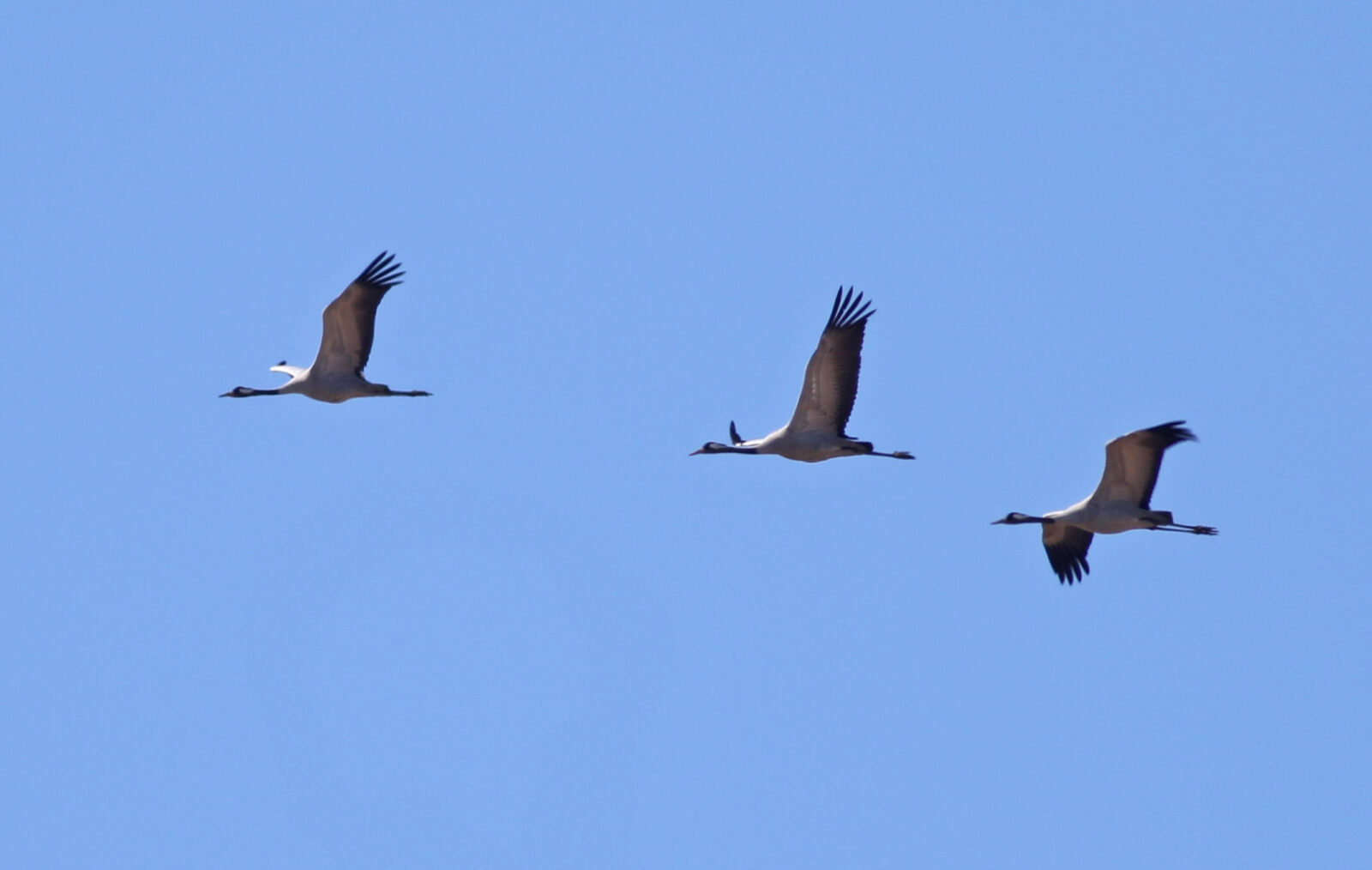
Sunny throughout, with a light/moderate northerly-easterly wind and temperatures that reached 11 degrees C. A Manx Shearwater flew past the headland in the morning, as did two Tufted Ducks and 14 Sandwich Terns. The day’s highlight related to three Cranes that flew east over North Dykes late morning; after touring the outer head, they headed west and were later seen near Scarborough. Notable records also involved two Avocet, a relatively early Swift, 13 Swallows, two Lesser Whitethroats, a Sedge Warbler, a Ring Ouzel, 19 Wheatears, a Black Redstart and seven Yellow Wagtails. Two Short-eared Owls frequented cliff top grasslands west of the Dykes.
The following summarises only records from our resident birders’ health walks and garden sightings; consequently, it provides a mere snapshot of the true scale of our spring migration.
A day of strong and cold easterly winds, sunshine and temperatures that reached 11 degrees C. Sightings off the Fog Station included two Red-throated Divers, eight Lesser Black-backed Gulls, eight Sandwich Terns, two Arctic Terns and four Bottlenose Dolphins.
Elsewhere, there were eight Eider, the long-staying drake Garganey, one Pink-footed Goose, a Grey Plover heading south, ten Lesser Black-backed Gulls flying north, a Hooded Crow, three Goldcrest, a Sedge Warbler, the year’s first Garden Warbler, three Common Whitethroats, a Black Redstart, two Common Redstarts, eight Wheatear, one Yellow Wagtail and a White Wagtail.
The following summarises only records from our resident birders’ health walks and garden sightings; consequently, it provides a mere snapshot of the true scale of our spring migration.
Another sunny day, with a moderate easterly wind and temperatures that peaked at 11 degrees C. During a seawatch, three Manx Shearwaters, an adult Little Gull and 12 Sandwich Terns flew south. Land-based sightings included a Pink-footed Goose, one Whimbrel, 18 Lesser Black-backed Gulls, 32 Swallows, two Hooded Crows, a Ring Ouzel, 13 Wheatear and a Common Redstart.
The following summarises only records from our resident birders’ health walks and garden sightings; consequently, it provides a mere snapshot of the true scale of our spring migration.
The weather was similar to previous days, with a moderate east-north-east wind, sunshine throughout and temperatures peaking at 12 degrees C. Two Red-throated Divers, 15 Sandwich Terns and three Arctic Terns flew past the Fog Station.
Additional records included a Pink-footed Goose, six Lesser Black-backed Gulls, a Hooded Crow, two Goldcrests, five Common Whitethroats, five Lesser Whitethroats, a Ring Ouzel, one Fieldfare, the year’s first Pied Flycatcher, eight Wheatears, a Common Redstart, two Yellow Wagtails and 11 Siskin. A Painted Bunting in a village garden added colour to proceedings, although it sported an avicultural ring. Sightings from Buckton/Bempton included a Green Sandpiper and one Short-eared Owl.
Redstart, by Jo HoodPainted Bunting, by Dave Simmonite
The following summarises only records from our resident birders’ health walks and garden sightings; consequently, it provides a mere snapshot of the true scale of our spring migration.
A day of cold north-north-west winds, hazy but bright skies and temperatures that reached 11 degrees C. Five Eider, a Manx Shearwater and six Sandwich Terns flew south past the Fog Station.
Land-based sightings included a Pink-footed Goose, four Shoveler, a Little Grebe, a Marsh Harrier, one Snipe, two Goldcrest, four Sedge Warblers, two Grasshopper Warblers, 11 Lesser Whitethroats, six Common Whitethroats, a Ring Ouzel, one Fieldfare, a male Pied Flycatcher, a Common Redstart, ten Wheatear, a Tree Pipit and four Yellow Wagtails. Buckton hosted a White Wagtail.
The following summarises only records from our resident birders’ health walks and garden sightings; consequently, it provides a mere snapshot of the true scale of our spring migration.
The weather consisted of a light/moderate northerly wind, sunny intervals and temperatures that reached ten degrees C. A Manx Shearwater, 13 Sandwich Terns and two Common Terns flew past the Fog Station. Puffins also returned en masse, with 348 flying north; 839 birds were also counted on the sea off the North Cliffs.
Non-passerine interest on the headland included a Pink-footed Goose, drake Garganey, four Teal, four Shoveler, a pair of Gadwall, a Marsh Harrier, one Red Kite, a flock of ten Common Buzzards flying north over Thornwick, three Bar-tailed Godwits, one Green Sandpiper, a Grey Plover, two Golden Plover, two Whimbrel and three Snipe. A Long-eared Owl represented the second of spring. Increased numbers of passerine migrants have been apparent over the last two days, with today’s highlights involving: a Hooded Crow, two Grasshopper Warblers, five Sedge Warblers, 20 Common Whitethroats, 15 Lesser Whitethroats, two Ring Ouzel, 17 Wheatear, the year’s first Whinchat, a Tree Pipit, five Yellow Wagtails and two Siskin.
The following summarises only records from our resident birders’ health walks and garden sightings; consequently, it provides a mere snapshot of the true scale of our spring migration.
A drake Goosander, two Manx Shearwater and a Bonxie flew north past the Fog Station, whilst 119 Sandwich Terns went south. The day’s highlight related to the discovery of a Richard’s Pipit; given its location, almost certainly a spring migrant and not the bird last seen a month ago that over-wintered. Additional sightings on the headland included the long-staying drake Garganey, three Shoveler, two Gadwall, two Marsh Harriers, two Little Ringed Plovers, a Ringed Plover, five Dunlin, a Snipe, three Bar-tailed Godwit, two Goldcrests, the year’s first Reed Warbler, two Grasshopper Warblers, a Ring Ouzel, one Fieldfare, 14 Wheatear, a Black Redstart, a Tree Pipit, two Yellow Wagtails and a Siskin.
The following summarises only records from our resident birders’ health walks and garden sightings; consequently, it provides a mere snapshot of the true scale of our spring migration.
Overcast at either end of the day, with sunny intervals inbetween; light and variable winds and temperatures reached 16 degrees C. Six Eider, two Red-throated Divers and 22 Sandwich Terns flew south past the Fog Station during the morning.
Notable records on the headland itself included a Pink-footed Goose, three Mute Swans, four Gadwall, two Teal, four Shoveler, a Little Ringed Plover, two Dunlin, one Snipe, a Bar-tailed Godwit and the year’s first Common Sandpiper. Passerine interest included 20 Willow Warblers, 11 Chiffchaff, 14 Blackcap, 27 Common Whitethroat, 20 Lesser Whitethroat, eight Sedge Warblers, one Whinchat, 11 Wheatear, a Black Redstart, five Yellow Wagtails and two Siskin.
The following summary only includes records from our resident birders’ health walks and garden sightings; consequently, it provides a mere snapshot of the true scale of our spring migration.
The weather consisted of moderate north-north-west winds and sunny intervals after an overcast start, with temperatures reaching a mere ten degrees C. Six Eiders flew south past the Fog Station, with four Whimbrel, a Sanderling, one Dunlin and two Sandwich Terns heading north. Additional sightings included a Pink-footed Goose, four Gadwall, four Shoveler, two Dunlin, one Common Sandpiper and a Little Ringed Plover. The year’s first Cuckoo was also recorded, along with a Richard’s Pipit, Black Redstart and three White Wagtails. Meanwhile, the cricket field at Sewerby attracted three Wheatears and nine Yellow Wagtails.
The following summary only includes records from our resident birders’ health walks and garden sightings; consequently, it provides a mere snapshot of the true scale of our spring migration.
An overcast day, with a light north-north-east wind and temperatures that peaked at nine degrees C. Four Red-throated Divers, a Manx Shearwater, 26 Sandwich Terns, a Common Tern and 273 Puffins flew past the Fog Station. Sightings elsewhere included a Pink-footed Goose, two Gadwall, two Tufted Ducks, five Sanderling, a Swift, one Reed Warbler, 12 Wheatear and six Yellow Wagtails.
The following summary only includes records from our resident birders’ health walks and garden sightings; consequently, it provides a mere snapshot of the true scale of our spring migration.
Cloud increased after a relatively bright start, with light rain from late afternoon; winds were moderate from the south-east and temperatures peaked at 11 degrees C. Eight Eider, two Red-throated Divers, six Sandwich Terns and a Bonxie flew past the Fog Station. Sightings on the headland included a Little Ringed Plover, two Whimbrel, a Grasshopper Warbler and 12 Wheatears.
The following summary only includes records from our resident birders’ health walks and garden sightings; consequently, it provides a mere snapshot of the true scale of our spring migration.
A day of moderate south-west winds, overcast skies and occasional brighter spells, showers from mid-afternoon and temperatures reaching 12 degrees C. Three Red-throated Divers, a Manx Shearwater and three Whimbrel flew north past the Fog Station, with 22 Sandwich Terns heading in the opposite direction.
A Pink-footed Goose, four Gadwall, four Shoveler and two Tufted Ducks frequented the headland, along with four Little Ringed Plovers, a Ringed Plover, four Dunlin, a Bar-tailed Godwit and two Whimbrel. Passerine interest included a Grasshopper Warbler (eighth individual of spring), eight Fieldfare, nine Wheatear, a Redstart and six Yellow Wagtails. Sightings in the Bempton area included two Grey Partridges and a Short-eared Owl.
The following summary only includes records from our resident birders’ health walks and garden sightings; consequently, it provides a mere snapshot of the true scale of our spring migration.
A day of light/moderate north-west winds, generally overcast skies and showers with temperatures reaching ten degrees C by late morning. Single Red-breasted Merganser, Red-throated Diver, Great Northern Diver, three Manx Shearwaters, two Whimbrel and the year’s first Arctic Skua flew south past the Fog Station.
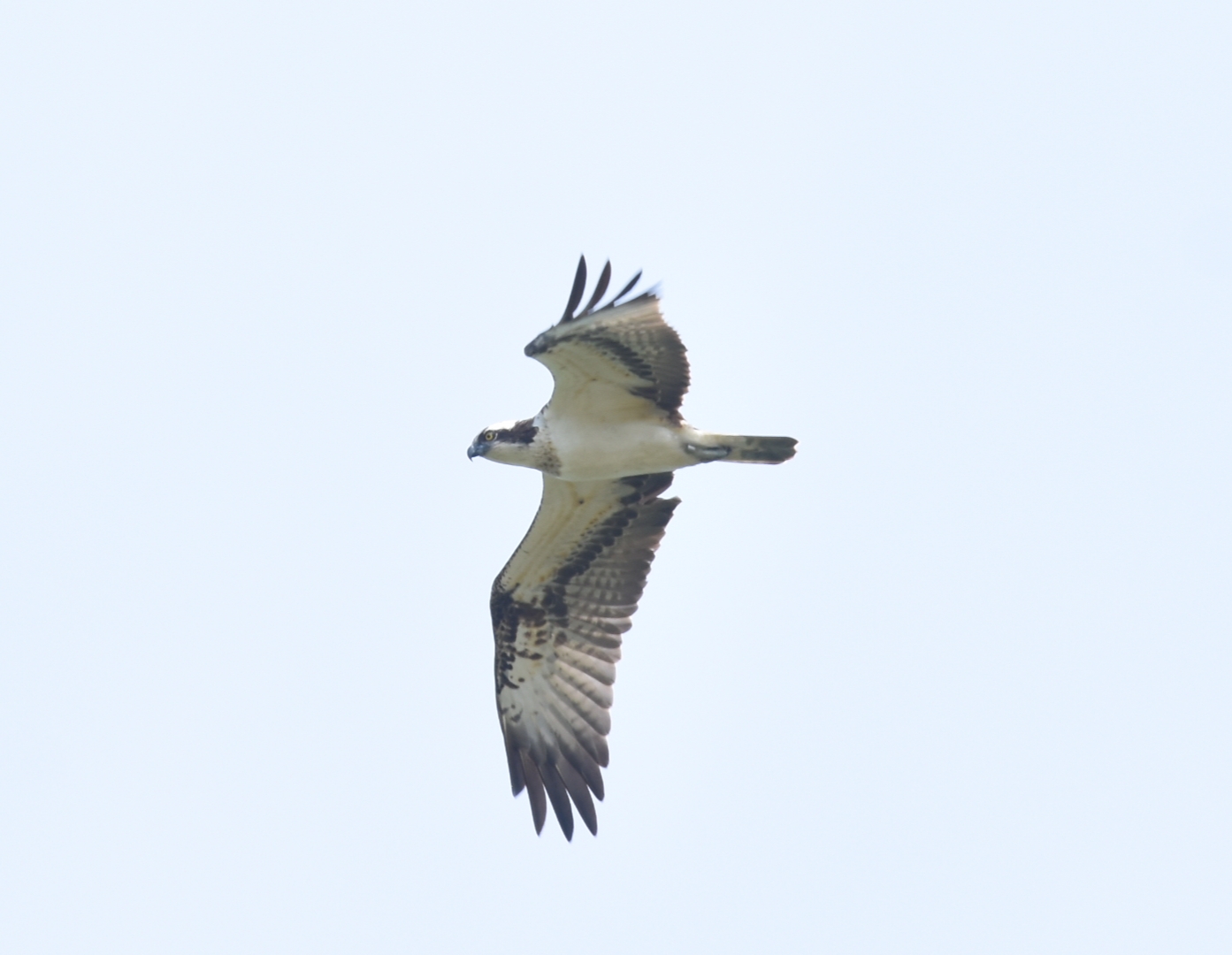
Sightings on the headland itself included two Pink-footed Geese, two Gadwall, two Shoveler, a pair of Tufted Ducks, four Whimbrel, a Bar-tailed Godwit, an Osprey that flew west along the South Cliffs, one Short-eared Owl, a Swift, a Hooded Crow, one Garden Warbler, single Redwing and Fieldfare, two Tree Pipits (including one singing), nine Wheatear, four Yellow Wagtails and five Siskin.
The following summary only includes records from our resident birders’ health walks and garden sightings; consequently, it provides a mere snapshot of the true scale of our spring migration.
The weather consisted of light/moderate north-north-westerly winds, sunny intervals and occasional showers, with temperatures peaking at 12 degrees C. Seven Pink-footed Geese, a Marsh Harrier, nine Whimbrel, 11 Lesser Black-backed Gulls and a Bonxie flew north past the Fog Station.
Sightings on the headland included two Pink-footed Geese, one Barnacle Goose, single pairs of Gadwall and Shoveler, three Tufted Ducks, single pairs of Red-legged and Grey Partridges, four Whimbrel, a Bar-tailed Godwit and single Short-eared Owl and Long-eared Owls. Passerine interest included a Grasshopper Warbler, two singing Garden Warblers, a Redwing, 12 Wheatear, three White Wagtails and six Yellow Wagtails. In addition, a pair of Grey Partridge and a Fieldfare were recorded at Bempton.
The following summary only includes records from our resident birders’ health walks and garden sightings; consequently, it provides a mere snapshot of the true scale of our spring migration.
A relatively overcast day, with a light south-easterly wind and temperatures reaching 11 degrees C. During the morning, seven Common Scoter, three Red-throated Divers, a Manx Shearwater, ten Oystercatchers, eight Lesser Black-backed Gulls and 64 Sandwich Terns flew north past the Fog Station.
The day’s highlights consisted of a Crane that flew south over Speeton before eventually resting on fields on the outer head and an Osprey that headed north over the village. Other notable records included two Pink-footed Geese, nine Whimbrel, a Bar-tailed Godwit, a Short-eared Owl, one Swift, a Cuckoo, four Wheatears, two Yellow Wagtails and a Siskin. A pair of Grey Partridge also frequented Bempton.
The following summary only includes records from our resident birders’ health walks and garden sightings; consequently, it provides a mere snapshot of the true scale of our spring migration.
Overcast with light rain early morning, clearing to sunny spells later; light/moderate easterly winds and temperatures reached a mere nine degrees. A flock of 14 Scaup, five Red-throated Divers, a summer-plumaged Great Northern Diver and ten Common Terns flew north past the Fog Station, whilst 12 Eider, a Bar-tailed Godwit, 63 Sandwich Terns and an Arctic Skua moved south.
Sightings on the headland itself included three Pink-footed Geese, four Gadwall, a Bar-tailed Godwit, three Whimbrel, two Mediterranean Gulls, a Reed Warbler, two Pied Flycatchers, the year’s first Spotted Flycatcher, three Whinchat, nine Wheatear and seven Yellow Wagtails. Yesterday’s Crane also re-appeared, heading west over Cliff Lane, Bempton early morning.
The following summary only includes records from our resident birders’ health walks and garden sightings; consequently, it provides a mere snapshot of the true scale of our spring migration.
A moderate easterly wind dropped in strength during a sunny day, with temperatures reaching ten degrees C. A Great Northern Diver, two Manx Shearwaters, four Sandwich Terns and two Common Terns flew north, with a Mediterranean Gull and an Arctic Skua moving south.
Notable sightings on the headland itself included nine Swifts, a Garden Warbler, one Reed Warbler, a Pied Flycatcher, one Whinchat, four Wheatears, a Tree Pipit and three Yellow Wagtails.