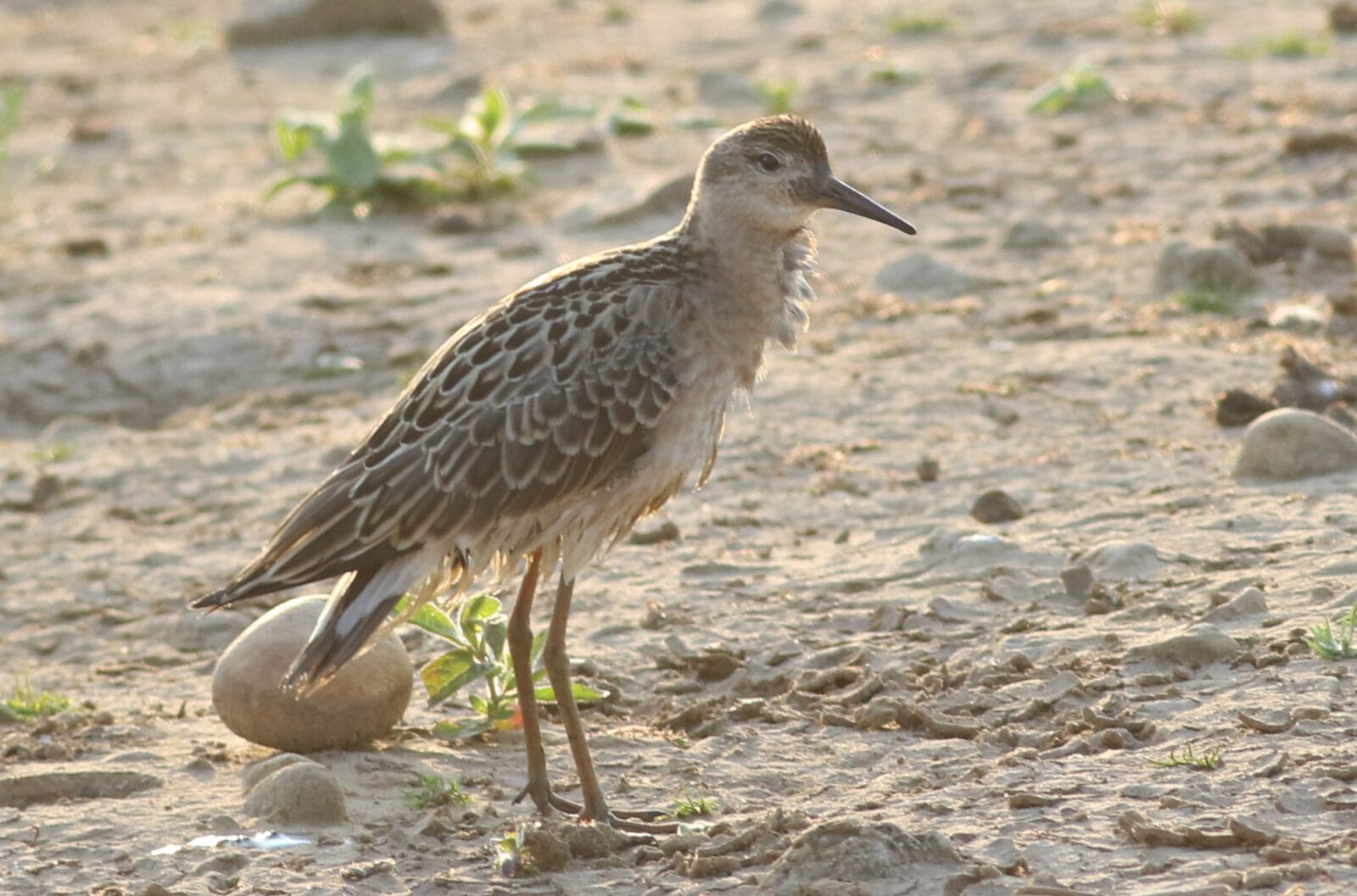
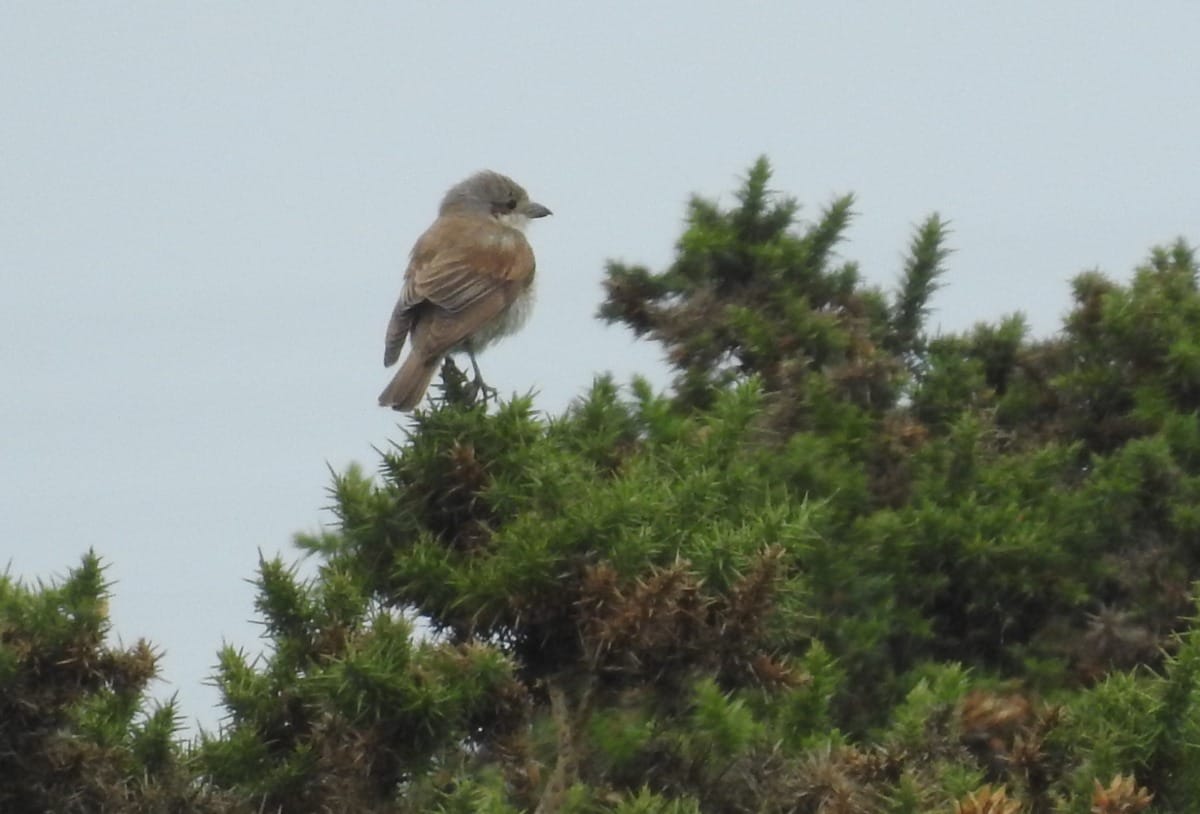
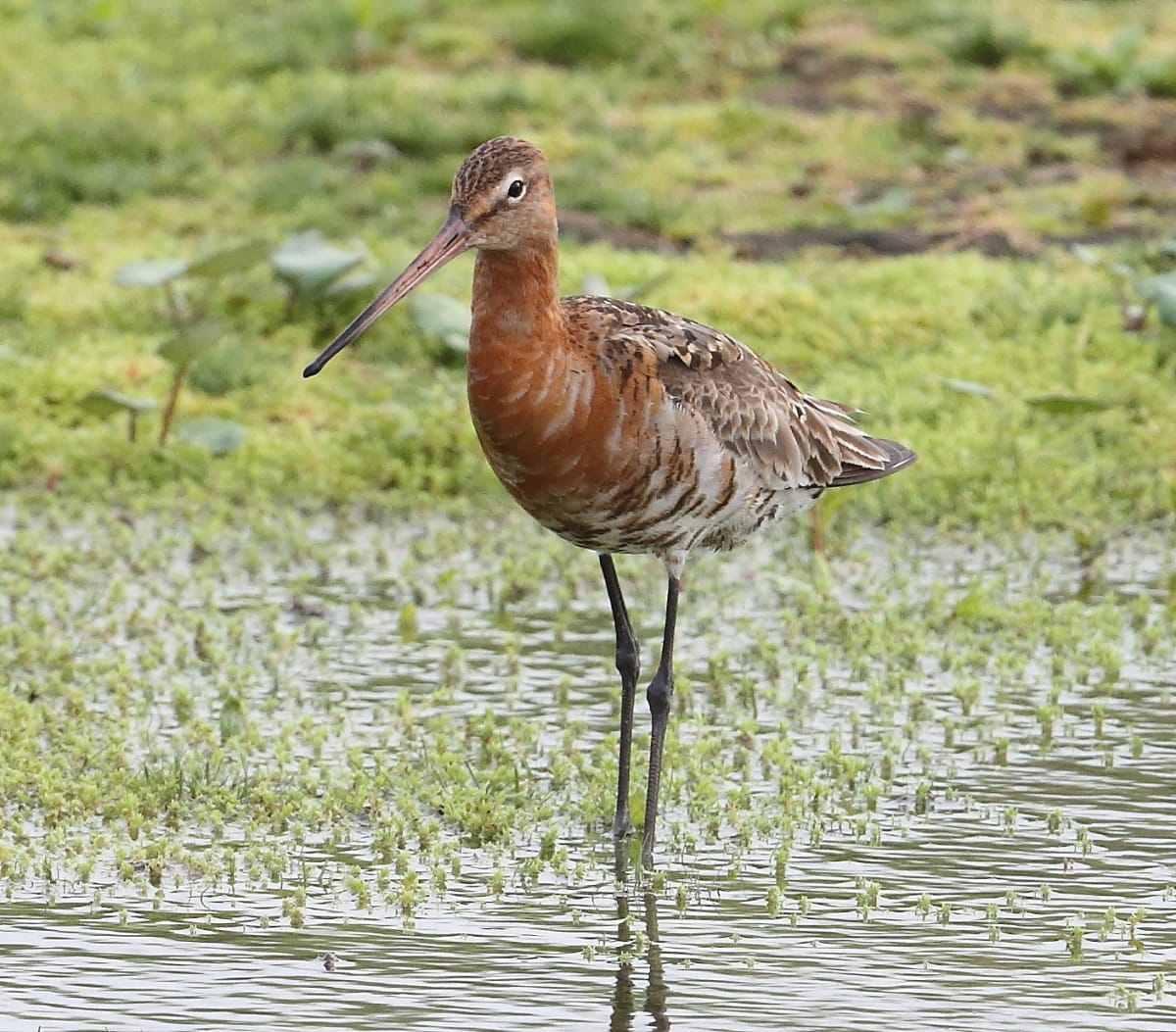
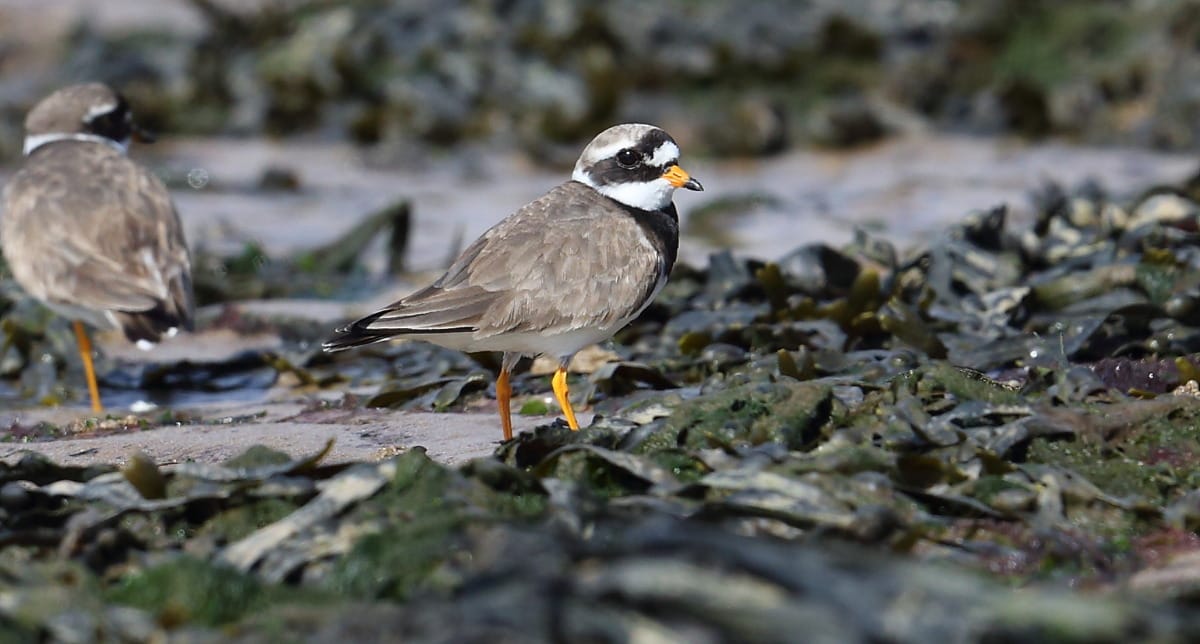
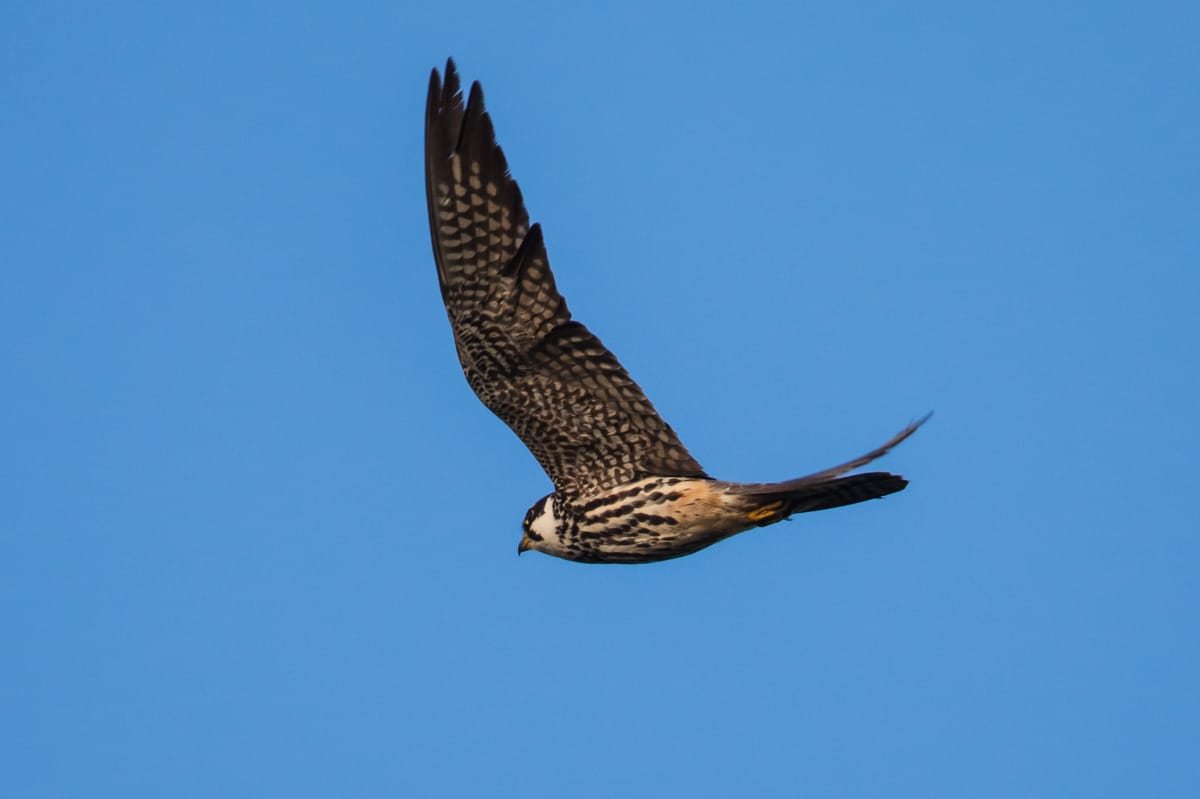
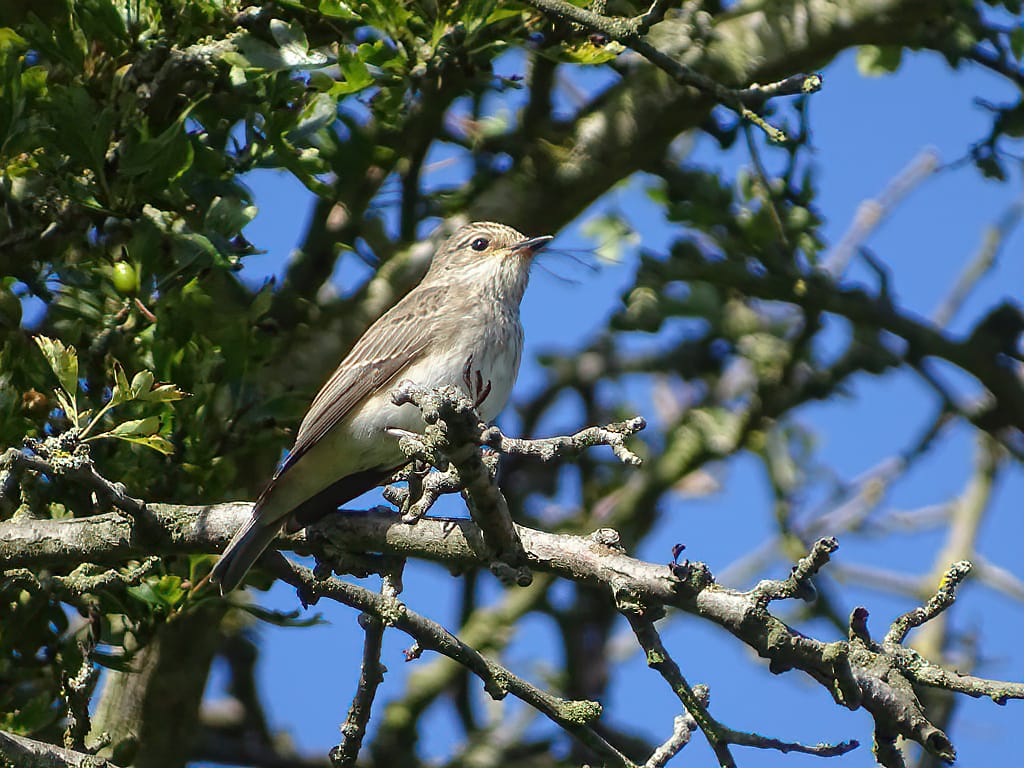
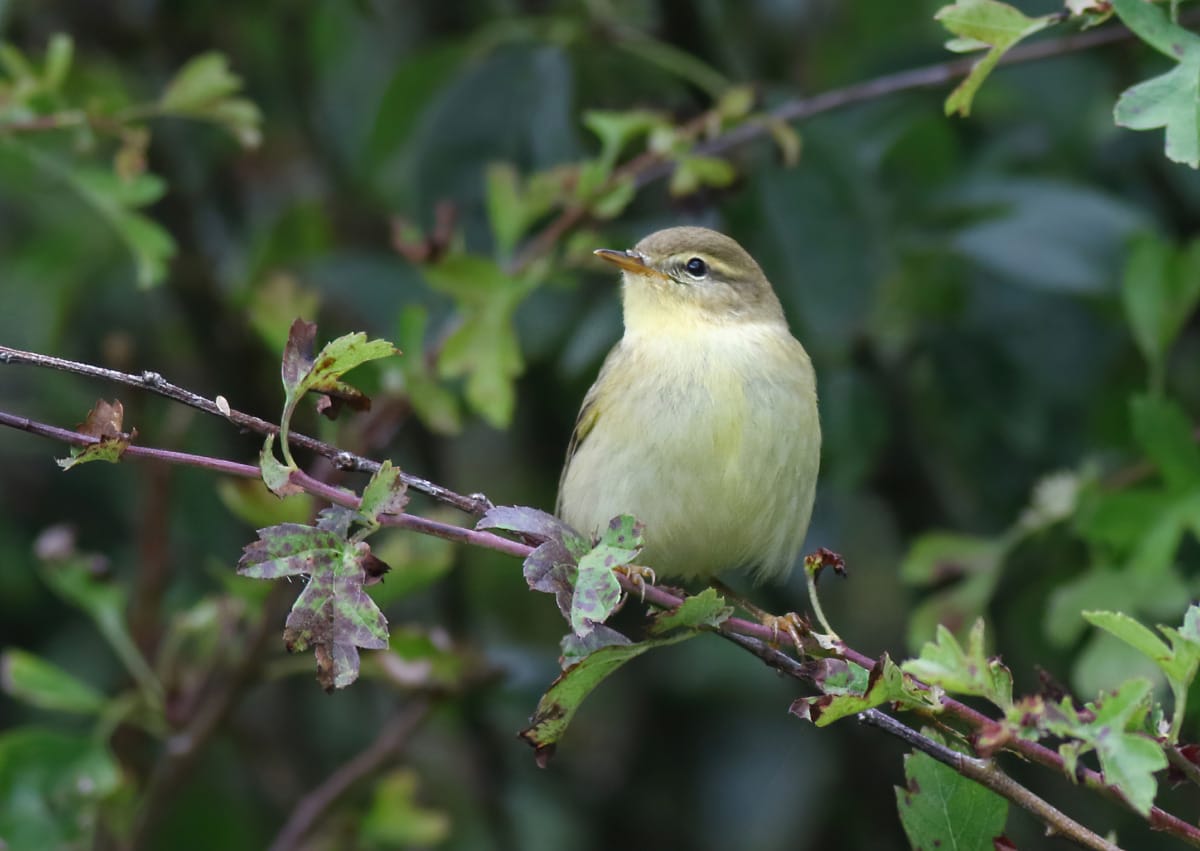
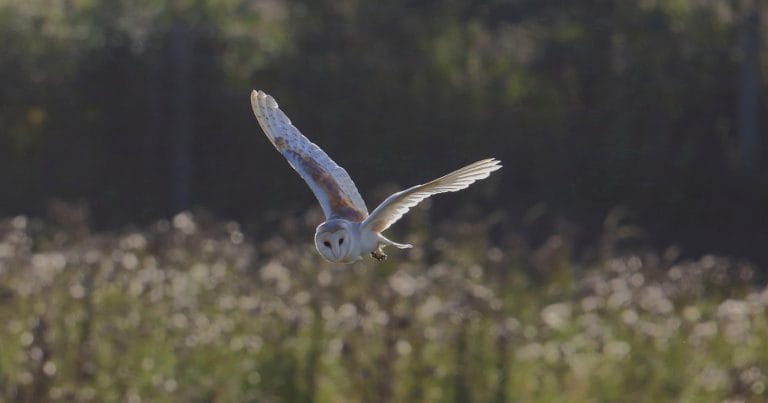
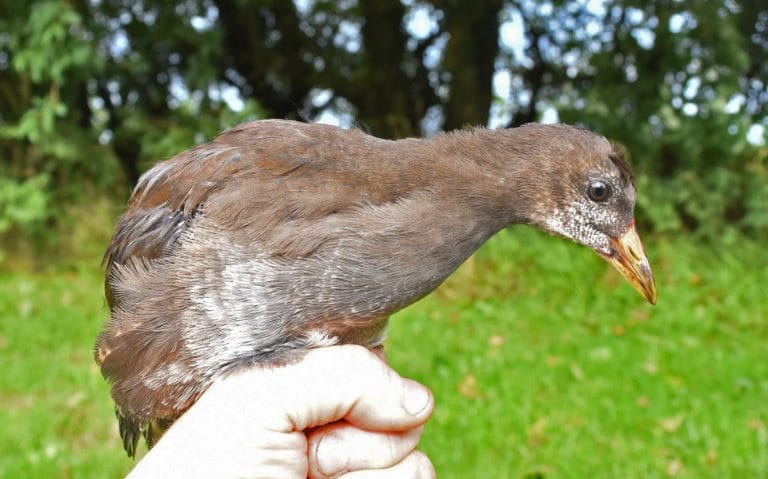
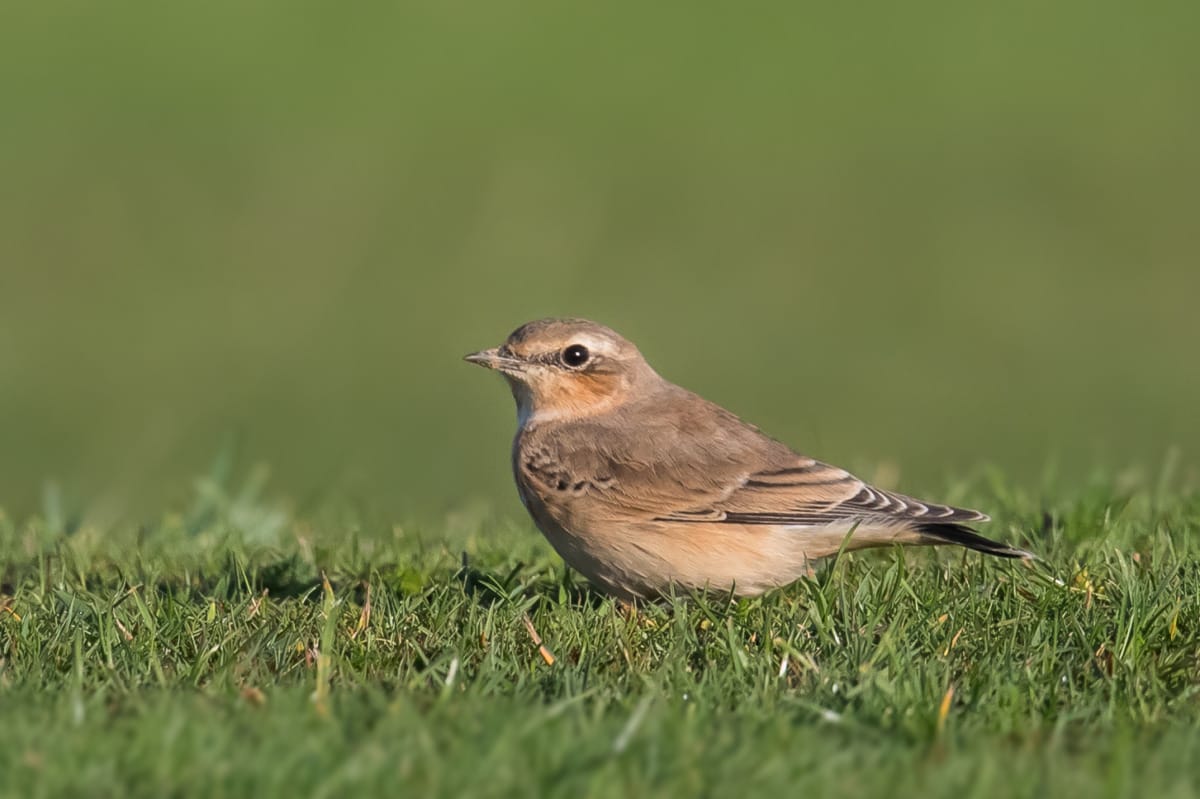
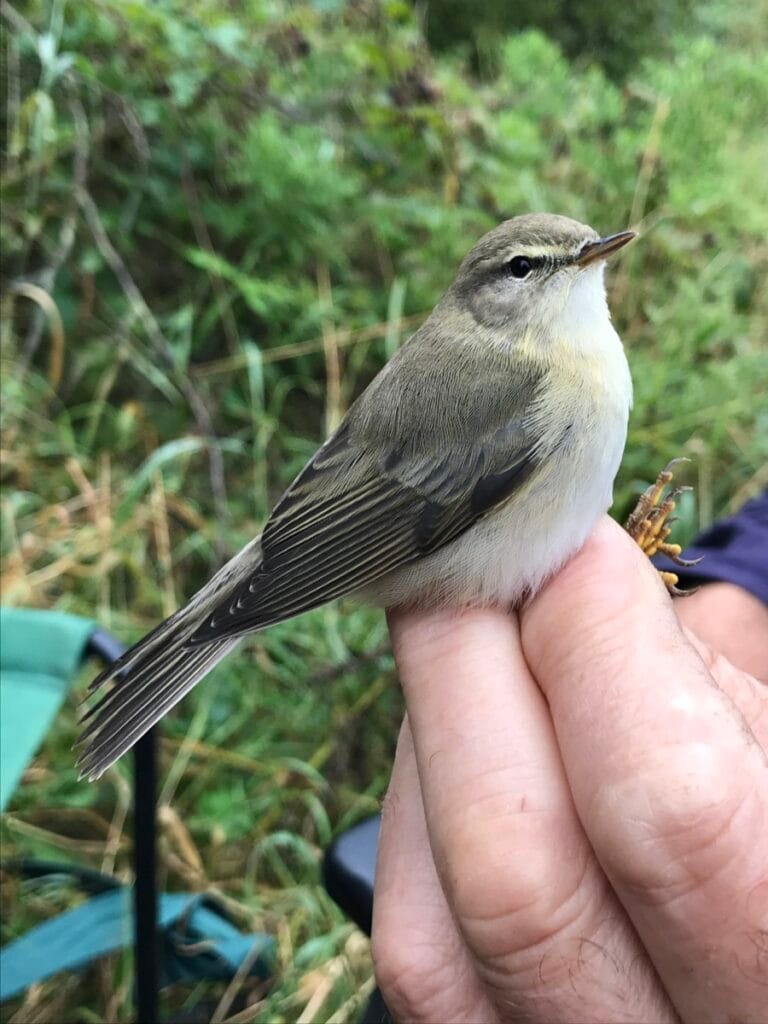
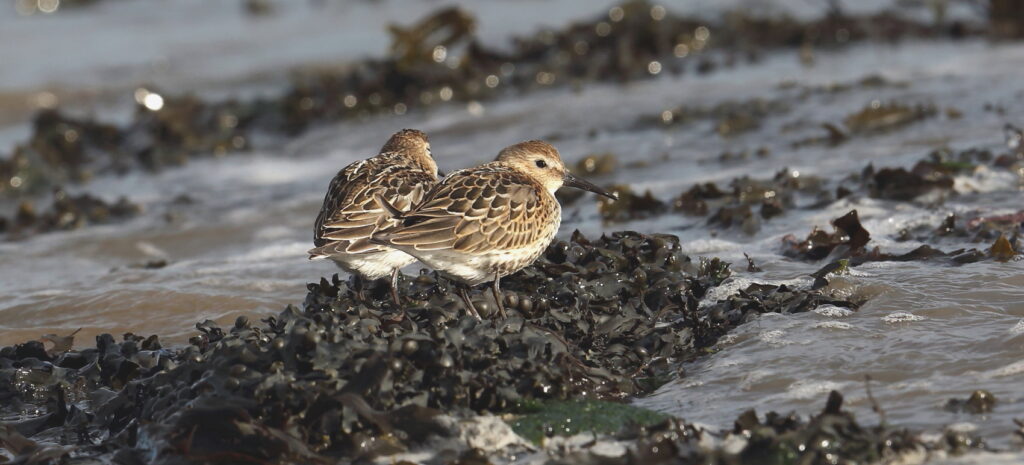
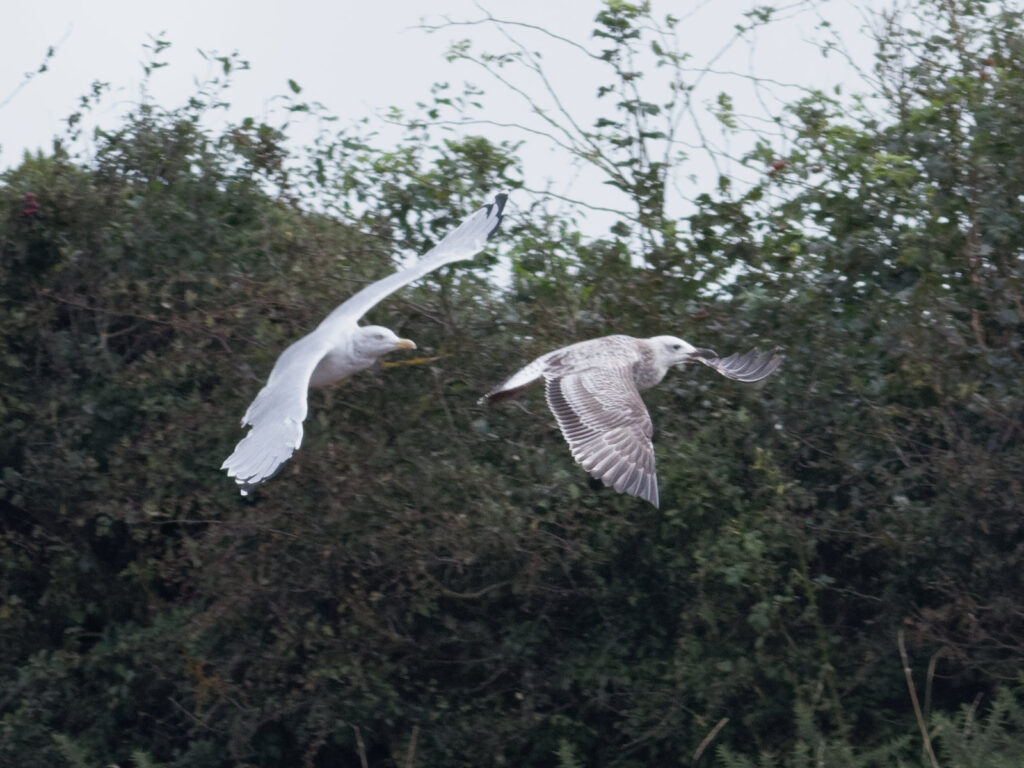
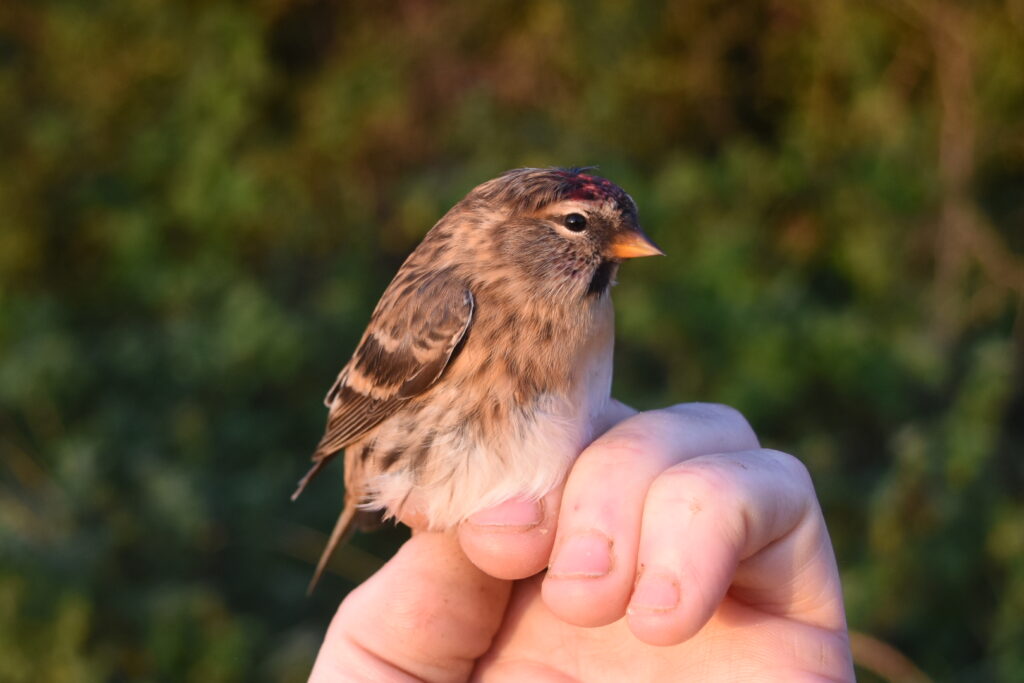
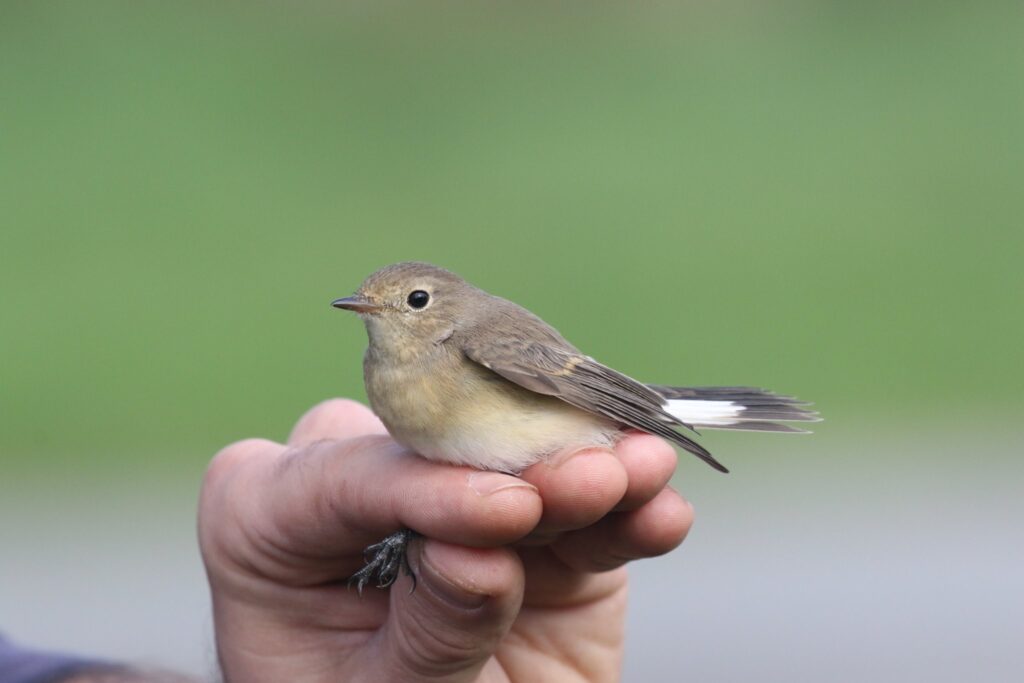
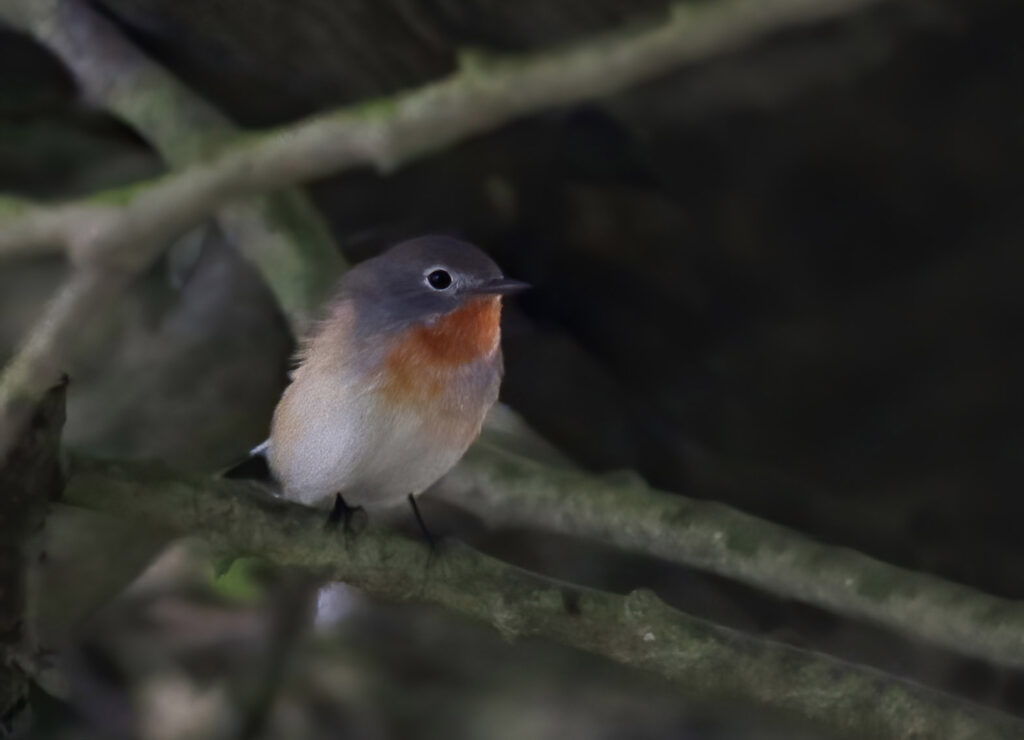
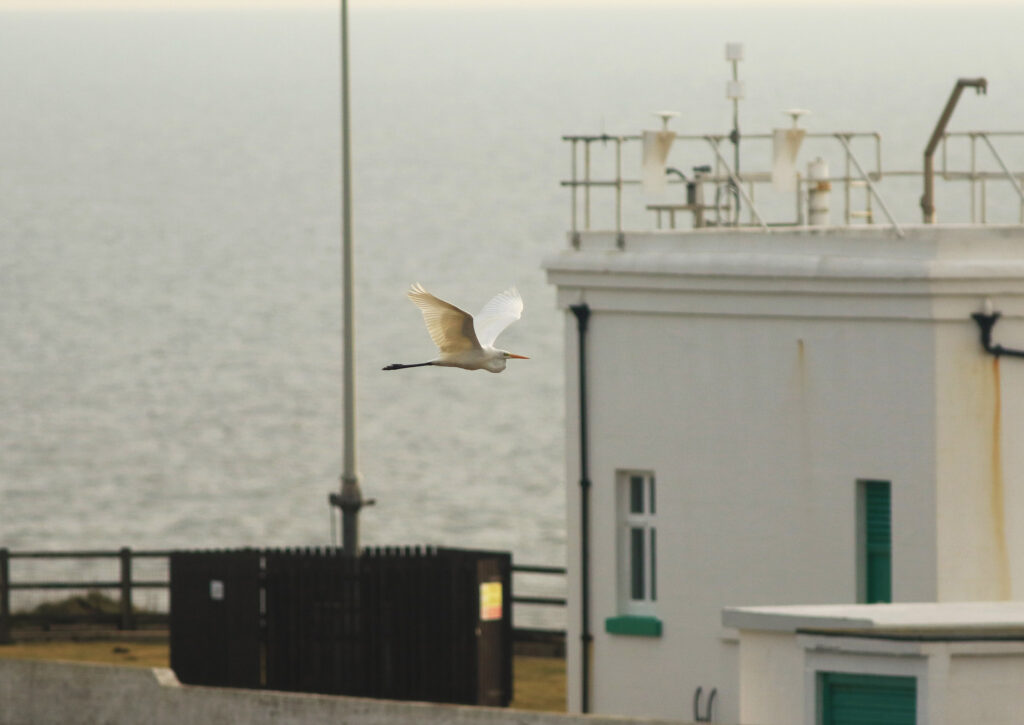
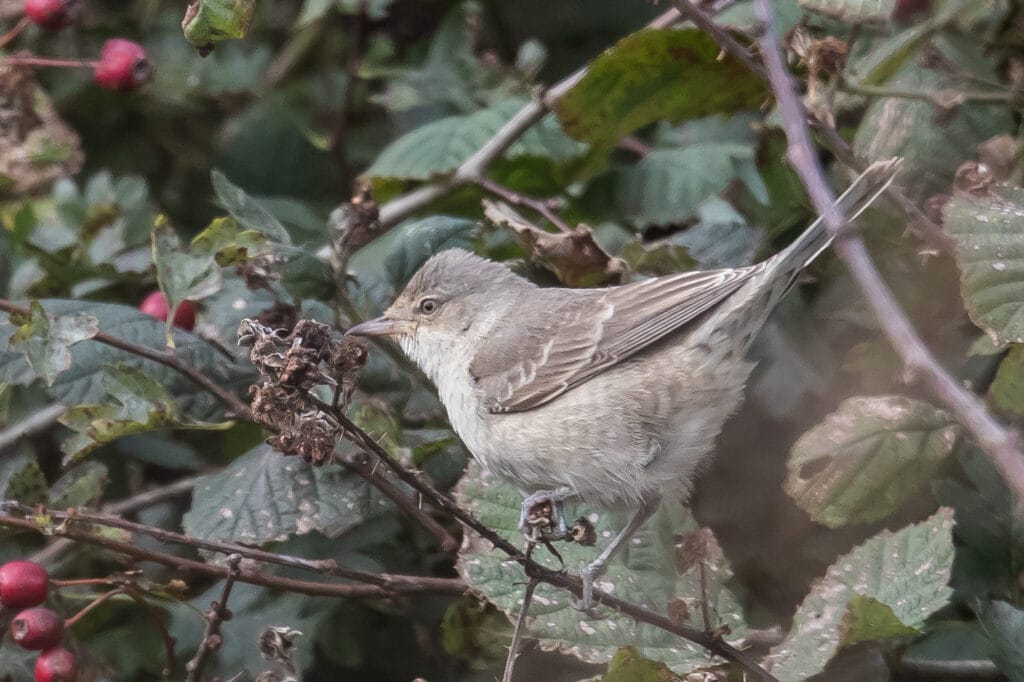
A thick sea fret rendered a seawatch impossible and land-based birding almost similar – visibility was poor all day, with viewing conditions exacerbated by strong northerly winds and cool temperatures. Thornwick Pools hosted a Shelduck, five Teal, a Ruff, three Dunlin, a Little Stint and two Redshank. Pied Flycatchers were glimpsed in three locations, including three birds at RSPB Bempton Cliffs where there were also five Willow Warblers.
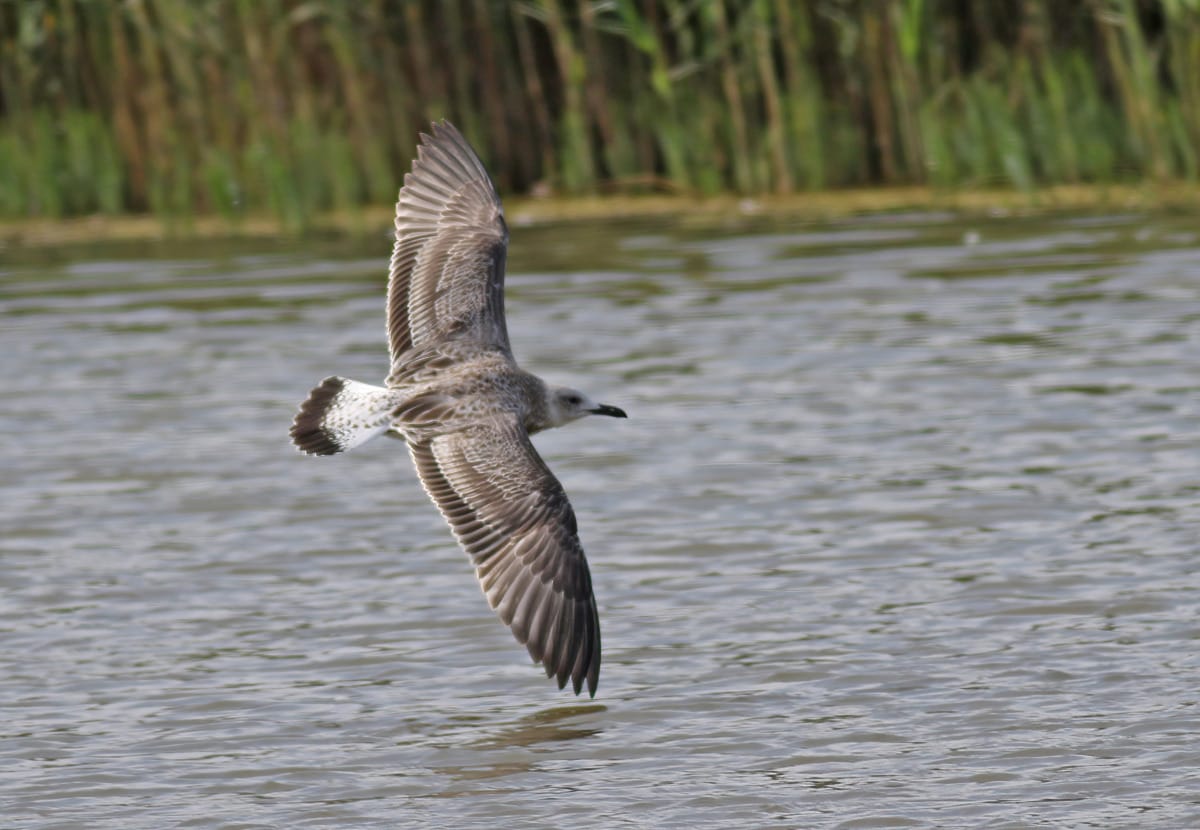
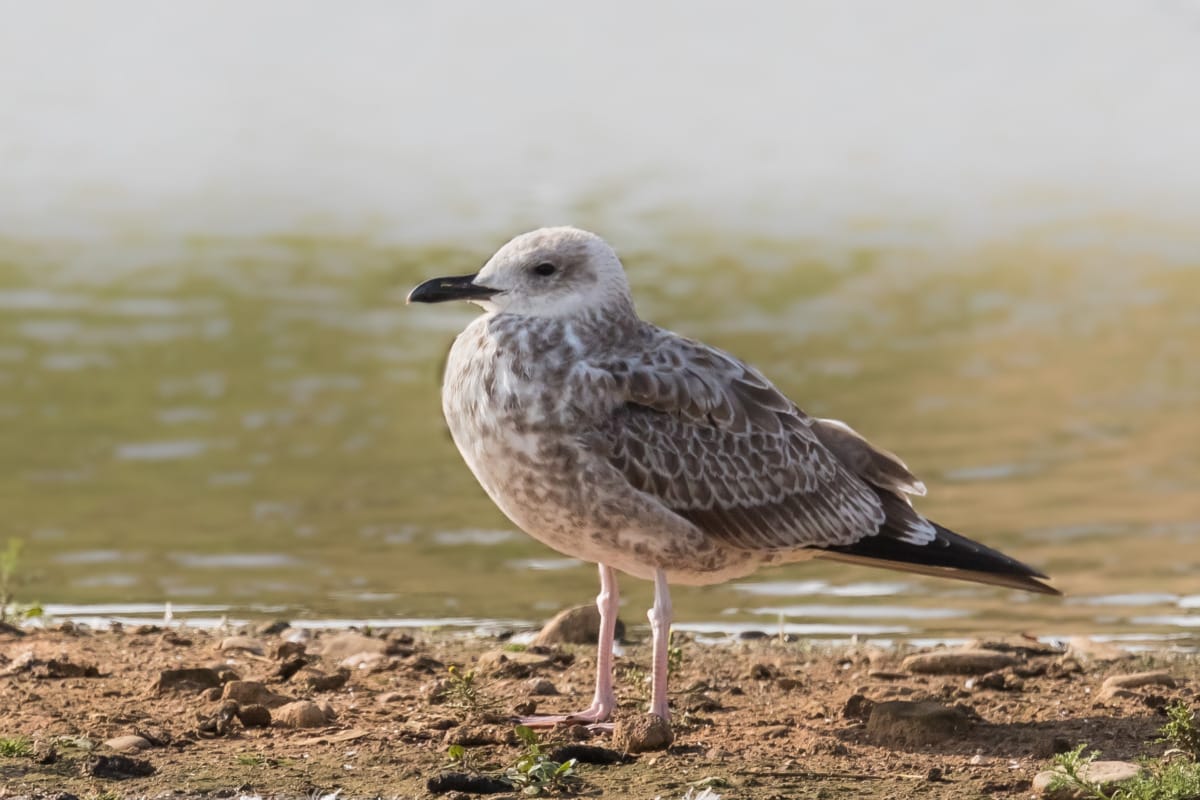
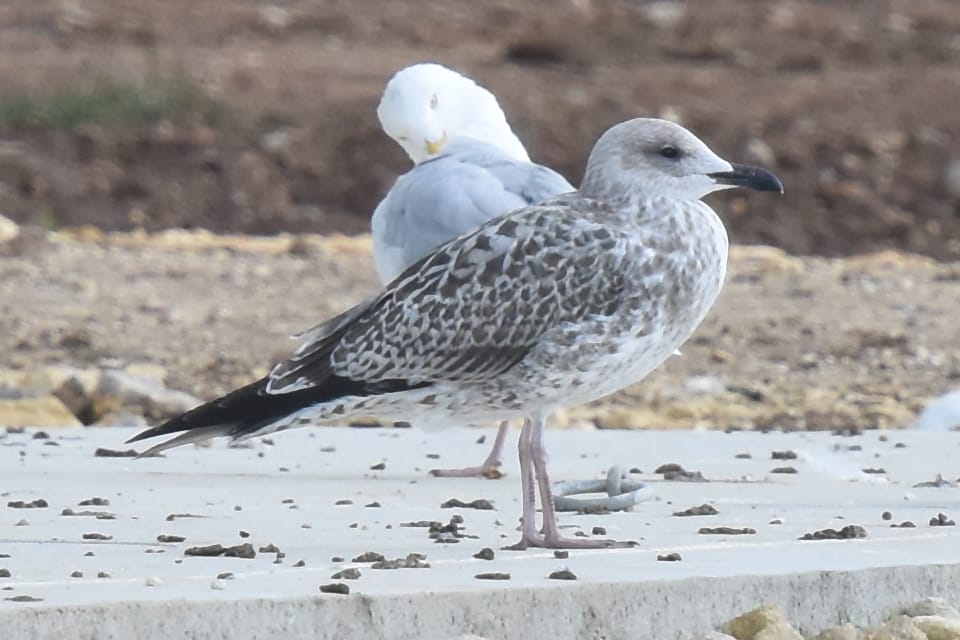
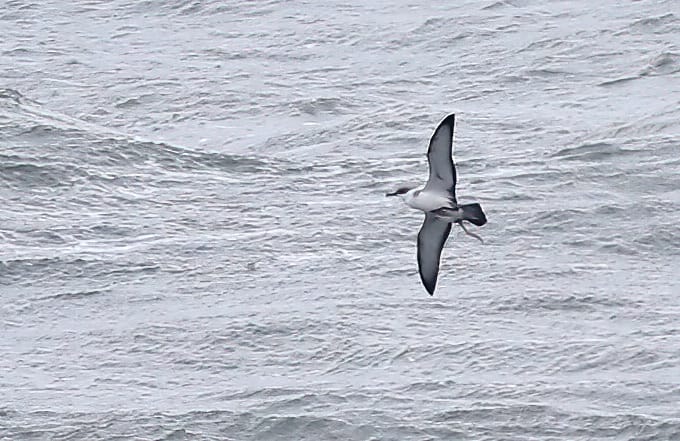
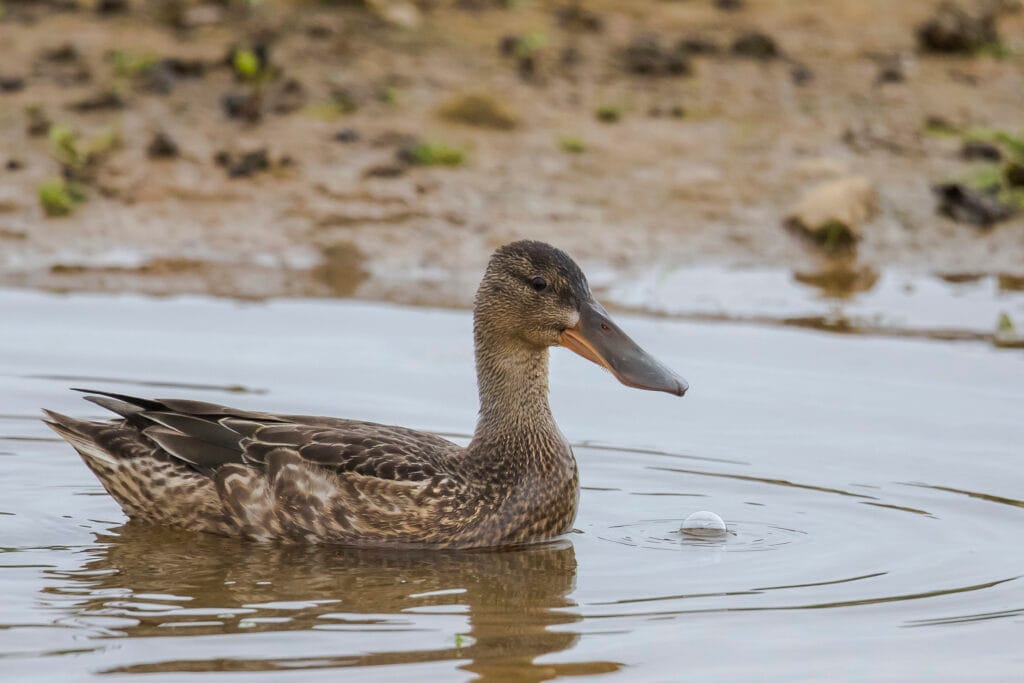
There were strong northerly winds throughout a day which began with a sea fret once again. However, this cleared within a few hours to leave overcast skies and temperatures reaching 17 degrees C. An above average seawatch featured the year’s first Balearic Shearwater and Long-tailed Skuas, with notable records including: 32 Teal, 12 Wigeon, a Shoveler, 297 Manx Shearwater north, a Balearic Shearwater north, 26 Sooty Shearwaters north, 259 Oystercatchers south, a Bar-tailed Godwit north, a Green Sandpiper south, 29 Arctic Skuas, nine Bonxies, five Long-tailed Skuas north (three juveniles, two juvs/imm), 429 Sandwich Terns, 195 Common Terns, 53 Arctic Terns, a juvenile Caspian Gull, a juvenile Mediterranean Gull and three juvenile Little Gulls.
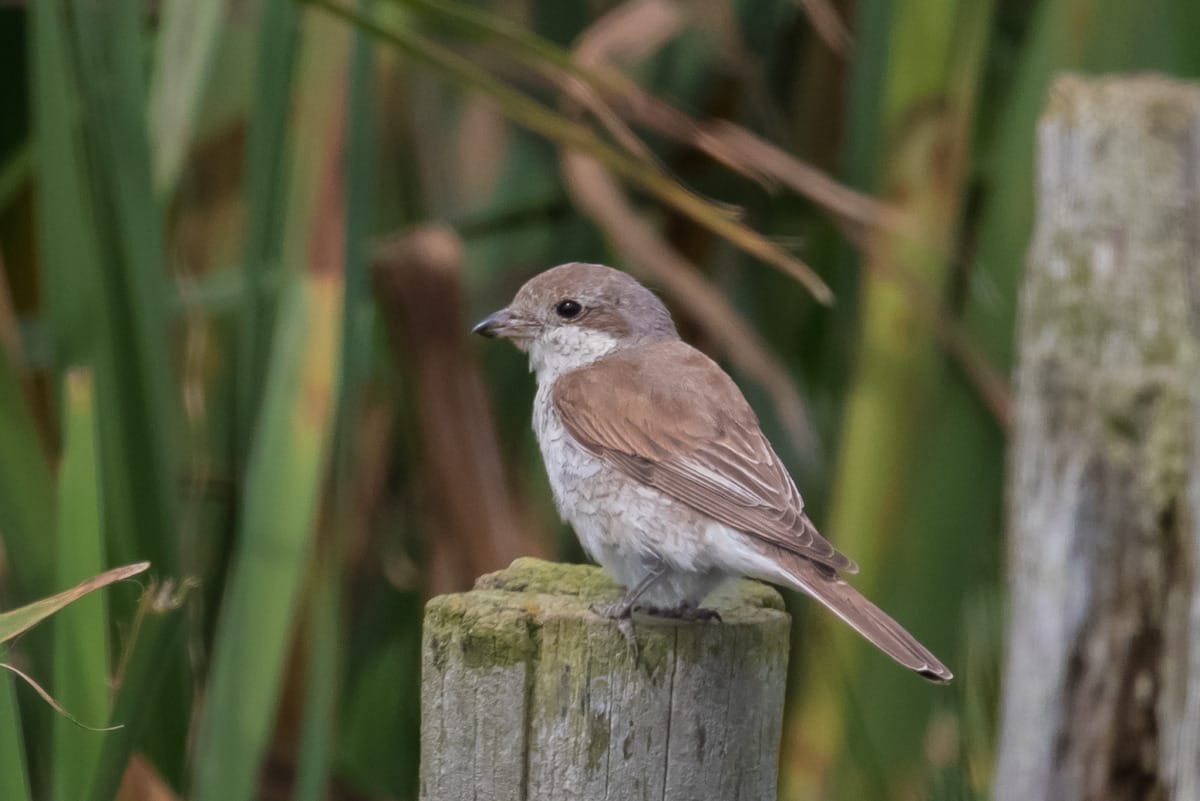
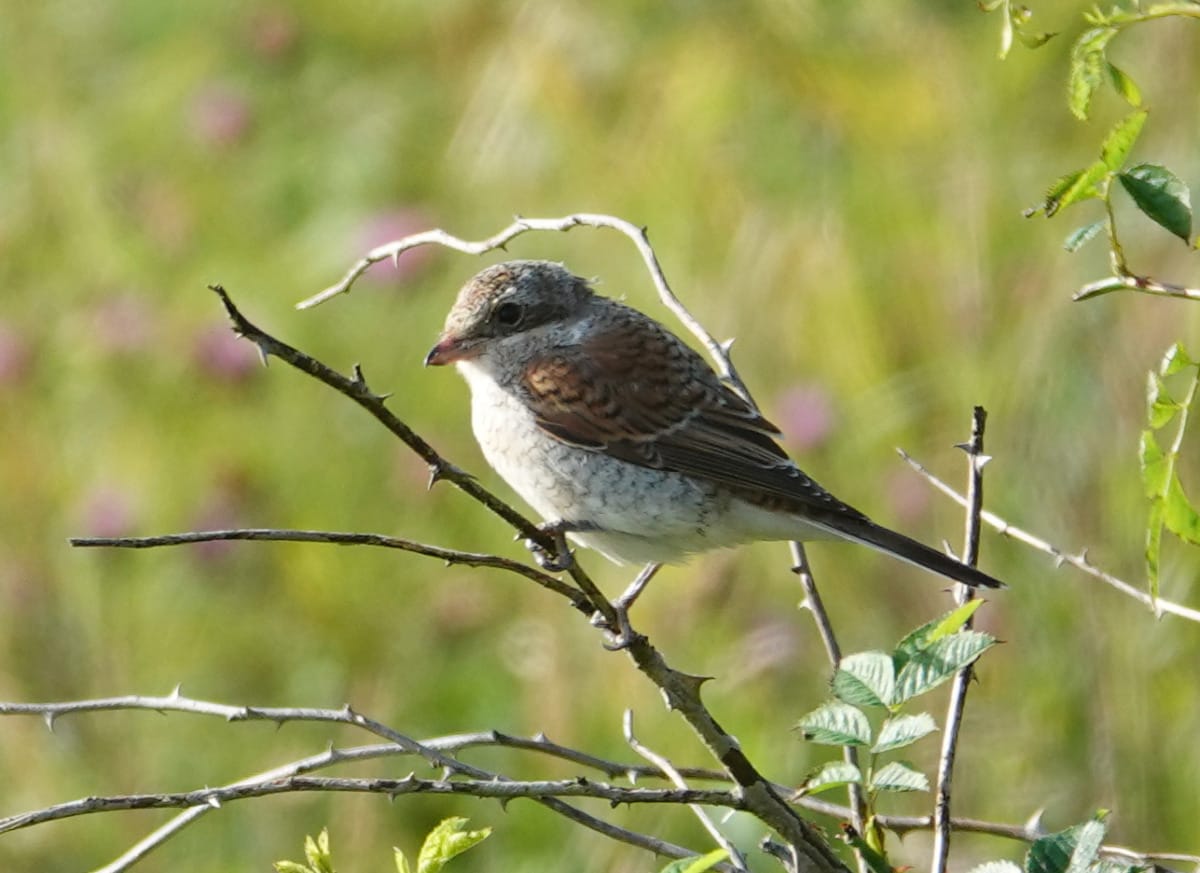
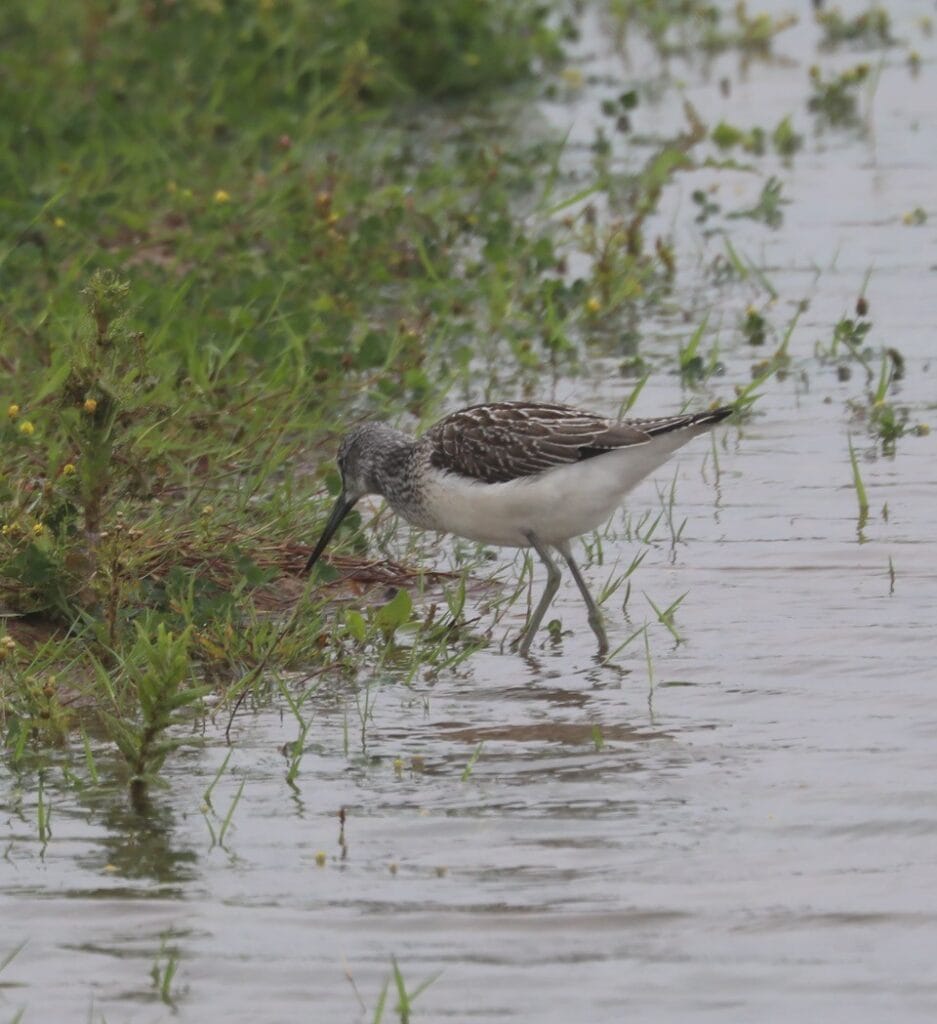
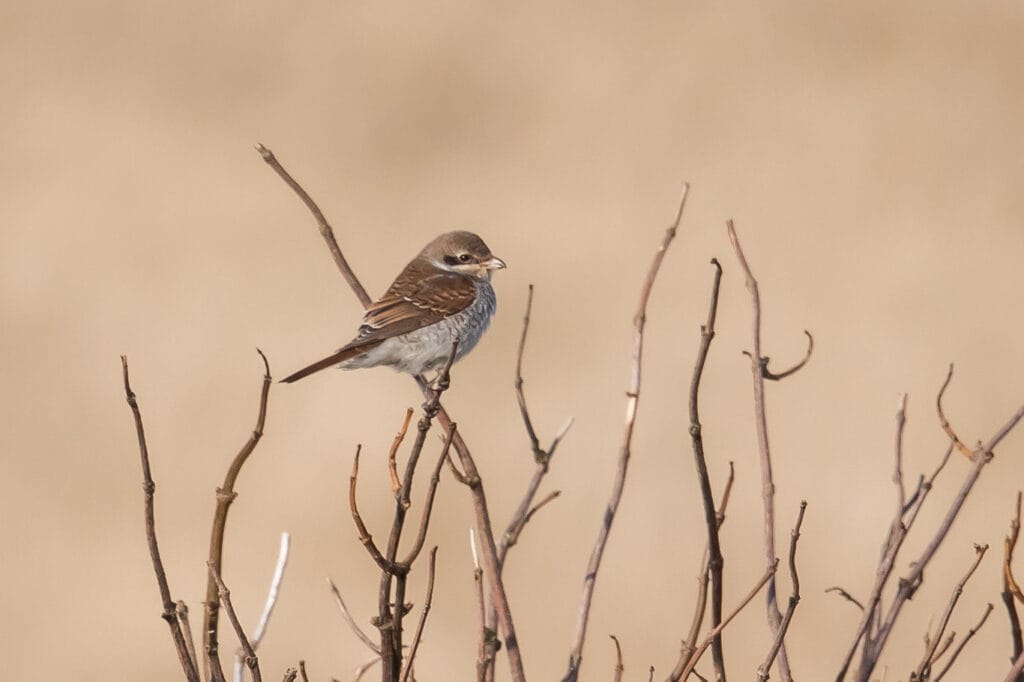
Thornwick Pools hosted a Shelduck, 11 Teal, a Little Stint, three Dunlin, a Ruff, two Redshank and seven Green Sandpipers; a Greenshank also flew south over the headland. Passerine migrants included the juvenile Red-backed Shrike lingering at the lighthouse, a Garden Warbler and six Pied Flycatchers.
Sightings from RSPB Bempton Cliffs included five Bonxies, four Willow Warblers and three Pied Flycatchers.
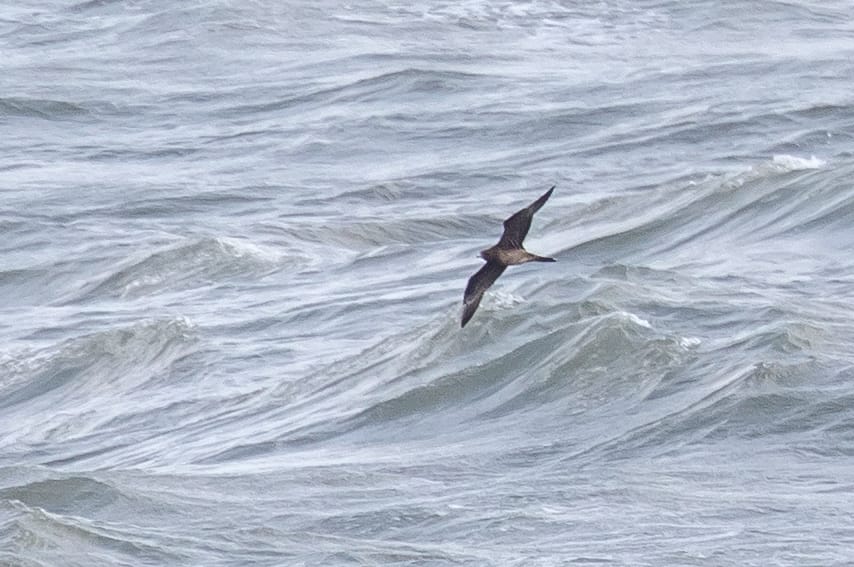
An overcast day, with a light/moderate north-easterly wind and a high of 17 degrees C. An all day seawatch was rewarded with a northbound passage of 30 Long-tailed Skuas, the highest day count since 1995! The vast majority of birds were juveniles, with one potential second-summer individual; all headed in a north/north-easterly direction out of Bridlington Bay, with several lingering around the Kittiwake-feeding flocks. The other highlights were a Cory’sShearwater that attended similar feeding flocks mid-afternoon and eventually flew north close inshore at 1655hrs; and an adult Roseate Tern that flew south at 1915hrs (first of the year). Other notable seawatch records included nine Sooty Shearwaters, 87 Manx Shearwaters, a Little Egret, 316 Oystercatchers south, seven Black-tailed Godwits south, a Little Gull north, a Mediterranean Gull, 173 Sandwich Terns, 187 Common Terns and 11 Arctic Terns all north, 23 Bonxies, a dark-morph ‘spooned’ Pomarine Skua south and 44 Arctic Skuas.
Elsewhere, the Ruff lingered at Thornwick Pools and two Green Sandpipers flew south. Passerine interest included a Garden Warbler at Old Fall (additional to the seven rung at South Landing) and three Pied Flycatchers.
RSPB Bempton Cliffs attracted three Willow Warblers, a Garden Warbler, three Pied Flycatchers and six Corn Buntings. A Marsh Harrier hunted the cliff top between Bempton and Buckton.
A ringing session at South Landing resulted in 55 birds being caught, including five Willow Warblers, seven Garden Warblers and a Pied Flycatcher. A total of 135 birds were also processed during a ringing session at RSPB Bempton Cliffs, including single Reed Warbler and Pied Flycatcher.
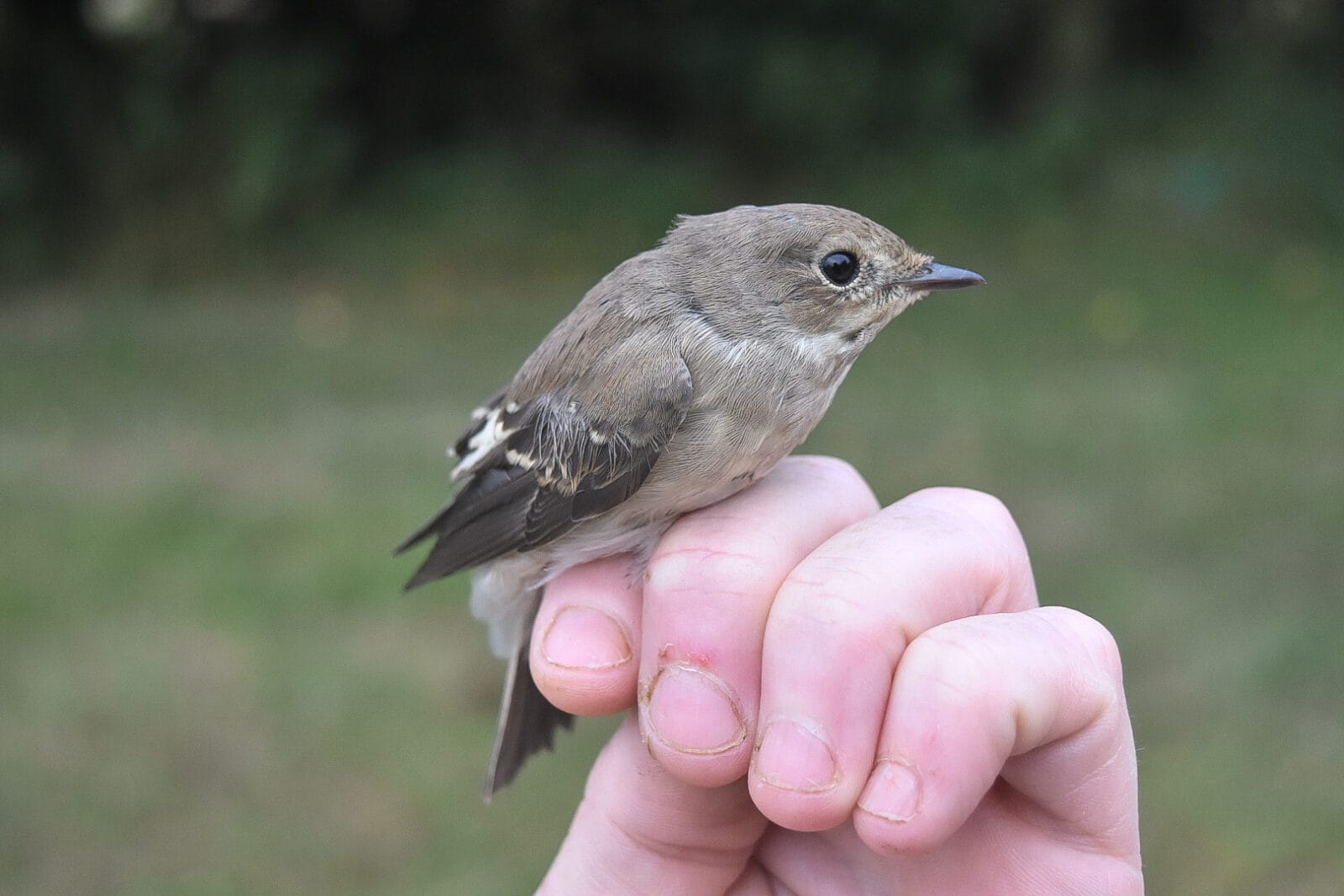
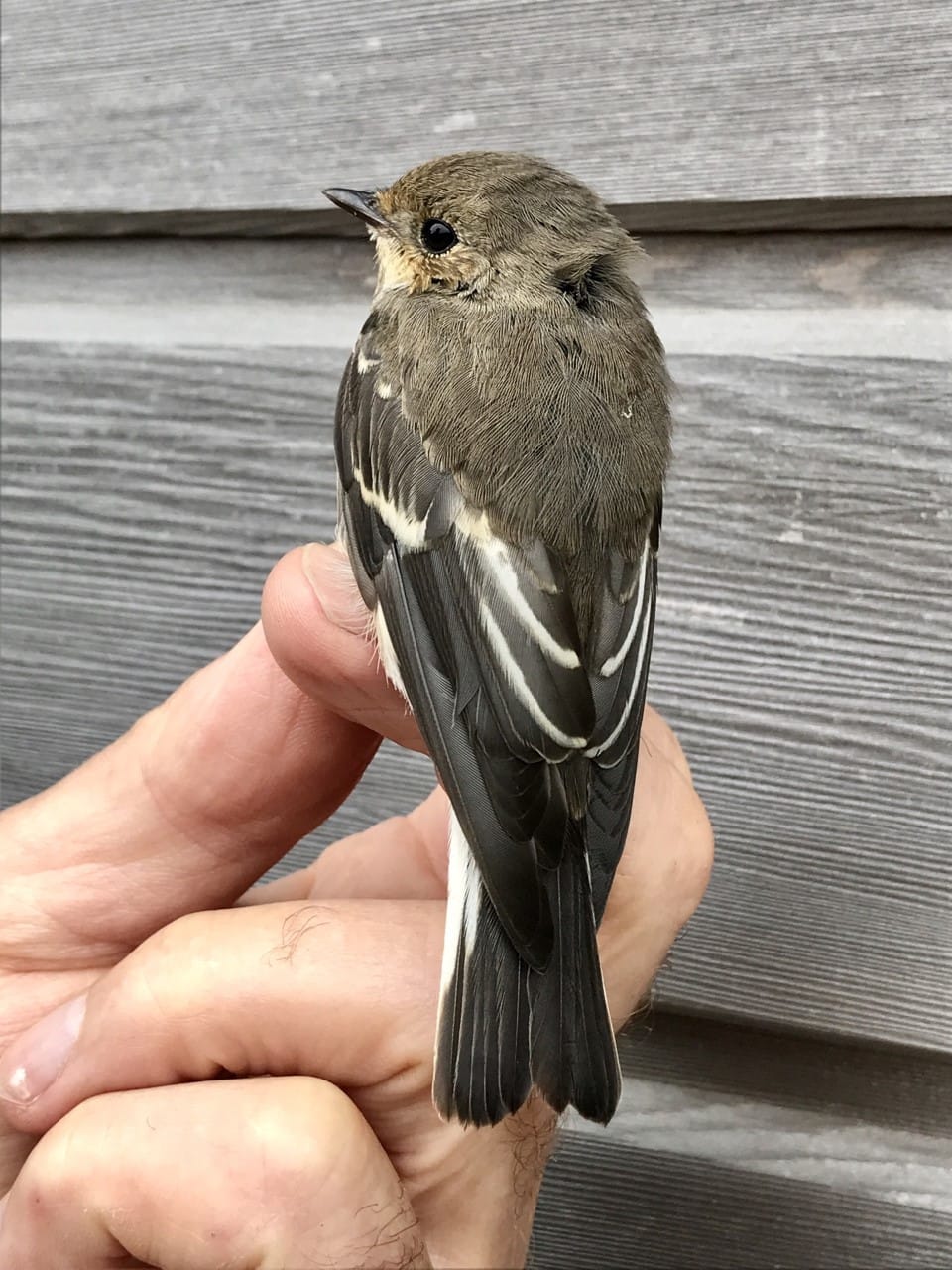
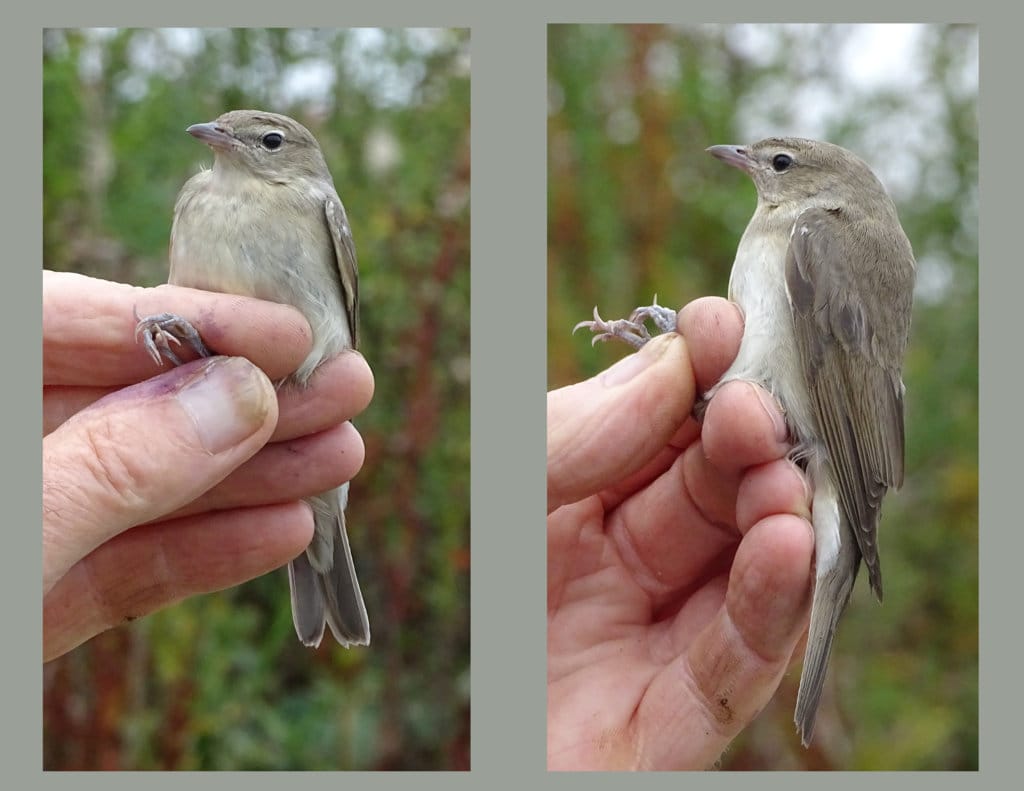
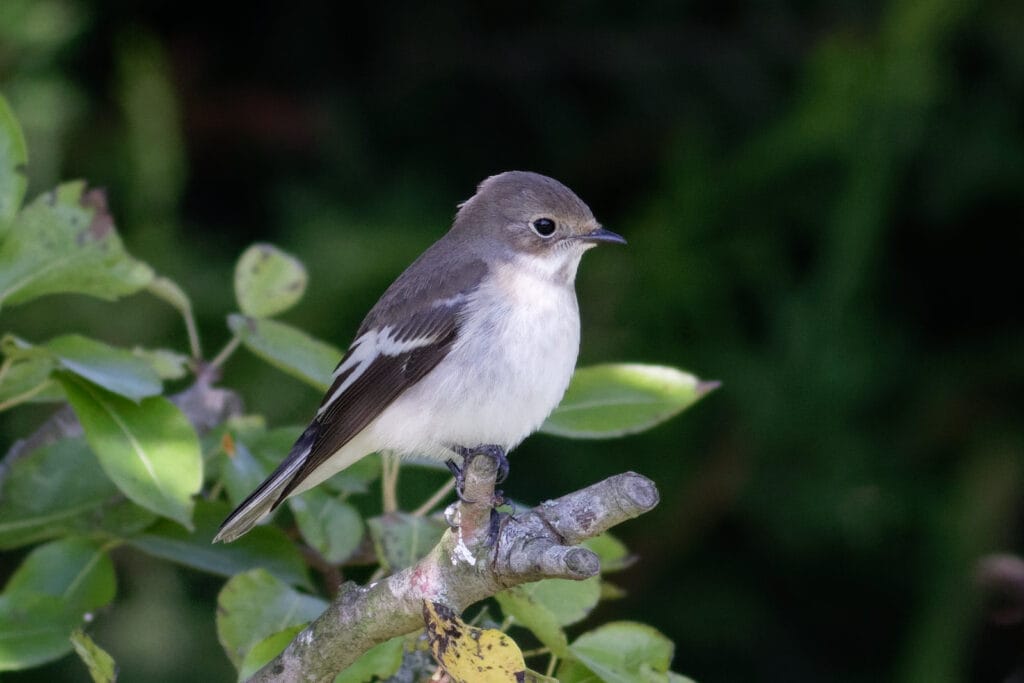
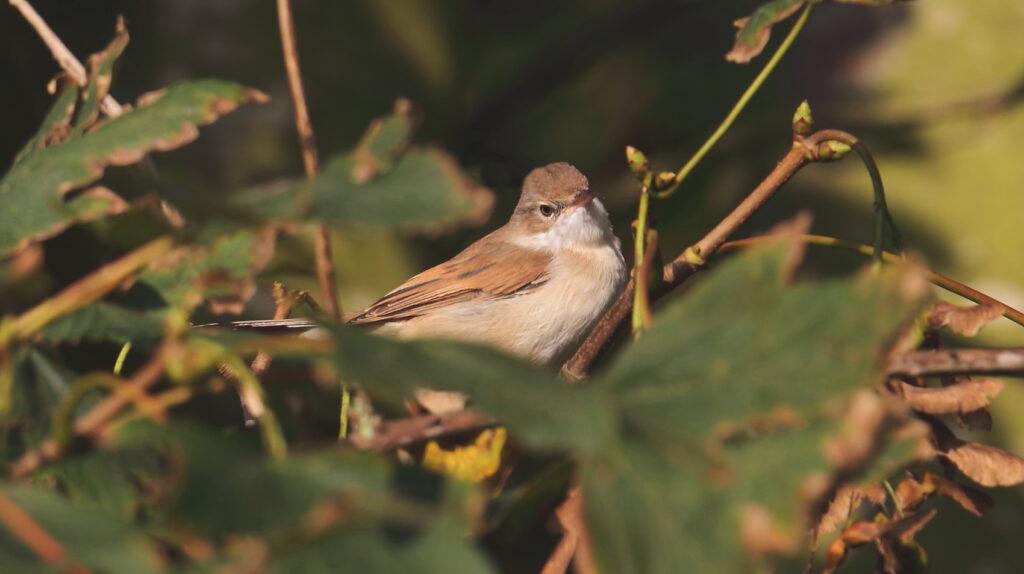
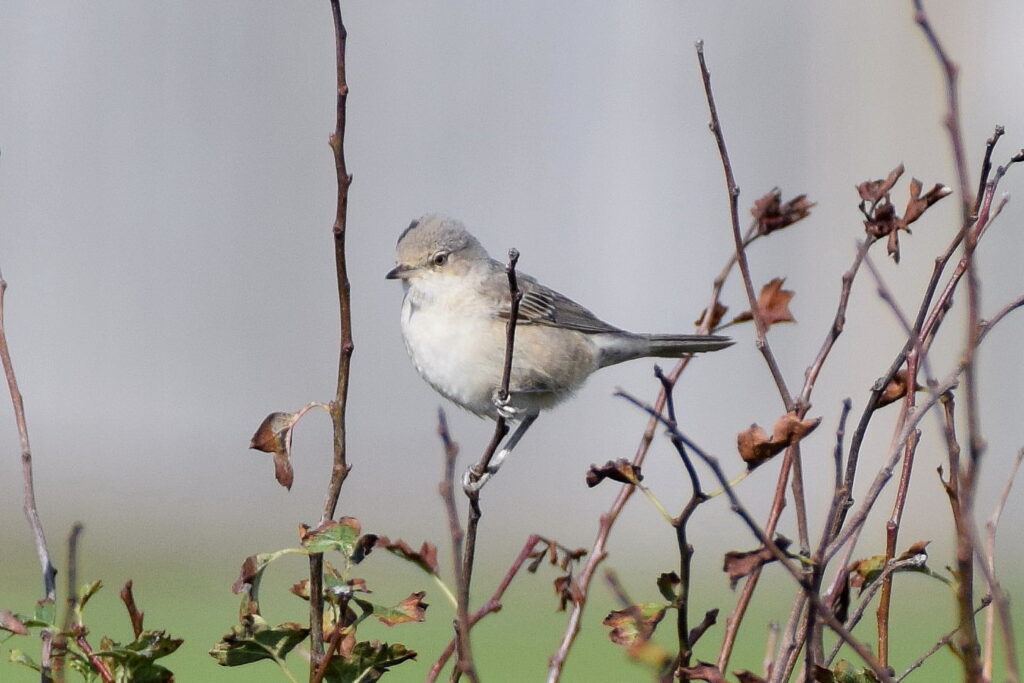
Pied Flycatcher, South Landing, by Jo HoodGarden Warbler, South Landing, by June & Malcolm Fox
Light/moderate north-easterly winds featured throughout an overcast day with occasional showers and temperatures that reached 17 degrees C. Seawatch highlights included two Shoveler, two Sooty Shearwaters, 28 Manx Shearwaters, 88 Sandwich Terns, 111 Common Terns, two Arctic Terns, three Little Gulls, 18 Arctic Skuas and five Long-tailed Skuas (all juveniles) flying north. Two Tufted Ducks, three Red-throated Divers and six Bonxies flew south.
Six Golden Plover, 23 Ringed Plovers, 13 Dunlin, a Greenshank, six Green Sandpipers and a Common Sandpiper contributed to the wader interest on the headland. A small arrival of passerine migrants took place from late morning, headlined by two Red-backed Shrikes on the outer head. Additional migrants were 19 Willow Warblers, six Garden Warblers, nine Pied Flycatchers, eight Wheatear, a Redstart and two Tree Pipits.
Sightings from RSPB Bempton Cliffs included five Teal, four Golden Plover, a Bonxie, two Marsh Harriers, a Reed Warbler, eight Willow Warblers, three Pied Flycatchers, six Whinchat and nine Yellow Wagtails.
Ringing sessions at both Thornwick and South Landing resulted in 81 birds being processed including 13 Willow Warblers, five Garden Warblers and a Pied Flycatcher.
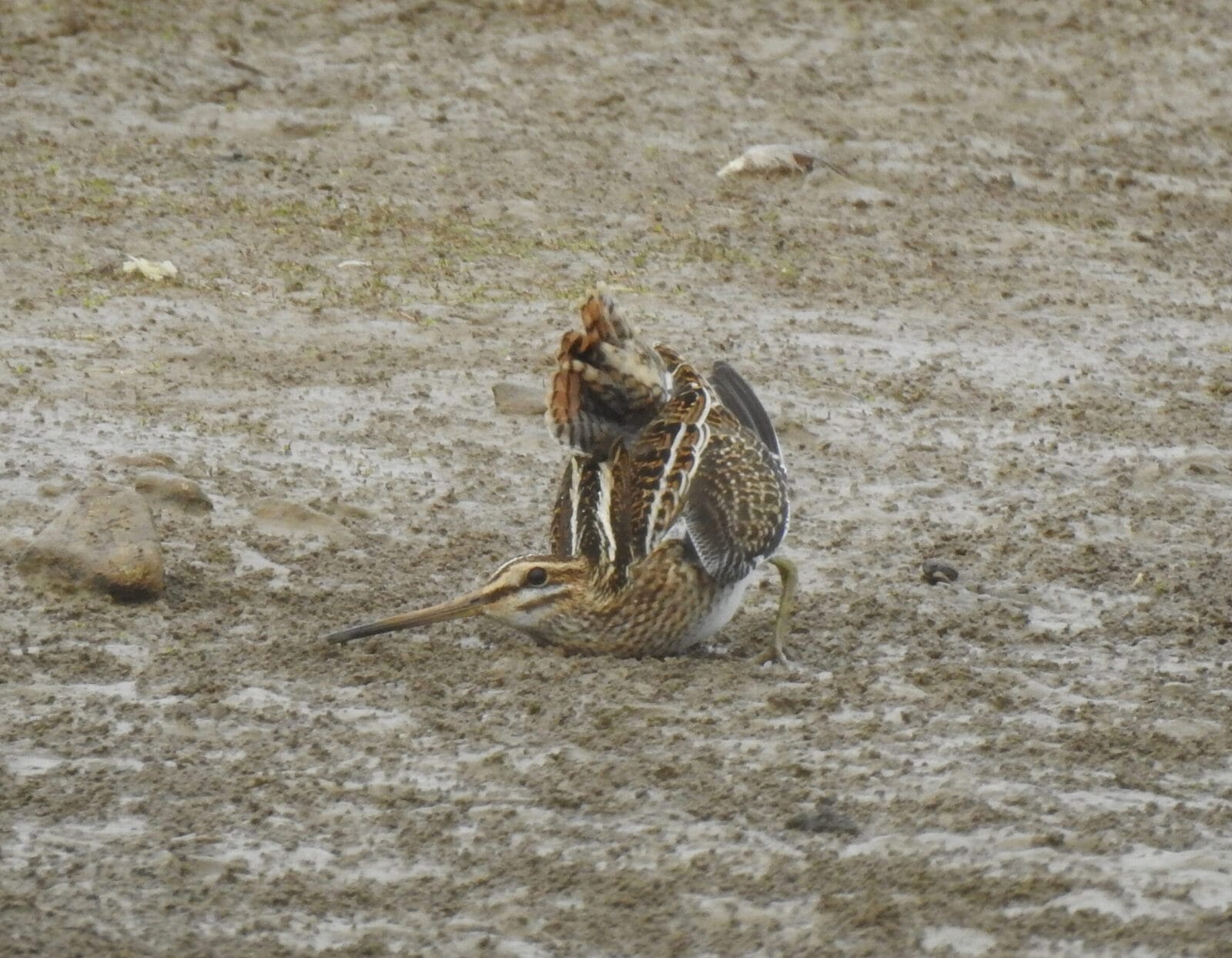
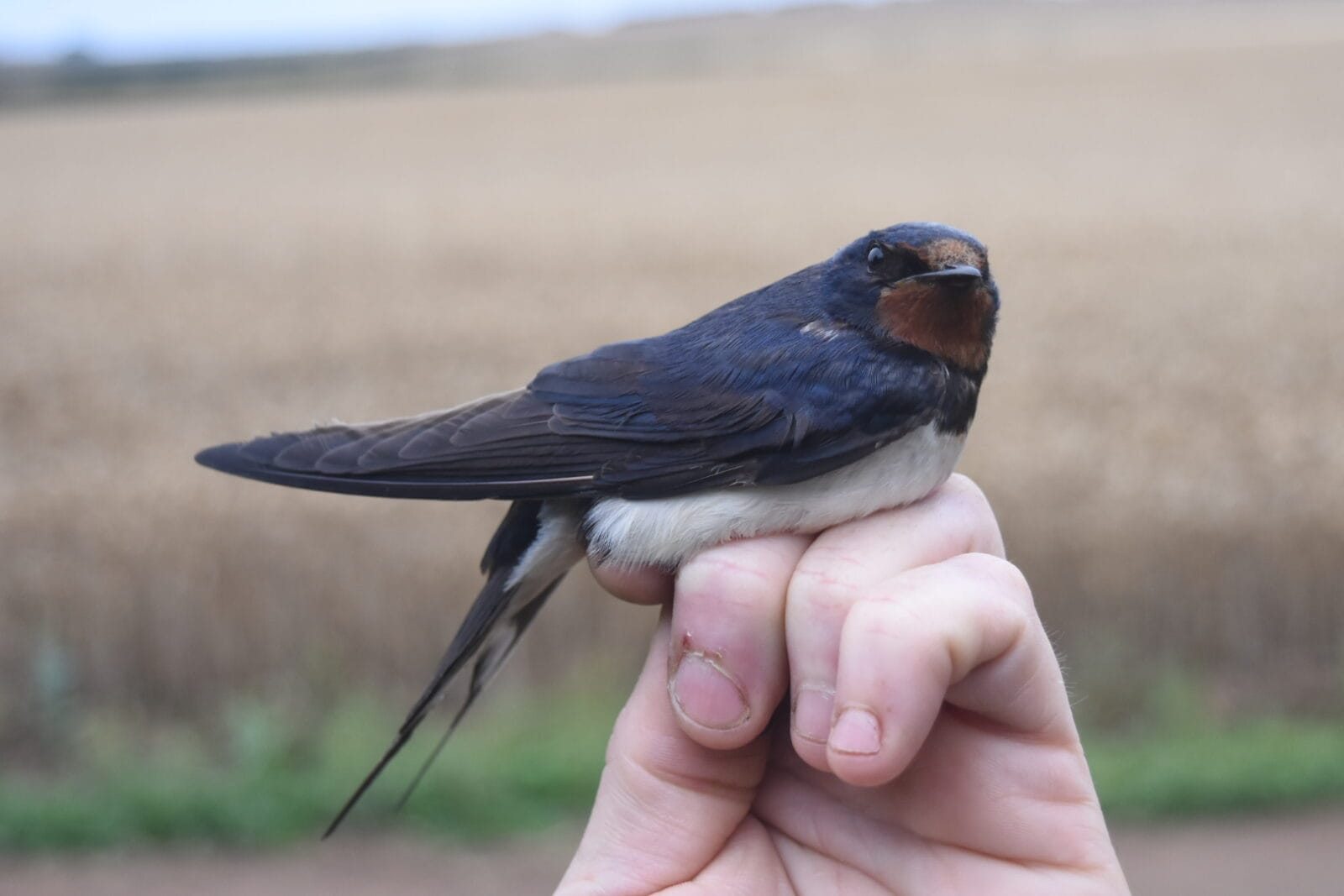
Red-backed Shrike, outer head, by Pete ShortCommon Snipe, Thornwick Pools, by Brett RichardsSwallow, Oceanview, by Andy Hood
Following heavy rain overnight, skies eventually brightened and temperatures reached 19 degrees C; relatively light winds were variable in direction, northerly initially ending south-easterly. Seawatch highlights included 78 Teal, three Red-throated Divers, two Sooty Shearwaters, 101 Manx Shearwaters, 418 Sandwich Terns, 388 Common Terns, an Arctic Tern, five Arctic Skuas, a dark morph Pomarine Skua and a pale morph juvenile Long-tailed Skua all moving north; a Balearic Shearwater, one Little Gull and ten Bonxies flew south. A juvenile Yellow-legged Gull lingered offshore.
Thornwick Pools attracted a Shelduck, four Ringed Plovers, two Dunlin, two Ruff, a Black-tailed Godwit, a Green Sandpiper, two Common Sandpipers and a juvenile Caspian Gull. The latter relocated to the new workings on the western fringe of Thornwick Camp, where it was joined by a second juvenile Caspian Gull early evening. Away from Thornwick, a Wood Sandpiper flew west over Old Fall; three Green Sandpipers moved south over the headland, whilst 14 Ringed Plovers, a Sanderling and five Common Sandpipers frequented South Landing beach.
Four Red-backed Shrikes were in residence on the outer head; two juveniles and an adult female frequented cliff top gorse south of the lighthouse, with a showier individual in the Bay Brambles. Other passerine sightings included 32 Willow Warblers, eight Garden Warblers, two ‘migrant’ Reed Warblers, ten Pied Flycatchers, six Whinchat and ten Crossbills.
Sightings from Buckton/Bempton included two Marsh Harriers, a Garden Warbler, five Pied Flycatchers and three Whinchat; a Long-tailed Skua was seen offshore, as was an Ocean Sunfish.
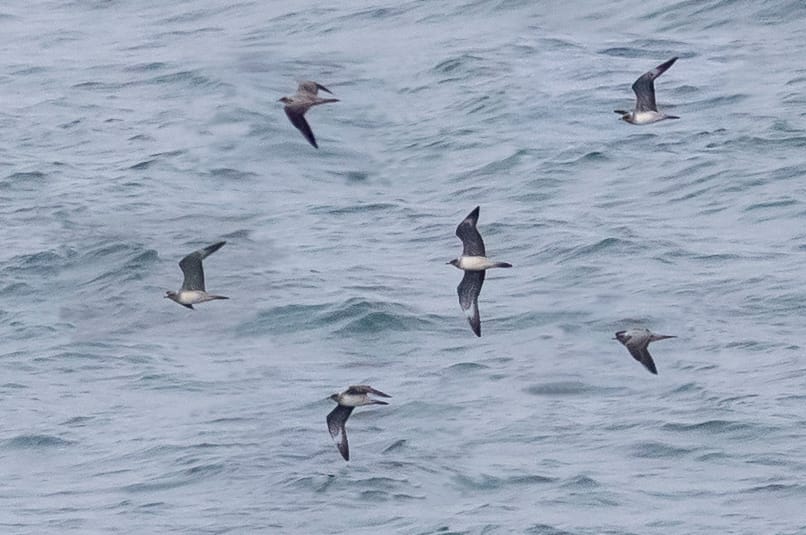
Long-tailed Skua (composite), seawatch, by Andrew AllportCaspian Gull, Thornwick Pools, by Craig ThomasRed-backed Shrike, outer head, by Andrew Allport
The day started with thick fog which gradually cleared to leave a relatively overcast day with brief spells of sunshine and heavy showers; light/moderate south-west winds and temperatures reached 19 degrees C. Seawatch highlights included six Little Egrets flying north, a Ruff south, eight Arctic Terns, two Bonxies and an Arctic Skua.
The influx of interesting larids continued with four juvenile Caspian Gulls and twojuvenile Yellow-legged Gulls present on the outer head; one of the former bathed at Thornwick Pools and singles of both visited the workings on the western side of the camp. Thornwick Pools also hosted the long-staying Shelduck, a Water Rail, two Ringed Plovers, a Ruff and two Dunlin. A Marsh Harrier flew west over North Dykes, but better still, an Osprey headed south over the outer head; a Short-eared Owl was also present. Passerine interest included a Red-backed Shrike on the edge of the Gorse Field, a Garden Warbler and two Pied Flycatchers.
Sightings from RSPB Bempton Cliffs included two Little Egrets flying south-east, six Whinchat and four Stonechats.
Caspian Gull, Thornwick Pools, by Andrew AllportYellow-legged Gull, Thornwick Camp, by Andy HoodBlack-tailed Godwit, Thornwick Pools, by Alan Walkington (17/8)
Winds from the south-west backed south-east and strengthened later in the day as a band of rain arrived; temperatures reached 20 degrees C. Nineteen Teal and five Golden Plover flew south during the seawatch, with 37 Sandwich Terns and 62 Common Terns heading north, whilst a juvenile Yellow-legged Gull loafed offshore.
A Shelduck, five Teal, a Water Rail and one Dunlin frequented Thornwick Pools. RSPB Bempton Cliffs attracted a juvenile Cuckoo and a Pied Flycatcher.
Sunny throughout, with south-west winds backing south-east during the afternoon and temperatures reaching 20 degrees C. During the seawatch, 34 Teal, a Grey Plover, 128 Sandwich Terns, 25 Common Terns, two Bonxies and two Arctic Skuas were recorded.
A ringtail Hen Harrier flew south along the edge of the Golf Course early morning, with three Hobbies also present. Three Greenshank and a Green Sandpiper were recorded at Thornwick Pools. Passerine interest included a lingering Red-backed Shrike, a Spotted Flycatcher, one Whinchat, eight Wheatear, a White Wagtail and 35 Yellow Wagtails.
RSPB Bempton Cliffs attracted five Willow Warblers, a Pied Flycatcher, four Whinchat, three Stonechat, two Wheatears and five Yellow Wagtails.
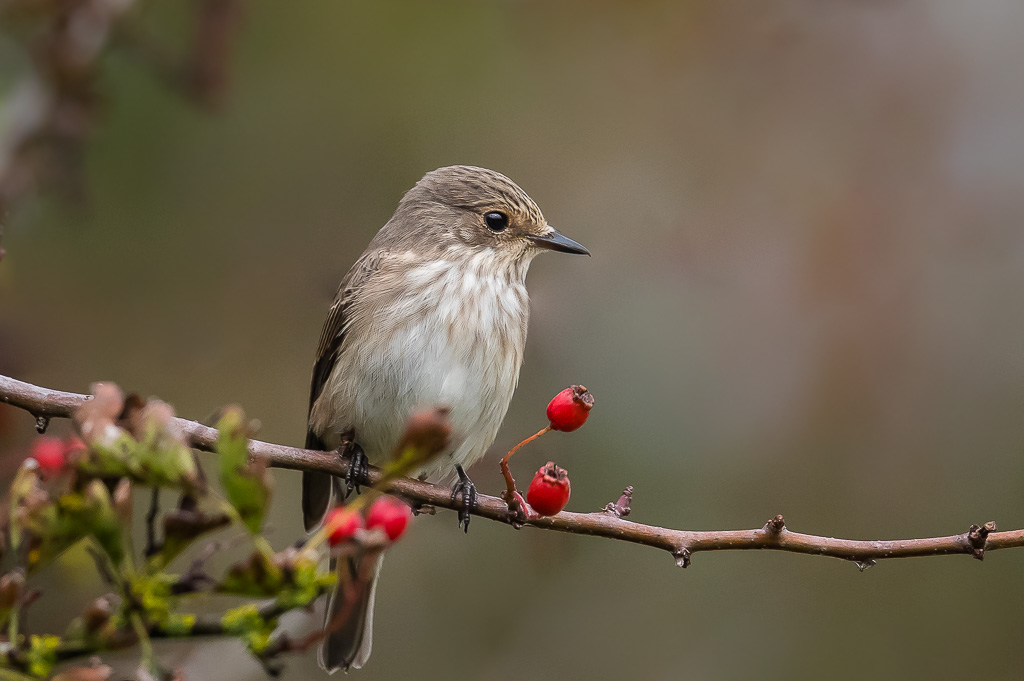
Hobby, outer head, by Andrew AllportSpotted Flycatcher, South Landing, by June & Malcolm Fox
Gale force south-westerly winds dominated a day with sunny intervals and temperatures that reached 22 degrees C. A brief evening seawatch was rewarded with a Manx Shearwater, four Oystercatchers, 18 Knot, a Bonxie, 80 Sandwich Terns, 25 Common Terns, an Arctic Tern, four Little Gulls and 15 Swifts flew south.
Thornwick Pools attracted 11 Teal and a Water Rail. Single juvenile Yellow-legged and Caspian Gulls loafed on fields at Oceanview.
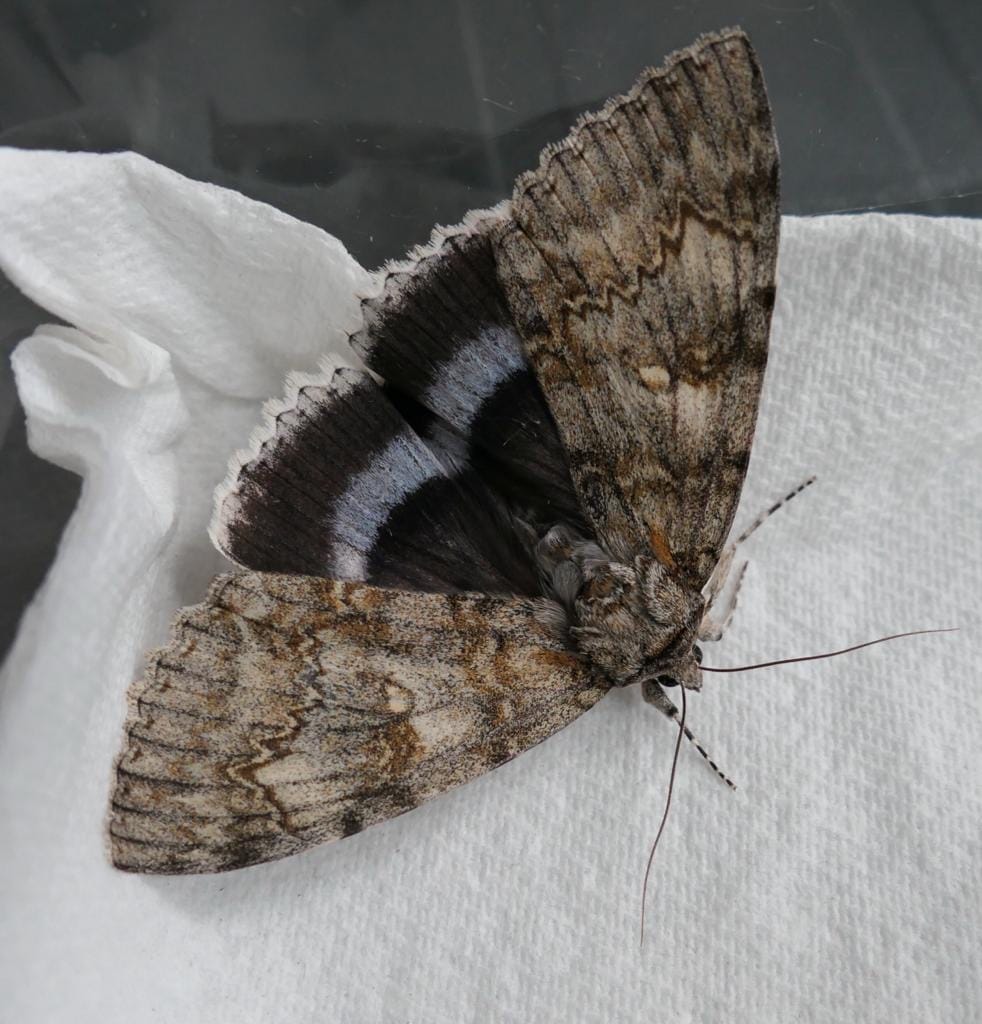
The day’s best sighting related to the discovery of a Clifden Nonpareil moth in a trap on the edge of the village.
The weather consisted of strong south-west winds, blustery showers and sunny intervals, with temperatures reaching 20 degrees C. Seawatch highlights included the following heading south: four Shelduck, ten Teal, 80 Oystercatchers, a Golden Plover, four Ringed Plovers, a Bar-tailed Godwit, 75 Knot, 19 Sanderling, 24 Redshank, a juvenile Caspian Gull, single Mediterranean and Little Gulls, 213 Common Terns, 104 Sandwich Terns. An immature Pomarine Skua flew north, whilst a Short-eared Owl flew in off the sea before feeding over the Gorse Field at dusk. Away from the sea, Thornwick Pools hosted a Gadwall and a ringtail Hen Harrier flew over Oceanview.
Four Marsh Harriers flew in off the sea at RSPB Bempton Cliffs (with a fifth bird at Speeton), with additional sightings on the reserve including two Ruff south-east, a Mediterranean Gull, two Yellow-legged Gulls, a Merlin, a Pied Flycatcher and two Whinchat.
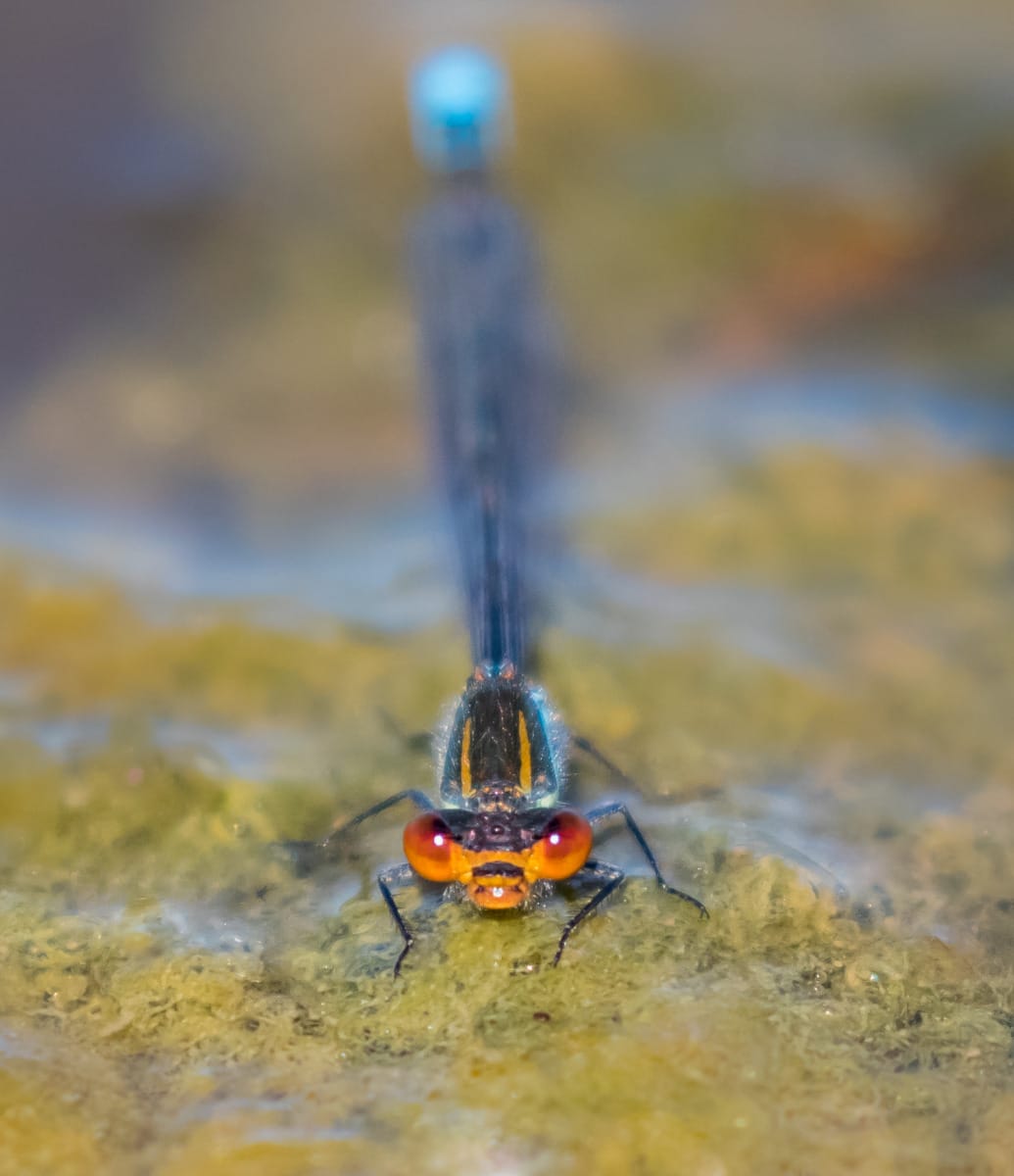
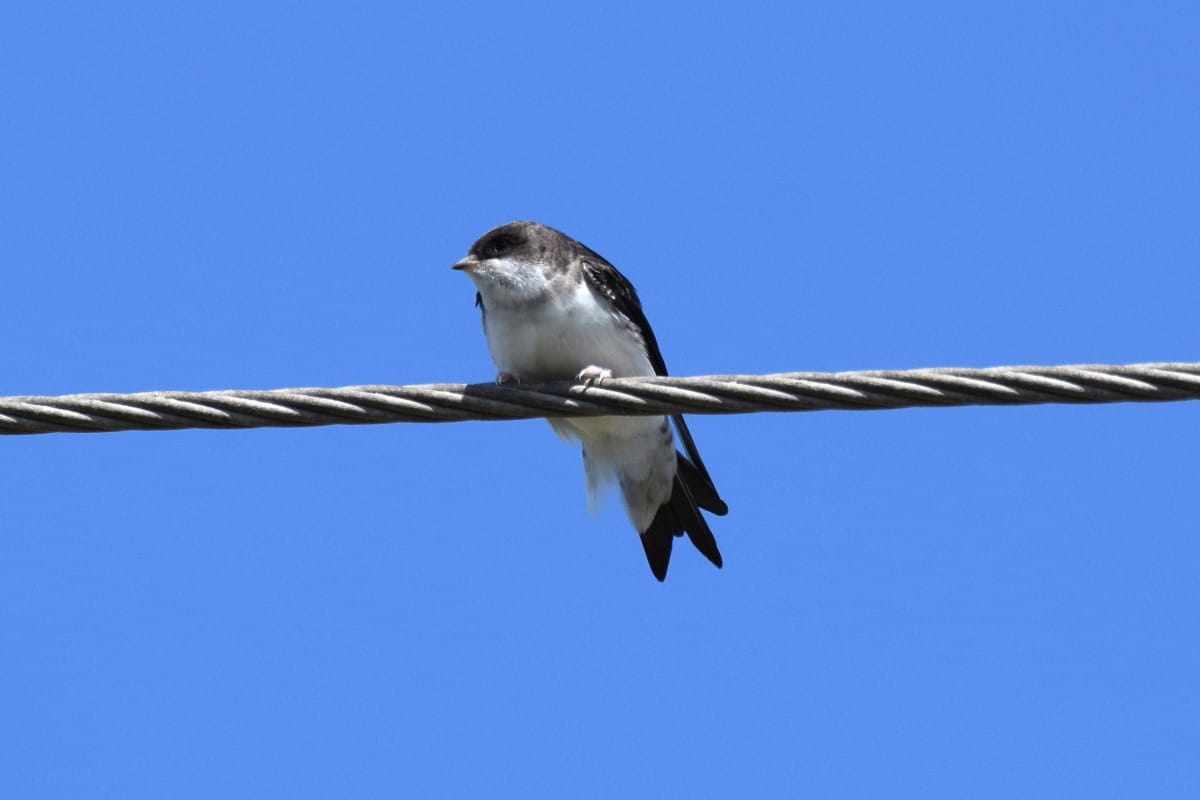
Small Red-eyed Damselfly, Flamborough, by Andrew AllportHouse Martin, Thornwick, by Don Hustings
Moderate westerly winds dropped in strength from mid-afternoon; there were sunny intervals initially, with showers later and temperatures reached 21 degrees C. Seawatch highlights included six Shelduck moving south, a Sooty Shearwater north and a second calendar-year Mediterranean Gull and three juvenile Little Gulls flying south.
Thornwick Pools attracted Gadwall, Shoveler, a Water Rail, two Ruff and 15 Redshank. The ringtail Hen Harrier continued to tour the outer head, a juvenile Merlin overflew Old Fall, whilst two Short-eared Owls hunted the Gorse Field. The day’s main feature included a substantial arrival of 252 Willow Warblers (162 outer head, 90 Bempton). A Red-backed Shrike was in bushes alongside the Golf Course early morning and additional passerine records included a Spotted Flycatcher, two Pied Flycatchers, five Whinchat and two Wheatears.
Sightings from RSPB Bempton Cliffs also included three Marsh Harriers, a Hobby, one Spotted Flycatcher, three Whinchat and a Wheatear.
Red-backed Shrike, outer head, by Geoff DobbsWillow Warbler, Old Fall, by Craig Thomas
A sunny day, with light winds veering from north-westerly to south-easterly in the afternoon. Seawatch highlights included 52 Oystercatchers and 25 Knot south, a juvenile Mediterranean Gull north, two Little Gulls, 394 Sandwich Terns, 57 Common Terns, two Arctic Terns, five Bonxies, an immature Pomarine Skua and 27 Arctic Skuas all south.
Thornwick Pools attracted single Shelduck, Gadwall and Shoveler, three Green Sandpipers, two Greenshank and a Dunlin. Elsewhere, the ringtail Hen Harrier flew east over South Landing, with the adjacent beach hosting a Knot, seven Common Sandpipers and two juvenile Mediterranean Gulls. Passerine interest included a 34 Willow Warblers, a Whinchat, 17 Yellow Wagtails and a Crossbill.
Strong south-easterly winds veered south-west late afternoon during a day of heavy rain. Seawatch highlights included three Gadwall, 77 Teal, 21 Little Gulls, two Arctic Terns and 86 Common Terns flying south, whilst a juvenile Long-tailed Skua and 72 Sandwich Terns headed north.
A strong west-north-westerly wind veered northerly and gradually decreased in strength. Drizzle persisted for the first post-dawn hours, but visibility gradually improved, with occasional sunny intervals by the afternoon. Such weather conditions appeared conducive for seawatching and so it proved. The day’s highlight was a Great Shearwater that initially headed south at moderate range at 1720hrs; it then returned back north close inshore at 1850hrs. In addition, a Storm Petrel that flew south past the Fog Station subsequently lingered off the headland for an hour early morning. Other notable sightings included five pale-bellied Brent Geese, 54 Sooty Shearwaters and 53 Manx Shearwaters all north, a Pomarine Skua, 59 Bonxies, 117 Arctic Skuas (highest daily count since 29th August 2011) and 13 Long-tailed Skuas all south; a juvenile Yellow-legged Gull and single Mediterranean and Little Gulls were also recorded. Elsewhere, a Short-eared Owl was present at North Landing.
Sightings from RSPB Bempton Cliffs included the aforementioned Brents, seven Long-tailed Skua, a Pomarine Skua, 21 Arctic Skua and a Marsh Harrier.
Light east-south-easterly winds established during a largely overcast day, with temperatures reaching 16 degrees C and rain arriving before dark. Seawatch highlights included a Pale-bellied Brent Goose, 30 Sooty Shearwaters, 97 Manx Shearwaters, a Balearic Shearwater, 119 Sandwich Terns, 25 Common Terns, two Arctic Terns, seven Bonxies and three Puffins flying north; five Red-throated Divers, a Snipe, eight Knot and five Arctic Skuas headed south, whilst a creamcrown Marsh Harrier flew out east. Wader interest on the headland included nine Whimbrel and single Common Sandpiper and Greenshank; two Short-eared Owls hunted grassland near North Marsh. Passerine interest included a Redstart and two Wheatear in what was otherwise a quiet day. A ringing session was rewarded with 38 birds being rung, including four Willow Warblers, five Whitethroats and a Lesser Whitethroat.
Sightings from RSPB Bempton Cliffs included a Marsh Harrier, three Whimbrel and a Grey Wagtail moving south-east, with single Garden Warbler, Whinchat and Wheatear in residence.
The day began with strong east-north-easterly winds and heavy rain, with winds backing north-easterly and increasing to gale force by the afternoon when the rain also intensified. Once again seawatching was order of the day, with a Great Shearwater along the surfline from 0900-0910hrs the undoubted highlight. Other sightings included 19 Pale-bellied Brent Geese, two Shoveler, seven Pintail, 78 Teal, 30 Common Scoter, 850 Fulmars, 35 Sooty Shearwaters and 17 Manx Shearwaters flying north; birds heading south included five Red-throated Divers, 17 Bonxies, 85 Arctic Skuas and 16 Long-tailed Skuas.
Thornwick Pools hosted single Teal, Shoveler, Common Sandpiper, Greenshank and two Snipe, whilst the ‘new workings’ attracted Ruff and Common Sandpiper. A Pied Flycatcher sheltering in a garden at North Landing hinted at a larger arrival, but weather conditions were atrocious.
Sightings from RSPB Bempton Cliffs three Brent Geese, two Marsh Harriers, six Arctic Skuas, one Pied Flycatcher and a Hawfinch.
Gusting gale force north-north-westerlies, overcast skies and occasional rain ensured the seawatch comprised the main event. A Great Shearwater flew slowly north at close range at 1700hrs, with views establishing it was a different individual to yesterday’s bird. Other notable sightings included 15 Pale-bellied Brent Geese, 48 Wigeon, a Pintail, two Eider, 81 Sooty Shearwaters, 72 Manx Shearwaters and four Arctic Terns flying north. Birds heading south included 118 Teal, 38 Bonxies, 103 Arctic Skuas and 11 Long-tailed Skuas.
Shoveler, Thornwick Pools, by Andrew AllportGreenshank, Thornwick Pools, by Steve Meredith
The weather consisted of moderate/strong northerly winds and generally overcast skies. Northbound passage during the seawatch included eight Pale-bellied Brent Geese, 53 Wigeon, a Pintail, 78 Teal, 72 Common Scoter, a Red-breasted Merganser, 27 Red-throated Divers, a Storm Petrel,147 Sooty Shearwaters, 234 Manx Shearwaters, a Little Gull, two Mediterranean Gulls, 86 Sandwich Terns, 33 Bonxies and seven juvenile Long-tailed Skuas. Heading south were a Red-breasted Merganser and 29 Arctic Skuas.
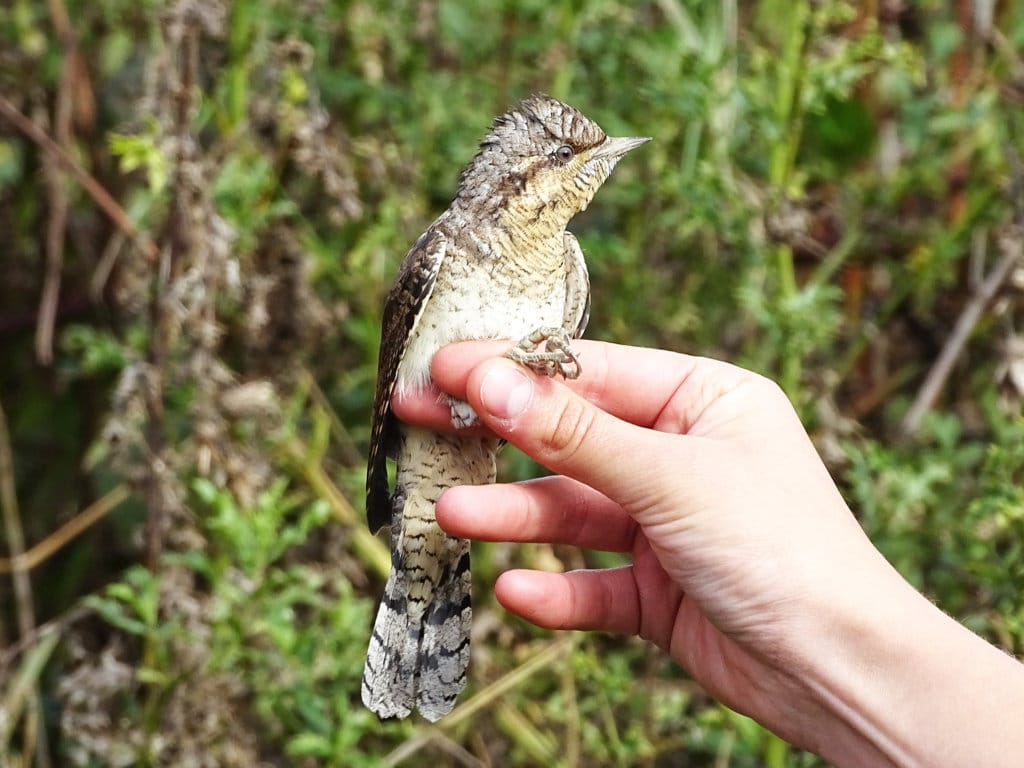
A Wryneck caught and ringed at South Landing was the headline act to a scattering of migrant passerines despite the relatively strong (although decreasing) northerly wind, involving: 27 Willow Warblers, three Reed Warblers, two Garden Warblers, six Pied Flycatchers, three Spotted Flycatchers, three Whinchat, five Wheatear and a Grey Wagtail.
RSPB Bempton Cliffs attracted 12 Willow Warblers, a Reed Warbler, one Garden Warbler, three Pied Flycatchers and a Hawfinch.
Wryneck, South Landing, by June & Malcolm FoxLong-tailed Skua, by Andrew Allport
The winds were light, initially from the north-west and latterly from the south-east, with sunny intervals and temperatures reaching 15 degrees C. A juvenile ‘intermediate morph’ Long-tailed Skua represented the seawatch highlight, with additional sightings including seven Sooty Shearwater, six Manx Shearwaters and nine Red-throated Divers flying north, 50 Oystercatchers moving south and three Arctic Terns, 56 Common Terns and 59 Sandwich Terns north.
Two Pale-bellied Brent Geese frequented the shoreline at New Fall, South Landing hosted a Little Egret, whilst Thornwick Pools attracted a Shoveler, three Teal and single Redshank, Dunlin and Greenshank. Waders flying over the headland included lone Grey Plover, Golden Plover, Greenshank, Snipe and Black-tailed Godwit; two Ruff frequented the Golf Course. A creamcrown Marsh Harrier hunted cliff top fields near the Fog Station early morning, 12 Common Buzzards included a flock of ten birds, whilst Hobbies appeared over the Gorse Field and Bempton village.
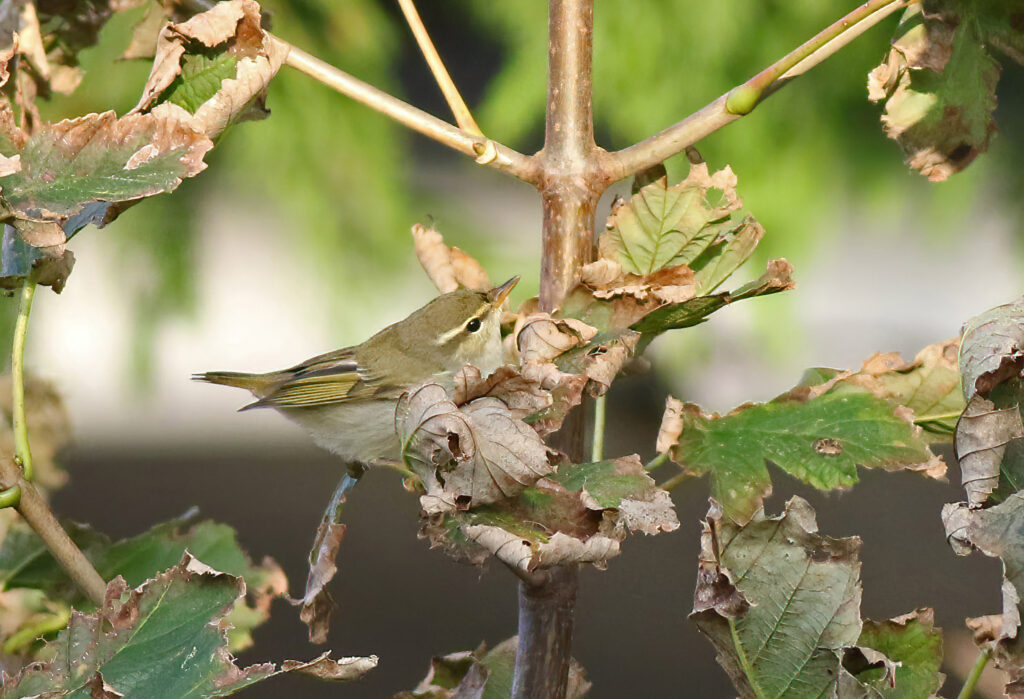
The day’s highlight was the discovery of a Greenish Warbler on the edge of the Gorse Field early morning. A Wryneck that showed sporadically in cliff top scrub at South Dykes was also noteworthy. Additional passerine records included an arrival of Lesser Whitethroats (17), one Garden Warbler, seven Pied Flycatchers, 130 Meadow Pipits, four Wheatears, three Yellow Wagtails, a Grey Wagtail, five Siskin and two Lesser Redpolls.
Sightings from RSPB Bempton Cliffs included a Greenshank over, two Reed Warblers and three Pied Flycatchers.
Sunny throughout, with a light south-easterly wind establishing in the afternoon. A single flock of 17 Common Buzzards over the outer head provided an impressive spectacle, with a Marsh Harrier also in the same area; smaller groups of Common Buzzards at various locations subsequently were presumed to have involved combinations of the original 17. Three Greenshank flew over the headland, whilst the year’s second Kingfisher over Bempton Lane provided a somewhat incongruous sight. Passerine interest included the first migrant Goldcrests (three) and a Pied Flycatcher. Ringing sessions at Oceanview/South Landing resulted in 65 birds being processed including two Goldcrest, two Whitethroats, two Treecreepers and 28 Meadow Pipits.
RSPB Bempton Cliffs hosted 18 Common Buzzards, a Marsh Harrier, a Short-eared Owl, two Goldcrests, single Pied Flycatcher, Whinchat and Wheatear along with five Yellow Wagtails.
After a bright start, the day ended with rain and a moderate south-westerly wind.
Single Greenshank and Snipe flew over Oceanview, where there were also a Goldcrest and two Siskin. Records from a cliff top walk between Speeton and Buckton included a juvenile Marsh Harrier, three juvenile Kestrels, a Wheatear, four Yellow Wagtails and three Crossbills; the latter moving south-east, as did 31 Swifts ahead of the rain. Sightings from RSPB Bempton Cliffs included single Little Egret and Siskin flying south-east, whilst passerine interest on the reserve included four Pied Flycatchers, three Whinchat, four Stonechat and a Hawfinch; the latter once again only noted in flight.
The weather consisted of moderate westerly winds, sunny intervals and temperatures that reached 20 degrees C. Highlights of the seawatch included a Shelduck, 23 Wigeon, 270 Teal and 27 Common Scoters flying south, a Sooty Shearwater and Little Egret heading north, seven Grey Herons, 19 Knot and 21 Dunlin moving south. Two Bonxies and three Arctic Skuas were also recorded flying past the headland.
Notable records from RSPB Bempton Cliffs included 36 Wigeon and a Hobby moving south-east and two Siskin flying in the opposite direction. A Marsh Harrier also frequented the reserve along with two Pied Flycatchers, two Whinchat, the long-staying juvenile Hawfinch and 200 Linnets.
Sunny intervals predominated with a moderate south-westerly wind. Temperatures peaked at 18C during the afternoon.
Late afternoon seawatching and was predictably low key. What interest there was being limited to 3 Whimbrel and 6 Knot. Otherwise there was one Manx Shearwater, Eider and Red-throated Diver. During the morning, however, 1 or 2 Minke Whales passed along the northern cliffs between Bempton and Thornwick.
At Flamborough, Meadow Pipits were moving during the morning with 221 counted passing along the Dykes along with 13 Siskin and a Grey Wagtail. Hirundines were also passing through with 280 House Martins and 70 Swallows while 2 Swifts were at North Landing. Passerines included a Spotted Flycatcher, 4 Wheatears and a Reed Warbler. Birds of the day were a Turtle Dove flying NW along the clifftop towards North Dykes and a Hen Harrier in the same area.
Bempton attracted single Spotted and Pied Flycatchers, 2 Reed Warblers, 4 Willow Warblers and single Chiffchaff and Goldcrest.
Largely cloudy with a moderate to fresh westerly wind, temperatures reach 18°C mid-afternoon.
A morning seawatch produced a single Sooty Shearwater blogging before flying north and a summer-plumaged Great Northern Diver also moving north; an evening watch produced 2 juvenile Mediterranean Gulls, 14 Knot, 18 Sandwich Terns and a Red-throated Diver south and 8 Swifts in off.
A juvenile Hen Harrier quartered the field on the south side of the Outer Head during the morning. A small fall on the Outer Head consisted of 9 Spotted Flycatchers, a Garden Warbler, 17 Willow Warblers, 2 Chiffchaffs, 6 Wheatears, a Whinchat and 2 Yellow Wagtails while 8 Siskins flew over. Meadow Pipits were moving again with 140 counted flying west along the southern cliffs. A single Whimbrel flew over the village and a Water Rail was at Thornwick Pools. By evening, there was 360 Great Black-backed Gulls roosting on the golf course.
Bempton again produced a good variety of passerine migrants with 11 Willow Warblers, 3 Chiffchaffs, 5 Blackcaps, a single Garden Warbler and Lesser Whitethroat, 8 Whitethroats and 2 Goldcrest. Reflecting the situation on the Outer Head 5 Spotted Flycatchers were present along with a single Pied. A Redstart, 3 Wheatears, 2 Yellow Wagtails and 13 Siskin were also seen. A flock of 140 Goldfinch was notable. A Marsh Harrier was in the Buckton area again.
juvenile Hen Harrier, Outer Head by Heidi Saunders
Cloudy all day, the wind was a light westerly during the morning but had veered to a northerly about midday. A band of rain arrived late afternoon and temperature reached a maximum of 15°C.
The sea was watched all day and viewing was more eventful than of late. The highlights included 37 Red-throated Divers (29 south), 20 Sooty Shearwaters north, 15 Manx (11 north), 6 Whimbrel and a Snipe south, single juvenile Mediterranean and Yellow-legged Gulls, 172 Sandwich Terns south. All four skua species put in an appearance with 13 Great, 44 Arctic (42 south) and a single Pomarine south and a Long-tailed north. Overhead, 2 Yellow Wagtails, 113 Meadow Pipits and 10 Siskin were all southbound. Cetaceans were also evident with at least 12 Harbour Porpoises offshore and a Minke Whale that was seen to breach.
Five Whimbrel passed Beacon Hill. On land, 2 Spotted Flycatchers, a Wheatear, a Sedge Warbler and 2 Yellow Wagtails were the best of a limited selection of migrants.
West of the Dykes, the first Pink-footed Geese of the autumn were 110 heading SW over Bempton whilst passerine interest included a Redstart, a Pied Flycatcher, 6 Willow Warblers and 2 Chiffchaff.
The day was mainly cloudy and dull with a moderate south-westerly and temperatures never exceeded 17°C.
Sooty Shearwaters featured again during today’s seawatches with 34 north, along with 6 Manx. Other highlights included 20 Common Scoter, 4 Red-throated Divers, a Great Crested Grebe and 92 Sandwich Terns north. Waders were represented by 8 Whimbrel, 17 Curlew, 7 Bar-tailed Godwit, 9 Knot, and 3 Dunlin all heading south along with 2 Little Egrets. There were few skuas with only 2 Great and a single Arctic. Lastly, a Short-eared Owl flew south.
Away from the Fog Station, finding migrants required a level of determination and rewarded by 5 Willow Warblers, 5 Chiffchaffs, 3 Blackcap, 4 Whitethroat, 1 Lesser Whitethroat, 2 Goldcrest and a Spotted Flycatcher. There was more interest provided by waders in the shape of 25 Curlew, a Whimbrel, 3 Bar-tailed Godwits, 24 Turnstone, a Knot, 19 Dunlin, 3 Snipe and 6 Redshank. Numbers of Swifts are now low with only 3 noted.
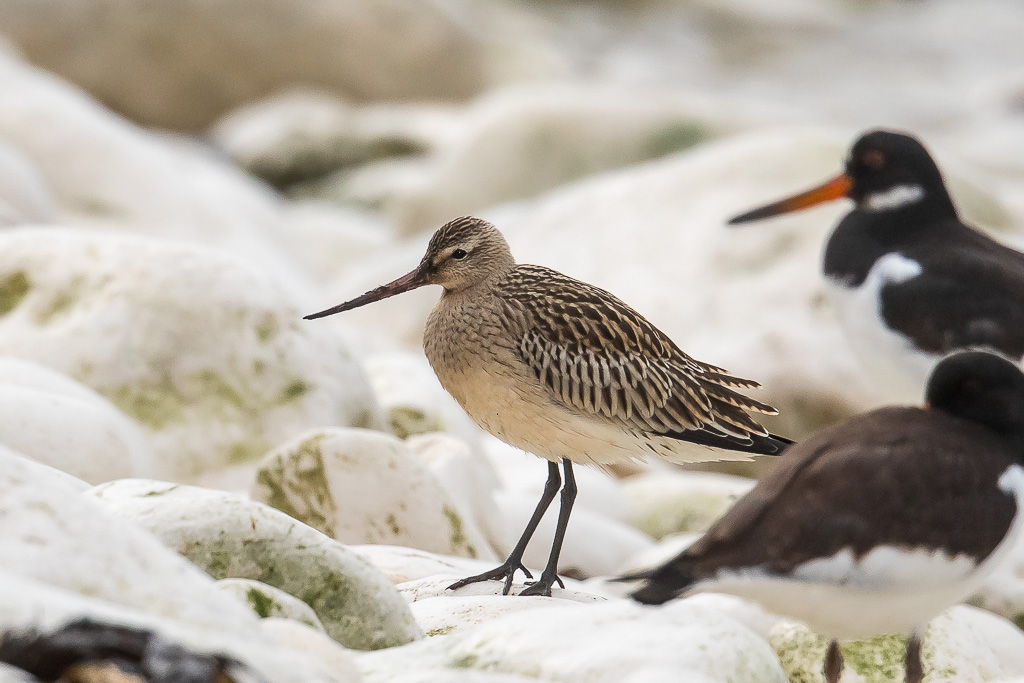
Bar-tailed Godwit, South Landing by Andrew Allport
The weather was warm, temperatures rising to 22°C, with sunny intervals and a light westerly breeze.
Seawatching yielded just one Sooty Shearwater. Terns provided greatest numbers with 115 Common, a single Arctic and 81 Sandwich Terns passing north while a juvenile Yellow-legged Gull was also present off the Fog Station.
Low numbers of warblers were present with 2 Willow Warblers, 2 Chiffchaffs, 2 Blackcaps, and a Whitethroat. A Grasshopper Warbler was a surprise find in a net at South Landing where a Redwing was a harbinger of many more to make landfall over coming weeks. Meadow Pipits and Siskins were moving again with 111 and 60 respectively heading SW along the southern cliffs and a Crossbill was present in a local garden. Swifts numbered 8 around the village and there was about 70 Swallows. Thornwick Pools attracted 7 Teal and 3 Dunlin. A Marsh Harrier frequented the Outer Head.
Bempton still held single Whinchat, Spotted Flycatcher, Willow Warbler and Chiffchaff while a Marsh Harrier continued to hunt in the area.
A bright and warm day, the light to moderate westerly wind continued, temperatures reached 20°C.
Highlights of the morning seawatch included 4 sooty Shearwaters north and a single Manx south. Passing waders were restricted to one Bar-tailed Godwit. A juvenile Mediterranean Gull flew north as did 61 Common Gulls which is a significant increase on previous days. Four Arctic Skua headed south and a single Bonxie north. Passerines passing overhead included a Grey and 2 Yellow Wagtails, 207 Meadow Pipits and 12 Siskins. During the afternoon, a Cory’s Shearwater headed slowly north, 2 Manx Went south as did 2 Little Egrets.
Away from the Fog Station, wader interest included 2 Common Sandpipers at Hartendale. A juvenile Caspian Gull put in appearance at Thornwick Pools and 32 Pink-footed Geese passed over. There were more passerine migrants than in recent days. In addition to the Meadow Pipits counted on the seawatch a further 88 were logged on the Outer Head. Eleven Spotted Flycatchers, 4 Wheatear, 3 Whinchat were all increases on recent days while warblers were also well represented with 3 Lesser Whitethroat, 8 Whitethroats, 3 Blackcaps, 8 Willow Warblers, 7 Chiffchaffs and single Sedge and Reed Warblers. A Crossbill flew over the Gorse Field and 5 Siskin were also present.
The bird cover crop at Bempton is producing results with an extraordinary mixed flock of 1000 Linets and Goldfinches. Other highlights included 3 Marsh Harriers and 3 Short-eared Owls, 5 Willow Warblers, 9 Chiffchaffs, 6 Blackcap, 6 Whitethroat, a Lesser Whitethroat, a Spotted Flycatcher, 2 Wheatears, 7 Yellow Wagtails and a Crossbill. Buckton was also in on the action with a 6 Willow Warblers, a Sedge Warbler and 3 Blackcaps.
Today felt appreciably cooler with afternoon the temperature peaking at 16°C. A sunny morning gave way to a much cloudier afternoon with the wind mainly from a westerly direction.
At the Fog Station, morning and evening seawatches were steady, the highlights being 11 Sooty and 19 Manx Shearwaters flying north, 87 Common Scoter north and 37 Sandwich Tern south. There relatively few skuas with 4 Bonxies and 3 Arctic. Reduced numbers of Meadow Pipits were passing overhead with only 21 logged together with a Grey Wagtail and a single Swift.
Migrants seemed to be in short supply again with only 3 Willow Warblers, 7 Chiffchaff, a Lesser Whitethroat, 2 Grey and 1 Yellow Wagtails, 3 Spotted and a single Pied Flycatchers. A Lesser Redpoll and 15 Siskins were on the Outer Head. Meadow Pipits numbered 86 and there was a Stonechat at Beacon Hill. Wader interest included 4 Bar-tailed Godwits, a Whimbrel and a Golden Plover. A Hobby dashed through Thornwick,
At Bempton, a Hobby flew SE and no doubt the same individual seen at Thornwick, 14 Coal Tits, departing over the field in groups of 5 and 9, was a good count and otherwise there was a general scattering of common migrants including 5 Yellow and 2 Grey Wagtails, 2 Willow Warblers, 3 Chiffchaff, 2 Blackcap, 3 Lesser Whitethroat, 3 Goldcrest , 3 Stonechat and 2 Wheatear. Three Great Spotted Woodpeckers and single lesser Redpoll and Siskins flew over. At least 4 Bottle-nosed Dolphins headed NW offshore.
Buckton also produced bird with 2 Whinchat , 2 Willow Warblers, a Blackcap with 1 or 2 Marsh Harriers still hunting the fields.
The weather consisted of moderate south-south-westerly winds, sunny intervals with periods of extensive cloud and temperatures that reached 18 degrees C. Seabird passage was subdued, with four Sooty Shearwaters flying north, along with 59 Common Scoters, three Bonxies and an Arctic Skua; a Little Egret and lone juvenile Mediterranean and Yellow-legged Gulls were also recorded from the Fog Station.
Thornwick Pools attracted ten Teal and two Dunlin, with four Bar-tailed Godwits and six Snipe over the outer head.; the latter appearing to come in off the sea. Passerine interest was confined to three Grey Wagtails and two Wheatears, one of which showed characteristics of the Greenland subspecies, mirroring similar records from other locations.
Notable records from RSPB Bempton Cliffs included a Marsh Harrier and 300 Linnets.
The day featured moderate/strong west-south-westerly winds, sunny intervals and temperatures that peaked at 18 degrees C. Eleven Red-throated Divers flew south during a seawatch that also included two Manx and a Sooty Shearwater moving north, whilst a Bar-tailed Godwit, two juvenile Mediterranean Gulls and seven Little Gulls flew south; a juvenile Yellow-legged Gull lingered off the outer head.
Away from the sea, two Little Egrets flew south, a Red Kite drifted over the village and three Swifts remained. Passerine migrants included three Spotted Flycatchers, a Whinchat, three Yellow Wagtails, 18 Siskin, 22 Lesser Redpolls and a Lapland Bunting that flew in off the sea at the lighthouse. Eleven Coal Tits, included three also ‘in off’ at the lighthouse continuing the influx noted over recent days.
Sightings from RSPB Bempton Cliffs included single Little Egret, Merlin and Hobby, a Wheatear, two Yellow Wagtails, seven Siskin and a Lesser Redpoll. A Marsh Harrier hunted cliff top fields at Buckton.
A moderate/strong west-south-westerly wind once again, with prolonged sunny intervals and temperatures reaching 23 degrees C. Two Sooty Shearwaters flew past the Fog Station, as did 11 Red-throated Divers, three Bonxies and four Arctic Skuas. Better still, an Osprey flew in off the sea and south at 0952hrs; part of a southerly movement involving several different individuals along the North-east coast.
Thornwick Pools attracted 17 Teal, four Bar-tailed Godwits frequented the Golf Course, a juvenile Caspian Gull fed behind the plough at Old Fall and a Swift flew over North Landing. Passerine migrants included two Sedge Warblers, a Spotted Flycatcher and five Wheatears.
Sunny throughout, with a light south-south-easterly wind developing during the afternoon and temperatures reached 18 degrees C. During a quiet morning seawatch, 14 Red-throated Divers and a Little Egret flew north.
A first-winter Caspian Gull initially in fields near Old Fall later visited the ‘new workings’ on the western edge of Thornwick Camp. However, the day’s highlights were the discovery of a juvenile Red-backed Shrike in the Gorse Field and a Barred Warbler in bushes near the lighthouse late afternoon; the first scarce migrants of the week, but given the promising forecast, unlikely to be the last. Additional passerine records included three Mistle Thrush, a Goldcrest, four Stonechats, six Yellow Wagtails, a Grey Wagtail, 41 Siskin and 19 Lesser Redpolls. Ringing sessions were rewarded with 51 birds being processed including 20 Meadow Pipits and two Lesser Redpolls.
A Willow Emerald damselfly at RSPB Bempton Cliffs was the headland’s first. Other notable records from the reserve included a Hobby, two Whinchat, two Stonechats and a pod of 20 Bottlenose Dolphins offshore.
Very light easterly winds and sunny throughout, with temperatures reaching 21 degrees C; a perfect day for drift migration with migrants making landfall in the afternoon.
Highlights were a first-summer male Red-breasted Flycatcher at Thornwick Country Park and the juvenile Red-backed Shrike still in residence near the lighthouse. Single Red Kite and Merlin graced the skies on the outer head, where a Turtle Dove frequented gardens early morning. Passerine migrants included two Goldcrests, a Wood Warbler in Old Fall, five Pied Flycatchers, four Redstarts, seven Whinchats, three Stonechats, a Tree Pipit, 280 Meadow Pipits (inc. 130 south), six Grey Wagtails south, 13 Yellow Wagtails south, 45 Lesser Redpolls, 26 Siskins, the first Brambling of autumn and a Lapland Bunting. Two Wheatears included a Greenland Wheatear that was chased over the sea by an Arctic Skua and only just managed to make landfall.
Wader interest included a Grey Plover, six Bar-tailed Godwits, a Whimbrel and one Common Sandpiper. A first-winter Caspian Gull again visited the new workings at Thornwick Camp early evening. During the seawatch, two Red-breasted Mergansers, a Sooty Shearwater, a juvenile Sabine’s Gull (0813hrs) and five Arctic Skuas flew north, whilst 20 Bottlenose Dolphins swam close inshore in the same direction.
Sightings from RSPB Bempton Cliffs included a Marsh Harrier, two Reed Warblers, three Goldcrests, a Pied Flycatcher and three Stonechat.
Lesser Redpoll, Oceanview, by Andy Hood
Bottlenose Dolphins, Fog Station by Brett Richards
The weather consisted of relatively overcast skies, temperatures that only reached 16 degrees C and a moderate to fairly strong north-north-westerly wind veering north-easterly in the afternoon. Unsurprisingly conditions proved conducive for seawatching, with the main highlights a Cory’s Shearwater that flew south at 1420hrs and a 1st calendar-year Black Guillemot on the sea off the Fog Station for ten minutes early morning before heading north. Other notable tallies included nine Pale-bellied Brent Geese, 217 Wigeon north, a Velvet Scoter south, 237 Common Scoter north, 294 Red-throated Divers south (highest tally since Jan 2010), 207 Manx Shearwaters north, 87 Sooty Shearwaters north, 99 Bonxies south, 95 Arctic Skuas south, four Pomarine Skuas south, four juvenileLong-tailed Skuas south and a juvenileSabine’s Gull north.
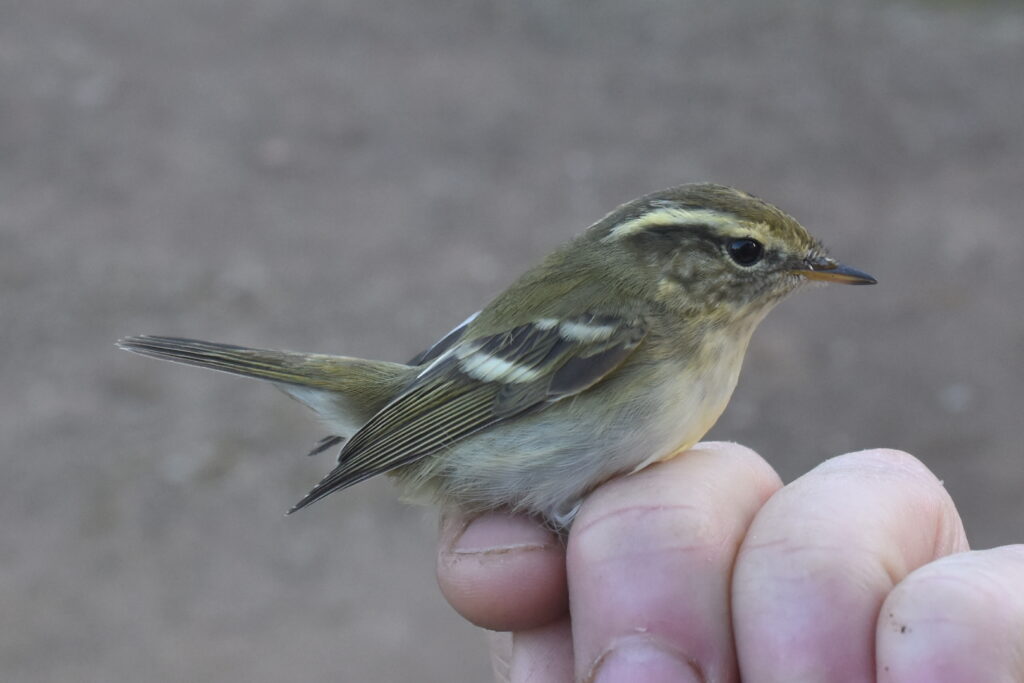
The north-easterly airflow also provided a vector for passerines to make landfall from a more northern trajectory than the last two days, with the first two Yellow-browed Warblers of the autumn located in the afternoon. Other notable records included a Turtle Dove, two Pied Flycatchers and a Lapland Bunting.
Light easterly winds, prolonged sunny intervals and temperatures that reached 16 degrees C; a perfect day for an afternoon arrival of drift migrants and so it proved. Highlights included three Red-breasted Flycatchers (Old Fall, outer head garden, RSPB Bempton Cliffs), two Barred Warblers (Golf Course Willows), five Yellow-browed Warblers (Buckton, RSPB Bempton Cliffs, South Landing & two outer head) and a Hawfinch (Old Fall). Other migrant totals included two Golden Plovers, six Redwing, four Spotted Flycatchers, six Pied Flycatchers, 11 Goldcrests, 12 Chiffchaffs, 12 Willow Warblers, 11 Blackcap, a Garden Warbler, 11 Lesser Whitethroats, three Redstarts, five Whinchat, four Stonechat, three Wheatears, a Grey Wagtail, two Lesser Redpolls and three Brambling.
During the morning seawatch wildfowl records included four dark-bellied Brent Geese, 12 pale-bellied Brent Geese, 86 Wigeon, a Shoveler, 36 Teal and 218 Common Scoter. A total of 208 Red-throated Divers flew south, 67 Sooty Shearwaters, 79 Manx Shearwaters and eight Arctic Terns headed north, two Little Egrets and 37 Bonxies headed south, whilst 20 Arctic Skuas were also logged. Two Little Gulls and two Mediterranean Gulls were also recorded.
Sightings from RSPB Bempton Cliffs included a Marsh Harrier, five Golden Plovers, a Grey Plover, a Merlin, one Short-eared Owl, two Redwing, three Pied Flycatchers, three Redstarts and four Stonechats.
Red-breasted Flycatcher, RSPB Bempton Cliffs, by Will Scott
An easterly wind increased in strength during a day featuring prolonged sunny intervals and temperatures that reached 16 degrees C. The morning’s seawatch was relatively quiet featuring three Bonxies, three Arctic Skuas, a juvenile Long-tailed Skua that flew north, one Medierranean Gull and a first-winter Caspian Gull. Seawatching aside, a Goosander overflew Lighthouse Road, a juvenile Great Crested Grebe was on the sea off Booted Gully, a Grey Plover frequented the new workings on Thornwick Camp and a first-winter Caspian Gull was located along Bempton Lane.
The day’s focus was once again on scarce drift migrants, with yet another juvenile Red-backed Shrike (11th individual this year) gracing the Bay Brambles, where one of yesterday’s Barred Warblers remained. A Red-breasted Flycatcher on the outer head was a new arrival, whilst of the three Yellow-browed Warblers in the same area, two appeared to have made landfall in the afternoon. A Hawfinch that accompanied a lone Redwing over the outer head was also presumably ‘fresh in’. Other notable passerine records included 17 Chiffchaffs, a Garden Warbler, five Pied Flycatchers, six Stonechats, five Redstarts, two Brambling and six Lapland Buntings.
Five Chiffchaffs, nine Goldcrests, a Pied Flycatcher and the Red-breasted Flycatcher were recorded at RSPB Bempton Cliffs.
Red-backed Shrike, Bay Brambles, by Alan Walkington
A moderate north-easterly wind featured throughout a sunny day, with temperatures reaching 16 degrees C. During the seawatch, 20 Red-throated Divers, five Sooty Shearwaters, a Great Crested Grebe, one Grey Plover and 17 Dunlin flew south, two Pomarine Skuas and a juvenile Little Gull flew north, whilst five Bonxies and nine Arctic Skuas were also recorded.
A Merlin hunted the Lighthouse Grassland at dusk, with a juvenile Yellow-legged Gull loafing on the new workings at Thornwick Camp. Three Red-breasted Flycatchers remained (including one at RSPB Bempton Cliffs), a juvenile Red-backed Shrike frequented hedgerows on the western edge of the Golf Course and a Barred Warbler was fresh in at Booted Gully. However, in the local context the day’s most notable discovery was a Cetti’s Warbler at South Landing. Additional passerine migrants included a Yellow-browed Warbler, one Pied Flycatcher, a Spotted Flycatcher, two Whinchat, two Redstarts and two Grey Wagtails.
An overcast day, with mist/drizzle early morning only and temperatures reaching 15 degrees C in a light easterly wind. The undoubted highlight was the presence of two Humpback Whales several km offshore of the Fog Station mid-morning. One animal habitually breached for over an hour, providing those lucky enough to be present with an awesome spectacle. Other seawatch sightings included a dark-bellied Brent Goose and 103 Red-throated Divers flying south, 25 Wigeon, 87 Common Scoters, seven Sooty Shearwaters and 1000 Kittiwakes all north, together with 12 Bonxies, three Pomarine Skuas (two north, one south), 16 Arctic Skuas, an adult Mediterranean Gull and a first-winter Caspian Gull.
Three Little Egrets frequented the rocky shores on the southern side of the headland, ten Grey Plovers at South Landing represented an impressive tally locally and a first-winter Caspian Gull showed well there early morning. There was evidence of a small arrival of passerines during the afternoon, including four Yellow-browed Warblers, nine Goldcrests, five Redwing, five Redstarts, a Pied Flycatcher and four Lesser Redpolls. The juvenile Red-backed Shrike continued in residence on Chalet Hedge and the Red-breasted Flycatcher remained at RSPB Bempton Cliffs; other sightings on the reserve included a Yellow-browed Warbler and a Snow Bunting. A further two Yellow-browed Warblers made landfall at Buckton.
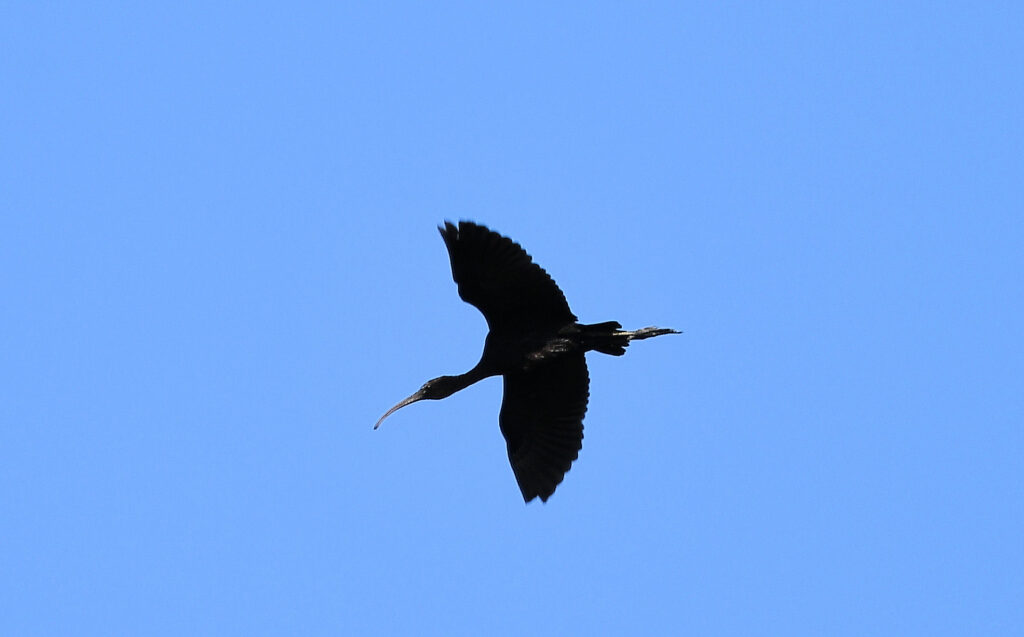
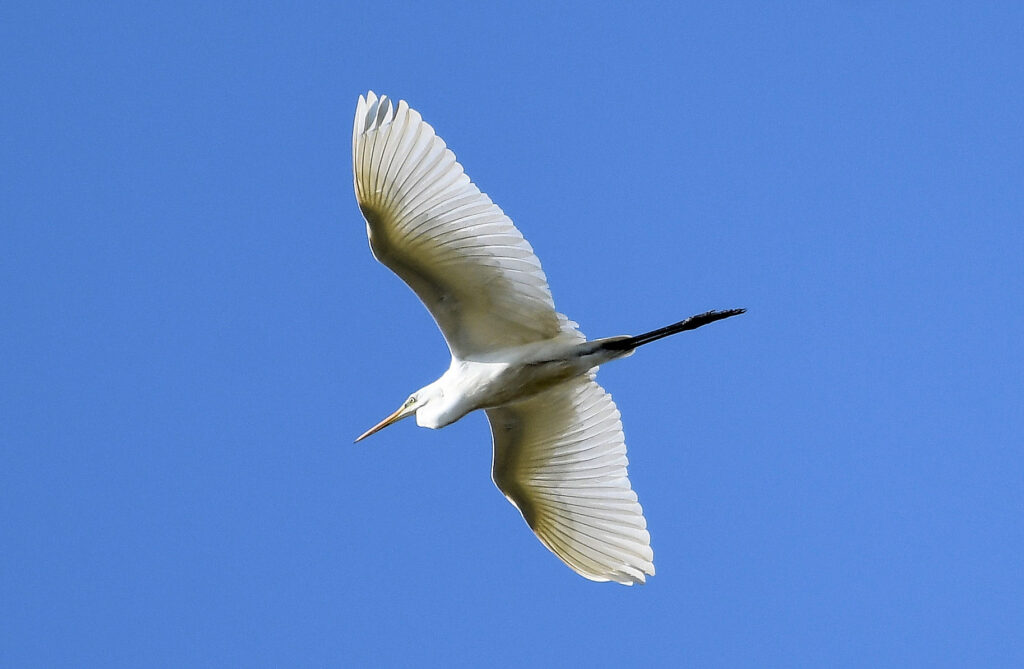
A sunny day, with light south-west winds and temperatures that reached an unseasonal high of 21 degrees C. Thirty-two Common Scoters flew north and 39 Red-throated Divers headed south during the morning’s seawatch. In the local context, the day’s most notable sighting related to a Glossy Ibis that flew north past the lighthouse; only the second record for the headland. Continuing the lanky bird theme, twoGreat White Egrets flew east over the headland. A total of 48 Pink-footed Geese moved south in two skeins, three Marsh Harriers overflew the headland and at least one first-winter Caspian Gull lingered, with sightings at South Landing and over Thornwick Pools.
First light revealed that the arrival of passerine migrants first witnessed mid-afternoon yesterday had continued. The year’s fifth Greenish Warbler was located at Thornwick Camp and shared the same few trees/adjacent hedgerow as two Yellow-browed Warblers; the latter part of an arrival of nine Yellow-browed Warblers. Two Barred Warblers remained in the Bay Brambles, with the Red-backed Shrike still in Chalet Hedge and viewable from Lighthouse Road. Additional passerine records included 23 Chiffchaff, a Willow Warbler, one Garden Warbler, a Common Whitethroat, four Lesser Whitethroats, two Pied Flycatchers, one Spotted Flycatcher, three Whinchat, nine Stonechat, a Redstart, nine Siskin, two Lesser Redpolls and a Lapland Bunting.
Thirty-six Pink-footed Geese and a Grey Plover flew south-east over RSPB Bempton Cliffs, where a Marsh Harrier, one Short-eared Owl, three Yellow-browed Warblers, the long-staying Red-breasted Flycatcher, a Pied Flycatcher, four Stonechats, three Lesser Redpolls and a Lapland Bunting frequented the reserve.
Glossy Ibis, outer head, by Andrew LasseyGreat White Egret, outer head, by Andrew LasseyRedstart, Flamborough village, by Rob Little
Another unseasonably warm day, with temperatures reaching 23 degrees C in sunny skies and light south-west winds. The first-winter Caspian Gull re-appeared at Thornwick Camp late afternoon and a Short-eared Owl hunted the outer head. Both the Greenish Warbler at Thornwick, the juvenile Red-backed Shrike alongside the Golf Course and the two Barred Warblers in the Bay Brambles remained. Other notable sightings included two Yellow-browed Warblers, one Whinchat, two Pied Flycatcher, one Spotted Flycatcher, a Redstart, eight Siskin and 75 Lesser Redpolls.
RSPB Bempton Cliffs three Yellow-browed Warblers, a Pied Flycatcher, two Stonechat and two Grey Wagtails, whilst a Hawfinch flew south. Two Yellow-browed Warblers remained in the Dell at Buckton.
Cloud built during the day, with rain from mid-morning and temperatures peaked at 15 degrees C; light south-westerly winds veered northerly later and also strengthened towards dusk. A Marsh Harrier overflew the Gorse Field early morning, with the two Barred Warblers lingering nearby at the Golf Course Willows. North Landing hosted a Yellow-browed Warbler, with other notable passerine records including a Spotted Flycatcher, five Grey Wagtails and four Crossbills. Two Yellow-browed Warblers were still present at RSPB Bempton Cliffs.
Barred Warbler, Golf Course Willows, by Don Hustings
Winds were light and variable in direction throughout a day where a best of 12 degrees C indicated they essentially originated from the north. Generally overcast, with sunny intervals late afternoon followed by a spectacular electric storm at dusk. Birding interest was split between the sea and land: seawatching was rewarded with 53 Sooty Shearwaters and 15 Manx Shearwaters flying north, with 130 Bonxies, six Pomarine Skuas (the latter confined to the afternoon), a juvenile Long-tailed Skua and 16 Arctic Skuas heading south.
An appreciable southerly movement of 715 Pink-footed Geese occurred in the morning. A Little Bunting at Thornwick Camp was the year’s first, with other notable sightings including three Yellow-browed Warblers, 33 Siskins and a Crossbill.
A total of 567 Pink-footed Geese south over RSPB Bempton Cliffs would undoubtedly have included many of the birds recorded over the outer head. Two Goosander, 19 Golden Plovers, 15 Bonxies, two Arctic Skuas, two Marsh Harriers, a Yellow-browed Warbler, a blythi-type Lesser Whitethroat, 12 Goldcrests and nine Lesser Redpolls were also recorded from the reserve.
Gale force northerly winds and heavy rain showers ensured all attention was justifiably focused on the sea. The highlight was a Flamborough record 302 Bonxies that flew south during the course of the day. Other notable sightings included 16 pale-bellied Brent Geese, a Blue Fulmar and 814 Sooty Shearwaters flying north, the latter the second highest count over the last decade. Six Pink-footed Geese, 83 Red-throated Divers, 17 Golden Plovers and a Mediterranean Gull also flew south, together with two Pomarine Skuas and 227 Arctic Skuas (the highest daily total for 20 years).
Seawatching at RSPB Bempton Cliffs reflected the wider movement past the outer head: 111 Sooty Shearwaters headed north, 45 Bonxies and 18 Arctic Skuas flew south.
Northerly gales for the second day running resulted in another great seawatch. A dark-bellied Brent Goose, 40 pale-bellied Brent Geese, 82 Common Scoter, a Black-throated Diver, two Storm Petrels, 1078 Sooty Shearwaters, 232 Manx Shearwaters and a pale morph juvenile Long-tailed Skua flew north. A total of 35 Bonxies and ten Arctic Skuas headed south. The strong northerly airflow also resulted in Barnacle Geese overshooting wintering grounds, with 62 moving south and 26 north. Despite the inclement conditions, some scarce passerine migrants had clearly made landfall: Yellow-browed Warblers were discovered at Old Fall & South Landing, whilst a male Red-breasted Flycatcher at Old Fall was better still.
Visible migration at RSPB Bempton Cliffs included 26 pale-bellied Brent Geese (21 north, five south), 132 Barnacle Geese (124 south, eight north), five Eider south, a Goosander north, 115 Sooty Shearwaters and 12 Manx Shearwaters; a Reed Warbler and two Brambling were also present.
Red-breasted Flycatcher, Old Fall, by Craig Thomas
The gale force northerly winds gradually relented during a largely overcast day, with occasional light drizzle in the morning and temperatures that reached 13 degrees C. Seawatching proved productive once again, with four Velvet Scoters, seven pale-bellied Brent Geese, a Storm Petrel, 204 Sooty Shearwaters, 129 Manx Shearwaters, a Black Guillemot, a juvenile Pomarine Skua and two juvenile Long-tailed Skuas all flying north. A flock of 19 Barnacle Geese also overflew Old Fall.
Shelter continued to be at a premium on the land, but where present, migrants illustrated an arrival had taken place over recent days. Old Fall hosted single Firecrest, Yellow-browed Warbler, the male Red-breasted Flycatcher and the week’s second Little Bunting. South Landing attracted 23 Redwing (with eight elsewhere), three Yellow-browed Warblers and a Hawfinch, whilst a fifth Yellow-browed Warbler frequented Hartendale. A single Barred Warbler remained in residence in the Bay Brambles.
Sightings from Bempton included 25 Barnacle Geese south, a Black-throated Diver north, a Leach’s Petrel north (off Buckton), 32 Sooty Shearwaters, 11 Manx Shearwaters, a Yellow-browed Warbler and two Hawfinch that flew south.
Very light, variable winds and sunny intervals provided ideal birding conditions after days of very strong northerlies. A Great Shearwater flying north headlined a seawatch that also included 96 Wigeon, 126 Common Scoters, 17 Sooty Shearwaters, 15 Manx Shearwaters, 7620 Kittiwakes, 11 Bonxies, six Arctic Skuas and 21,255 Razorbills all flying north.
Land-based sightings included a party of nine Bean Geese sp. heading south over the headland early morning, a Barnacle Goose accompanied the resident Greylag flock, three Water Rails were newly arrived and a Grey Plover flew west. However, passerine migrants took centre stage due to the calm conditions, with the day’s highlight referring to the discovery of an Arctic Warbler in a village garden late afternoon; it showed from 1615-1700hrs, but there was no further sign before dusk. Yet another Red-backed Shrike frequented the South Cliffs, two Red-breasted Flycatchers were present at Old Fall, two Barred Warblers remained in the Golf Course Willows, no fewer than 36 Yellow-browed Warblers were located and the Little Bunting appeared briefly near Old Fall. Additional totals included three Ring Ouzels, 24 Song Thrush, 23 Redwing, a Fieldfare, 22 Blackbirds, 8 Willow Warblers, 53 Chiffchaff, 63 Goldcrest, a Firecrest, 19 Blackcap, five Lesser Whitethroats, two Spotted Flycatchers, one Redstart, a Whinchat, 17 Stonechats, 169 Lesser Redpolls, 55 Siskins flying west, a Hawfinch also west, two Crossbills and eight Lapland Buntings.
Sightings from RSPB Bempton Cliffs included 200 Pink-footed Geese south, nine Goldcrests and four Yellow-browed Warblers. Nearby Buckton hosted an additional three Yellow-browed Warblers, together with single Merlin, Marsh Harrier, 20 Goldcrests and two Stonechats.
Arctic Warbler, Flamborough village, by Craig ThomasLittle Bunting, Old Fall (27/9), by Martin StandleyRed-backed Shrike, South Cliffs, by Andrew Allport
The weather consisted of light north-westerly winds, prolonged sunny intervals and temperatures that peaked at 15 degrees C. Seawatching was rewarded with three dark-bellied Brent Geese, 42 Common Scoters, 12 Red-breasted Mergansers, two Bonxies, an Arctic Skua and a juvenile Yellow-legged Gull flying north.
A total of 29 Pink-footed Geese flew south, whilst passerine interest included a Red-backed Shrike (Chalet Hedge), 34 Goldcrests, 17 Yellow-browed Warblers, a Barred Warbler (Golf Course Willows), 19 Blackcap, one Garden Warbler, a Reed Warbler, one Spotted Flycatcher, six Stonechat, 25 Siskin, 26 Lesser Redpolls, five Crossbill and four Lapland Buntings. Ringing sessions resulted in 69 birds being processed including three Yellow-browed Warblers and ten Lesser Redpolls.
Three Yellow-browed Warblers also frequented RSPB Bempton Cliffs, where a Lapland Bunting flew over.
The day featured increasingly blustery southerly winds and cloudy skies, with rain arriving mid-afternoon and a high of 13 degrees C. A morning seawatch produced 34 Common Scoter, three Red-breasted Mergansers and two Scaup flying north, with a Tufted Duck moving in the opposite direction. A Great White Egret also flew in off the sea by the Fog Station and continued west. Elsewhere, a Little Egret was seen at Thornwick, three Yellow-browed Warblers remained, the village attracted three Lesser Redpolls, whilst a lone Crossbill flew west. RSPB Bempton Cliffs attracted another two Yellow-browed Warblers.
A bright day with sunny intervals, a generally light westerly wind and temperatures that reached 13 degrees C. A Black Kite that flew north-west along the Golf Course at 0840hrs would represent the first record for the headland if accepted. Elsewhere, two Velvet Scoters sheltered on the sea off South Dykes, 33 Pink-footed Geese headed south, a flock of ten Grey Herons and a Little Egret flew west over the village. A Jack Snipe that landed in the Gorse Field was presumably a new arrival. A Raven initially over Old Fall and latterly flying north-west over Mid Dykes was particularly noteworthy; a species with only a handful of records over the last decade, albeit showing signs of increasing of late. Two Barred Warblers included a new discovery in a village garden, whilst one lingered in the Bay Brambles. A total of 11 Yellow-browed Warblers were in residence, including two in Old Fall, two in South Landing, two in Hartendale and three in South Dykes. Other notable sightings included a Merlin, 33 Redwing, one Whitethroat, a Whinchat, two Wheatear, a Grey Wagtail, six Lesser Redpolls, one Brambling and a Lapland Bunting.
Five Yellow-browed Warblers were present at RSPB Bempton Cliffs, together with single Whitethroat and Brambling; 120 Pink-footed Geese also flew south-east there and a Marsh Harrier headed north-west.