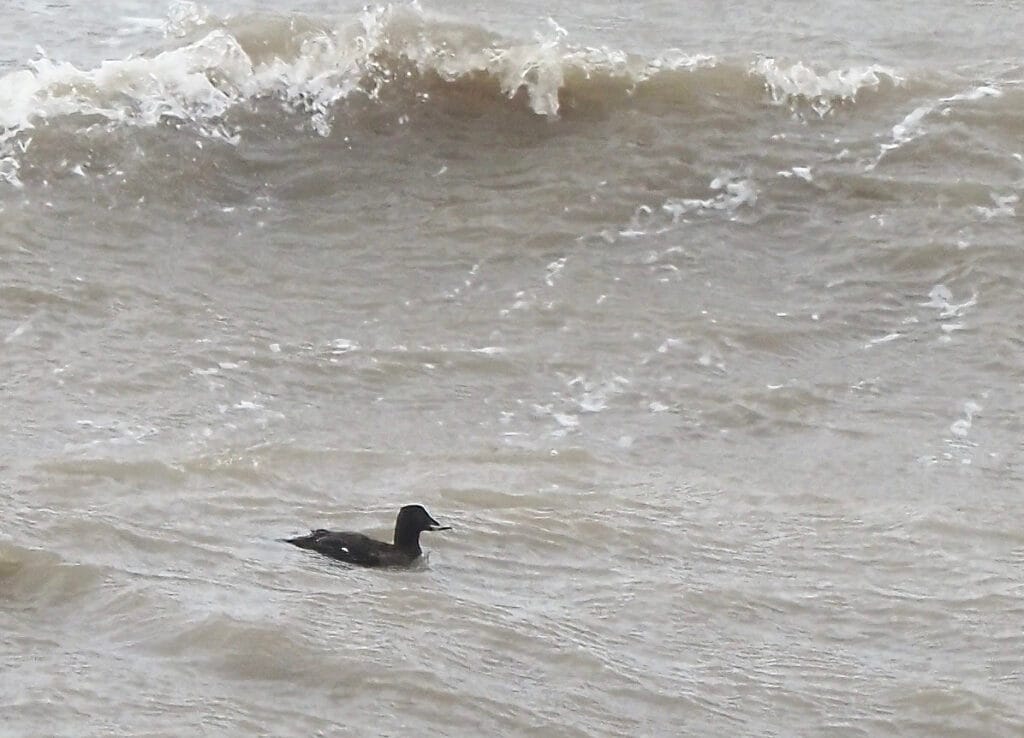
A moderate wind veered west-south-west to north-west, with overcast skies and persistent rain, heavy at times; temperatures reached seven degrees C. Thornwick Pools attracted 86 Teal, while nine Coot represented a significant arrival in the local context, including five on Thornwick Lakes. The first-winter Velvet Scoter remained off South Landing along with 19 Great Crested Grebes; 15 Fieldfare also flew west.
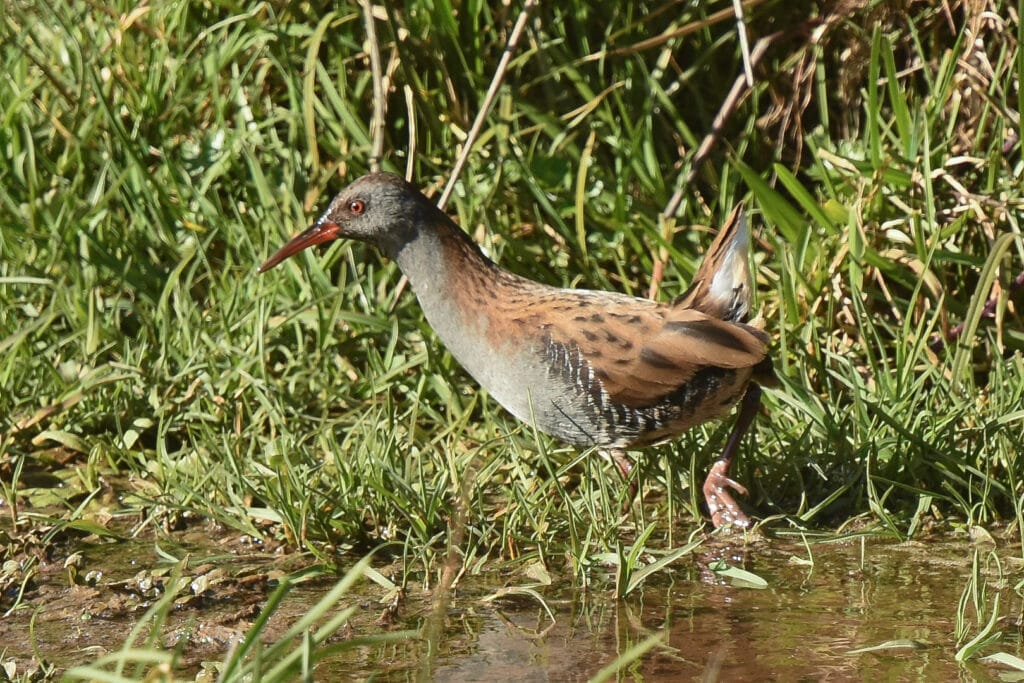
The weather consisted of moderate south-westerly winds, sunny intervals after an overcast start and temperatures that peaked at ten degrees C. Seawatch highlights included several thousand Guillemots flying south; a Mute Swan, one Great Northern Diver and a Dunlin also moved south past the headland. Thornwick Pools attracted 154 Teal, with a lone Jack Snipe nearby. Two Water Rails remained near the Lighthouse, a Woodcock was in a garden near South Landing and a single Fieldfare flew in off the sea.
Strong winds veered from the south to the west during a day that featured both heavy rain in the afternoon and sunny intervals; temperatures peaked at 12 degrees C. A total of 69 Red-throated Diver flew south during the morning’s seawatch when 1000 Guillemots also headed in the same direction. The outer headland’s wetlands attracted three Shelduck, 206 Teal, 36 Wigeon, a Tufted Duck, nine Coot, two Jack Snipe, 16 Snipe and two Water Rails. The Velvet Scoter remained off South Landing, where three Woodcock were in residence.
Despite being between two major storm systems, the strong westerly wind was still the major feature of the day’s weather, being mainly sunny, the temperature reached 9C.
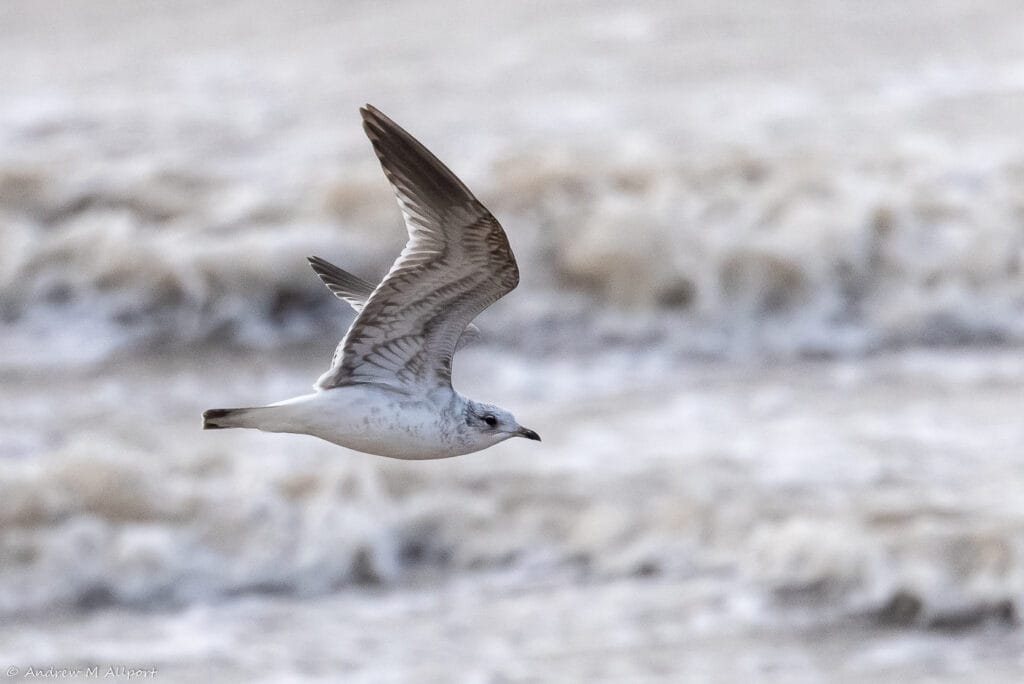
Seawatchers were rewarded with a Great Northern Diver, seven Red-throats, a Shelduck, three Common Scoter and an adult Mediterranean Gull.
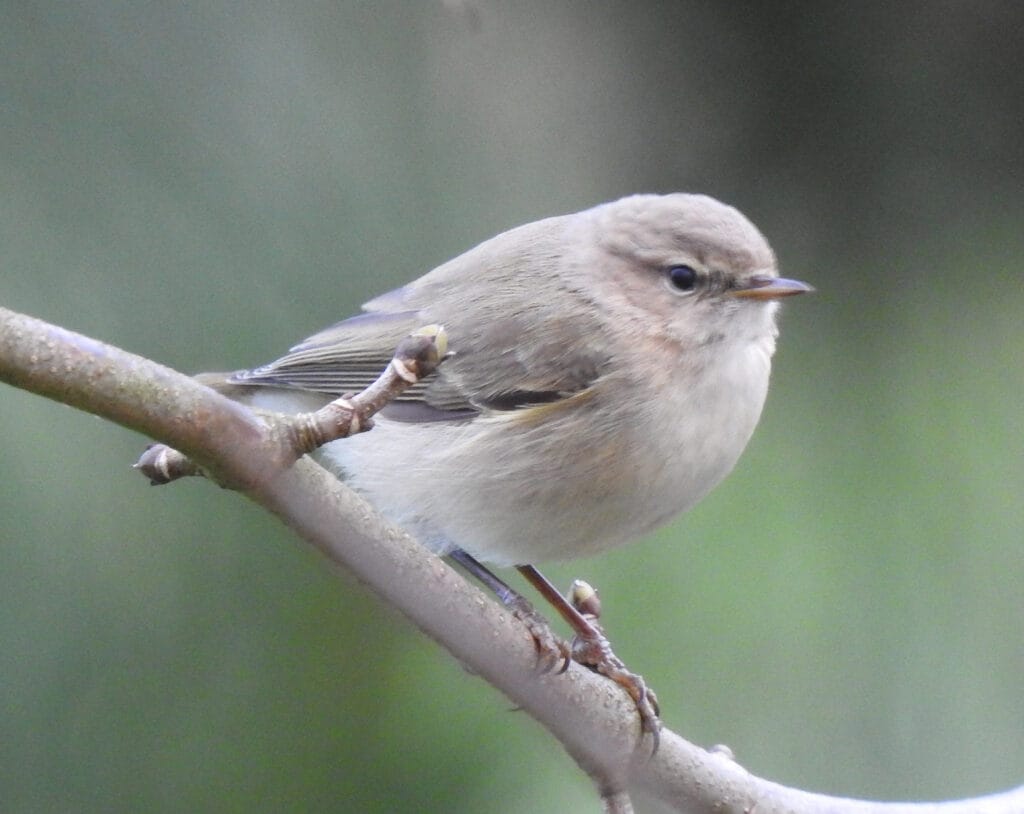
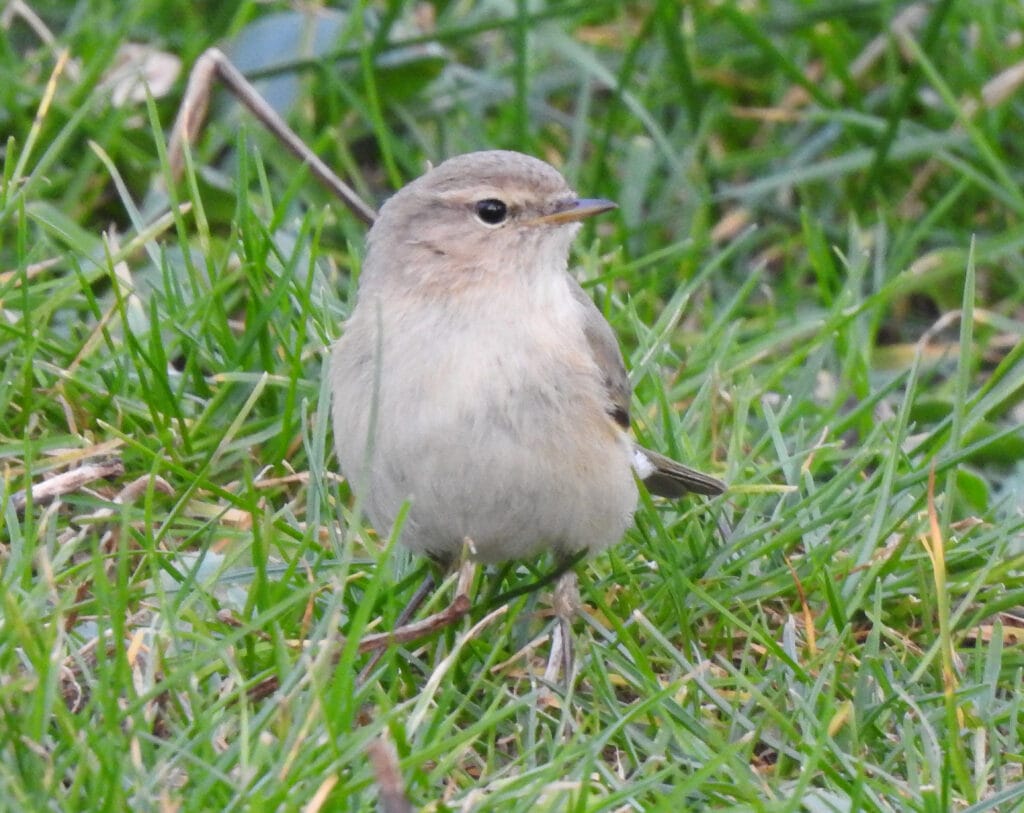
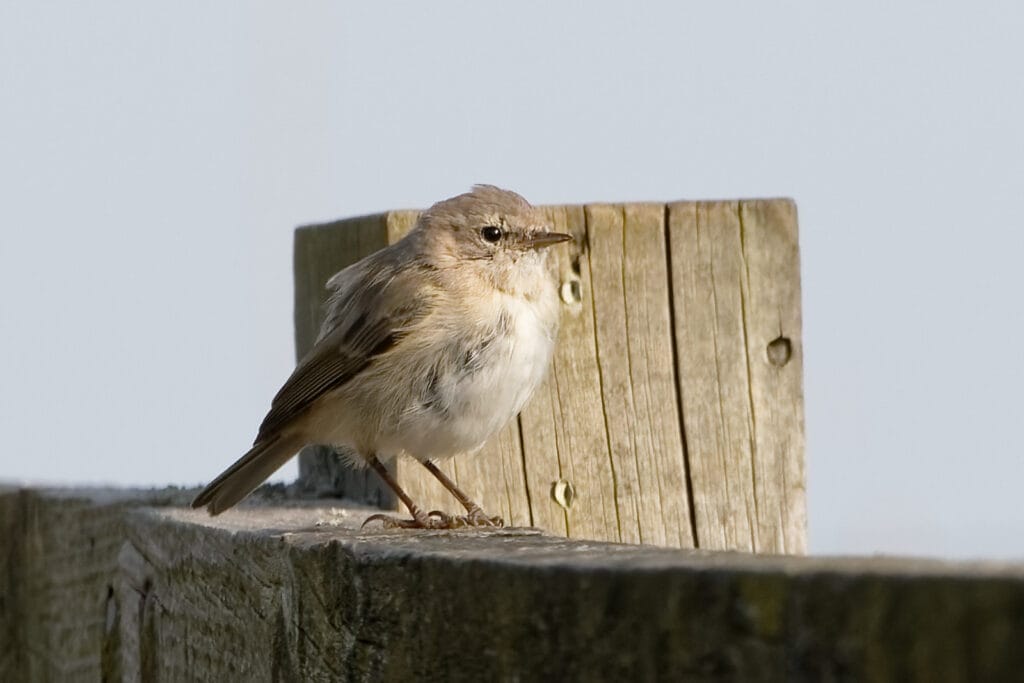
At Thornwick Pools, Teal numbers remained high with 211 accompanied by a Shelduck and a Wigeon while nearby, the wintering Siberian Chiffchaff still remained. A Water Rail continued to feed beside the Motorway Hedge.
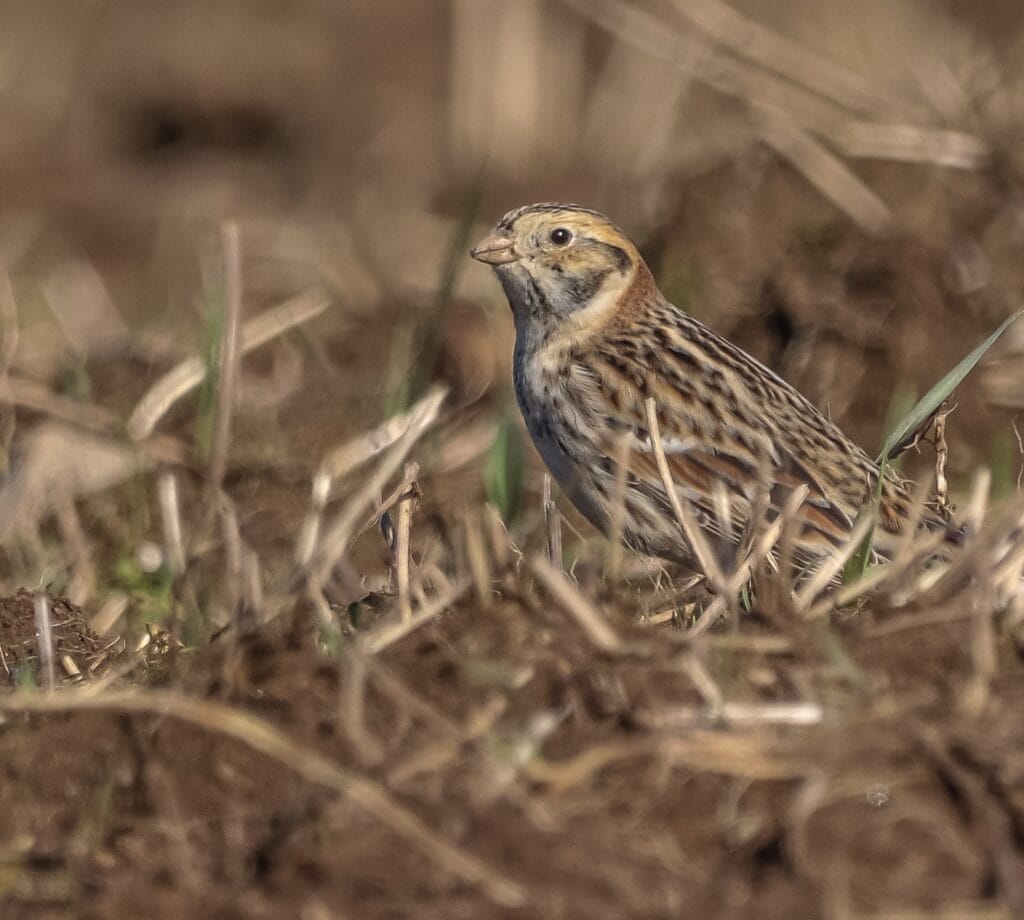
Forty Lapland Buntings and three Shore Larks remained at Buckton.
Another day of westerly gales, strengthening throughout the day and gusting to force 10 by late afternoon with occasional heavy showers. The temperature was academic reaching 9°C late morning.
A Great Northern Diver was the highlight of the morning’s seawatch which also featured 50 Red-throated Divers and nine Common Scoters.
The Siberian Chiffchaff remained at Thornwick while 108 Teal were present on the pools there. South Landing attracted a Grey Wagtail while the wintering Velvet Scoter was still offshore with 10 Common Scoter, an Eider and 53 Red-throated Divers.
Storm Eunice headed towards the continent overnight and left a colder, much less windy day. The temperature didn’t exceed 4°C during the bright morning which gave way to sleet and then snow from early afternoon.
Seawatching highlights were limited to two Eiders, two Common Scoter and 41 Red-throated Divers.
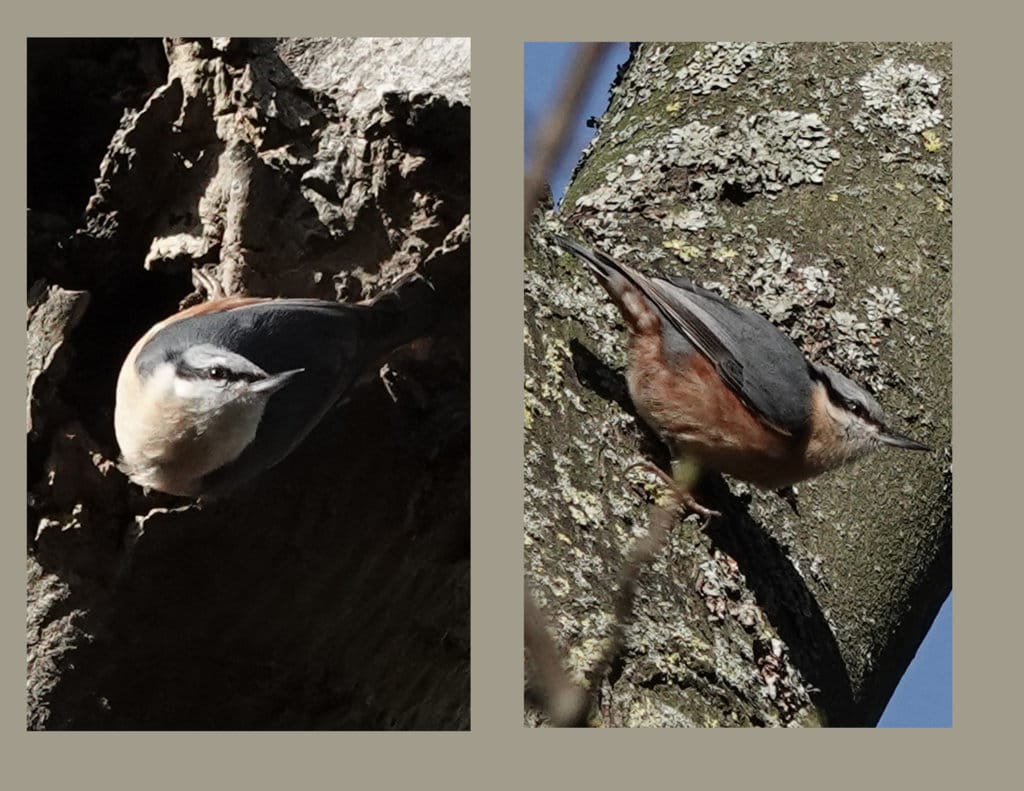
The Siberian Chiffchaff was still present at Thornwick Camp. A Golden Plover overflew the Lakes where the Mute Swan remained. Numbers of Teal fell slightly to 165. Two Nuthatch were in South Dykes.
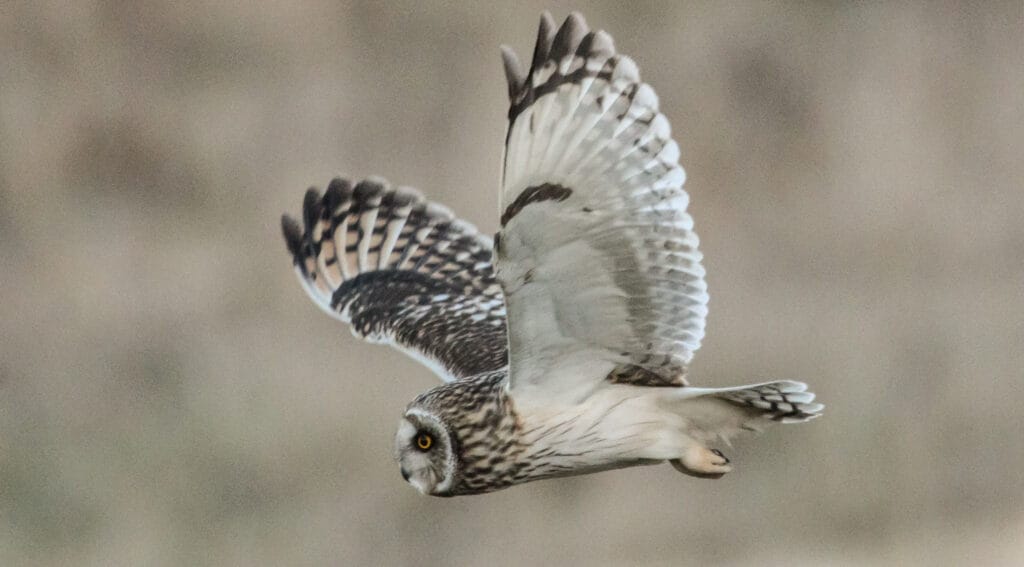
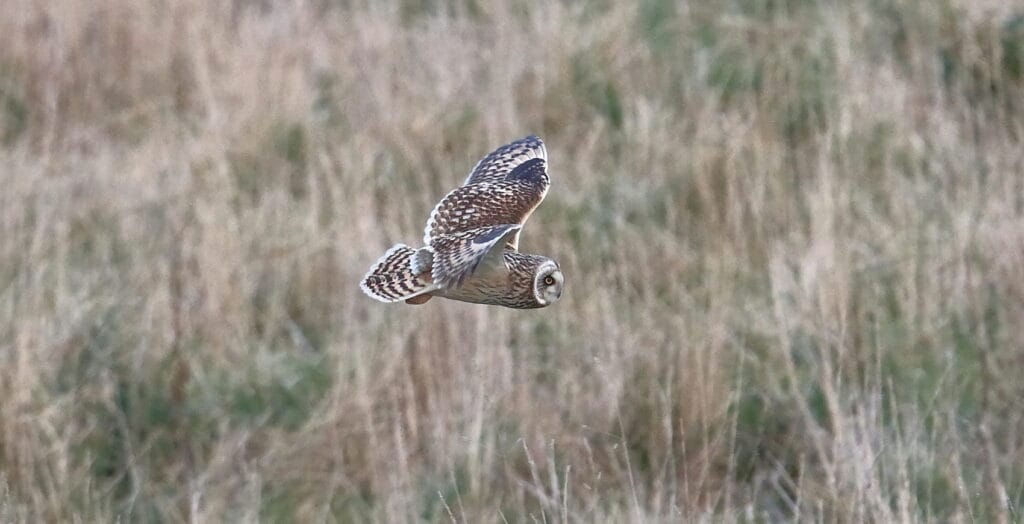
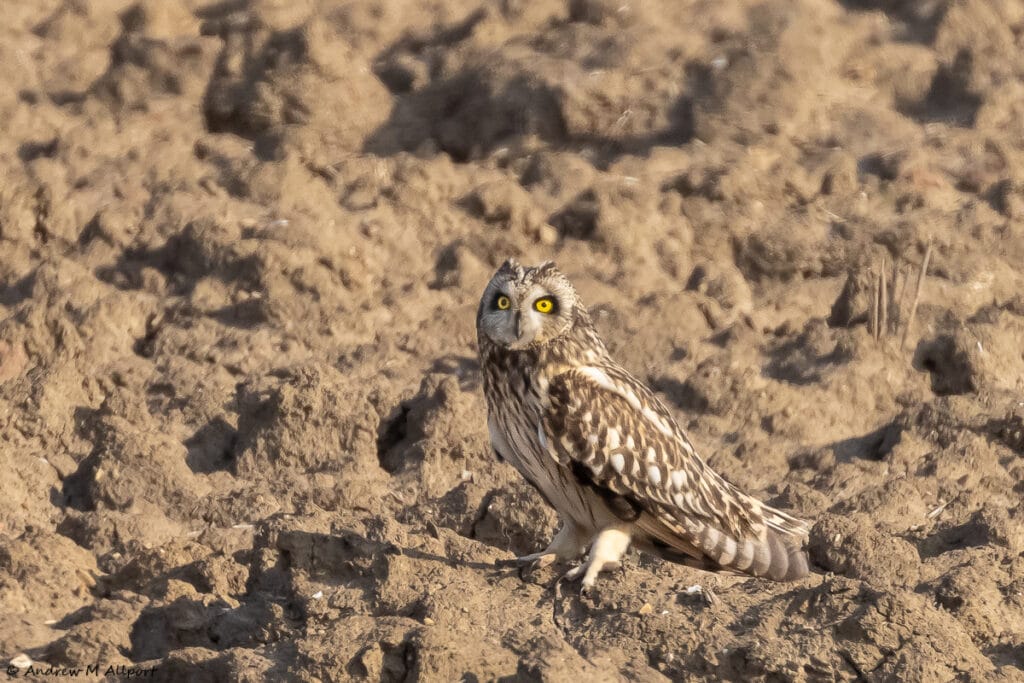
At Bempton Cliffs RSPB, two Short-eared Owls quartered the fields.
The temperature rose significantly overnight as the weather returned to being mild at 12°C with a strong south-westerly and very wet.
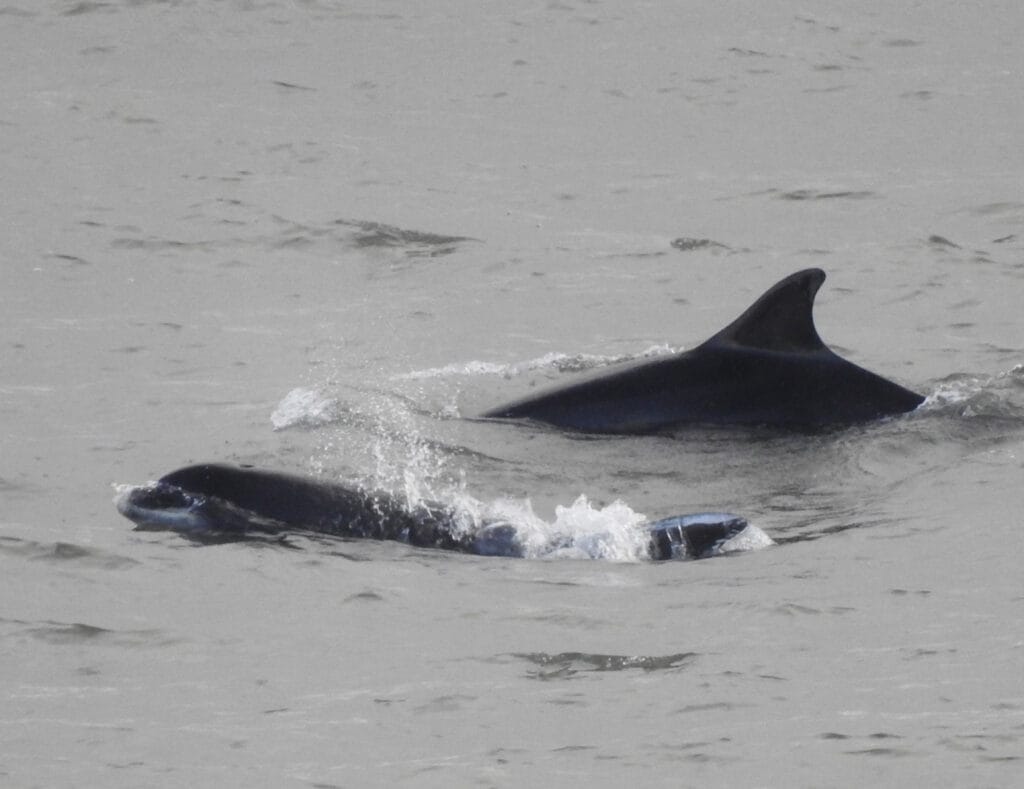
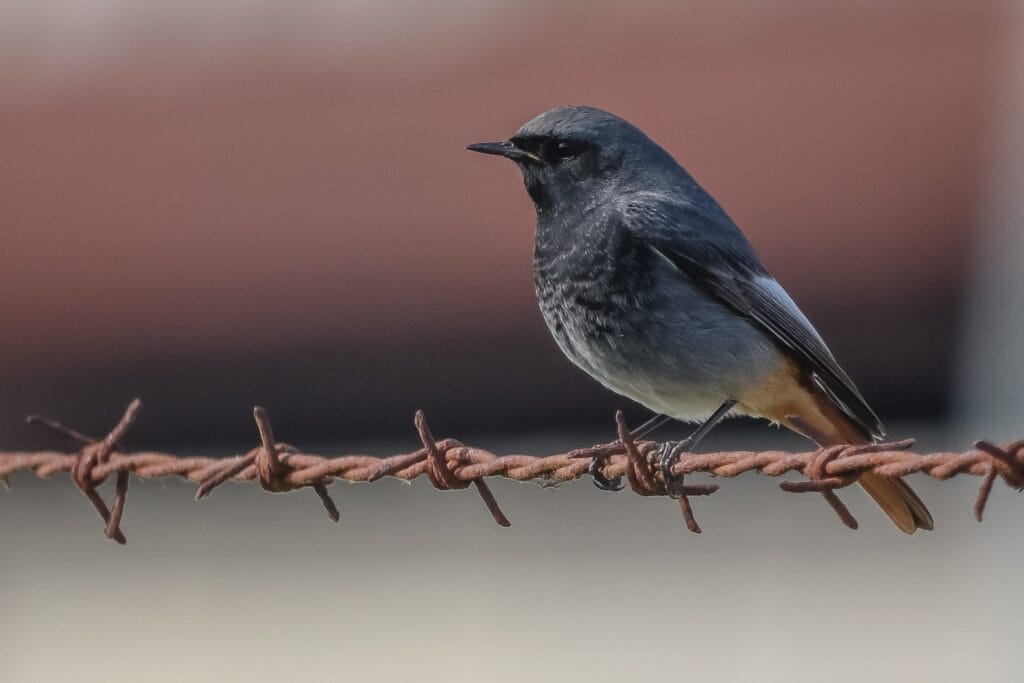
Seawatching efforts at the Fog Station produced four Pintail and four Common Scoter while four Bottle-nosed Dolphins headed north and two Harbour Porpoise were offshore. A male Black Redstart was also in the area.
Unfortunately, the atrocious weather limited birding opportunities elsewhere. Nevertheless, records included the Velvet Scoter still at South Landing and 149 Teal at Thornwick Pools.
The weather consisted of sunny intervals, moderate/strong north-westerlies and temperatures that peaked at eight degrees C. Seawatching proved quiet, with 23 Red-throated Divers and 64 Kittiwakes flying south, with 106 Fulmars moving north. The first-winter male Velvet Scoter lingered off South Landing, a Woodcock frequented Oceanview, whilst the Siberian Chiffchaff remained at Thornwick.
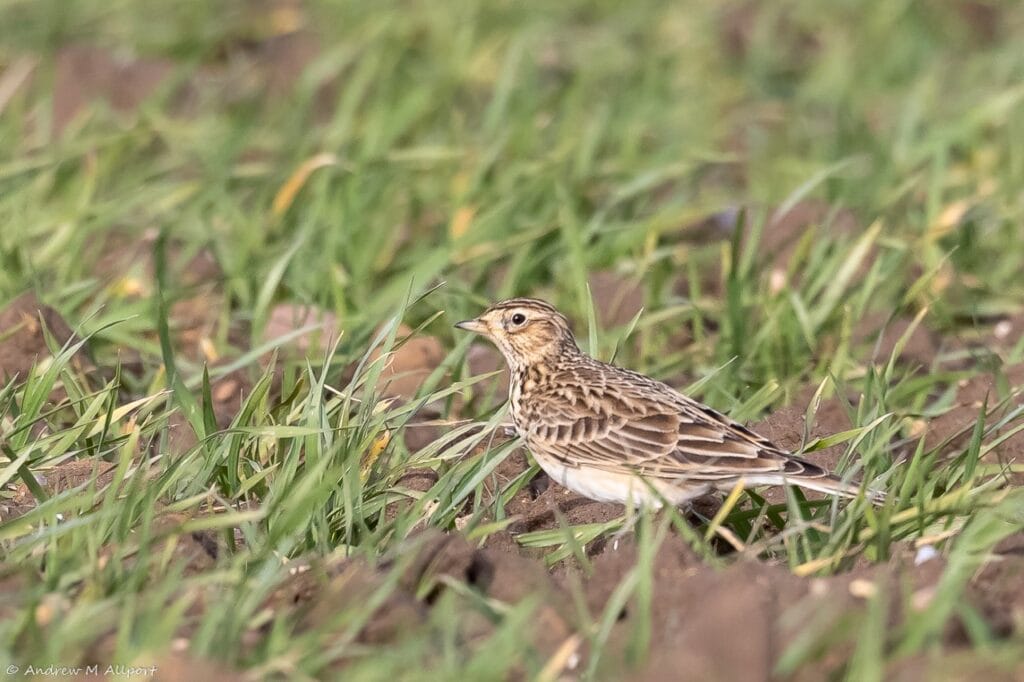
A gusty wind veered from the south-west to the north-west during a day of sunny intervals and temperatures that reached 11 degrees C. A Great Northern Diver flew south during the morning’s seawatch which also featured seven Skylarks flying in off. The Velvet Scoter remained off South Landing, a female-type Black Redstart frequented the cliffs around the Fog Station, while the SiberianChiffchaff showed again at Thornwick; 63 Redwing and two Fieldfare fed on fields near South Dykes. RSPB Bempton Cliffs attracted twoShort-eared Owls, while two Shore Larks remained at nearby Buckton.
The weather consisted of sunny intervals and a strong south-westerly wind, with temperatures peaking at 11 degrees C. A total of 125 Pink-footed Geese flew north-west over the headland, while 36 Teal remained on Thornwick Pools. Two Short-eared Owls continued to hunt cliff top fields at RSPB Bempton Cliffs, a pod of 15 Bottlenose Dolphins swam south-east there, while 12 Lapland Buntings remained in cliff top stubble at nearby Buckton.
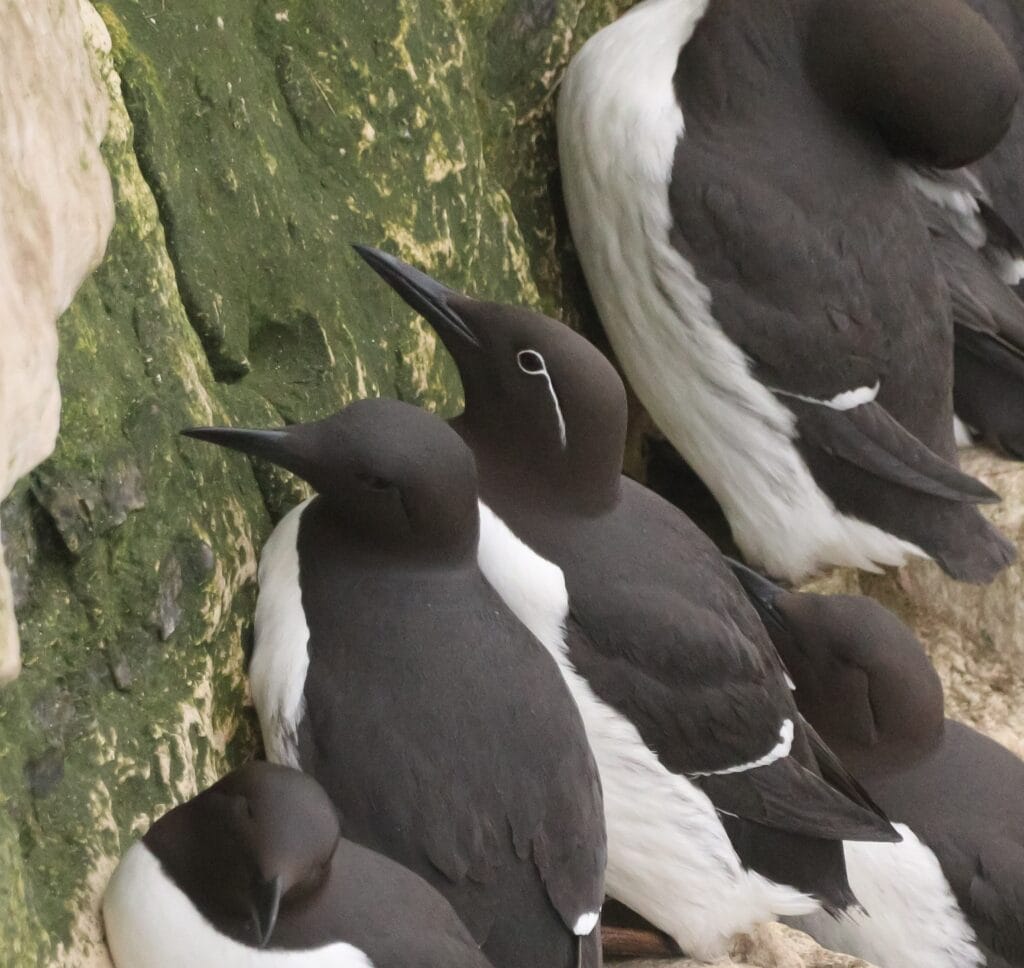
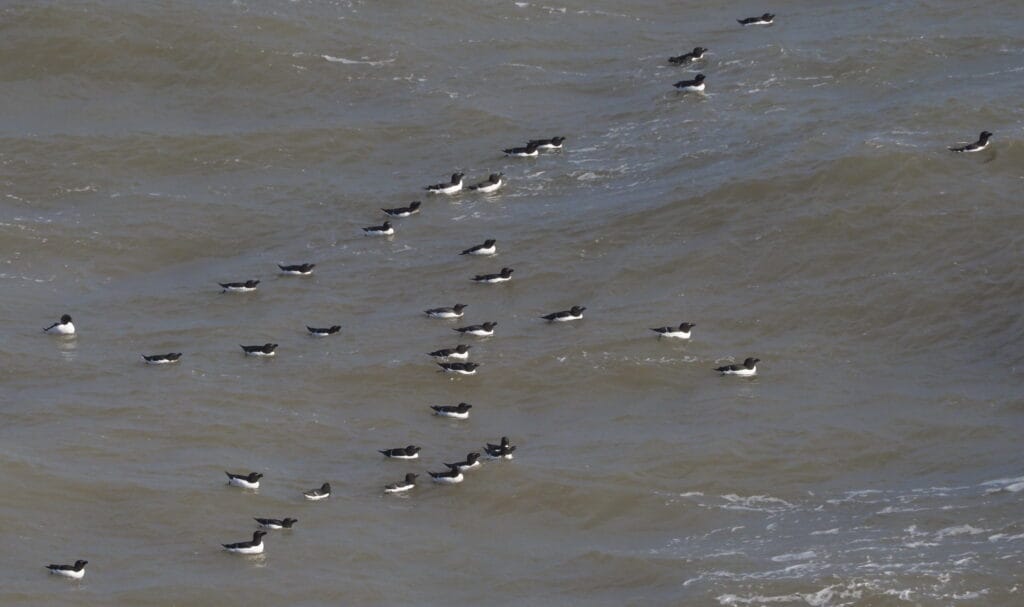
A colder day, with occasional snow showers, sunny intervals and a moderate westerly wind; temperatures reached four degrees C by late morning. Four Eiders flew past the Fog Station, but the main interest were the many thousands of Guillemots and thousands of Razorbills in residence. The Siberian Chiffchaff continued to over-winter at Thornwick, while a Short-eared Owl remained at RSPB Bempton Cliffs.
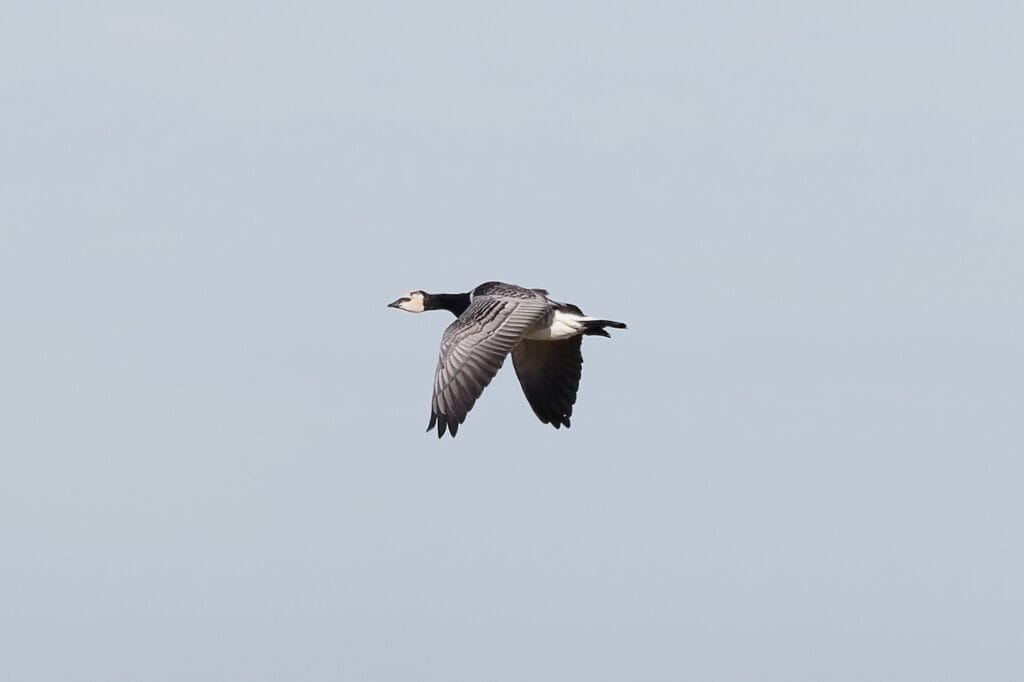
A sunny day, with a west-north-westerly wind dropping in a strength and temperatures reaching eight degrees C. A skein of 34 Pink-footed Geese flew north during a seawatch that also featured a Great Northern Diver heading south. A Barnacle Goose flew north over North Marsh, the Velvet Scoter remained off South Landing, the Siberian Chiffchaff showed well at Thornwick while the female Black Redstart re-appeared at the Fog Station. A Short-eared Owl hunted the cliff top grasslands at RSPB Bempton Cliffs and six Lapland Buntings were on nearby stubble at Buckton.
Sunny throughout, with a blustery southerly wind developing after a relatively calm start and temperatures peaking at ten degrees C. A northerly movement of 1150 Pink-footed Geese took place from first light until mid-morning. In addition, the Thornwick area hosted a Mute Swan, 70 Teal, seven Coot, a Water Rail (Fishing Lake), three Fieldfare and the long-staying Siberian Chiffchaff. A pod of Bottlenose Dolphins swan east past RSPB Bempton Cliffs, while two Lapland Buntings and a Snow Bunting were on the cliff top at Buckton. A Chiffchaff was discovered at Bridlington Links GC just to the west of the Dykes.
Strong southerly winds featured throughout a sunny day with temperatures reaching seven degrees C. Tens of thousands of auks flew past the Fog Station during a morning’s seawatch that also featured five Eiders moving north. The Siberian Chiffchaff continued in residence at Thornwick, whilst the female Black Redstart re-appeared on the cliffs below the Fog Station mid-afternoon. Four Shelduck and two Corn Buntings moved through RSPB Bempton Cliffs.
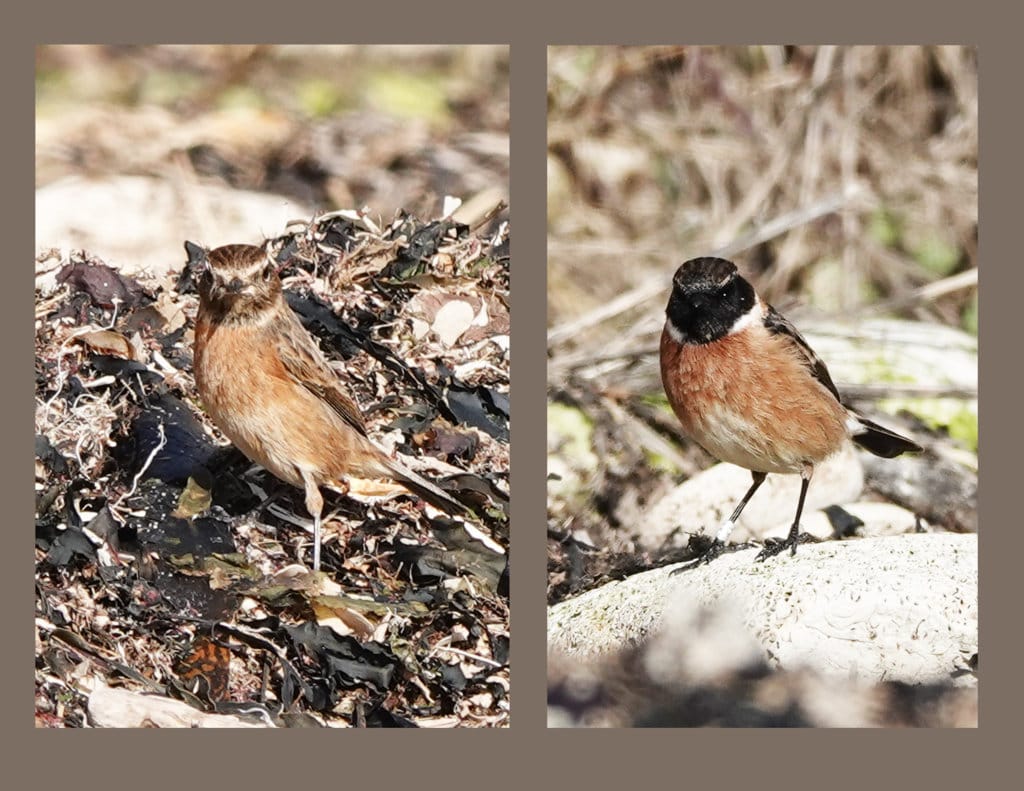
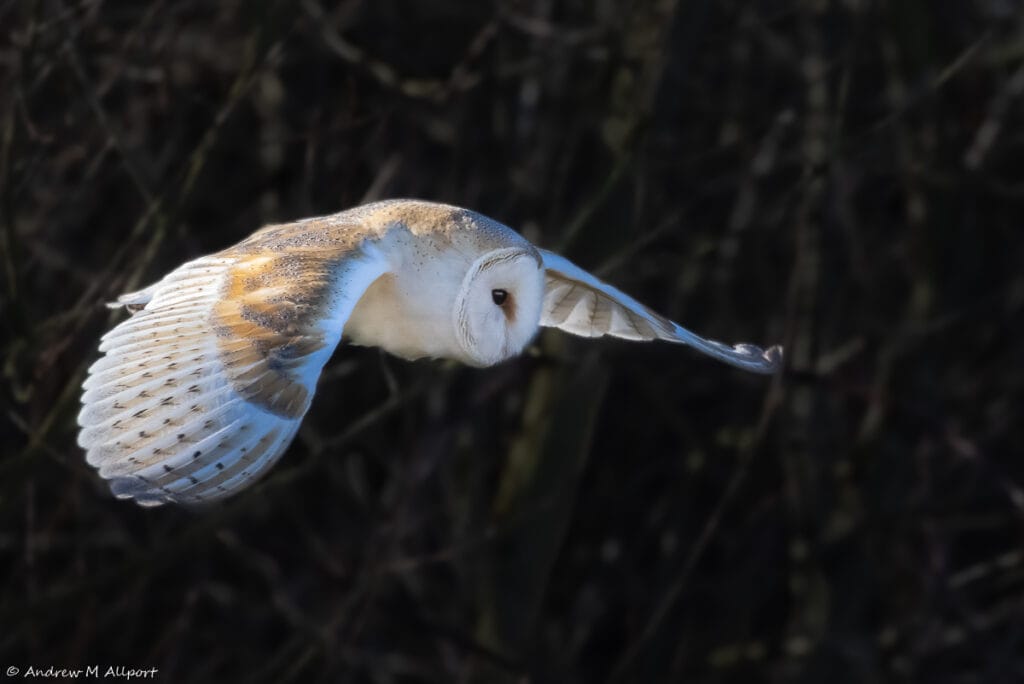
An overcast day, with a moderate southerly wind and rain arriving late afternoon; temperatures peaked at eight degrees C. Hundreds of Guillemots and fewer Razorbills were still off the outer head although no birds were on the cliffs, while 16 Purple Sandpipers remained below the Fog Station. A pair of Stonechats and a Barn Owl were recorded at South Dykes, the latter one of four day-hunting individuals.
The first day of meteorological spring was appropriately very sunny although the temperature only reached 9°C in a cool northerly breeze.
Seawatching was relatively uneventful, highlights being four Eider, four Common Scoter, 28 Red-throated Divers and a winter-plumaged adult Mediterranean Gull. The female-type Black Redstart remained below the Fog Station.
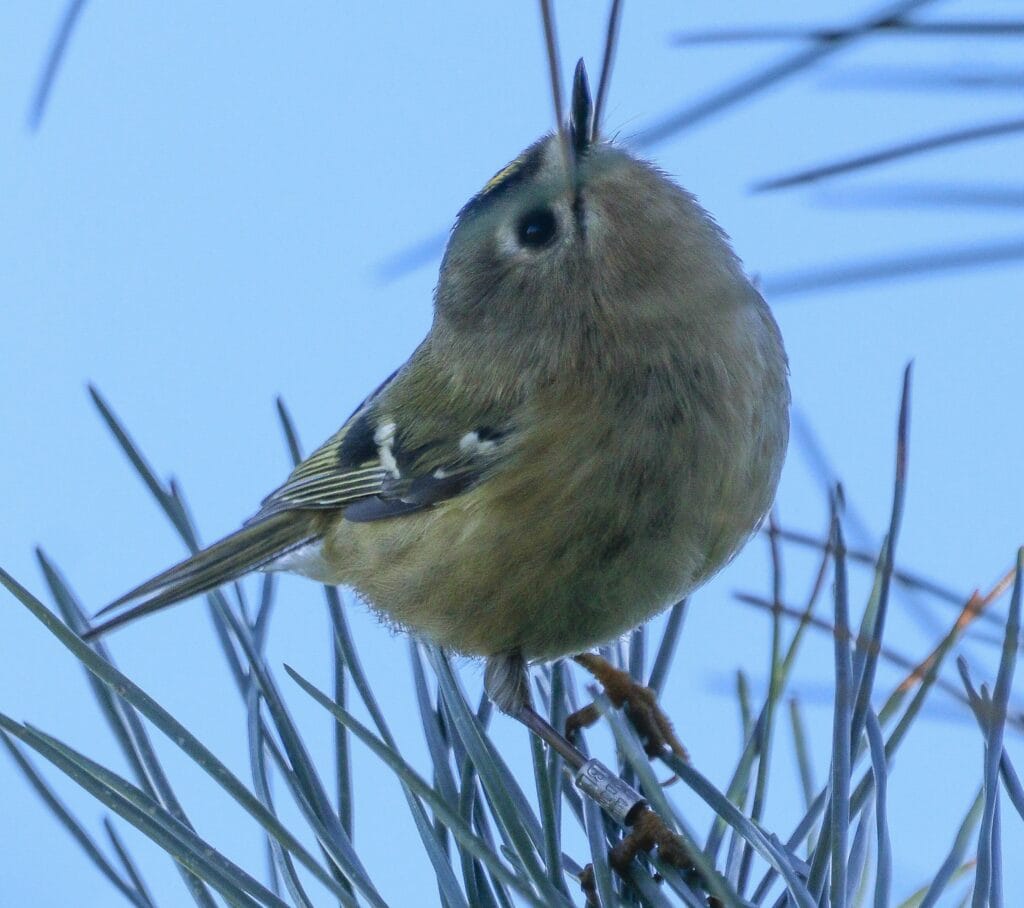
Elsewhere on the Outer Head, the more interesting sightings included a Pink-footed Goose, Teal numbers continued to fall with 44 present at Thornwick Pools, a Water Rail, a Jack Snipe and 14 Snipe. Passerine interest involved three Goldcrest, 14 Fieldfare and a male Siskin in a village garden – presumably all birds on their return journey to breeding areas.
At Bempton Cliffs RSPB, two Short-eared Owls continued to hunt on the reserve while nearby at Buckton a Golden Plover headed west and two Lapland Buntings remained on the cliff top.
An overcast day, with a light/moderate south-easterly wind and temperatures peaking at six degrees C. The seawatch featured the first major surprise of the year when a Great Shearwater flew south at relatively close range at 0902hrs; this represented only the second ever March record, following a bird that flew north on 15th March 1992. Two drake Scaup also flew south during the seawatch. In addition, Thornwick Pools hosted 47 Teal and a Water Rail, while South Landing attracted a Woodcock.
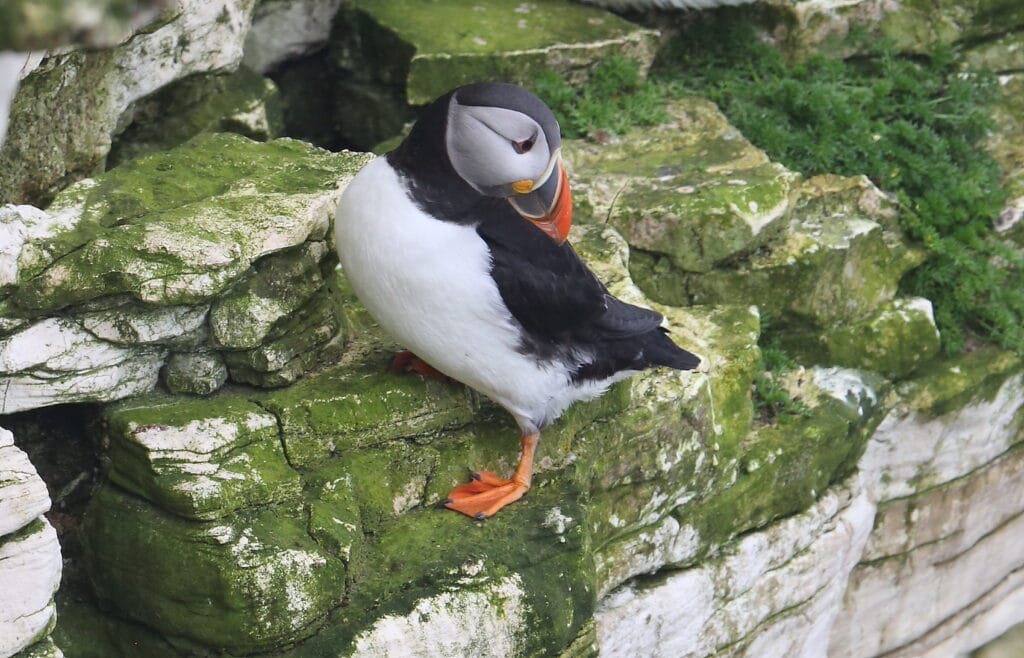
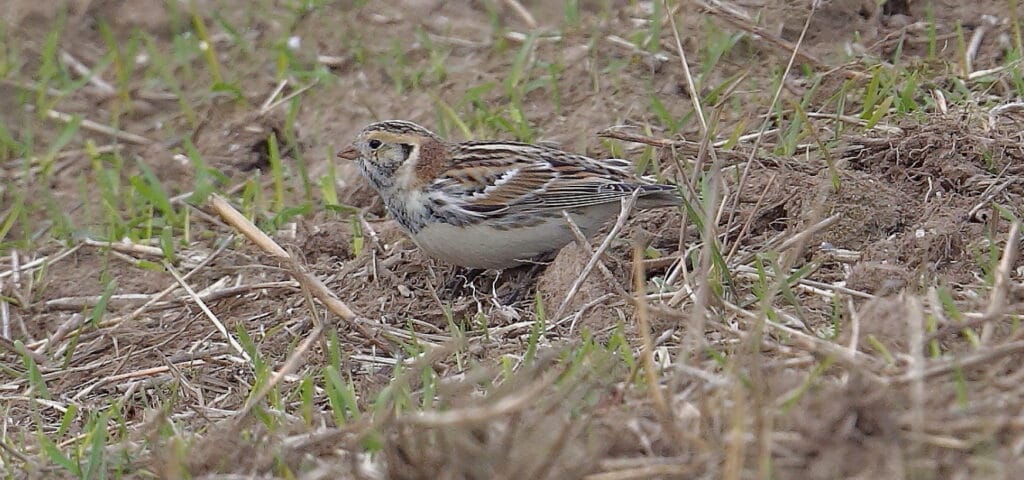
An overcast day, with a light/moderate south-easterly wind and temperatures peaking at seven degrees C. A Puffin that flew north represented the year’s first seawatch record, with 28 Common Scoters and 38 Red-throated Divers also recorded. The Water Rail remained in residence near the Lighthouse, as did two Short-eared Owls at RSPB Bempton Cliffs (where a Chiffchaff was also present) and a Shore Lark, 20 Lapland Buntings and two Snow Buntings at Buckton.
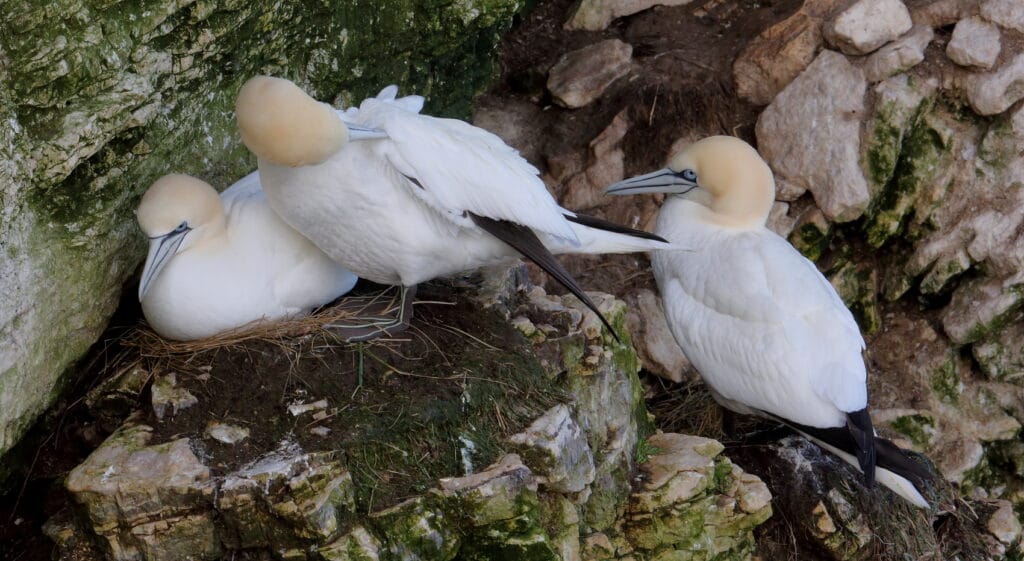
Overcast and rain throughout, with a northerly wind establishing from mid-morning; temperatures peaked at seven degrees C. A pod of six Bottlenose Dolphins was the highlight of a morning’s seawatch that also featured significant numbers of Guillemots/Razorbills and 582 Gannets. The Velvet Scoter remained off South Landing, where 80 Turnstones represented a good tally, whilst the Siberian Chiffchaff continued its residence at Thornwick. Buckton cliff top again proved attractive to five Lapland Buntings.
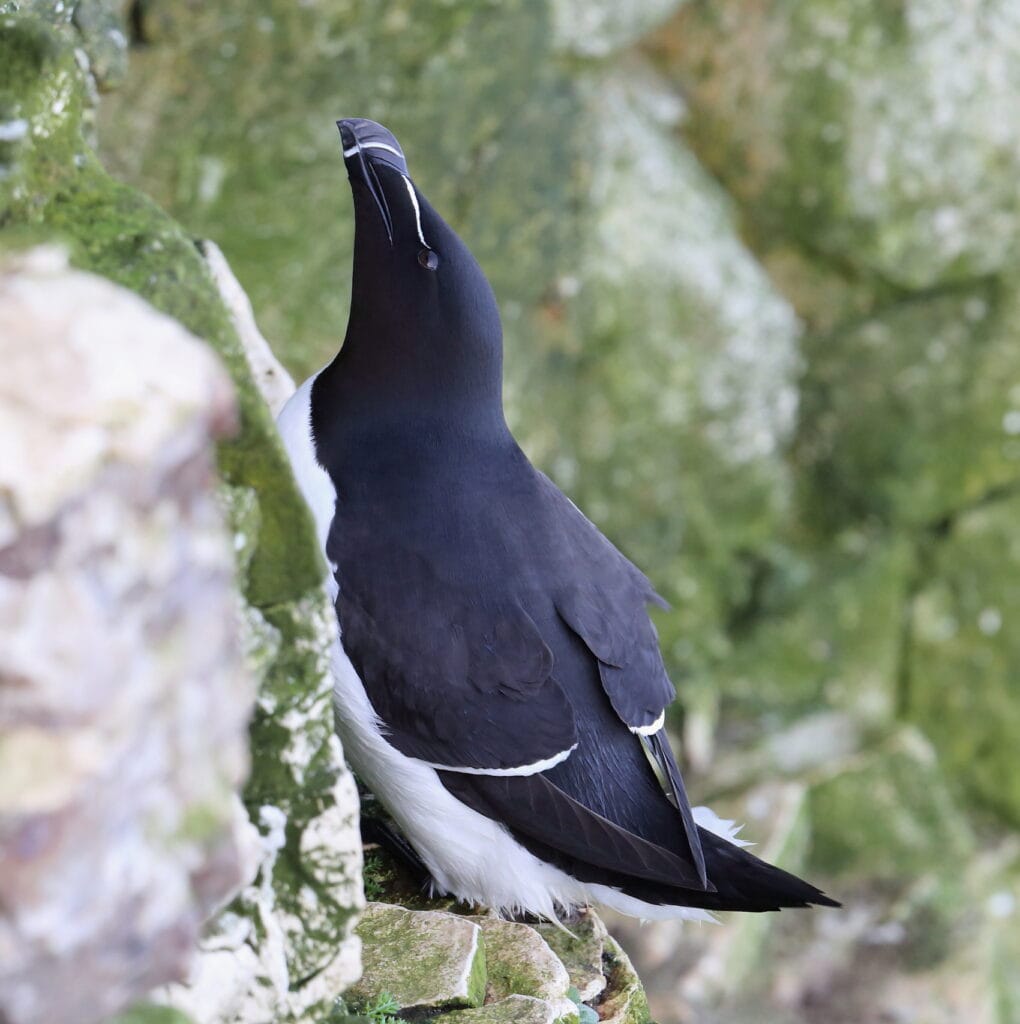
Razorbill, RSPB Bempton Cliffs, by Alan Walkington
Strong northerly winds featured throughout a largely overcast day, with showers and temperatures peaking at six degrees C. Fourteen Eiders flew south during the morning’s seawatch that also featured a Tufted Duck, 255 Fulmars north and six Bottlenose Dolphins blogging offshore. Two Gadwall and 53 Teal were on Thornwick Pools, while a Woodcock was at Oceanview.
A sunny day, with a cool north-easterly wind and temperatures peaking at seven degrees C. Seawatch highlights included nine Eiders (7 south, 2 north), 109 Kittiwakes and a Puffin also north. Thornwick Pools hosted 46 Teal and two Gadwall, with the Siberian Chiffchaff still in residence nearby. Spring passage was evident, with two Stonechat on the edge of the village at Hartendale and five Goldcrests. A Small Tortoiseshell was another sign of spring.
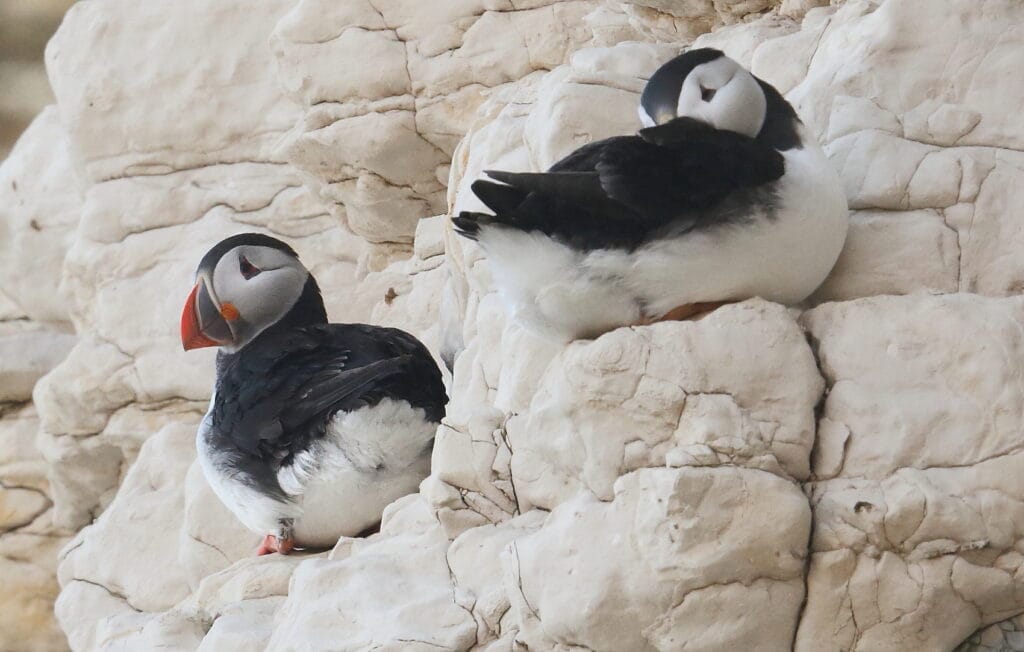
Despite a bright start, it was a generally overcast day with a light/moderate south-easterly wind developing and temperatures reaching six degrees C. A Manx Shearwater flew south on the seawatch, with the year’s first Lesser Black-backed Gull moving north. Bottlenose Dolphins were again evident, with up to 15 present off the Fog Station/RSPB Bempton Cliffs. Typical of a relatively still day in early March, Puffins appeared in numbers, with three off the Fog Station, 15 at North Landing and 30 off ‘Grandstand’ RSPB Bempton Cliffs; two Short-eared Owls and a Marsh Harrier were also seen on the reserve and two Lapland Buntings continued in residence at nearby Buckton.
In addition, notable sightings on the outer head included the Velvet Scoter (South Landing), two Gadwall, three Goldcrests, the wintering Siberian Chiffchaff and 60 Redwing.
A blustery southerly wind established during a relatively bright day with temperatures reaching six degrees C. Six Bottlenose Dolphins were again off the Fog Station during the morning; Guillemots and Razorbills visited the cliffs, albeit in lower numbers than yesterday and two Puffins were also on the sea. The Siberian Chiffchaff remained at Thornwick, as did the pair of Gadwall on the Pools. ThreeShort-eared Owls hunted cliff top fields at RSPB Bempton Cliffs whilst five Lapland Buntings were at Buckton.
Short-eared Owl, RSPB Bempton Cliffs, by Alan Walkington
Moderate/strong winds from a south-easterly to a southerly direction during a day of sunny intervals and temperatures peaking at ten degrees C. Single Goosander and sanderling south on the morning’s seawatch were noteworthy, with thousands of auks flying past the headland and resting on the water. A White Wagtail on the Golf Course was early, with two Scandinavian Rock Pipits at the same location. The three Shore Larks re-appeared in cliff top stubble at Buckton, where at least three Lapland Buntings remained.
Bottlenose Dolphins, Fog Station, by Brett Richards (8/3)
Moderate/strong southerly winds backed south-easterly during a day that featured both sunny and overcast skies; temperatures reached nine degrees C. An adult Little Gull that flew south during the morning seawatch was the first of the year. Two Goldcrests, 60 Redwing and a Grey Wagtail were present at South Dykes. On the opposite side of the headland, 22 Lapland Buntings and a Snow Bunting were on the cliff top at Buckton, with Short-eared Owl and Chiffchaff at RSPB Bempton Cliffs.
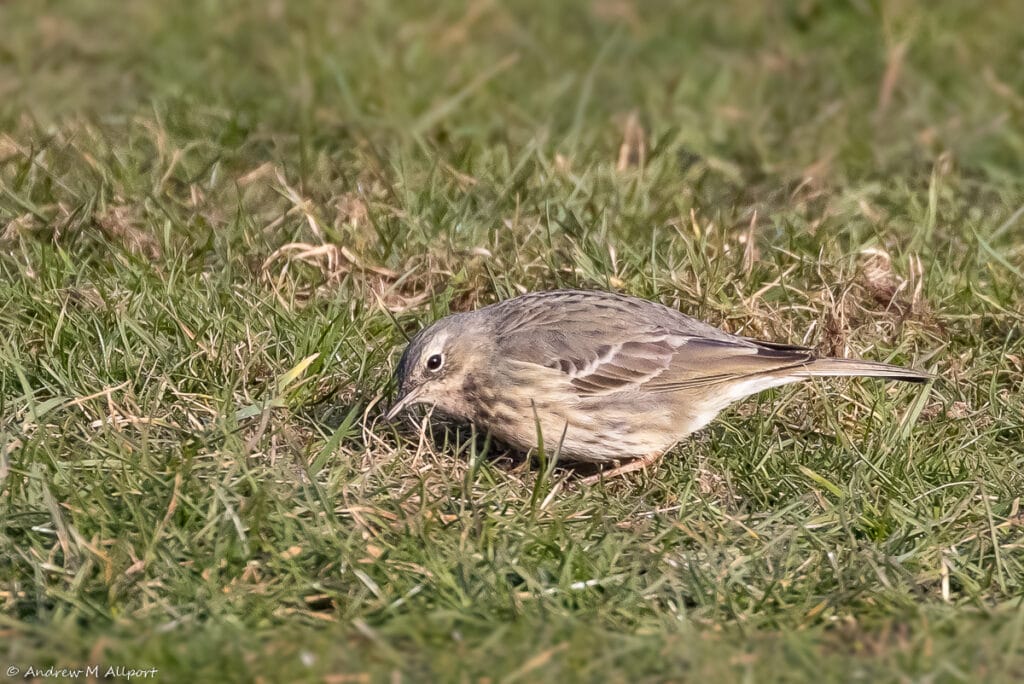
Scandinavian Rock Pipit, Golf Course, by Andrew Allport (09/03)
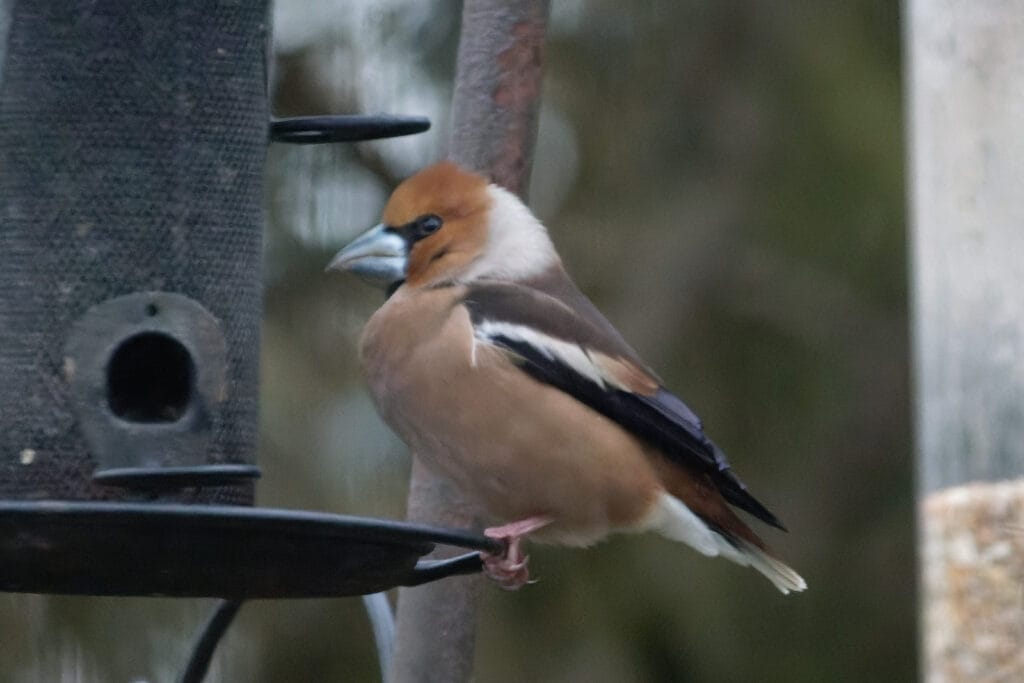
Strong south-easterly winds featured throughout a day that began with sunny intervals, but ended overcast with light rain; temperatures reached nine degrees C. Following the early White Wagtail on 9/3, the day’s highlight was further evidence that spring passage was well underway – a Hawfinch visited feeders in a village garden late afternoon.
Five Brent Geese, three Wigeon, seven Teal, nine Dunlin and a Lesser Black-backed Gull flew south during the morning seawatch. Thornwick Pools hosted two Gadwall and 41 Teal, while a Woodcock was present at South Landing. Whelkie Wynds attracted a Chiffchaff, whilst the Siberian Chiffchaff remained at Thornwick; a Scandinanvian Rock Pipit was on the nearby cliff top. Fifteen Lapland Buntings and a Snow Bunting were again on cliff top fields at Buckton.
The weather featured strong south-east/southerly winds, generally overcast skies and temperatures peaking at 11 degrees C. A lone Ringed Plover, 12 Dunlin and a Lesser Black-backed Gull flew south past the Fog Station. The highlight was the arrival of an early Firecrest to the Golf Course Willows, especially welcome given their paucity in 2021. In addition the Siberian Chiffchaff remained, as did the Hawfinch although that was present in a village garden early morning only. Other notable sightings included 13 Lapwing east, a Dunlin along Water lane, two Chiffchaff, three Fieldfares, a Siskin and a Lapland Bunting (Old Fall). A Short-eared Owl lingered at RSPB Bempton Cliffs, along with five Lapwing, 110 Starlings, 29 Blackbirds, three Fieldfare and five Siskin; 12 Lapland Buntings were again at Buckton.
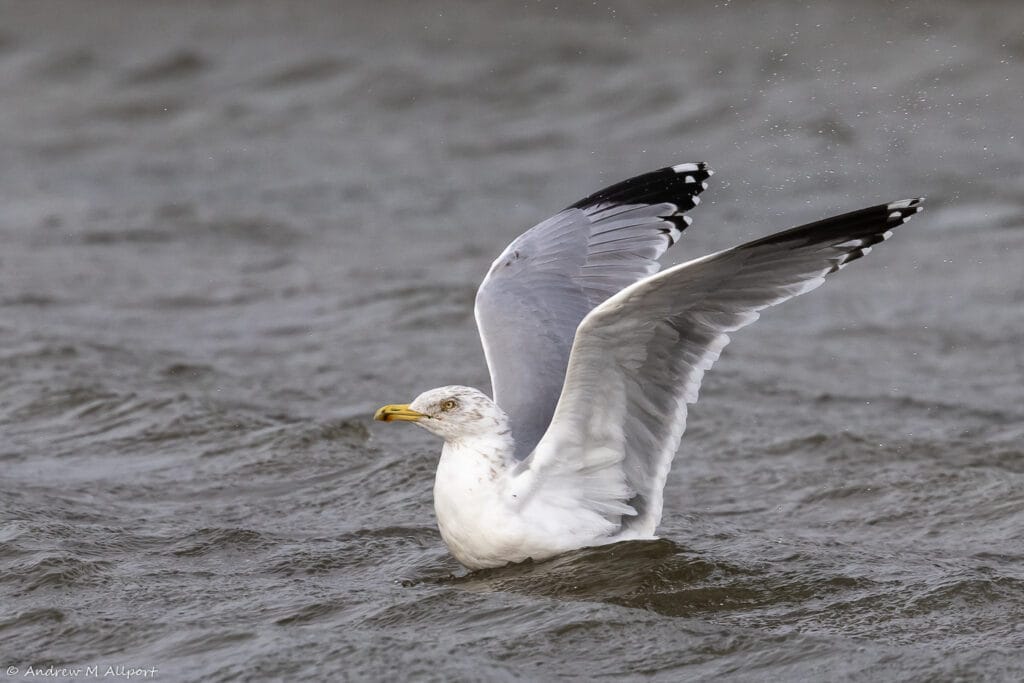
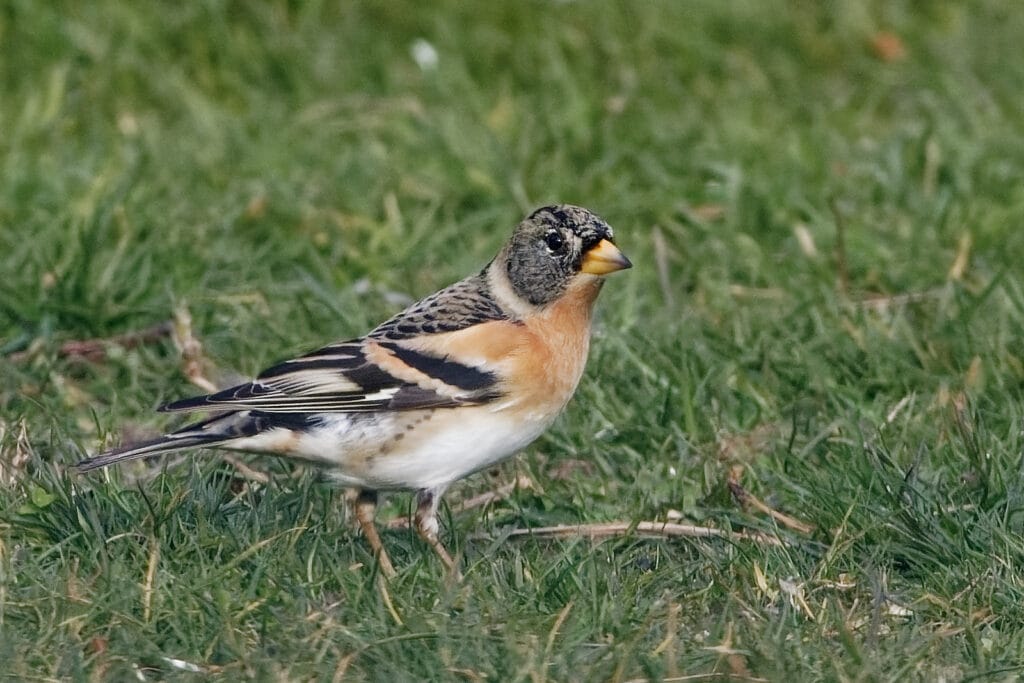
A day of moderate south-easterly winds, generally overcast skies and temperatures reaching nine degrees C. Seawatch highlights included 108 Cormorants, 428 Herring Gulls and a Lesser Black-backed Gull moving south. Thornwick Pools attracted two Gadwall, 30 Teal and a Scandinavian Rock Pipit; the Siberian Chiffchaff was still present nearby. Early spring migrants included 250 Starlings, 61 Fieldfare, 22 Redwing, two Goldcrests, seven Chiffchaff, a White Wagtail, three Siskin and a Brambling. Sightings from the Buckton/Bempton area included a Woodcock, one Short-eared Owl, three Fieldfare and ten Lapland Buntings.
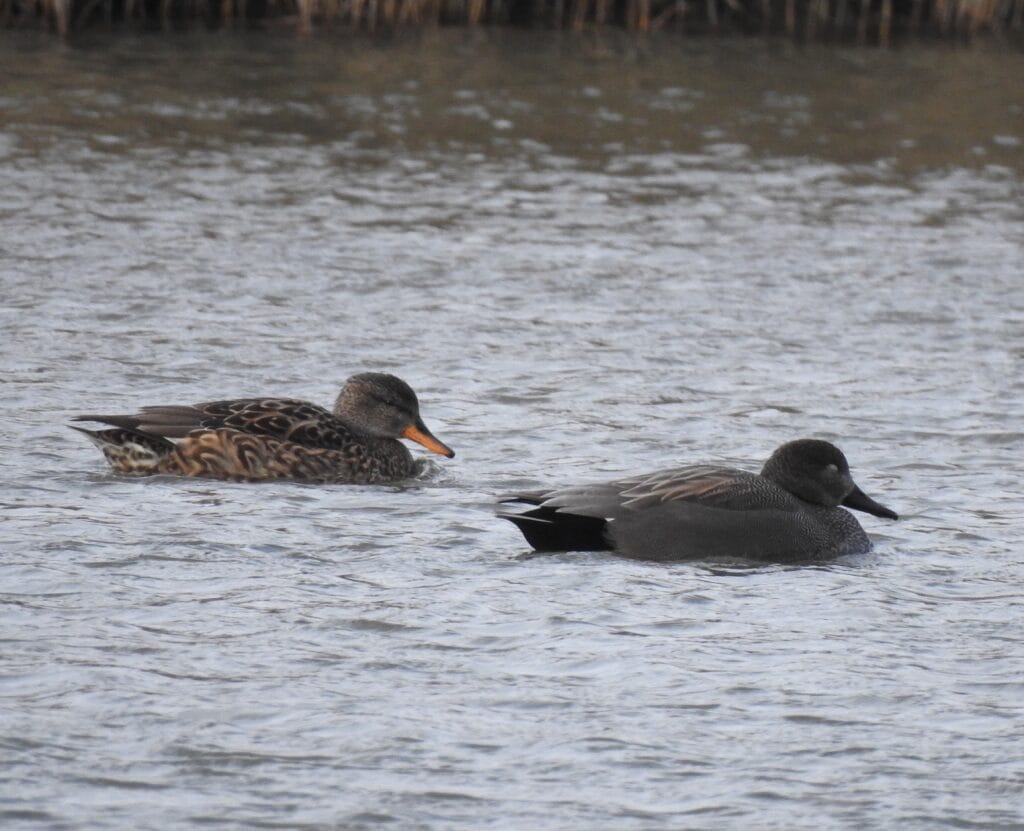
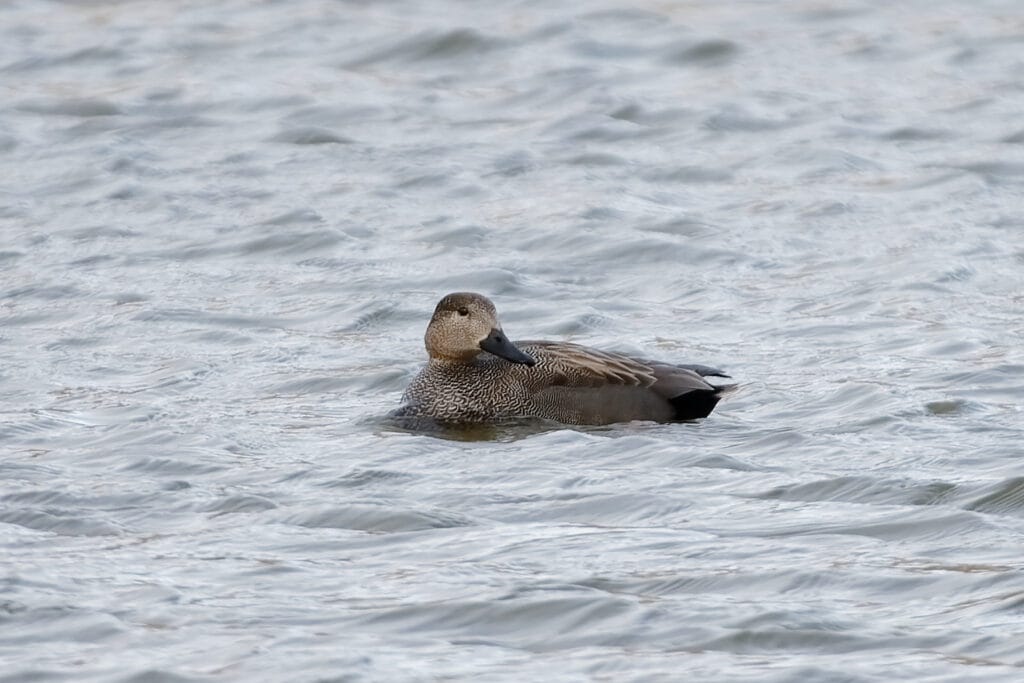
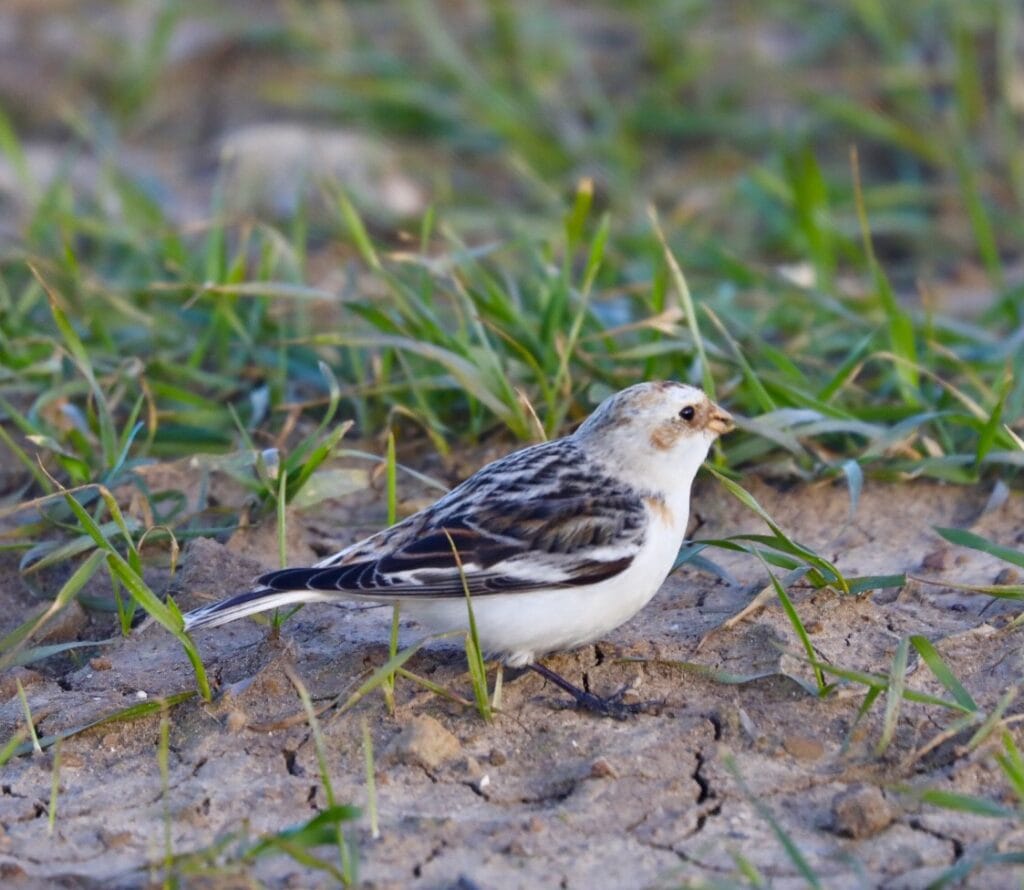
Gadwall, Thornwick Pools, by Rob LittleSnow Bunting, RSPB Bempton Cliffs, by Steve Meredith (12/3)
A bright day, with prolonged sunny intervals, a relatively light southerly wind and temperatures peaking at 13 degrees C. A single dark-bellied Brent Goose and creamcrown Marsh Harrier flew south during the morning’s seawatch. A total of 360 Puffins were recorded between North Dykes and the Fog Station, with the majority rafting below the cliffs. Elsewhere, a Merlin overflew Old Fall. Passerine migrants included 460 Starlings, seven Fieldfare, 72 Redwing, seven Goldcrest, the long-staying Siberian Chiffchaff, nine Chiffchaffs, 12 Pied Wagtails, seven Siskin and two Brambling. Butterfly sightings included a scattering of Small Tortoiseshells across the headland and, more unusually, a Brimstone in the village. Notable records at Buckton included a Water Rail, one Goldcrest and four Lapland Buntings.
It was a sunny day, with light southerly winds and temperatures reaching ten degrees C. Seawatch highlights included a lone Gadwall and 24 Eiders flying north, with a Goosander and an adult Mediterranean Gull south. Two Woodcock were recorded, whilst a total of 1500 Puffins rafted on the sea between the Dykes and the Fog Station. Passerine migrant totals included seven Redwing, five Fieldfare, three Goldcrest, eight Chiffchaff, a White Wagtail, three Brambling and four Siskin. Two Siskin visited a village garden in Bempton, a Whimbrel flew north-west over the nearby reserve, with single Goosander and Snow Bunting south-east, while 30 Lapland Buntings showed well on the cliff top at Buckton.
In contrast to previous days, it was misty at times with a heavy overcast, a light/moderate southerly wind and heavy rain arriving late afternoon. A scattering of passerine migrants were again evident, with larger numbers of Siskins present: 20 shared between two gardens on the southern side of the village indicative of a significant influx. The Lapland Bunting flock also remained at Buckton, with 27 birds giving good views on the cliff top plough.
A bright day, with a moderate/strong west-south-westerly wind and temperatures that reached 13 degrees C. Seawatch highlights included two Shoveler flying south and a pod of 15 Bottlenose Dolphins. The day’s highlight was an early morning Woodlark at the Lighthouse Grassland; after singing briefly, it wasn’t seen after 0800hrs. A Barnacle Goose in off the sea later joined the Greylag flock, while raptor interest included a Marsh Harrier south over the Dykes, along with 15 Common Buzzard. A Water Rail remained near the Lighthouse, as did three Woodcock, whilst Thornwick Pools attracted 15 Snipe. Large gulls headed west over the headland, with totals of 110 Great Black-backed Gulls, 520 Herring Gulls and a Lesser Black-backed Gull. Passerine migrants included nine Chiffchaffs, the long-staying Siberian Chiffchaff, 24 Redwing, a second-calendar year male Black Redstart and 22 Siskin. Elsewhere, a Red Kite flew south-east over RSPB Bempton Cliffs and 20 Lapland Buntings remained at Buckton; a Nuthatch frequented Sewerby Gardens.
Sunny throughout, with a light south-easterly wind developing and temperatures peaked at 11 degrees C. A quieter day, with a clear out of migrants and few signs of new arrivals. The North Marsh area hosted 56 Teal and eight Wigeon. Passerine interest included 18 Redwing, a Fieldfare, one Goldcrest, five Chiffchaff, two Siskin and a Brambling. Ten Lapland Buntings remained at Buckton, while a pod of at least 15 Bottlenose Dolphins showed well off RSPB Bempton Cliffs and the Fog Station early morning.
Another sunny day, with a cool south-easterly wind establishing and temperatures reaching ten degrees C. Eight Tufted Ducks and an adult Mediterranean Gull flew south during the morning seawatch when seven Eider flew north. Passerine migrants were again thin on the ground; 1500 Starling represented a sizeable increase, but otherwise 11 Chiffchaffs, four Goldcrest and four Redwing. A Woodcock overflew the road east of Bempton village, single Water Rail, Chiffchaff, Redwing and four Stonechats were at RSPB Bempton Cliffs and two Lapland Buntings at nearby Buckton.
The weather consisted of easterly winds, a sunny start with increasing cloud in the afternoon and temperatures that peaked at eight degrees C. Eleven Wigeon and 31 Teal remained in residence, while a pair of Common Buzzards were east of the village. Migrants included six Siskin and a Brambling that visited feeders on the southern edge of the village. A ringing session at South Landing was rewarded with two Chiffchaffs among a total of 36 birds processed, whilst ‘vis mig’ through RSPB Bempton Cliffs included two White Wagtails and 15 Magpies.
A light wind backed from a westerly direction to a south-easterly during another sunny day, with temperatures reaching ten degrees C. Migrants on the outer head included a Woodcock, ten Chiffchaffs, a Redwing, four Brambling and 22 Siskin. Two Short-eared Owls remained at RSPB Bempton Cliffs, with three Chiffchaffs also present; a male Black Redstart was located along Cliff Lane and 48 Golden Plovers overflew the village. The pod of c.20 Bottlenose Dolphins continued to tour the headland; having been off the Fog Station early morning, they later entertained off Bempton Cliffs.
Sunny throughout, with a light easterly breeze and temperatures reaching 11 degrees C. Large numbers of auks were back on the cliffs, whilst a pod of c. 20 Bottlenose Dolphins swam north out of Bridlington Bay. A Little Grebe at Thornwick Pools was new, while the nearby over-wintering Siberian Chiffchaff sang for the first time. Ten Chiffchaffs were in residence, some obviously freshly arrived, while five Goldcrests, 17 Redwing and nine Siskin were also recorded. Eight Lapland Buntings remained on the cliff top at Buckton.
Red-throated Diver, Fog Station, by Brett RichardsSiberian Chiffchaff, Thornwick, by Rob Little
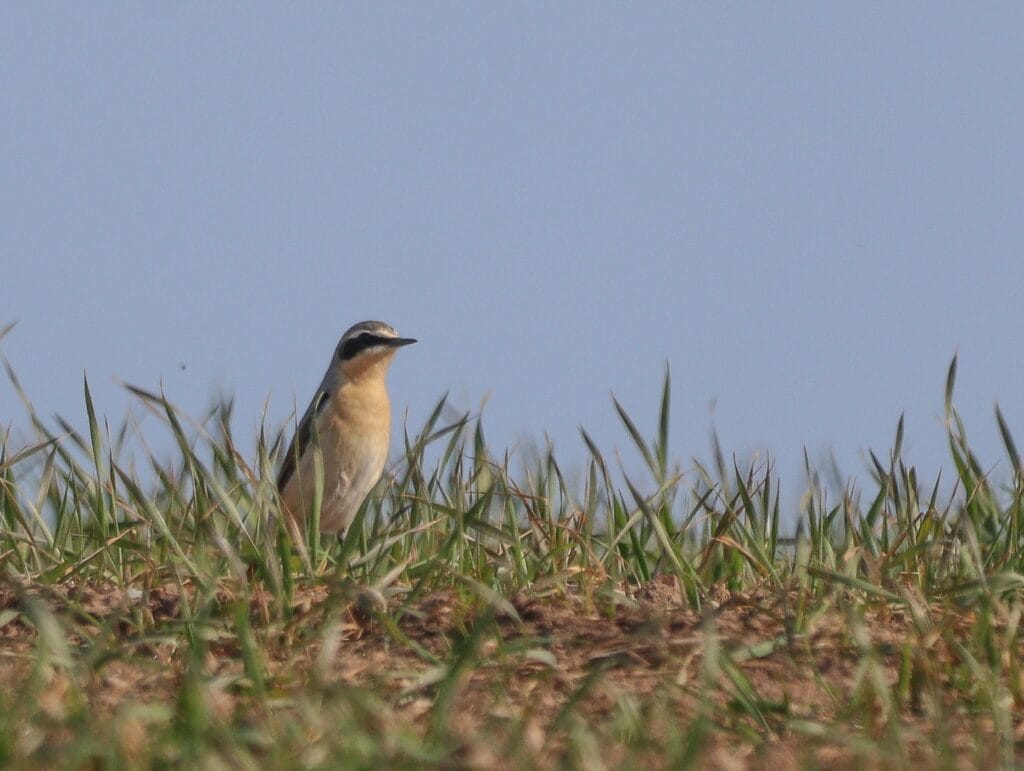
Sunshine prevailed after a misty start, with light variable winds and temperatures peaking at 11 degrees C. An arrival of migrants reflected the favourable conditions and included the year’s first Little Ringed Plover at Thornwick Pools, a Wheatear on the nearby cliff top, a Black Redstart also near Thornwick, 13 Chiffchaffs, three Goldcrests, a Redwing, and 33 Siskin; the Siberian Chiffchaff also remained. FourWheatears appeared on the cliff top between Buckton and Bempton, while two Chiffchaff and single Siskin and Brambling visited the reserve.
Sunny throughout, with a light variable winds and temperatures reaching 14 degrees C. The year’s first Sandwich Terns were recorded during the morning’s seawatch, with three birds flying south. However, the main feature of the day were two distinct movements of Redwing: unusually, a total of 395 Redwing made landfall from the east early morning and headed west over the headland. Towards dusk, a mirror image movement took place, with 480 Redwing flying high from South Dykes and heading east out to sea. Additional migrant records included two Little Ringed Plovers, four Woodcock, a Jack Snipe, the long-staying Siberian Chiffchaff, 20 Chiffchaffs, one Black Redstart, a Wheatear, a White Wagtail and four Siskin.
Sunny throughout, with a light, variable breeze and temperatures peaking at 14 degrees C. Unsurprisingly the seawatch was quiet, although a Shoveler flew south and two Eiders north. The headland’s wetlands attracted nine Wigeon, 93 Teal, two Little Grebes, a Water Rail, a Little Ringed Plover, two Jack Snipe and 19 Snipe; four Woodcock and a Golden Plover were also present. A creamcrown Marsh Harrier flew west over South landing, whilst a Short-eared Owl hunted the outer head. Passerine migrants included the Siberian Chiffchaff, 22 Chiffchaffs, a Blackcap, ten Goldcrests, three Fieldfare, 24 Redwing, a Wheatear, two Black Redstarts, six Stonechats, six Siskin and two Brambling.
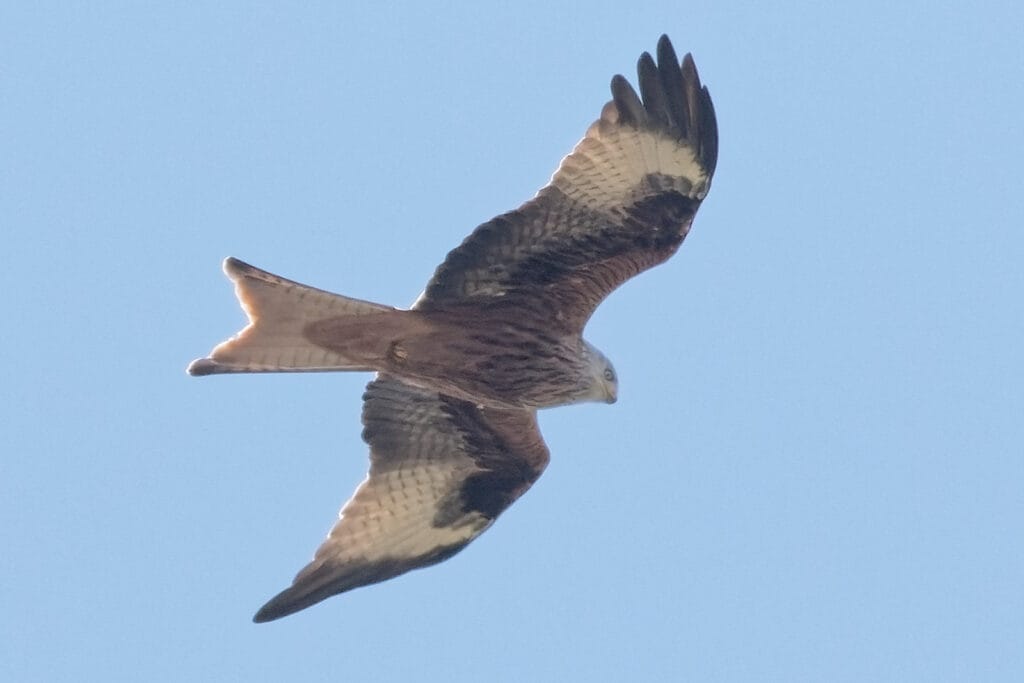
A sunny day, with light variable winds and temperatures that reached 14 degrees C. Two Red Kites toured the headland during the afternoon before they eventually headed north-west. Thornwick Pools again hosted a Little Ringed Plover, while the Siberian Chiffchaff continued in residence north of ‘red brick house’ and the long-staying Mute Swan remained at the nearby Lakes. Passerine interest included 19 Chiffchaffs, one Black Redstart, a Brambling, a Snow Bunting and a singing Corn Bunting, the latter near Old Fall. Another Black Redstart appeared on the cliff top at RSPB Bempton Cliffs, where a Short-eared Owl lingered, whilst a Little Owl was located on Cliff Lane.
A misty day, with visibility much reduced at either end of a day that also featured sunny intervals, almost no wind and temperatures reaching ten degrees C. A Green Woodpecker at RSPB Bempton Cliffs late afternoon stole the headlines – although an expected species in many parts of Yorkshire, this remains a true rarity on the headland. Other sightings on the reserve included two Chiffchaffs, two Goldcrests, 17 Redwing, a Wheatear and one Siskin. Notable sightings on the outer head included a flock of 55 Redwing heading east and 14 Siskin and a Brambling visiting a village garden.
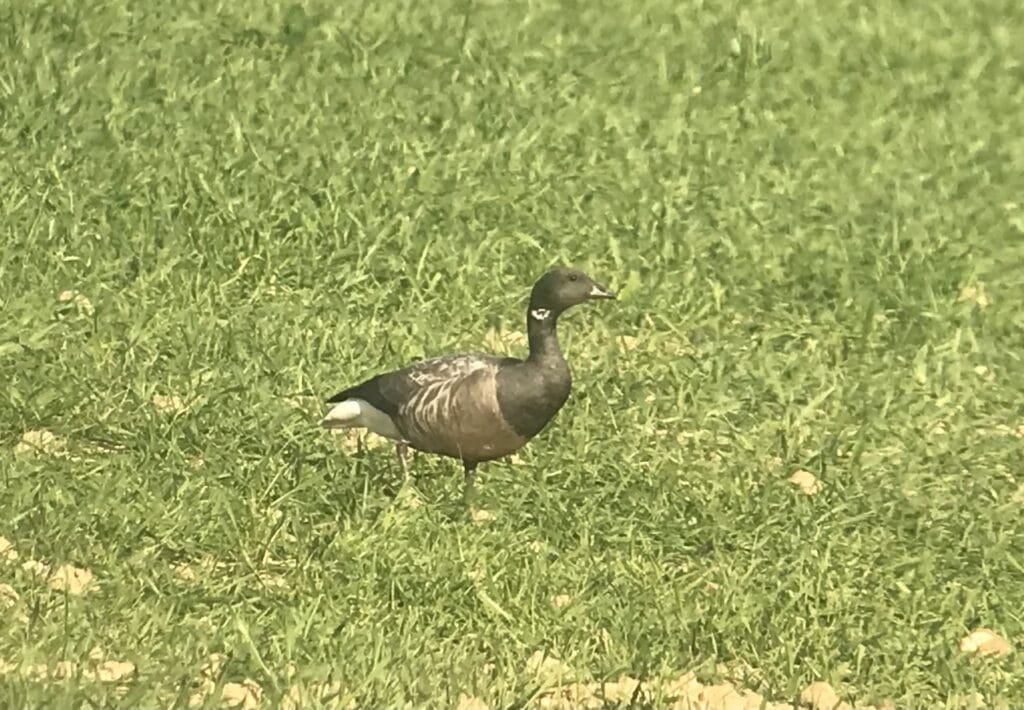
Light winds backed from a south-west to a south-east direction during an overcast day with spells of mainly light rain, while temperatures reached nine degrees C. Seawatching was rewarded with a dark-bellied Brent Goose heading north and two Goosanders south. The Mute Swan remained on The Lakes, while a drake Shoveler was a new arrival at Thornwick Pools; better still, a Ruff visited the flash along Water Lane. Passerine interest included the singing Siberian Chiffchaff at Thornwick and five Brambling, the latter visiting village gardens.
Ruff, Water Lane, by Alan WalkingtonShoveler, Thornwick Pools, by Brett Richards
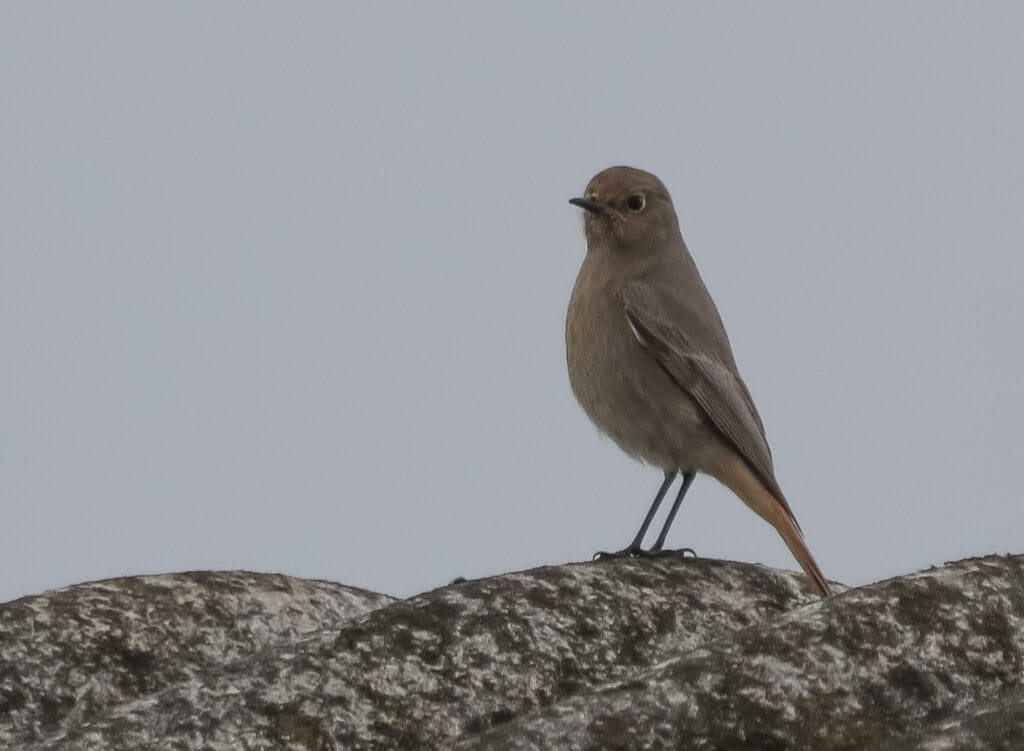
An overcast day, with very light southerly winds and temperatures peaking at eight degrees C. A second calendar-year Mediterranean Gull and three Lesser Black-backed Gulls flew north during a morning seawatch that also witnessed four Dunlin moving south. Thornwick Pools hosted a Little Ringed Plover, while the Ruff remained on Water Lane Flash early morning. Another significant movement of Redwings took place, with 833 logged moving east. Additional migrants included 27 Chiffchaff, the Siberian Chiffchaff, three Goldcrests, 14 Fieldfare, four Brambling and two Siskin. Cliff Lane, Bempton attracted a Little Owl and a female Black Redstart, while a Blackcap was singing on the Links Golf Course adjacent to South Dykes.
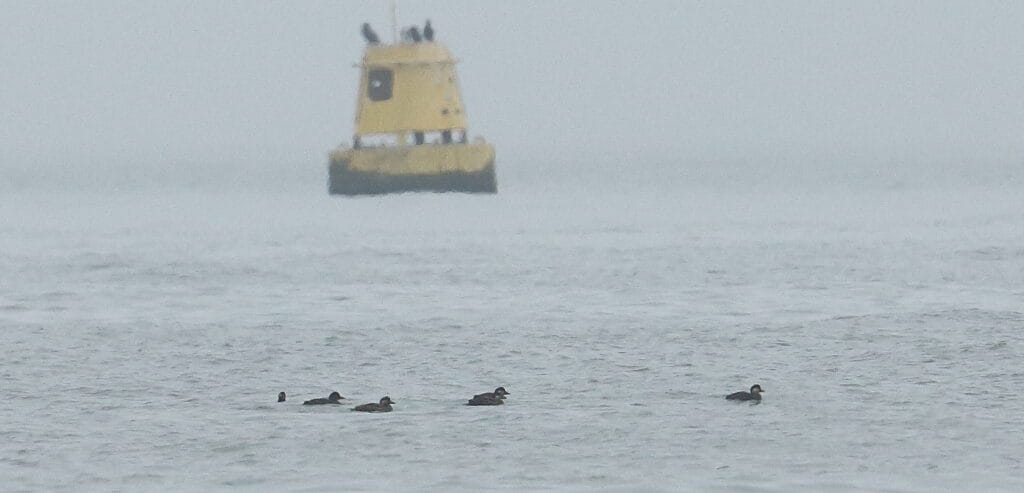
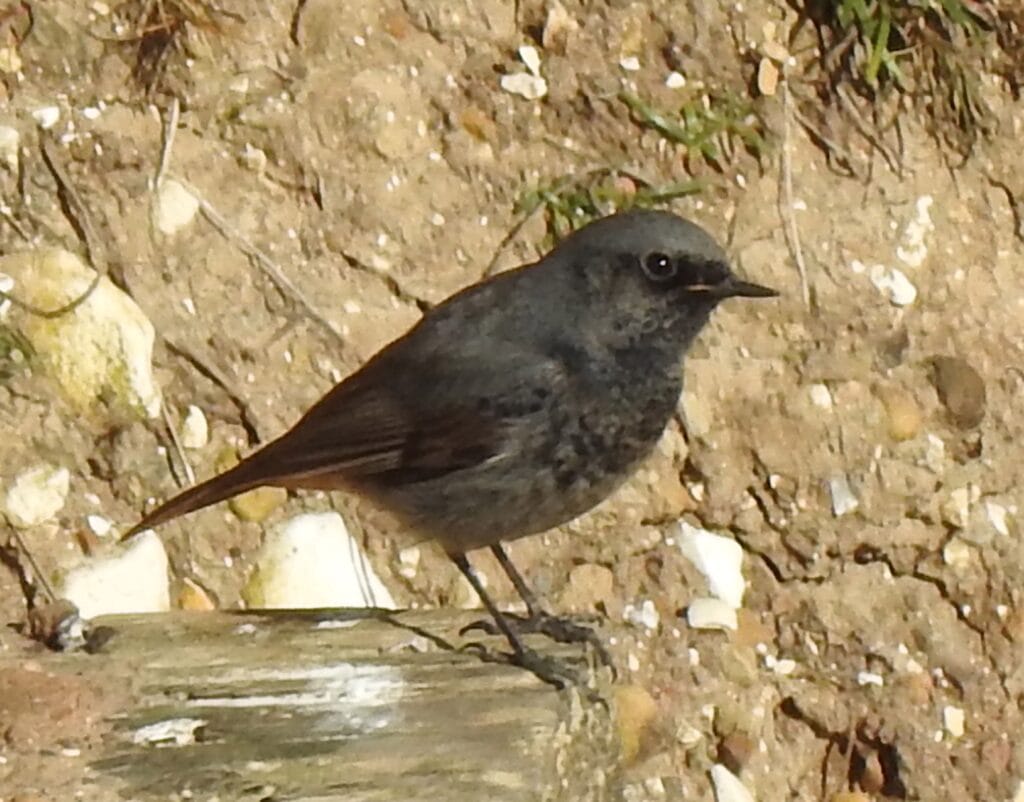
Black Redstart, Bempton, by Dan HoweCommon Scoters, South Dykes, by Alan Walkington
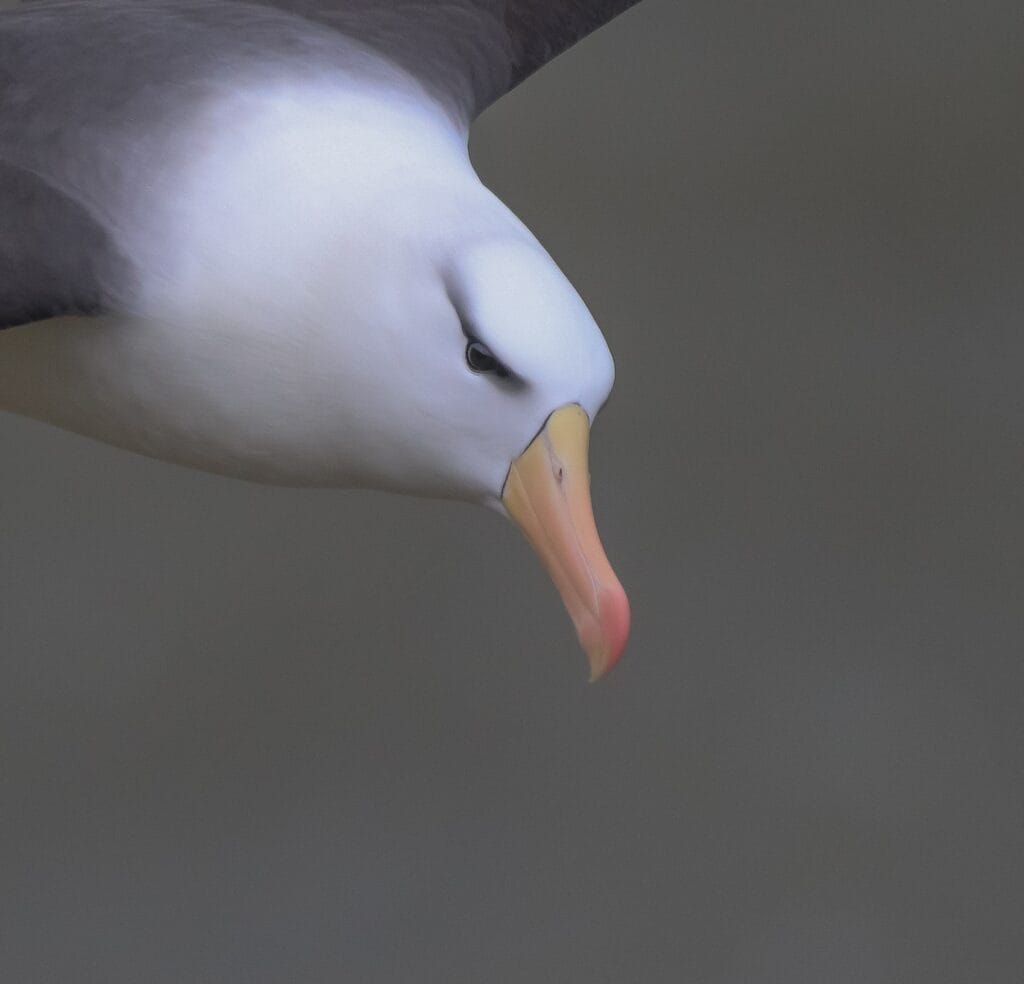
A cold north-easterly wind strengthened during a largely overcast day that featured sleet showers and temperatures pegged back at four degrees C. There was one standout: the return of the Black-browed Albatross to RSPB Bempton Cliffs. Having first appeared in early summer in previous years, its arrival in early spring was a surprise – first seen prior to mid-day, it was still present early evening. Seawatching off the outer head was rewarded with three Velvet Scoters and a Blue Fulmar flying north. Away from the sea, a Little Owl was located near Sixpenny and a Scandinavian Rock Pipit visited Thornwick Pools.
Black-browed Albatross, RSPB Bempton Cliffs, by Dan Howe
The cold weather snap continued with occasional snow showers, a bitingly chilly and strong north-easterly wind and temperatures peaking at a paltry four degrees. Factor in the wind chill and well, it was decidedly challenging for observers of the Black-browed Albatross that continued in residence at RSPB Bempton Cliffs. Additional sightings included the long-staying Siberian Chiffchaff at Thornwick and two Wheatears.
Black-browed Albatross, RSPB Bempton Cliffs, by Andy Hood
The weather consisted of sunny intervals, only occasional light, wintery showers and temperatures peaking at five degrees C, but feeling colder in a moderate northerly. The Black-browed Albatross continued its residence at RSPB Bempton Cliffs, mainly focused on the cliffs near Staple Newk. Elsewhere, a Little Ringed Plover and the Siberian Chiffchaff remained at Thornwick, while three Wheatears on the outer head represented an improved showing.
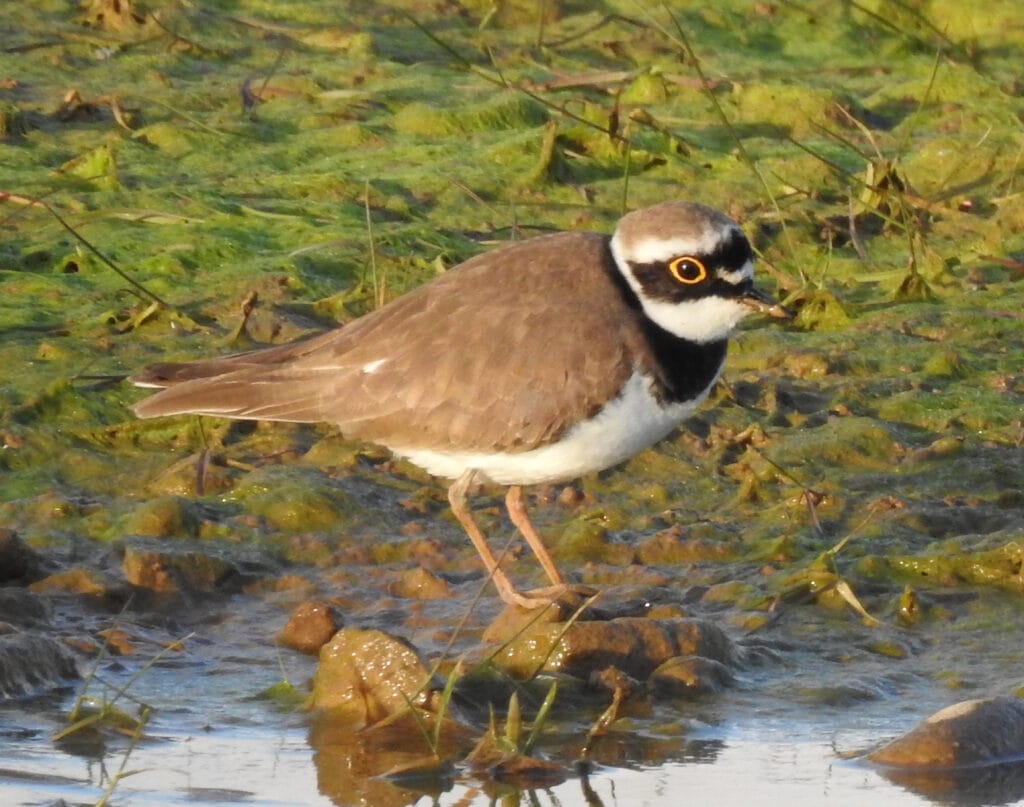
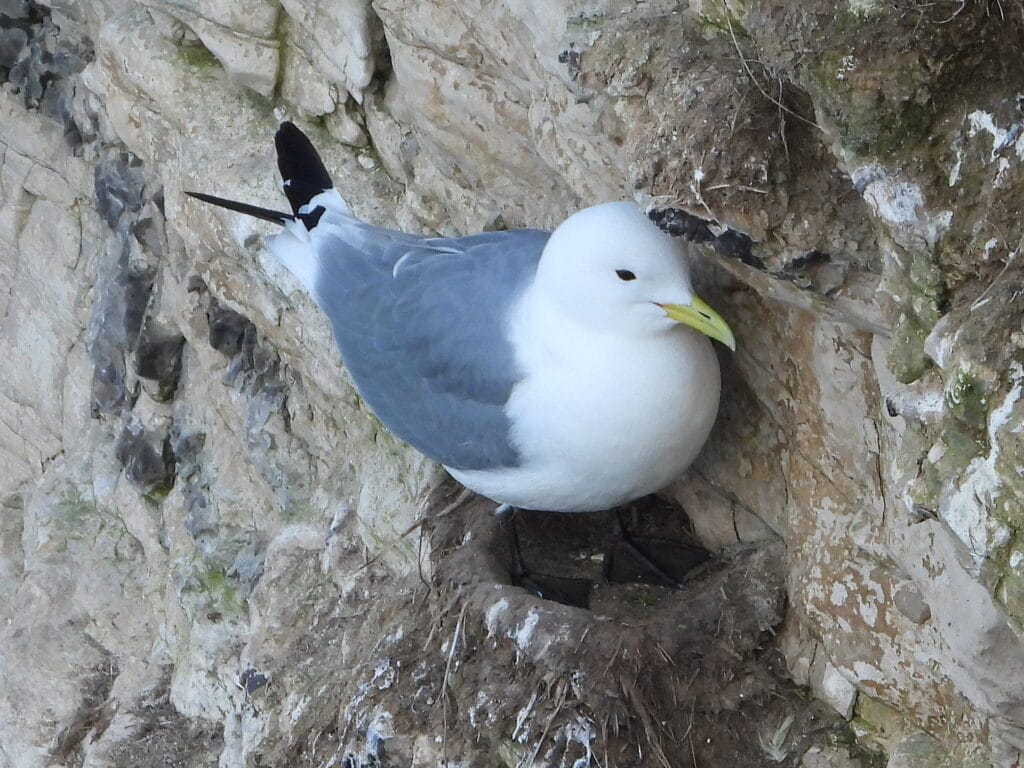
Little Ringed Plover, Thornwick Pools, by Brett RichardsKittiwake, RSPB Bempton Cliffs, by Don Hustings
There were sunny intervals for the majority of the day, albeit punctuated by wintry showers during the morning; temperatures reached six degrees in a light northerly. Seawatch highlights included a dark-bellied Brent Goose south (having earlier rested on fields adjacent to North Marsh) and a Manx Shearwater north. The outer head’s freshwaters attracted a Shelduck, four Wigeon, 46 Teal, a Little Ringed Plover and six Snipe. Passerine interest included three Wheatears, the Siberian Chiffchaff, two Black Redstarts and two Brambling. The Black-browed Albatross continued to show well at RSPB Bempton Cliffs, where there were also two Short-eared Owls on view.
Winds were generally from the west and increased in strength during the evening; it was a day of sunny intervals and increasing overcast and temperatures reached ten degrees C. Seawatch highlights included a Marsh Harrier flying north (quite possibly the same individual was seen later heading west at Bempton) and a pod of 17 Bottlenose Dolphins also moving north. The Black-browed Albatross visited the cliff at Staple Newk on several occasions, although it also drifted east on the sea offshore of Thornwick. Both the dark-bellied Brent Goose and Mute Swan remained on the outer head, as did the Siberian Chiffchaff. A Woodcock, one Wheatear, and two male Black Redstarts frequented the outer head, with a female-type Black Redstart east of Bempton village, whilst the year’s first Ring Ouzel fed in fields on the western edge of Flamborough village. Additional sightings at RSPB Bempton Cliffs included two Short-eared Owls and a White Wagtail.
Moderate/strong westerly winds featured during a cloudy day, with temperatures peaking at 13 degrees C. Naturally the Black-browed Albatross continued to dominate headlines, showing well at RSPB Bempton Cliffs and, also on occasion, along the northern side of the headland towards Thornwick. Two Mediterranean Gulls flew south during the morning seawatch, with three Eiders and two Lesser Black-backed Gulls also recorded. Passerine interest included the lingering Siberian Chiffchaff, six Redwing, two Wheatears, a White Wagtail and two Brambling.
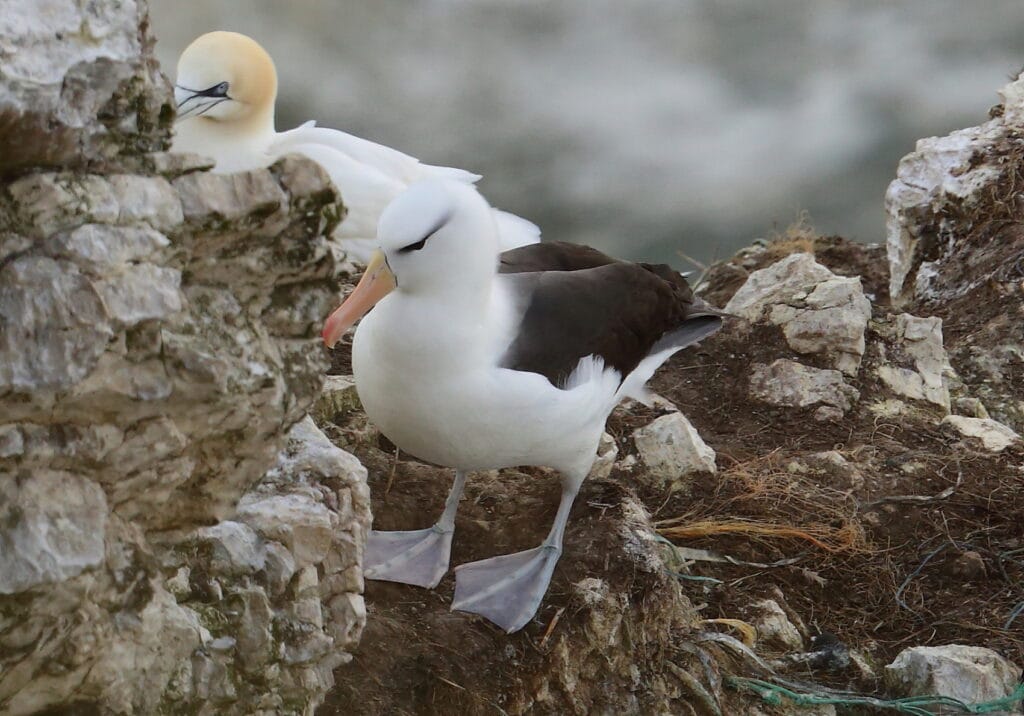
Black-browed Albatross, RSPB Bempton Cliffs, by Alan Walkington