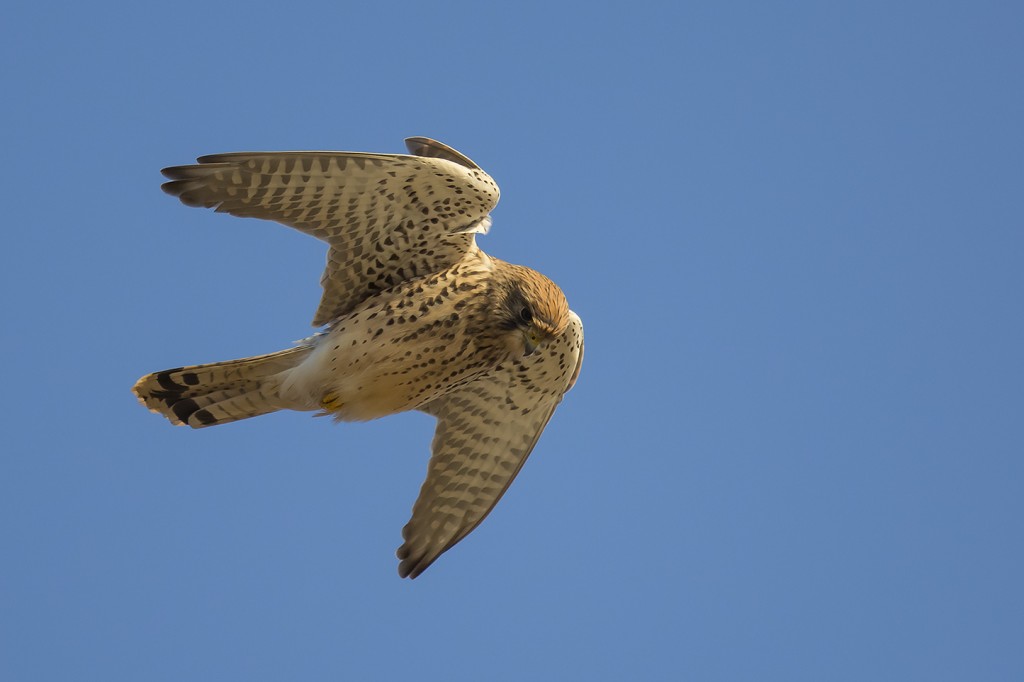
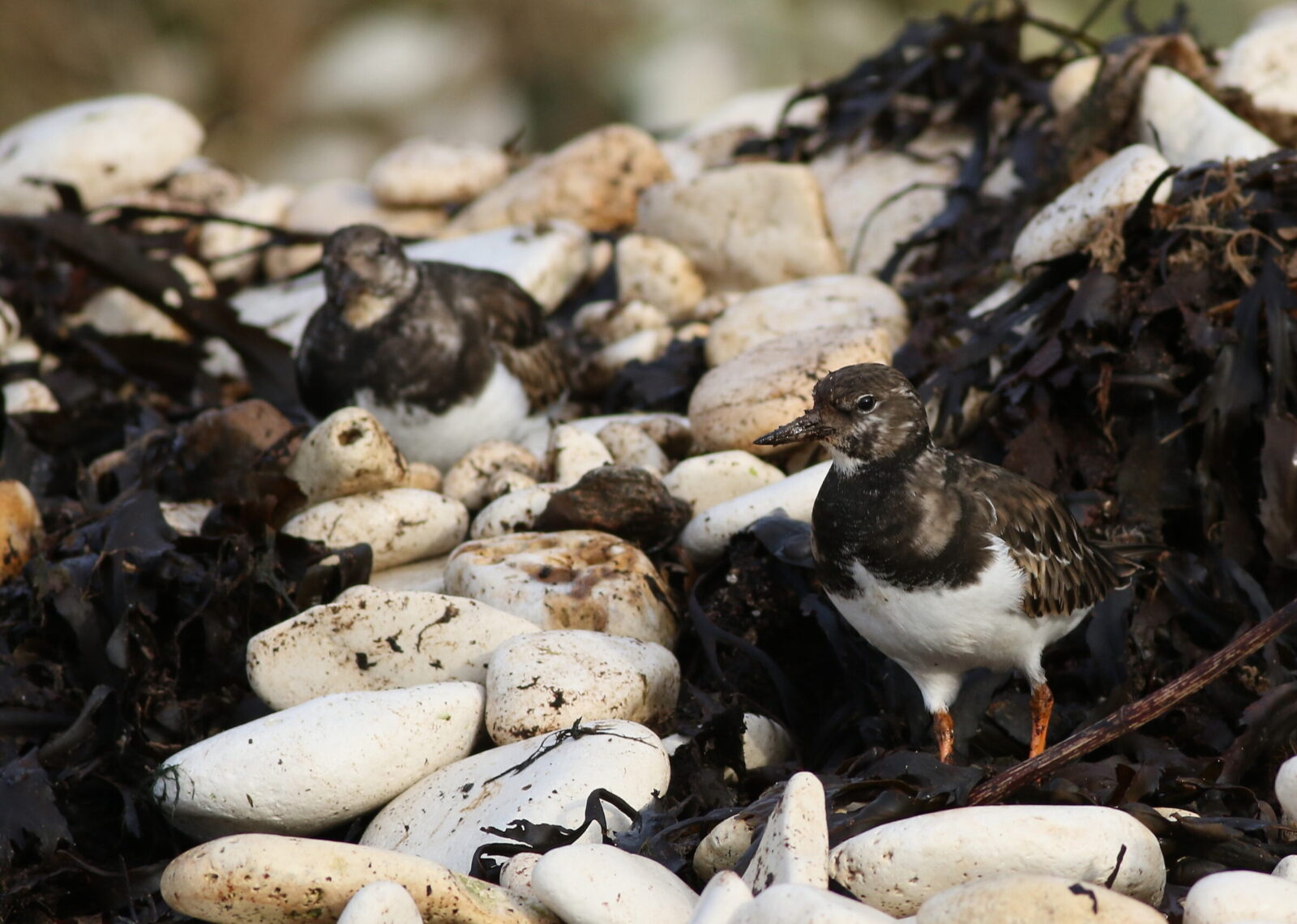
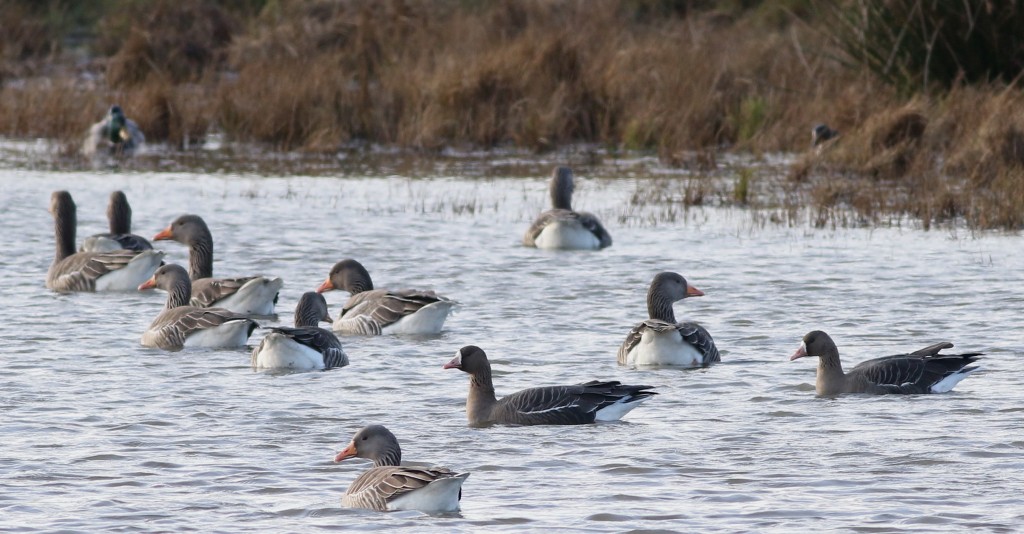
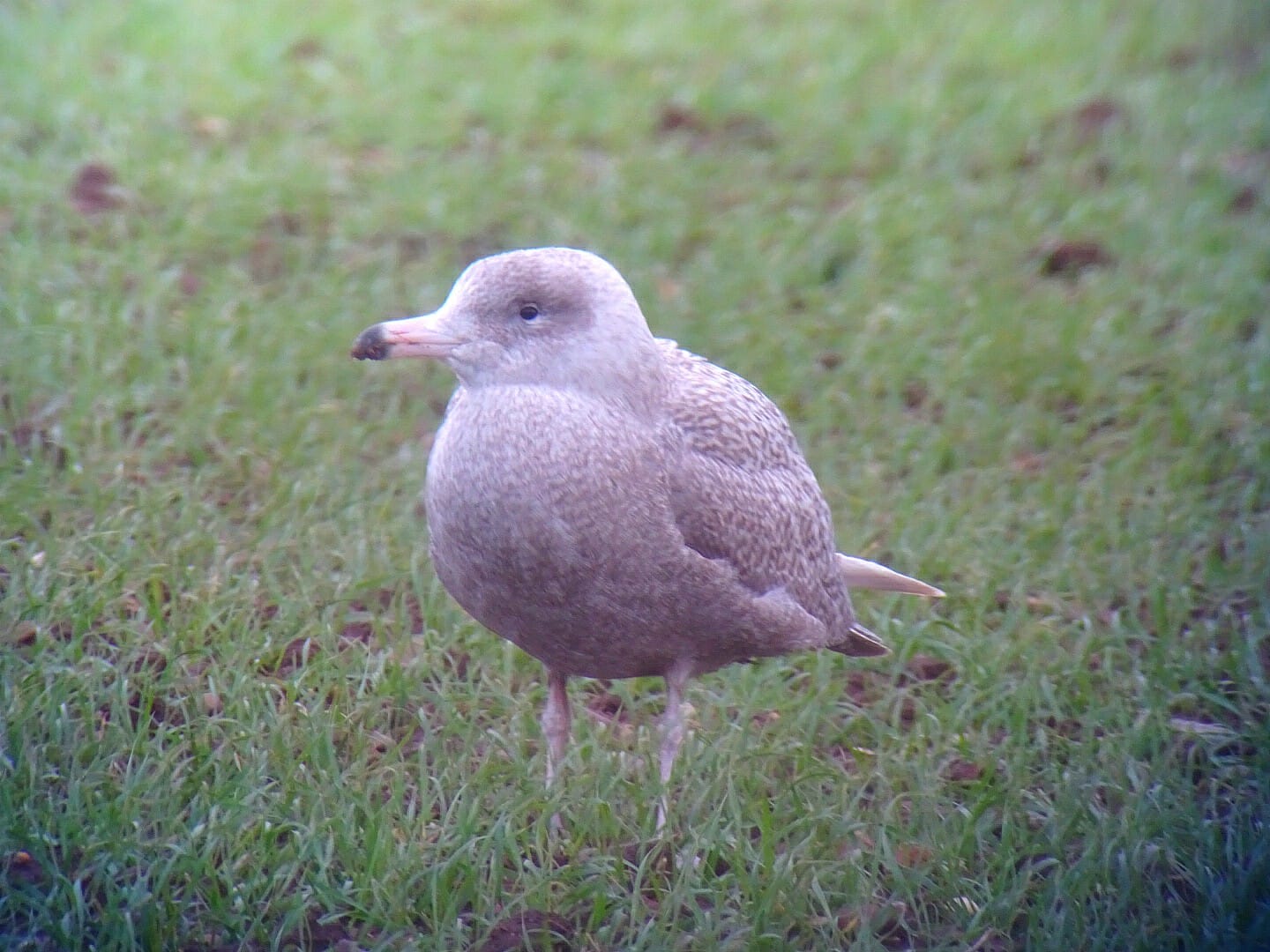
The weather consisted of light/moderate north-north-west winds and showers. During the seawatch, a Long-tailed Duck, a Black-throated Diver, seven Sooty Shearwaters and 39 Kittiwakes flew north, with five Bonxies moving south (and a single also north).
A light north-easterly wind and generally overcast day. Seawatching highlights included six Long-tailed Ducks, three Goldeneye, single Black-throated Diver, Great Northern Diver and Red-necked Grebe all flying north. Seven Bonxies and 105 Red-throated Divers were also logged.
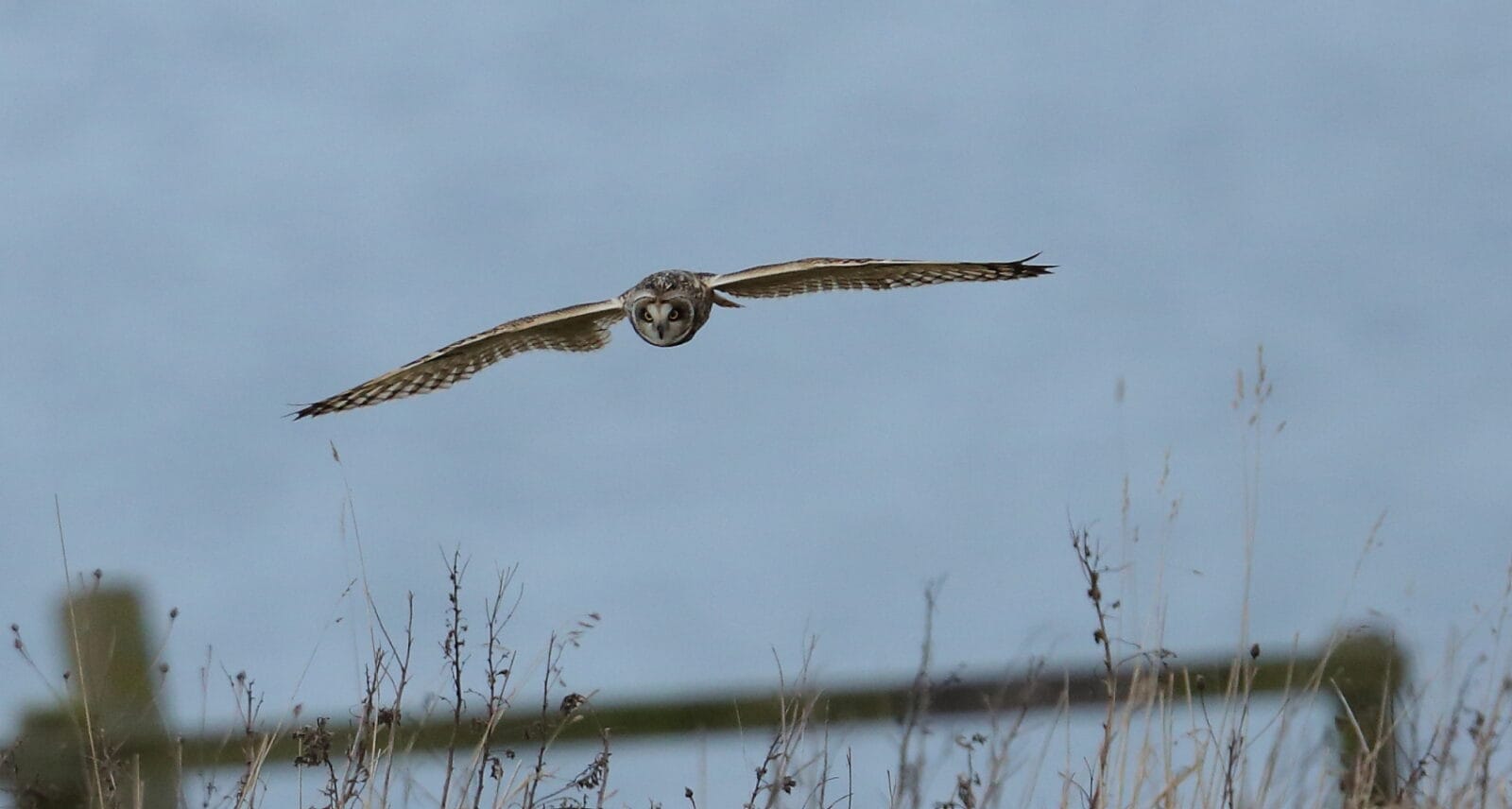
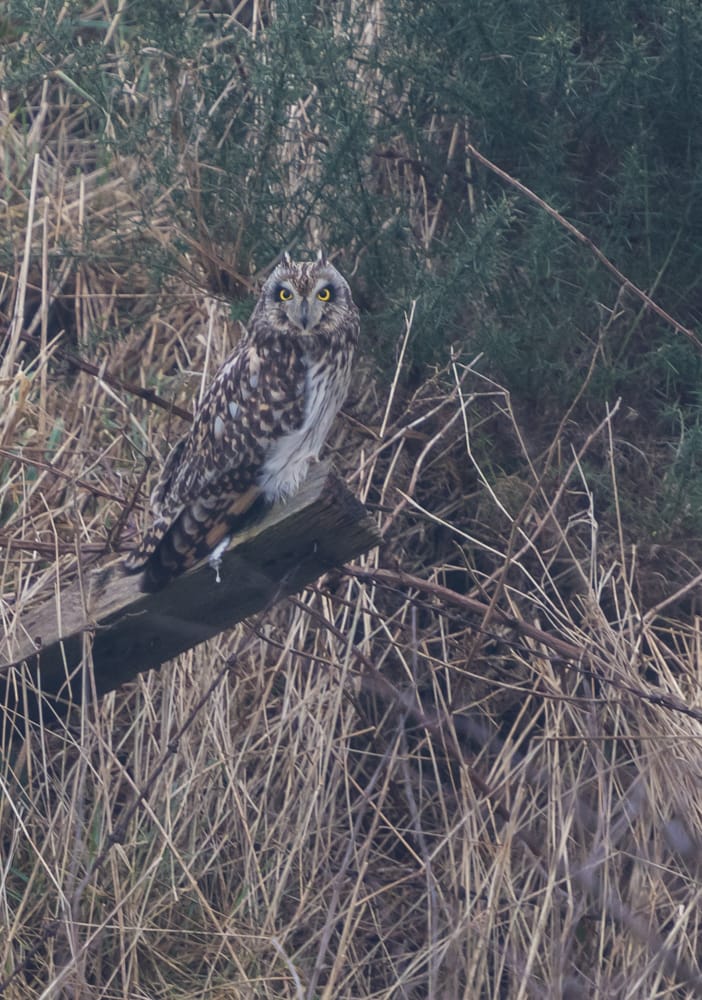
West of the Dykes, the Bempton/Buckton area attracted a Short-eared Owl, six Stonechats, 30 Blackbirds, 53 Yellowhammers and five Corn Buntings.
A mainly cloudy day with a slight easterly wind and 7c.
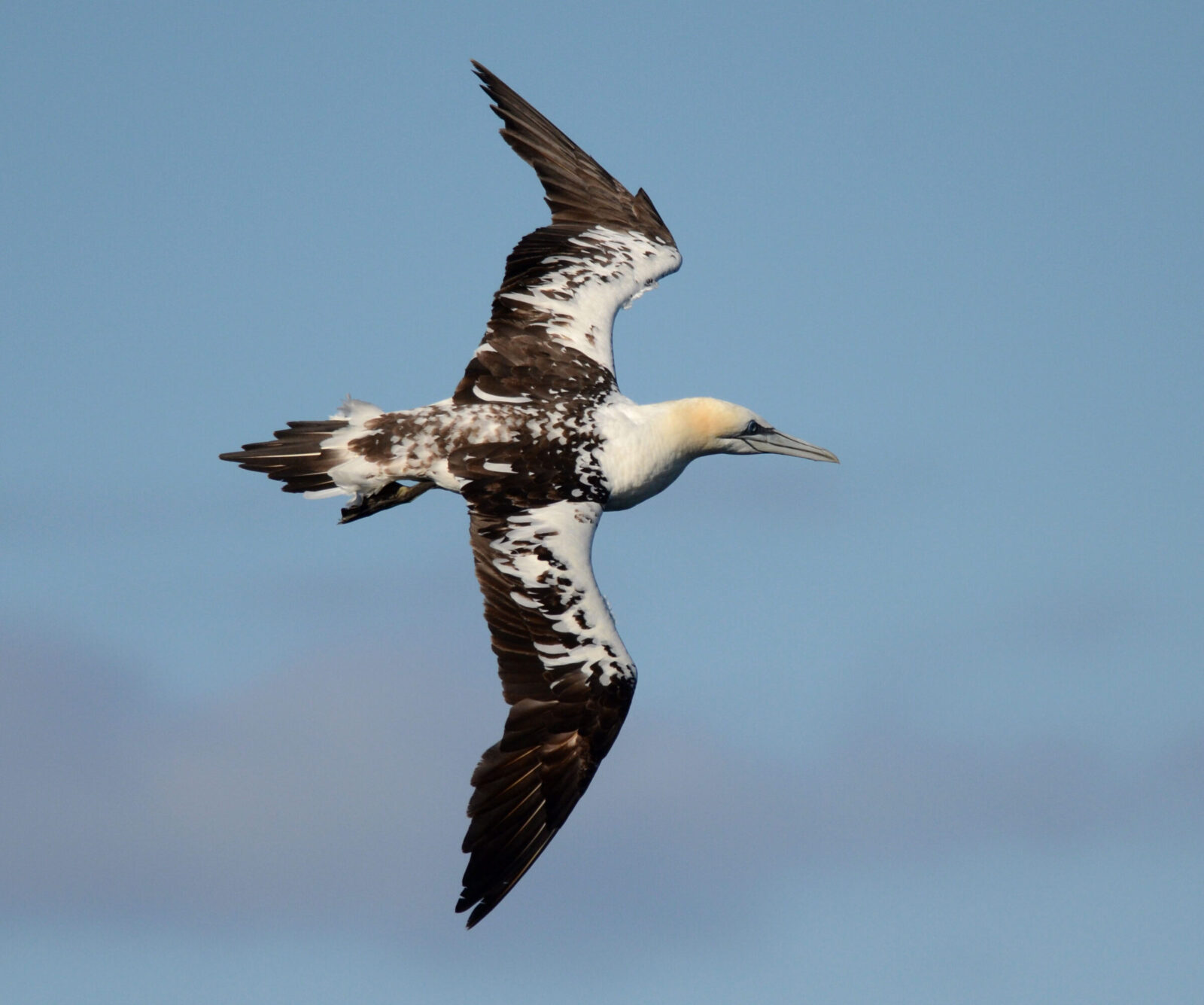
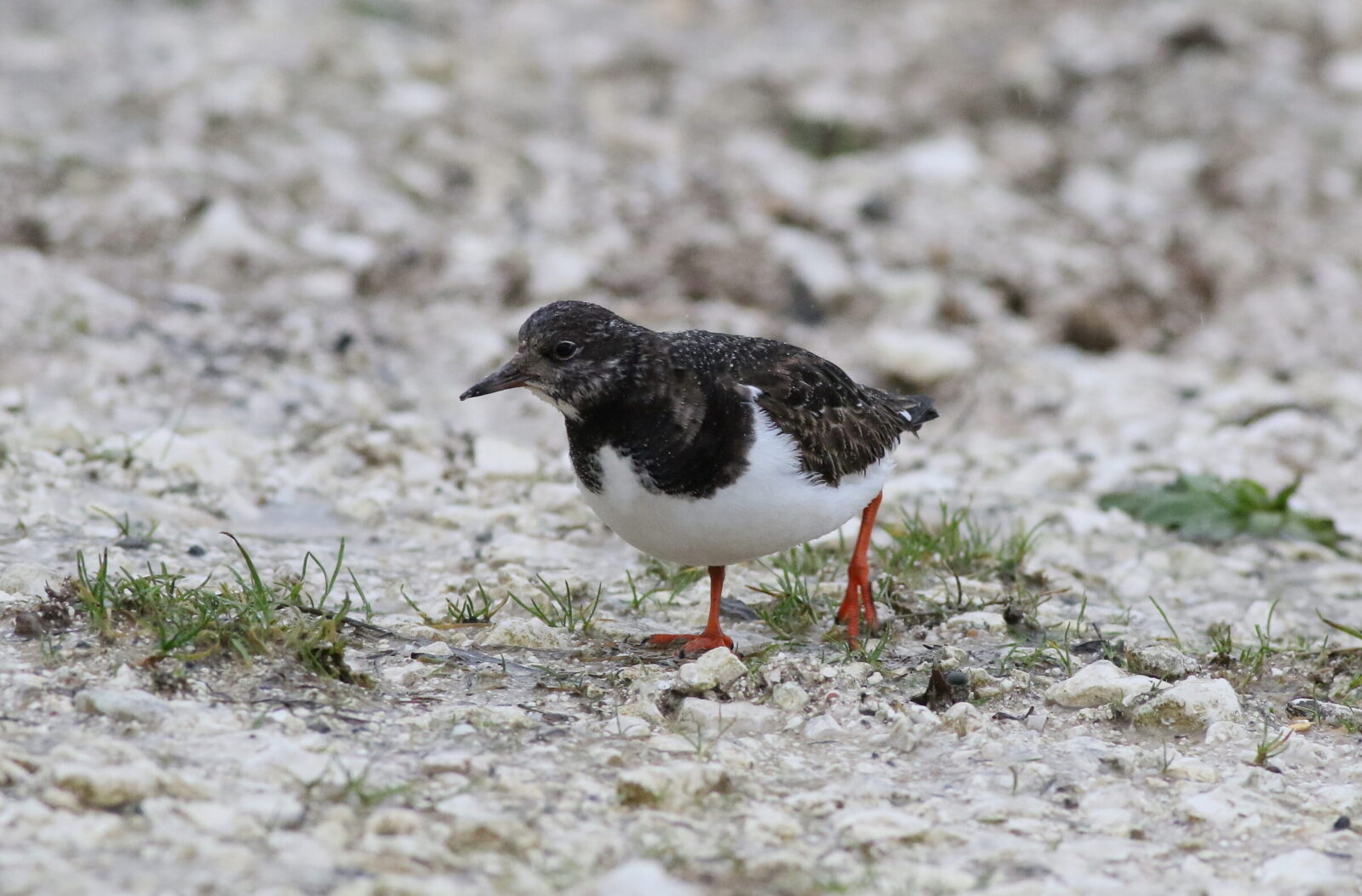
Sea-watching produced five Common Scoter south and 2 north, 20 Red-throated Diver south and 12 north, Pomarine Skua north and present off the headland were 10 Red-throated Diver, 55 Gannet, 25 Oystercatcher, six Turnstone and 1000s of Guillemot on the sea and moving around.
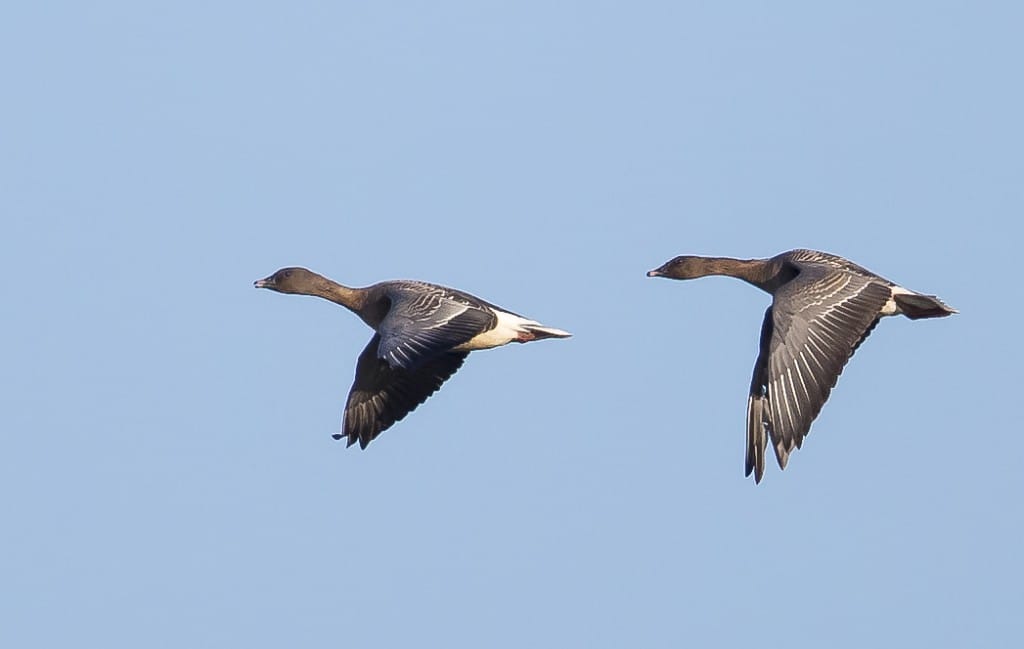
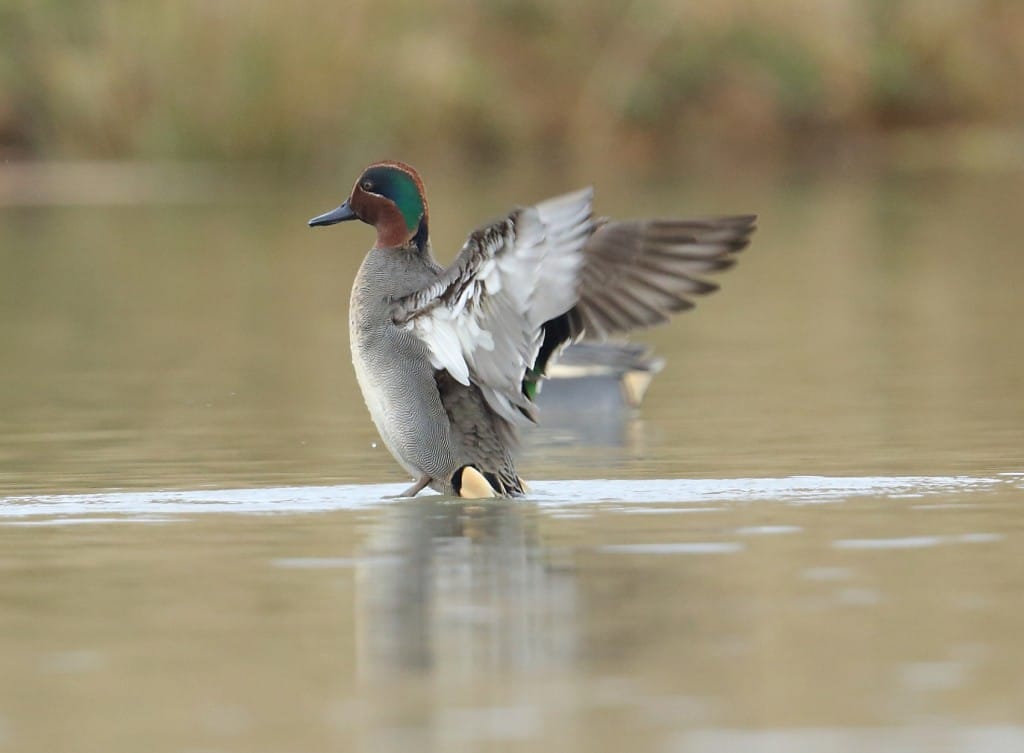
Elsewhere were Long-tailed Duck, two Goldeneye, 10 Great Crested Grebe, four Eider and 50 Common Scoter off Sewerby. 94 Grey-lag Goose, Pink-footed Goose, 19 Teal, two Stonechat and eight Yellowhammer.
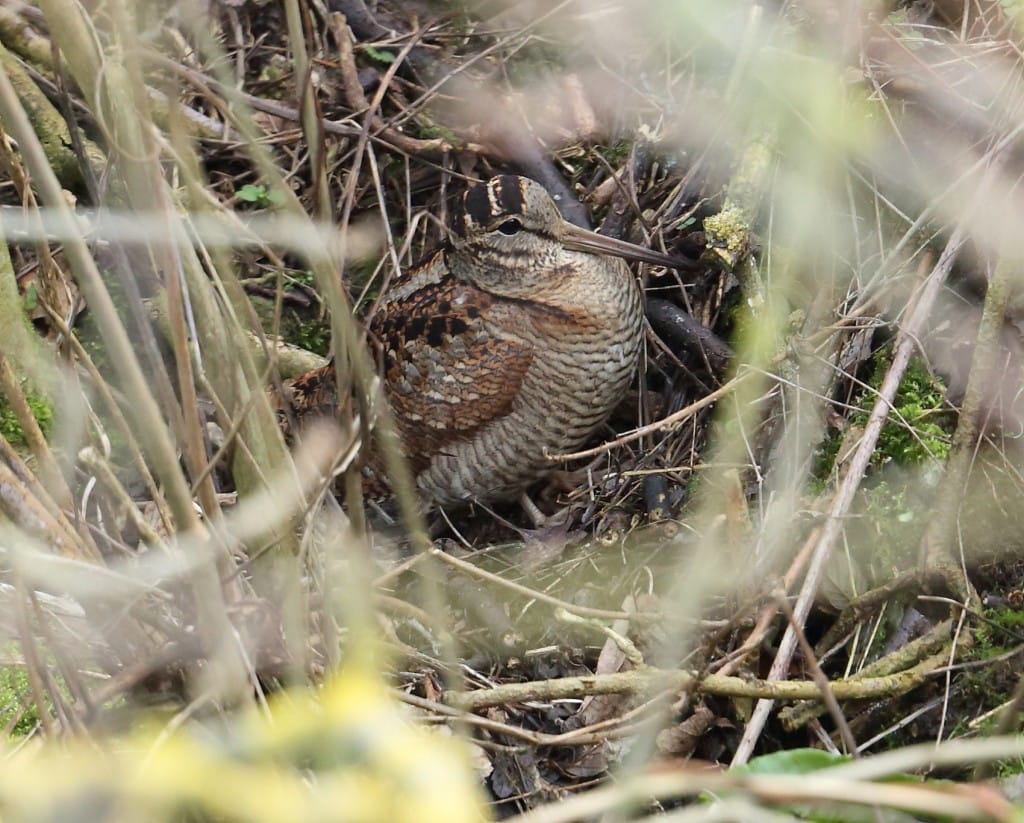
During a day of light south-easterly winds and sunny intervals six Eider and a Red-necked Grebe flew north. A Pink-footed Goose and ten Wigeon were in residence, along with a Great Northern Diver off Hartendale, whilst a single Woodcock was logged.
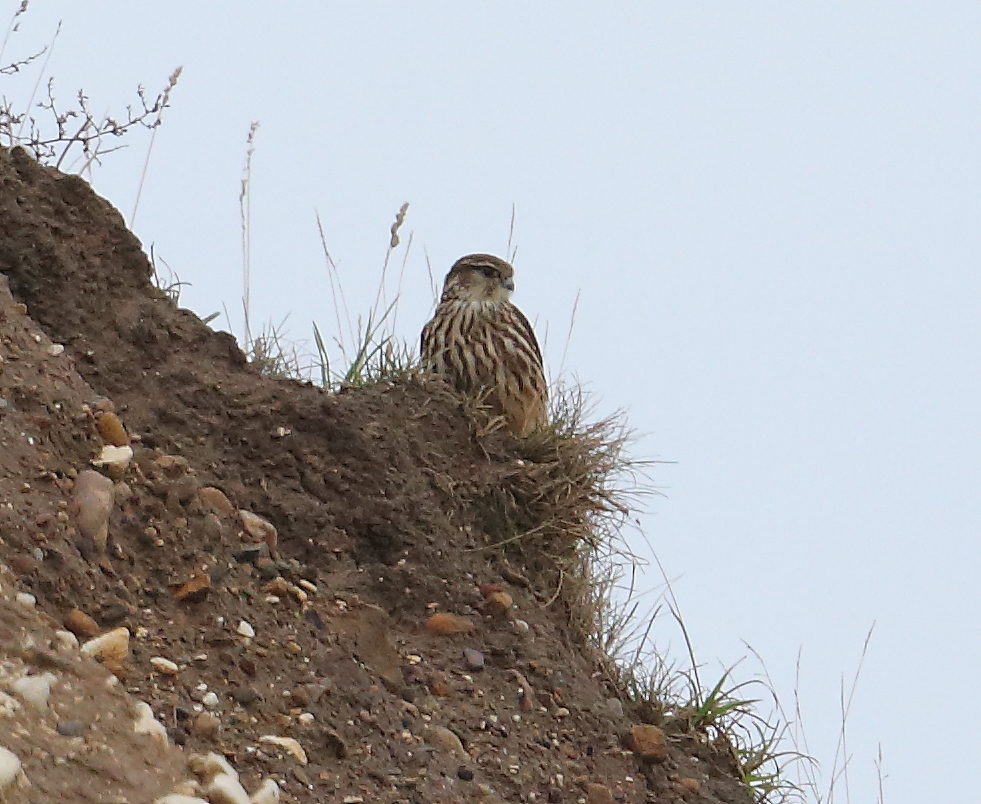
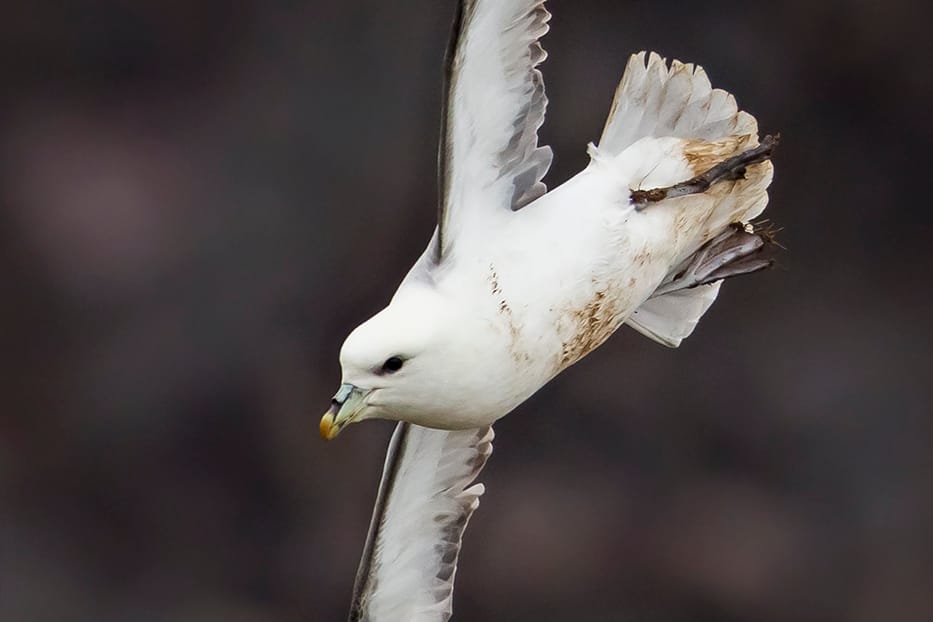
A moderate south-west wind and relatively overcast skies. Seawatching highlights included nine Whooper Swans and five Gadwall flying south, a Blue Fulmar also heading south and a Merlin.
West of the Dykes, sightings from Buckton included single Pintail and Little Egret, two Stonechat and 75 Yellowhammers.
Another quiet day, with rain during the morning and light south-westerly winds. Very few auks were present, despite good numbers featuring in recent weeks, with just four Guillemots and a Razorbill recorded. The headland’s freshwater wetlands attracted 93 Greylag Geese, six Wigeon, 13 Teal and a Grey Heron.
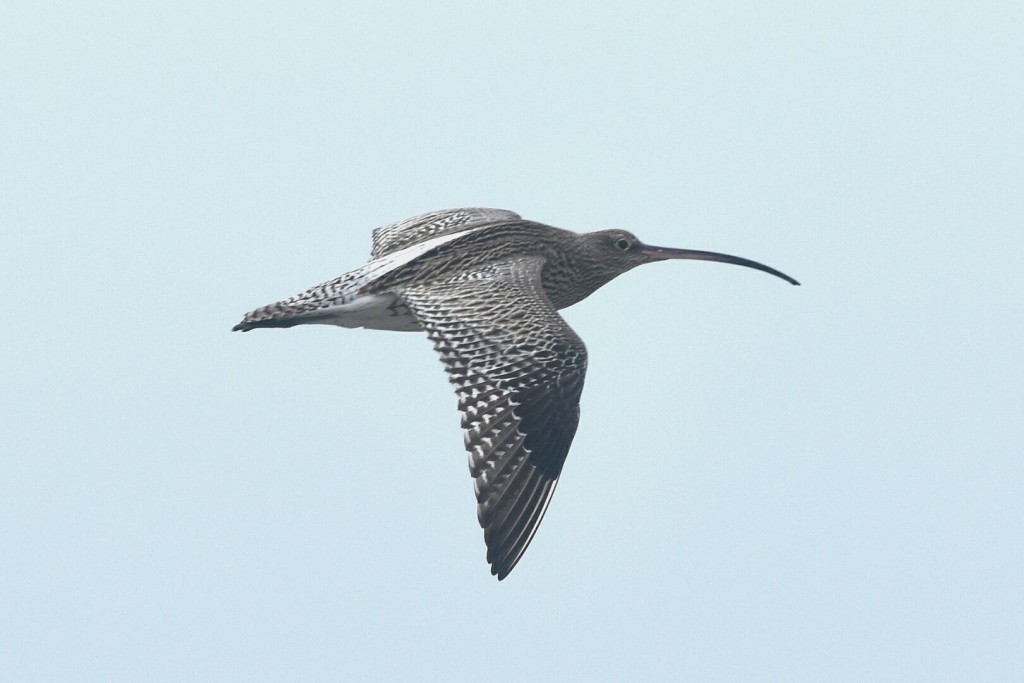
The weather consisted of overcast skies and light south-west winds, whilst mid-morning temperatures reached 11 degrees C. During the seawatch, three Gadwall, a Wigeon, seven Common Scoter and a Long-tailed Duck flew south, whilst a Peregrine hunted the outer head. Additional sightings included 23 Curlew, two Jack Snipe, nine Snipe, a Woodcock and eight Bullfinch.
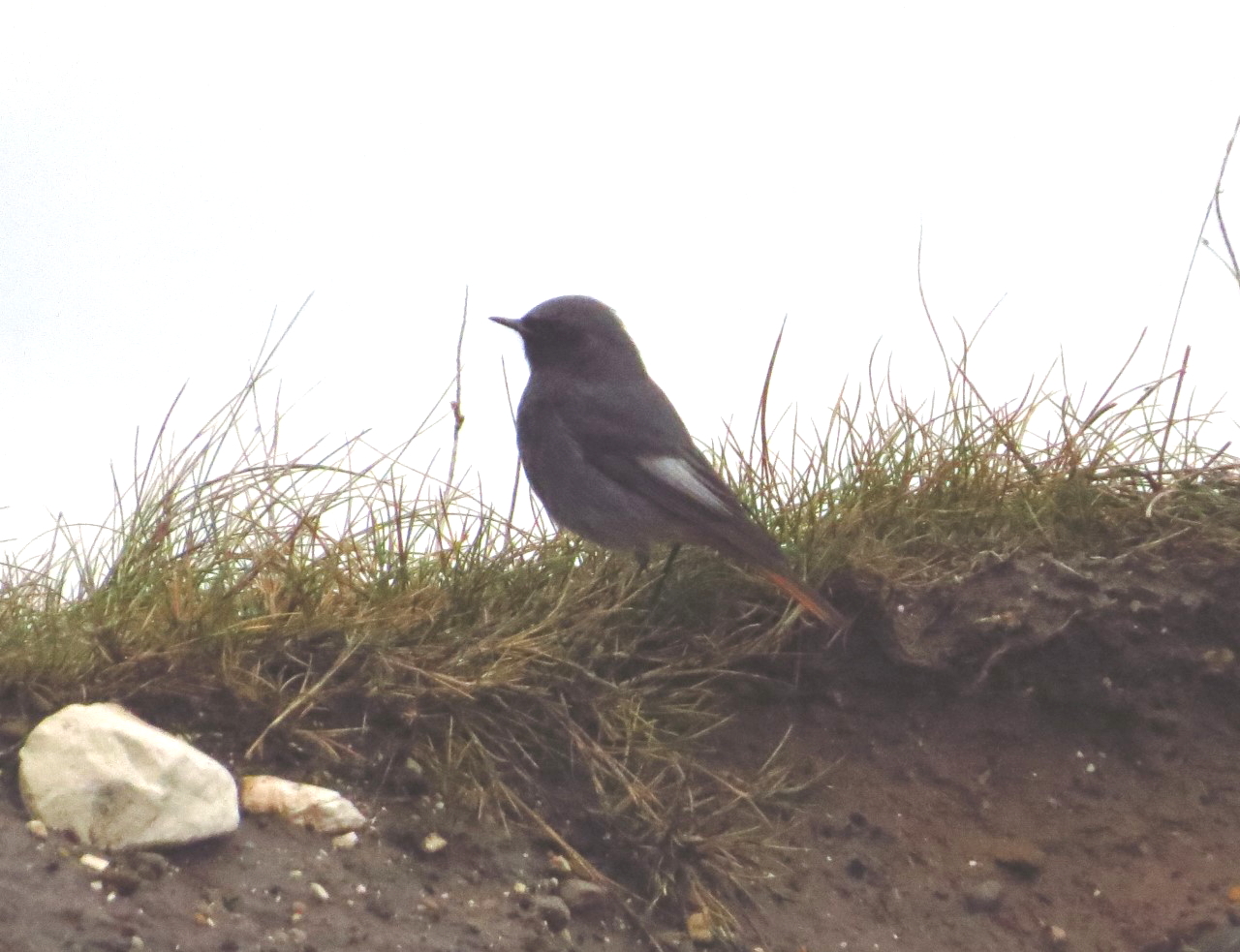
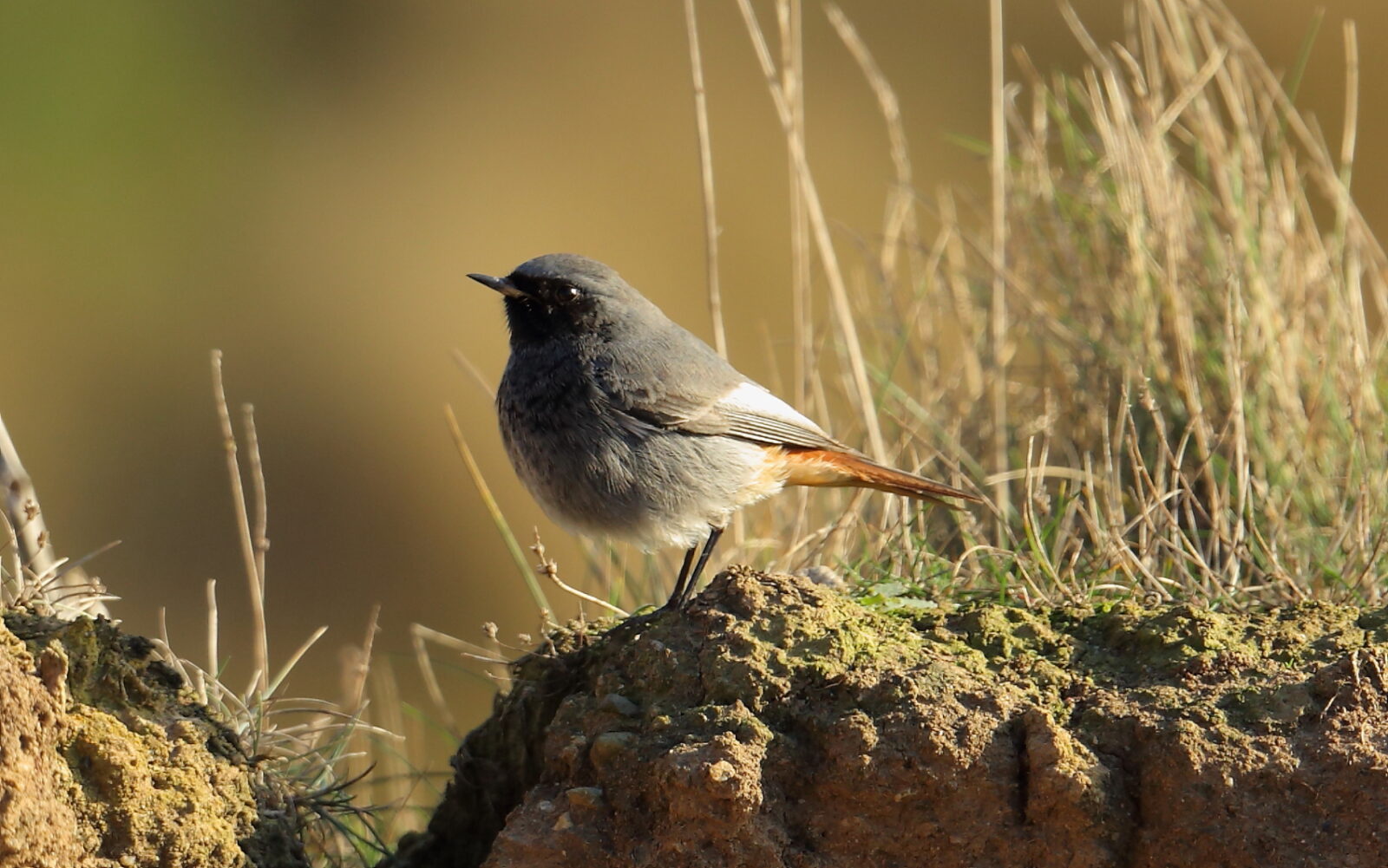
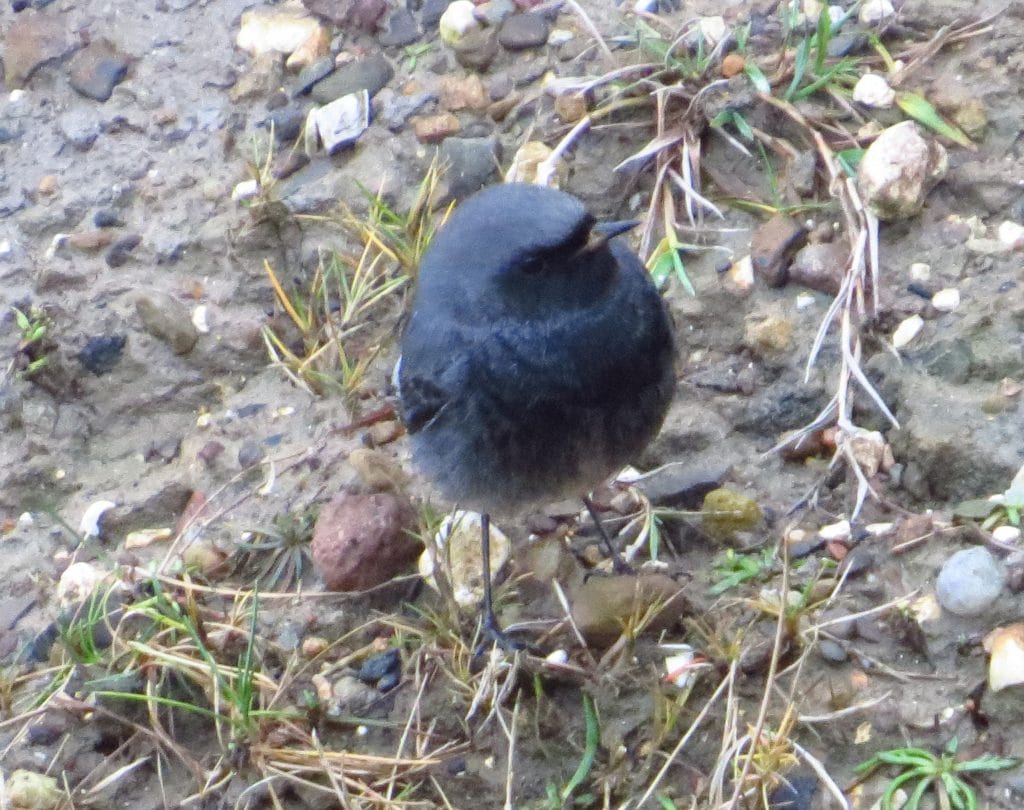
Another day of overcast skies and light south-westerly winds. During the seawatch, a Great Northern Diver flew north and a Great Crested Grebe moved south. A total of 214 Shags left the cliff roost, whilst a male Black Redstart at the Fog Station was a surprise.
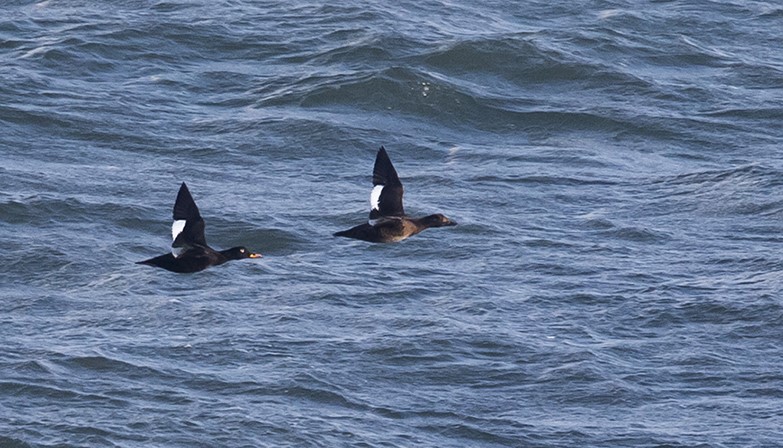
Records off the southern side of the headland included two Great Northern Divers, four Long-tailed Duck, three Velvet Scoter and 62 Common Scoter. Single Merlin and Short-eared Owl hunted the headland.
The weather consisted of light west-south-westerly winds and largely overcast skies with temperatures reaching 8 degrees C. Records in the South Landing/South Dykes area included a Red-necked Grebe, one Great Crested Grebe, two Long-tailed Ducks, two Velvet Scoter and 46 Common Scoters. A juvenile Glaucous Gull flew south over the outer head, a Short-eared Owl hunted the gorse field, whilst two Black Redstarts were in residence: a male at the fog station and a female at South Landing.
Bempton Cliffs RSPB hosted three Short-eared Owls, three Stonechats and 29 Rock Pipits.
A seawatch during light/moderate south-westerly winds was quiet, although a Bonxie flew north and the male Black Redstart remained around the Fog Station. Single Red-necked Grebe, two Great Crested Grebe, two Velvet Scoter and 40 Common Scoter were off South Dykes. A Water Rail was at Thornwick Pools, whilst 48 Redshank were between South Dykes and Sewerby and 32 Stock Doves at Hartendale.
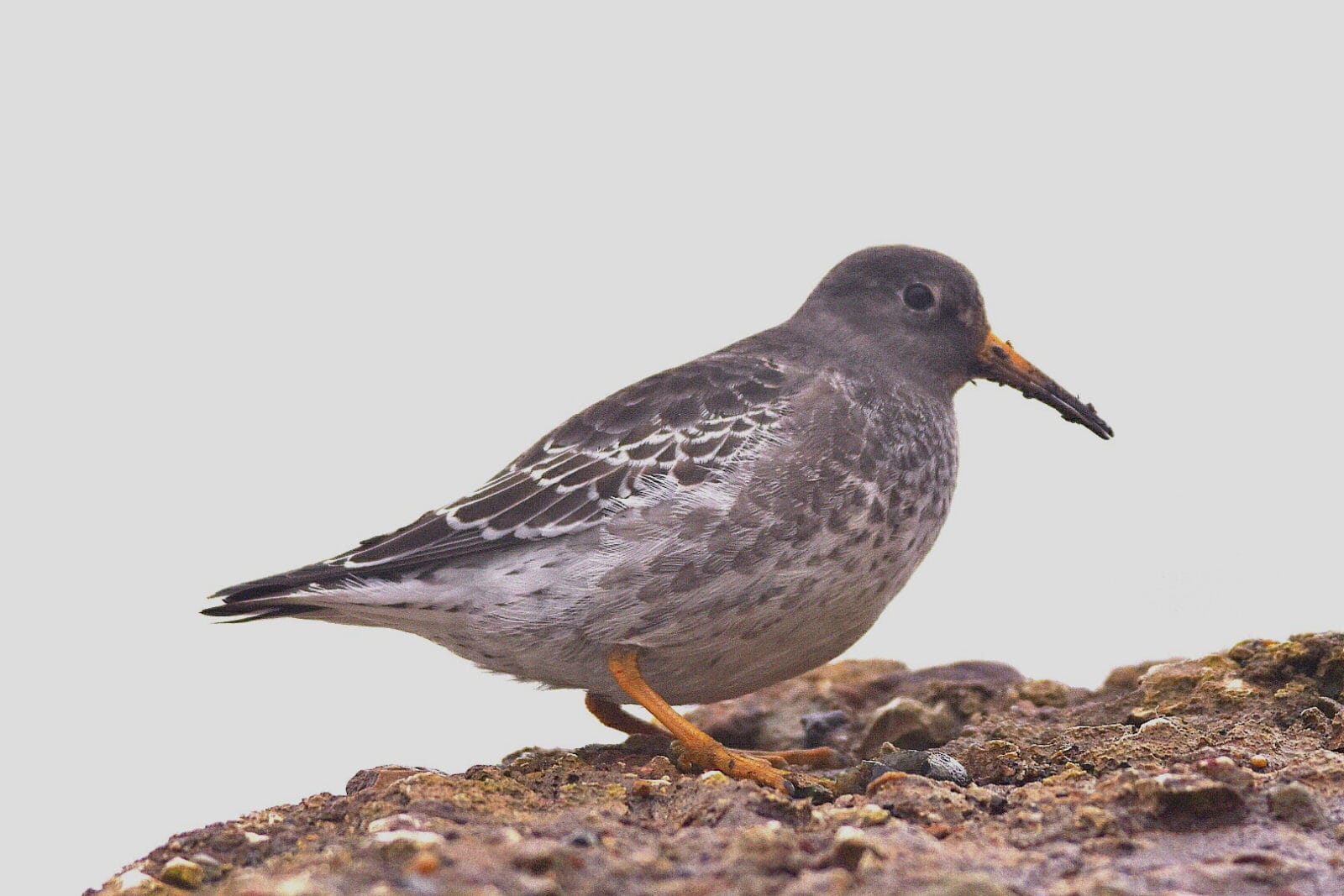
With very light southerly winds, overcast skies and misty conditions seawatching was slow: a Great Crested Grebe flew south and 19 Purple Sandpipers were below the fog station, where the male Black Redstart remained.
Seventeen Pink-footed Geese flew south over the outer head, three Velvet Scoter and three Long-tailed Ducks were on the sea between South Landing and South Dykes, whilst a Woodcock was at Oceanview.
Another misty and generally overcast day, with light/moderate south-westerly winds. Seawatching highlights included 13 Wigeon and a Bonxie south. However, the main feature was a southerly movement of Golden Plover with 359 flying south over the sea; in addition, another 86 Golden Plovers flew south over the headland.
A Velvet Scoter was on the sea off South Landing, whilst the male Black Redstart remained in the vicinity of the Fog Station.
It was an overcast day with a moderate south-south-easterly wind. Seawatching records included three dark-bellied Brent Geese, 33 Wigeon, 26 Teal, 44 Common Scoter, 16 Goldeneye, 32 Red-throated Divers, 31 Golden Plover and a Bonxie flying south, whilst a Great Northern Diver moved north.
Additional records included a Velvet Scoter off South Landing, two Jack Snipe, 21 Snipe, a Coot on Thornwick Pools, a Grey Wagtail and one Snow Bunting.
Light south-westerly winds, overcast skies and temperatures again hovered around 8 degrees C. A total of 235 Shag left the cliff roost, a Peregrine cruised the outer head, whilst ten ‘Northern’ Herring Gulls represented the year’s largest tally of a subspecies that used to be much more common. Wildfowl records included a Pink-footed Goose, 18 Wigeon and 14 Teal on the headland’s freshwaters, with three Velvet Scoter on the sea near South Dykes.
The winds remained westerly, but clear skies and sunshine represented a significant change. Wildfowl were on the move, with four Mute Swans south, 21 Wigeon, a Shoveler, 14 Eider and a Velvet Scoter south. Two Great Northern Divers and a Bonxie also headed south.
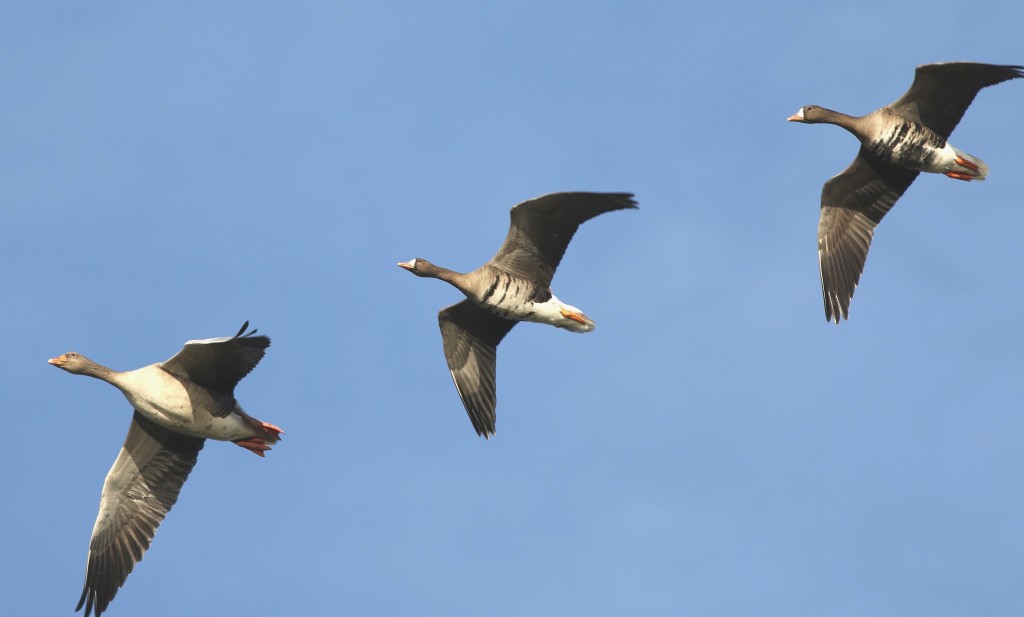
Four Whooper Swans flew south over Thornwick, a total of 385 Pink-footed Geese moved in a similar direction, but better still, 19 White-fronted Geese were recorded (ten south and one north on the seawatch, with eight at North Marsh). A Merlin hunted the outer head, whilst a Long-tailed Duck, 15 Purple Sandpipers and a Grey Wagtail frequented South Dykes.
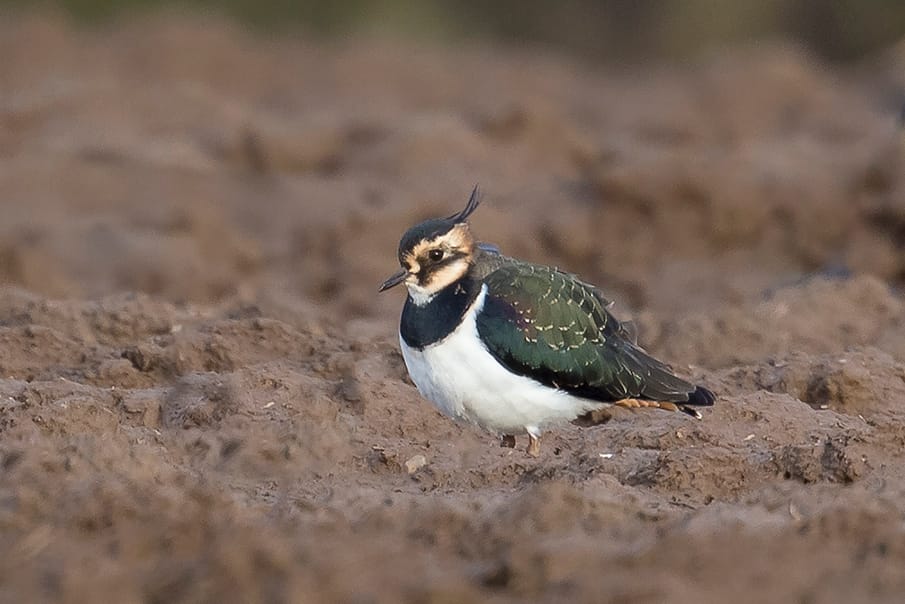
West of the Dykes, sightings from Bempton Cliffs RSPB included the four Mute Swans, 195 Pink-footed Geese, a Little Egret and 110 Lapwing.
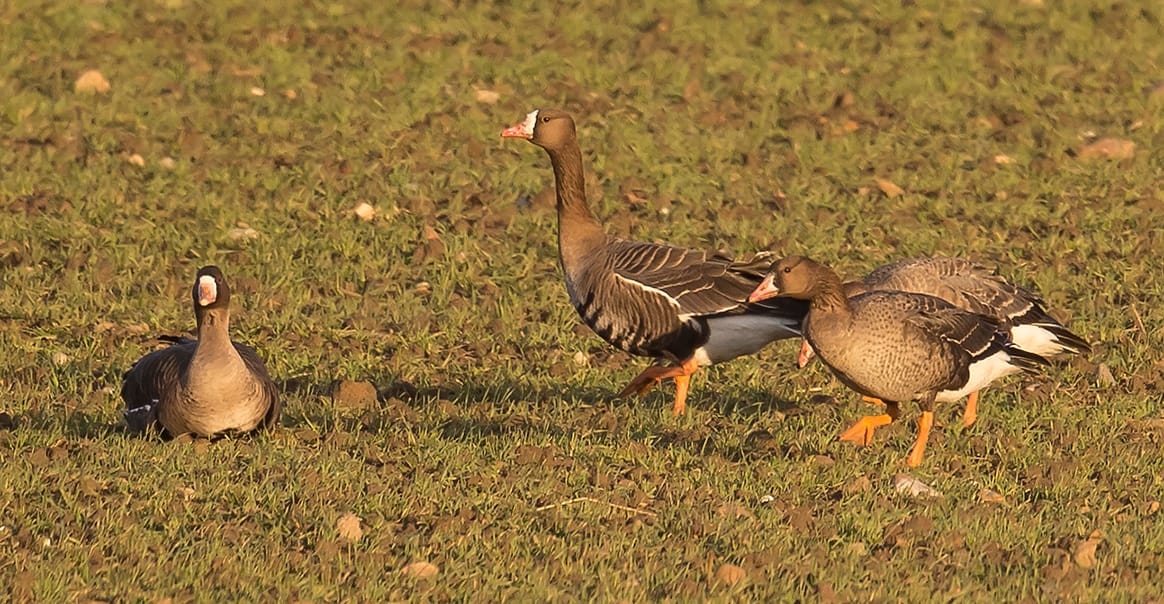
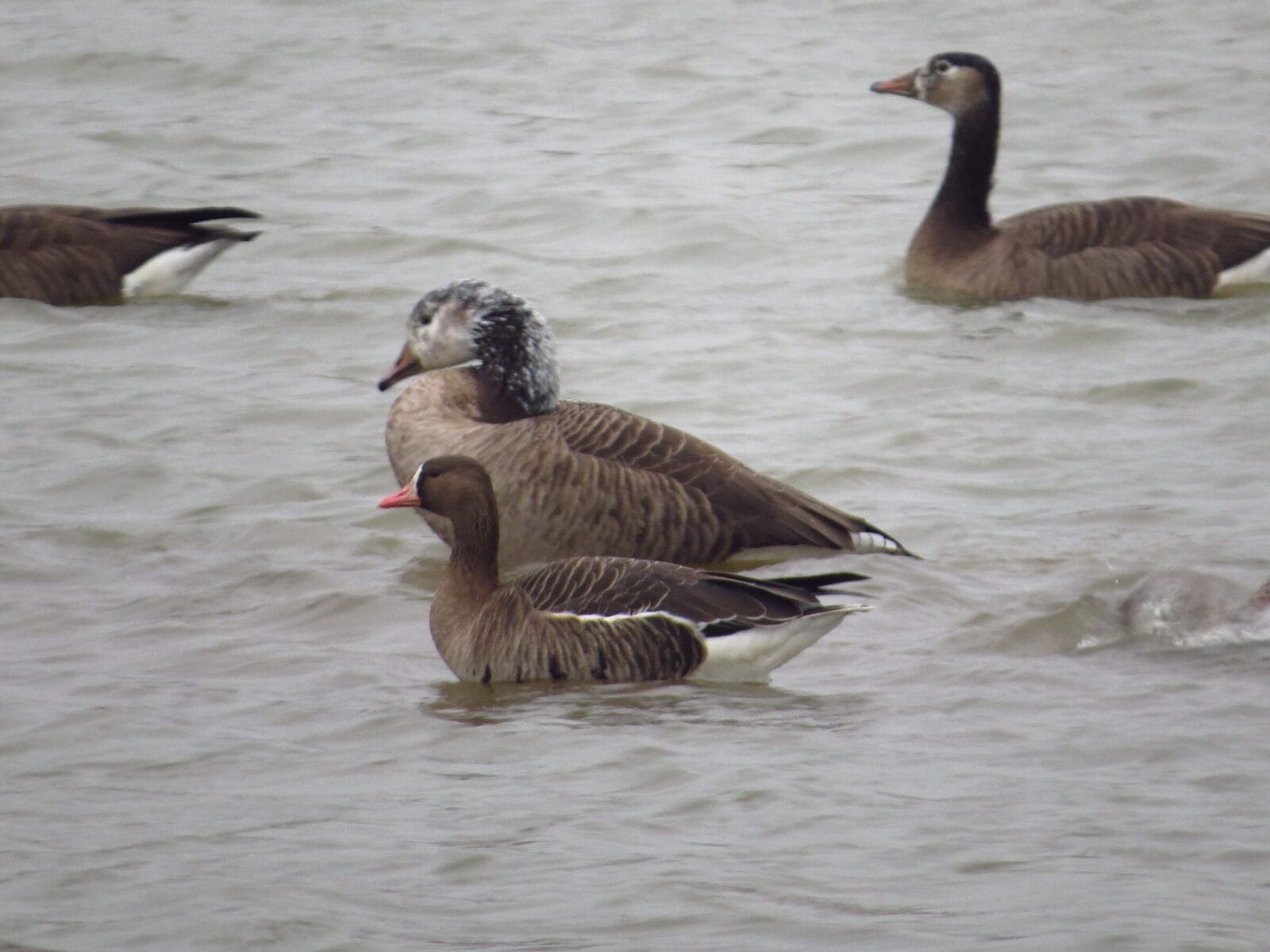
White-fronted Geese with a Greylag, North Marsh, by Craig Thomas
The weather consisted light south-westerly winds and overcast skies. Seawatching highlights were few, with five Eiders flying north the best. A single Pink-footed Goose and three White-fronted Geese accompanied the Greylag flock in the vicinity of North Marsh. In addition, the male Black Redstart was seen again near the Fog Station.
West of the Dykes, a Gadwall, pair of Stonechat and 70 Yellowhammers were located at Buckton.
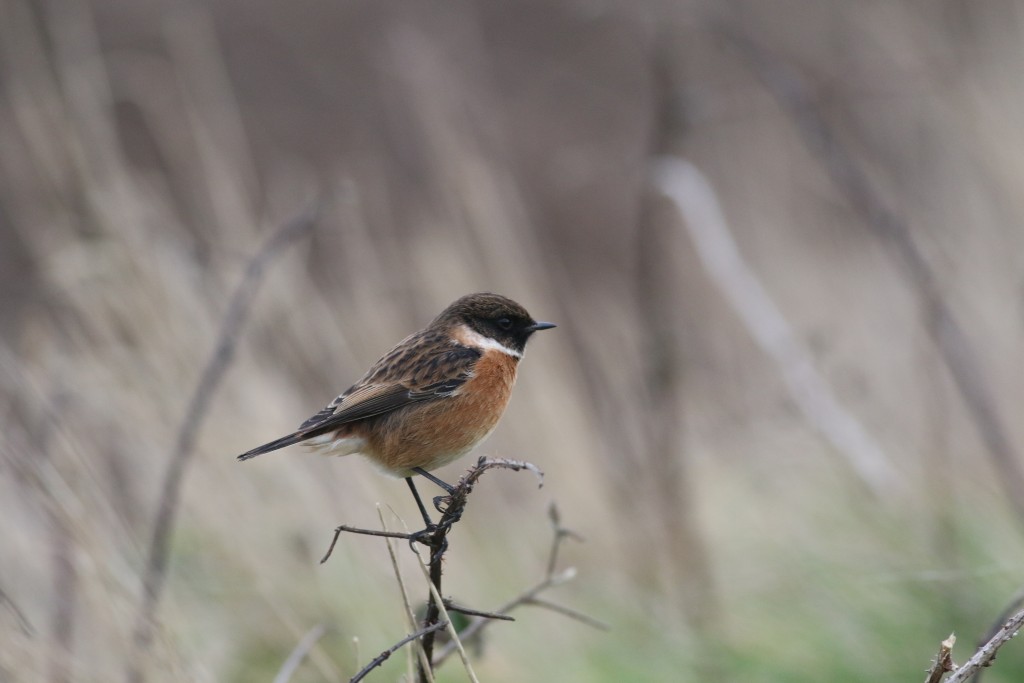
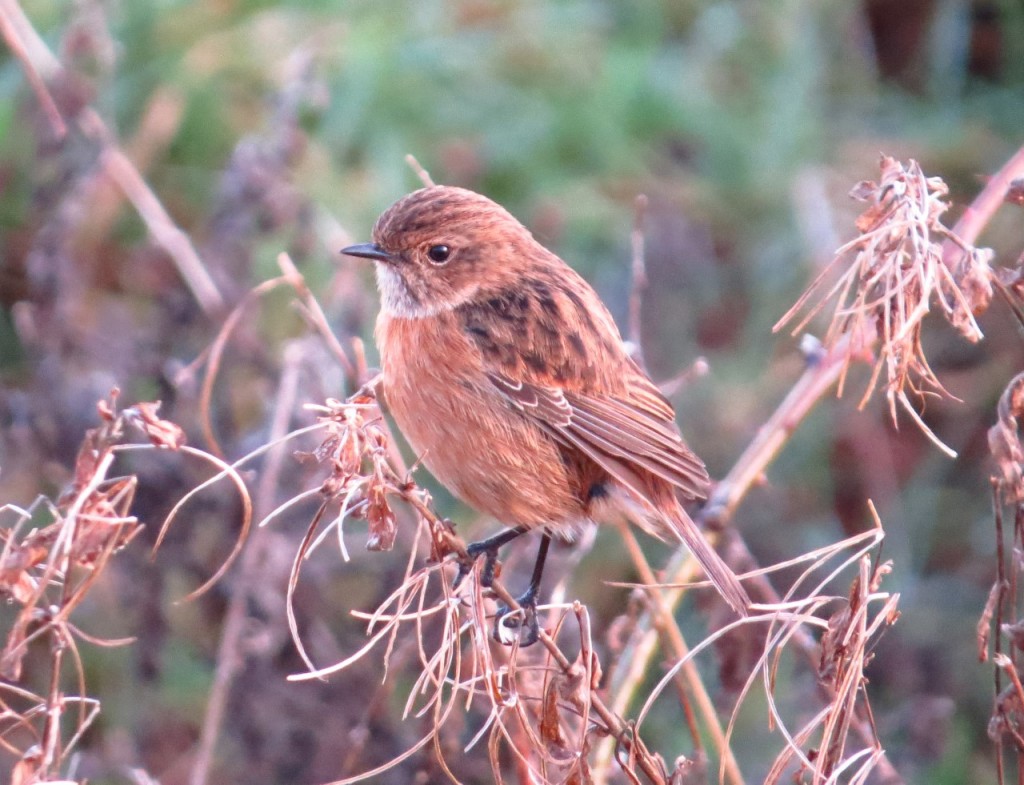
Stonechat, Lighthouse grasslands, by Alan Walkington
An overcast day, with very light northerly winds and temperatures that reached 6 degrees C. Seawatching highlights included seven dark-bellied Brent Geese, 15 Wigeon and a Velvet Scoter flying south, whilst a very unseasonal Ruff and a Bonxie moved north.
Sightings in the vicinity of South Dykes included a Tundra Bean Goose on the golf course, four Long-tailed Ducks, three Goldeneye, 135 Common Scoter and two Velvet Scoter. Two White-fronted Geese accompanied the Greylags on the headland, the Black Redstart was near the Fog Station and a Chiffchaff visited a garden on the outer head.
‘bridled’ Guillemot, Fog Station, by Alan Walkington
The weather consisted moderate/strong south-westerly winds, initially overcast skies with sunshine later. Seawatching highlights included 19 Wigeon, a Pochard, four Velvet Scoter, a Goosander and one Great Northern Diver flying south, whilst a first-winter Mediterranean Gull headed north. Additional sightings on the outer head included 52 Purple Sandpipers and a female-type Black Redstart.
Three Pink-footed Geese and a White-fronted Goose toured the headland, with three Jack Snipe also recorded.
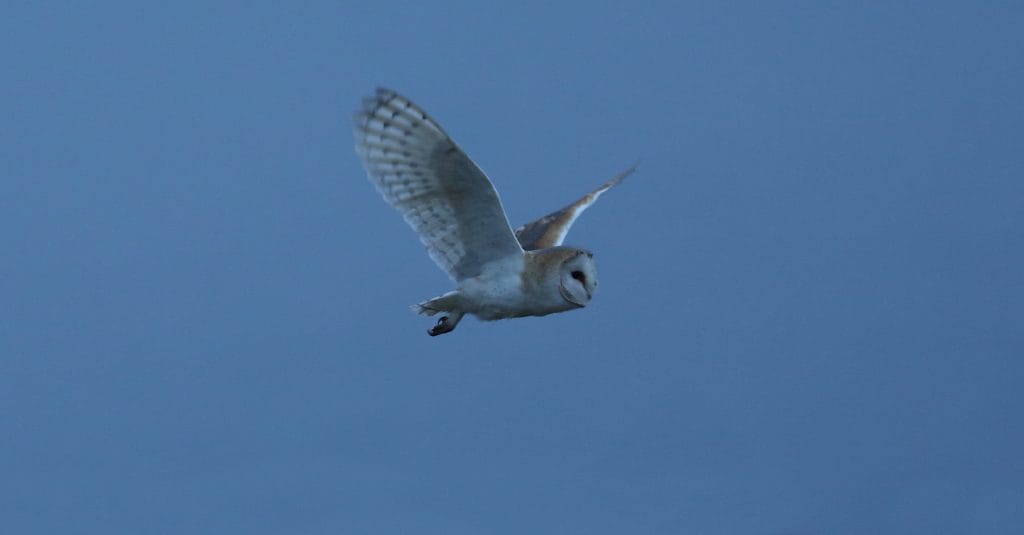
The day featured moderate south-westerly winds and overcast skies. Seawatching records included 19 Wigeon and four Eider flying south. Sightings from Thornwick Pools included two Barn Owls and a Stonechat.
Although relatively cold, it was a sunny day throughout with a moderate south-westerly wind. During the seawatch, a Pink-footed Goose, six Wigeon and two Velvet Scoter flew south. The resident goose flock contained three Pink-footed Geese and a single White-fronted Goose.
Increasingly strong to gale force south-westerly winds were the main feature of the day’s weather, with heavy squally showers also developing in the afternoon. Seawatching was quiet, although two Black Redstarts frequented the cliffs around the Fog Station. Two Pink-footed Geese and a White-fronted Goose remained on the outer head.
Strong westerly winds blew throughout a day that started brightly before clouding over. The seawatch was again quiet, although the male Black Redstart remained around the Fog Station. Two Long-tailed Ducks were on the sea east of South Landing.
Late news concerned the sighting of a Yellow-browed Warbler that accompanied a Long-tailed Tit flock along the exit road of South Dykes on 22nd December.
Another day of very strong westerly winds, although there were largely bright skies. Highlights of the seawatch were limited to 305 Shag leaving the cliff roost – the largest tally of the winter – and a single Puffin flying south.
Away from the sea, 25 Pink-footed Geese flew south, three frequented the headland along with two White-fronted Geese. A single Shelduck on Thornwick Pools was unseasonal, with additional sightings including 19 Wigeon, 35 Teal and a Water Rail. An unseasonal Kingfisher overflew the golf course.
Finally, Xmas wishes to all followers of this ‘blog’!
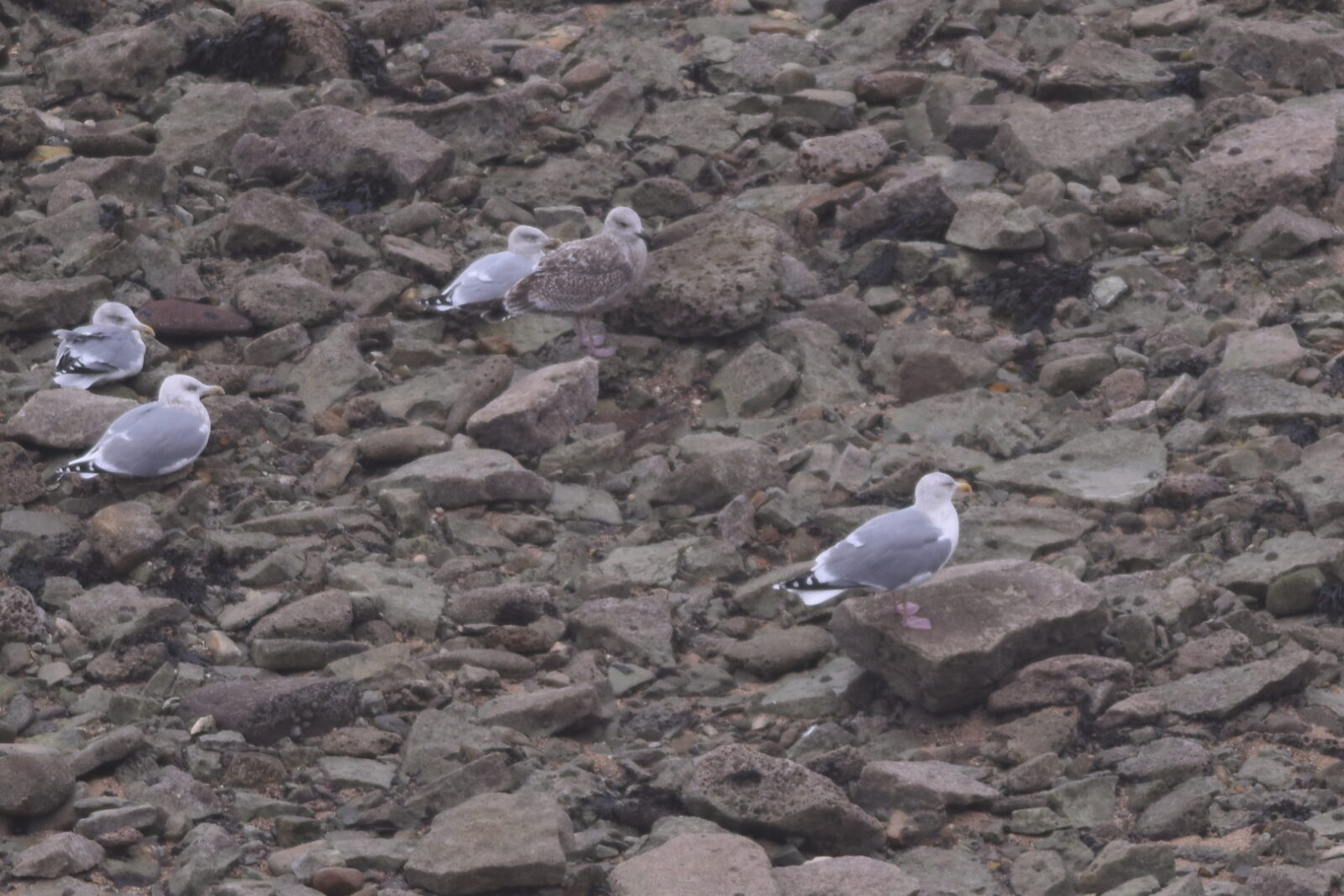
‘argentatus’ & ‘argenteus’ Herring Gulls, outer head, by Andy Hood
The weather consisted of very strong west-north-westerly winds and sunny skies. The male Black Redstart remained around the Fog Station, with additional sightings including 70 Stock Doves and two Stonechat.
Another sunny day, with a moderate westerly wind and temperatures reaching 6 degrees C. Seawatching highlights included single Scaup and Manx Shearwater and three Bonxies flying north, whilst 575 Common Scoters flew past the headland. Elsewhere, a single Pink-footed Goose accompanied the 138-strong flock of Greylags and a Snow Bunting flew in off the sea.
West of the Dykes, sightings from Buckton included two Short-eared Owls, two Stonechats and three Corn Buntings.
Although a sunny day with very light south-westerly winds, temperatures had only reached 1 degrees C by late morning. During the seawatch, a Black-throated Diver and a Little Egret flew north, whilst tens of thousands of Guillemots were present, but only three Razorbills recorded.
A day of light south-westerly winds, sunny skies and temperatures that only rose to 2 degrees C by late morning. Seawatching highlights included 12 Pink-footed Geese flying south and two Gadwall moving north. Away from the sea, an adult White-fronted Goose accompanied the Greylags, a record local count of 81 Stock Doves, a Chiffchaff and the male Black Redstart; the latter at the Fog Station.
Stonechat, Lighthouse grassland, by Alan Walkington
The weather remained unchanged, with light south-westerly winds, sunshine and relatively low temperatures. During the seawatch, single Black-throated Diver and Puffin flew south, whilst the male Black Redstart remained in residence around the Fog Station. Five Pink-footed Geese and two White-fronted Geese were present on the headland.
A generally bright day, with a moderate south-westerly wind and temperatures reaching 9 degrees C. During the seawatch, four Shelduck and a Grey Plover flew south, along with in excess of 20,000 Guillemots.
Waterfowl on the headland included two White-fronted Geese, single Gadwall and Shelduck, 12 Wigeon and 19 Teal.
White-fronted Geese with Greylags, North Marsh, by Craig Thomas
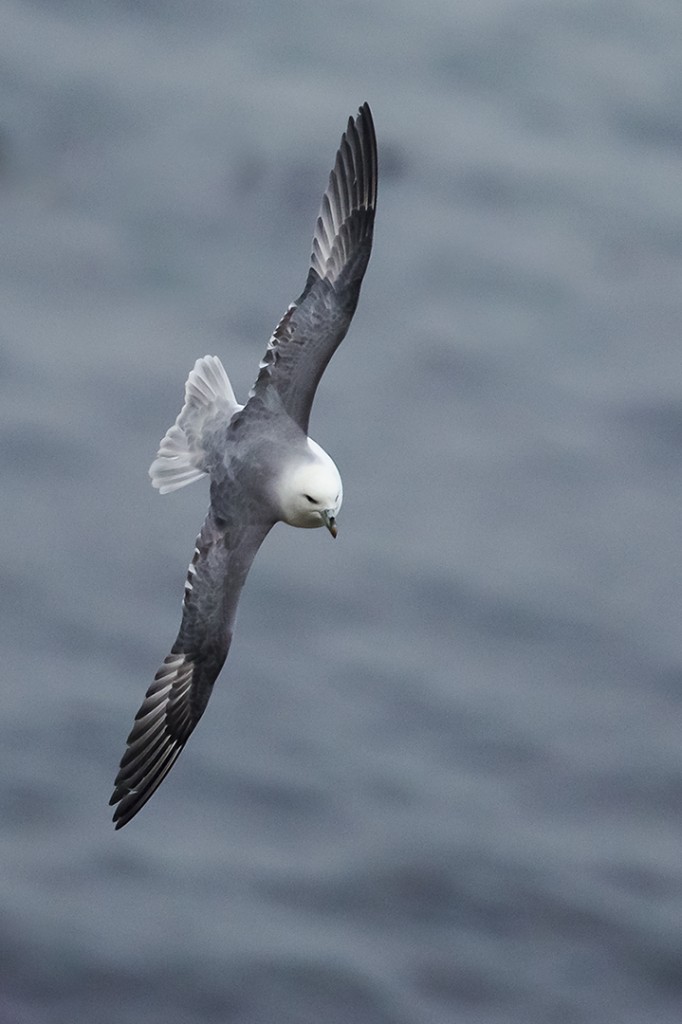
The year started with strong northerly winds, rain until mid-morning and temperatures that reached 6 degrees C. Seawatching was relatively quiet, with 248 Fulmars moving north the most notable record.
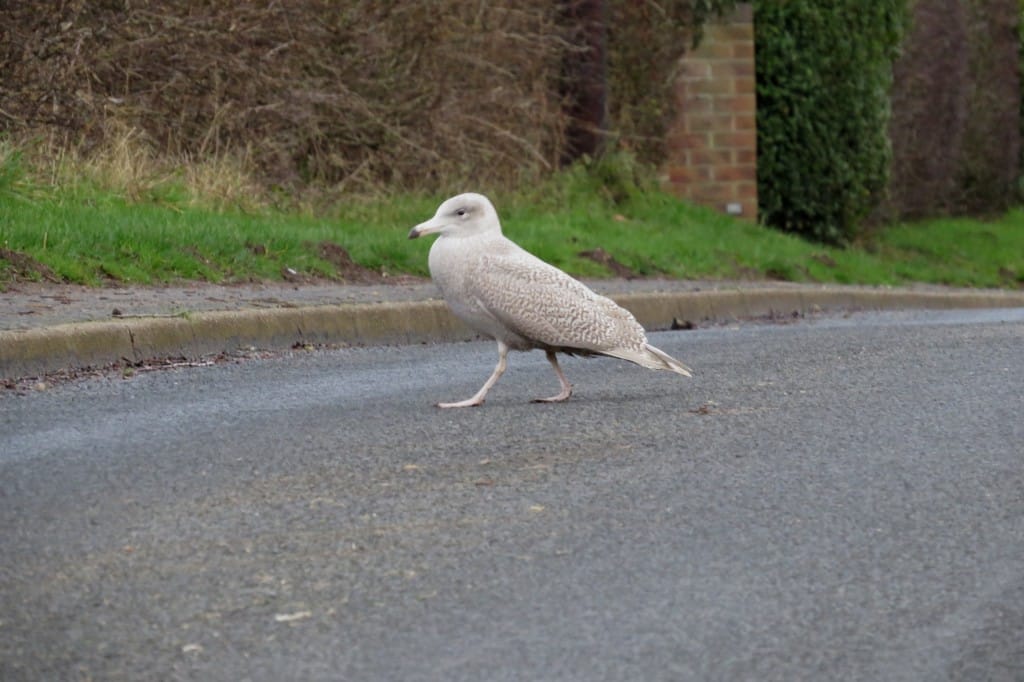
Three White-fronted Geese (two adults and a juvenile) toured the outer head along with a lone Pink-footed Goose. Three Velvet Scoter were on the sea between South Dykes and Sewerby, with a Great Northern Diver off the former site. Single Gadwall, Shoveler and Merlin were also recorded off South Dykes. A juvenile Glaucous Gull rested on fields along Lighthouse Road, but then moved onto the road itself, where it was hit by a car and had to be taken into care.
Glaucous Gull, Outer Head, by Andy HoodGlaucous Gull, Lighthouse Road, by Max & Paula Webber
A day of strong northerly winds and sunshine after a succession of heavy showers first thing, although the temperature only reached 4 degrees C. Seawatching proved rewarding, with five dark-bellied and three pale-bellied Brent Geese, one Velvet Scoter and a Goldeneye flying north, single Black-throated Divers north and south, a Great Northern Diver north, two Blue Fulmars north, three Bonxies south and a juvenile Iceland Gull north.
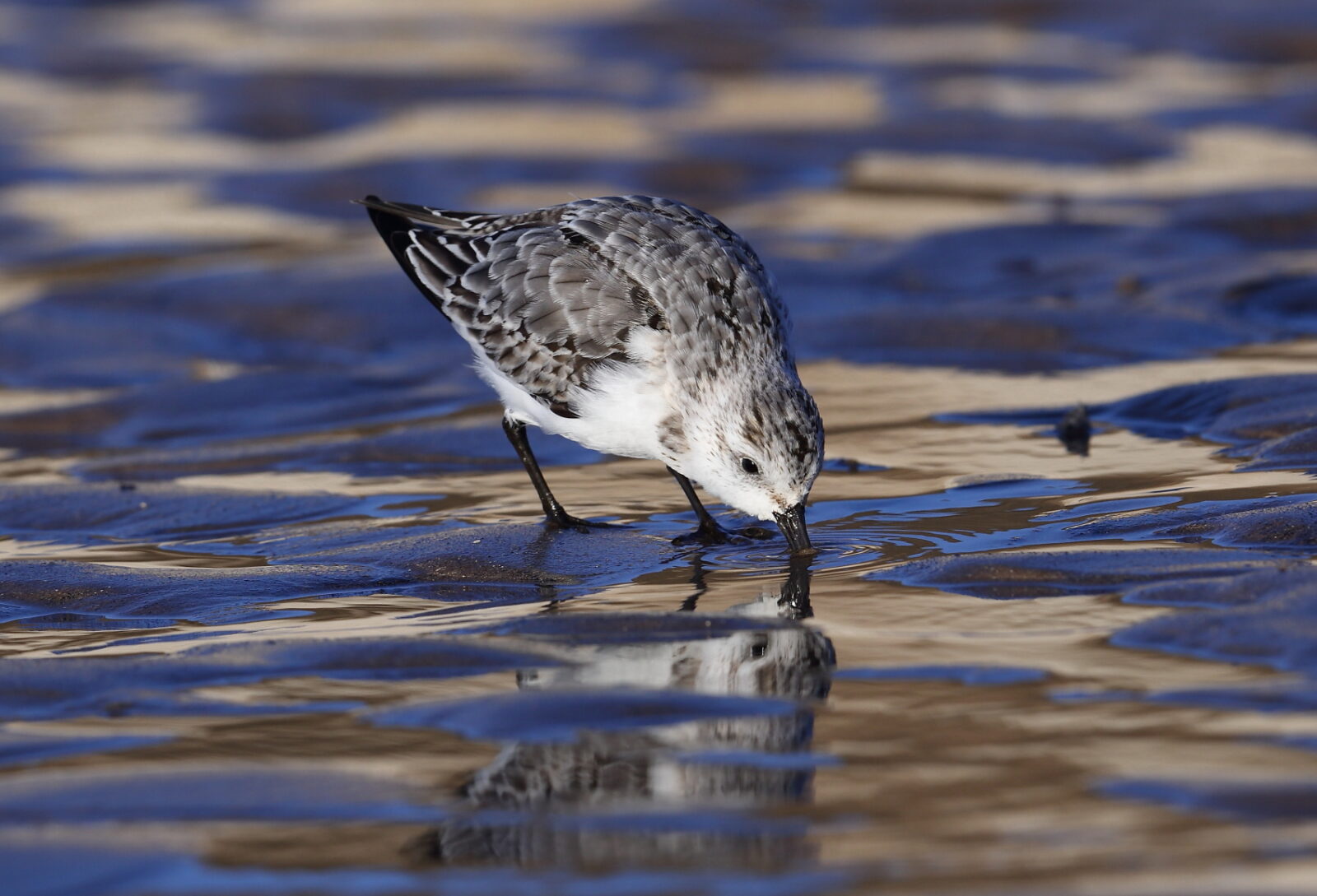
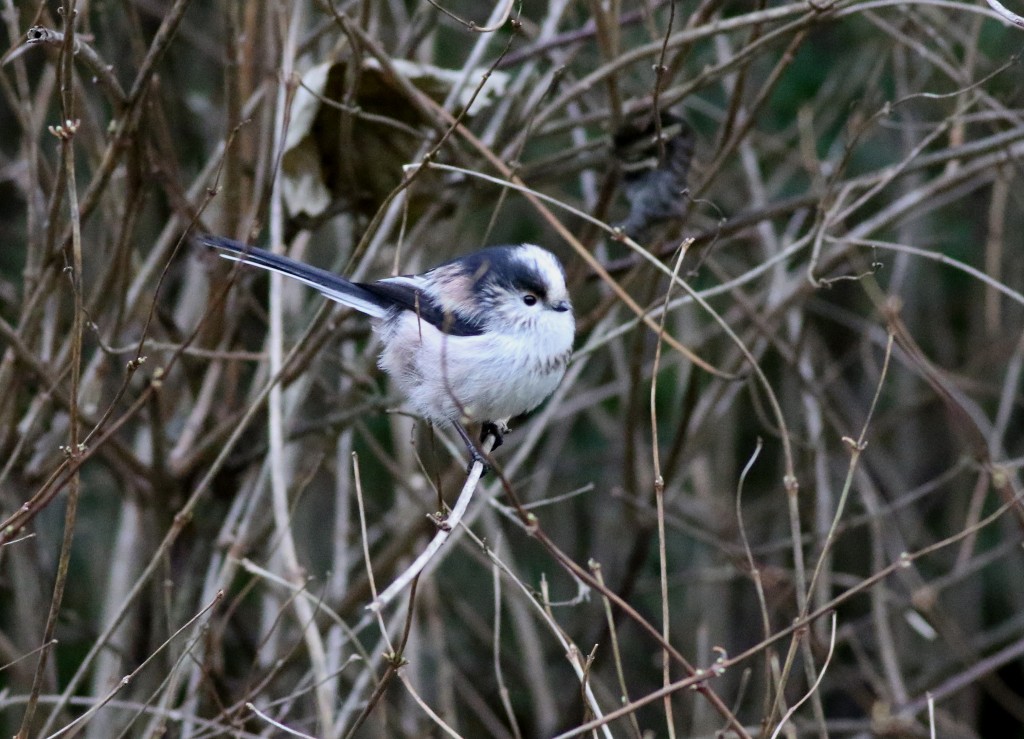
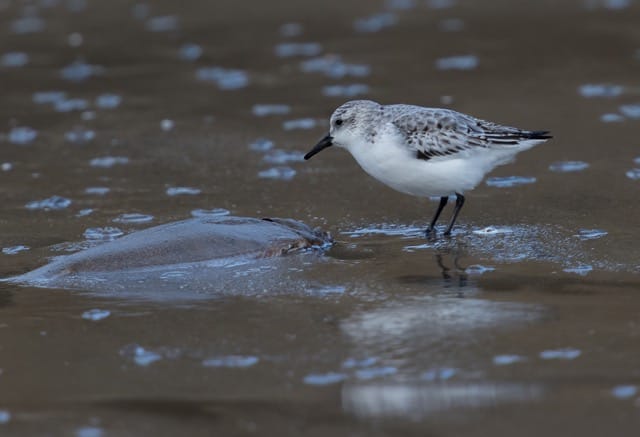
Eight White-fronted Geese and a single Pink-foot accompanied the Greylag flock on the outer head. The sea between South Landing and South Dykes attracted two Great Northern Divers, two Great Crested Grebes, two pale-bellied Brent Geese, three Velvet Scoter, a Goldeneye and three Long-tailed Ducks. South Dykes beach hosted 12 Sanderling and a Grey Wagtail, whilst a Chiffchaff and 25 Long-tailed Tits were in the nearby ravine.
Great Northern Diver, South Dykes, by John Beaumont
The weather consisted of moderate/strong west-north-westerly winds and generally overcast skies. During the seawatch, 117 Common Scoters flew south, a Goldeneye headed north, two Great Northern Divers and a juvenile Iceland Gull flew south, whilst a Bonxie was in residence.
Eight White-fronted Geese remained on the head, together with a Pink-footed Goose, 14 Wigeon, 139 Teal, a Velvet Scoter, one Jack Snipe, a Woodcock and a lone Waxwing, the latter west over South Landing.
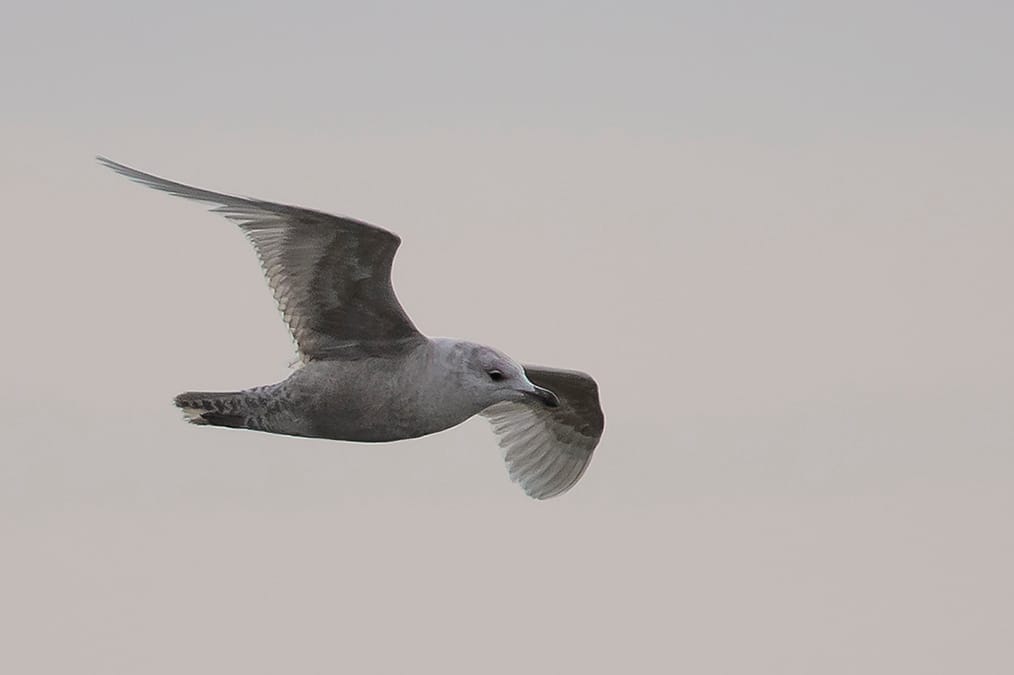
White-fronted Geese, North Marsh, by Andrew AllportIceland Gull, Fog Station, by Andrew Allport
It was a day of gale force northerly winds and sunny intervals, with occasional light showers. Seawatching highlights included a Black-throated Diver flying south, a Great Northern Diver north and one Blue Fulmar also north.
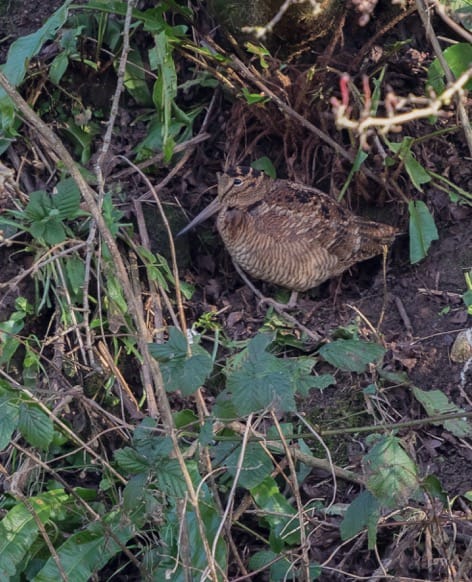
The day’s highlight was the discovery of a Black-necked Grebe off South Dykes; one of only a handful of local records. Additional sightings off South Dykes included two Great Northern Divers, six Long-tailed Ducks, a Velvet Scoter and one Goldeneye. A Woodcock showed well in South Landing.
The weather consisted of light north-westerly winds and sunny skies. During the seawatch, a Velvet Scoter, seven Long-tailed Ducks, six Goldeneye, a Blue Fulmar, two Manx Shearwaters, 384 Razorbills and three Puffins flew north, whilst a juvenile Glaucous Gull went south.
Six Long-tailed Ducks, a Goldeneye and four Great Northern Divers were on the sea off South Dykes/South Landing. Additional records included three Pink-footed Geese, 14 Wigeon, two Gadwall, 83 Teal, a Water Rail and one Woodcock.
An overcast day, with moderate south-westerly winds. Seawatching was rewarded with five Gadwall flying south, a Blue Fulmar north, a juvenile Glaucous Gull that eventually flew south (re-appearing at South Landing later) and a juvenile Iceland Gull that flew north.
A White-fronted Goose visited Thornwick Pools, whilst a Brent Goose and two Great Northern Divers were between South Landing and South Dykes.
On a positive note, last week’s Glaucous Gull (that was hit by a car) recovered sufficiently well enough to be released at Rufforth Tip near York today.
White-fronted Goose, Thornwick Pools, by Brett Richards
The weather consisted of light north-westerly winds, overcast skies and light rain during the afternoon. During the seawatch, 48 Teal flew north, with single Eider and Velvet Scoter moving south.
Sightings from South Landing/South Dykes included two Great Northern Divers, 30 Red-throated Divers, six Great Crested Grebes and three Long-tailed Ducks. Three Jack Snipe and 13 Snipe were located on the headland, with a Black Redstart relocated between the Lighthouse and the Fog Station.
Winds remained light and generally from the west during a largely sunny day. Seawatching produced eight Tufted Ducks, a Great Northern Diver and a juvenile Glaucous Gull flying north.
Eight White-fronted Geese frequented the North Marsh area, two Great Northern Divers, a Long-tailed Duck and nine Velvet Scoters were on the sea between South Landing and South Dykes. The male Black Redstart was again on the cliffs near the Fog Station.
A dull and overcast day, with a moderate south-westerly wind. A juvenile Glaucous Gull that flew south during a relatively quiet morning represented the highlight of the seawatch. Elsewhere, two Shoveler visited Thornwick Pools.
West of the Dykes, a Short-eared Owl hunted grasslands at Bempton Cliffs RSPB.
Short-eared Owl, Bempton Cliffs RSPB, by Alan Walkington
The weather consisted of light westerly winds and sunshine for most of the day. Away from a very quiet seawatch, eight White-fronted Geese remained in residence, 74 Teal were located on the wetlands and South Landing hosted a Woodcock.
West of the Dykes, a juvenile Glaucous Gull flew north at Bempton Cliffs RSPB, where a Short-eared Owl continued to hunt grassland near the visitor centre.
A day of gale force westerly winds and sunny skies. The seawatch was quiet apart from three Blue Fulmars that flew north, whilst a Great Northern Diver was off South Dykes. A single Pink-footed and eight White-fronted Geese toured the headland, whilst a Woodcock roosted at South Landing.
The weather consisted of light westerly winds and sunny intervals. A seawatch from South Landing was rewarded with two Black-throated Divers flying south, with a single off North Landing later. A total of 40 Red-throated Divers and a Great Crested Grebe also flew south.
Away from the sea, a Pink-footed Goose and eight White-fronted Geese toured the headland. A Woodcock showed well in South Landing.
A day of extreme weather, with storm-force northerly winds, snow first thing, turning to sleet/rain later and huge seas. Seawatching was limited to two Velvet Scoters flying south, whilst a Great Northern Diver and three Long-tailed Ducks were off South Landing.
After yesterday’s excessive conditions, north-westerly winds moderated and sunny intervals developed after a cloudy start. The seawatch proved to be productive, with the following highlights: two Great Northern Divers heading north, a Black-throated Diver south, a Sooty Shearwater north, three Glaucous Gulls north (two juveniles and an adult), an immature Pomarine Skua south and a Little Auk north. Three Long-tailed Ducks were again off the South Cliffs, two Woodcock were also recorded, including a single at South Landing, and a Snow Bunting frequented Beacon Hill.
A day of light south-westerly winds and overcast skies with drizzle. Seawatch highlights included a Blue Fulmar flying north and a minimum of one juvenile Glaucous Gull also heading north. The eight White-fronted Geese and Pink-footed Goose again accompanied the goose flock on the headland.
West of the Dykes, two Glaucous Gulls flew north at Bempton Cliffs RSPB, whilst a Short-eared Owl hunted the grasslands around the visitor centre.
An overcast day, with light drizzle periodically throughout and a light/moderate south-westerly wind. A Great Northern Diver and 12 Great Crested Grebes were on the sea between South Dykes and Sewerby. In the village, a Waxwing appeared along the road to South Landing.
West of the Dykes, two Short-eared Owls frequented Bempton Cliffs RSPB.
Great Northern Diver, South Dykes, by Craig Thomas
The weather consisted of moderate south-westerly winds, overcast skies and occasional light rain. During the seawatch, 90 Pink-footed Geese flew north, seven Shelduck, an Eider and a male Goosander flew south. After a gap of several days, the two Black Redstarts reappeared at the Fog Station.
Eight White-fronted Geese and a Pink-foot toured the headland, whilst a Tufted Duck was a new arrival on Thornwick Pools. A Great Northern Diver was again between South Landing and South Dykes, whilst two Woodcock frequented South Landing.
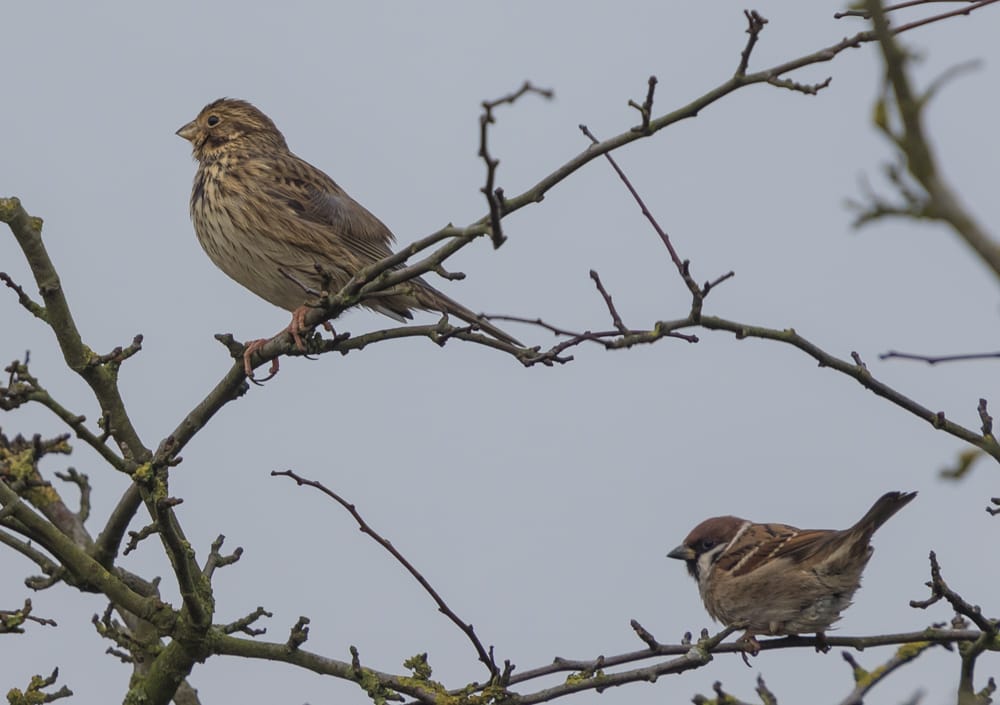
West of the Dykes there were two Short-eared Owls at Bempton Cliffs RSPB, with another three birds at Buckton; additional sightings at the latter site included 40 Tree Sparrows, 70 Yellowhammers and 14 Corn Buntings.
Tree Sparrow and Corn Bunting, Buckton, by Paul Reed
It was another overcast day, with light drizzle at times and light south-westerly winds. Seawatching highlights included a Great Northern Diver flying north and a juvenile Glaucous Gull moving in the opposite direction.
The eight White-fronted Geese and one Pink-foot remained. A Great Northern Diver was off South Landing, whilst eight Great Crested Grebes were between South Dykes and Sewerby. Thornwick Pools hosted a Water Rail, the Woodcock remained in South Landing, with a Stonechat on the Links Golf Course near South Dykes.
West of the Dykes, a Short-eared Owl was at Bempton Cliffs RSPB.
The weather remained unchanged, with very light south-westerly winds and a heavy overcast. During the seawatch, two Blue Fulmars lingered offshore. Sightings on the headland included the Pink-footed Goose and eight White-fronted Geese, whilst two Golden Plover and four Stonechats were also recorded.
Three Short-eared Owls hunted the grasslands around the Bempton Cliffs RSPB Centre.
The weather consisted of light south-westerly winds and overcast skies. Seawatching highlights included 25 Pink-footed Geese, nine Shelduck and a Blue Fulmar flying north.
The Greylag flock in the North Marsh area contained two Tundra Bean Geese, eight White-fronted Geese and eight Pink-feet. Two Woodcock were recorded in South Landing and the male Black Redstart made an appearance near High Stacks.