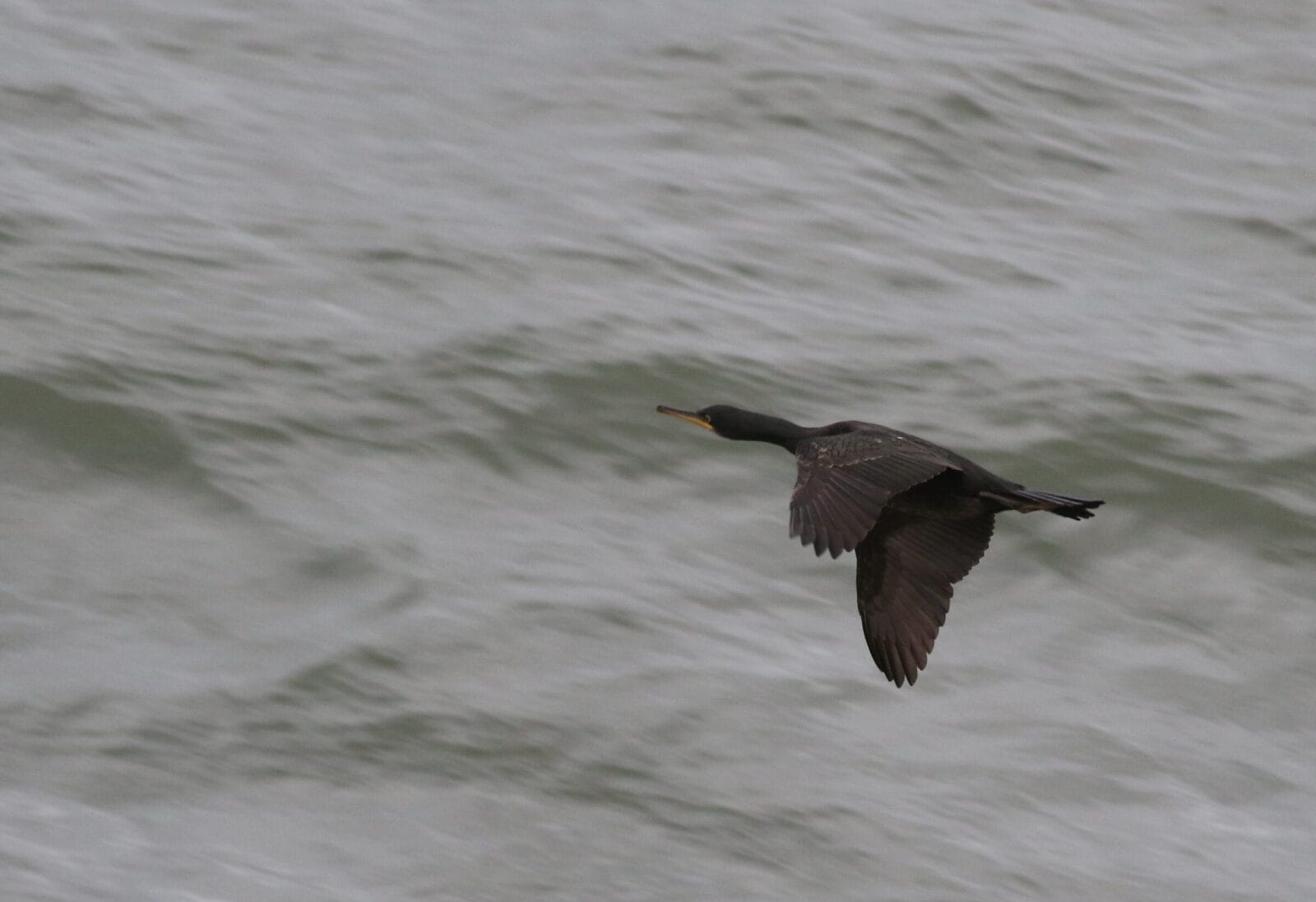
A south-south-west wind strengthened during the day which was largely bright but overcast. During the seawatch a Great Northern Diver flew south, 350 Pink-footed Geese and seven Wigeon moved north and 185 Razorbills were recorded; the first treble-figure tally since mid-October.
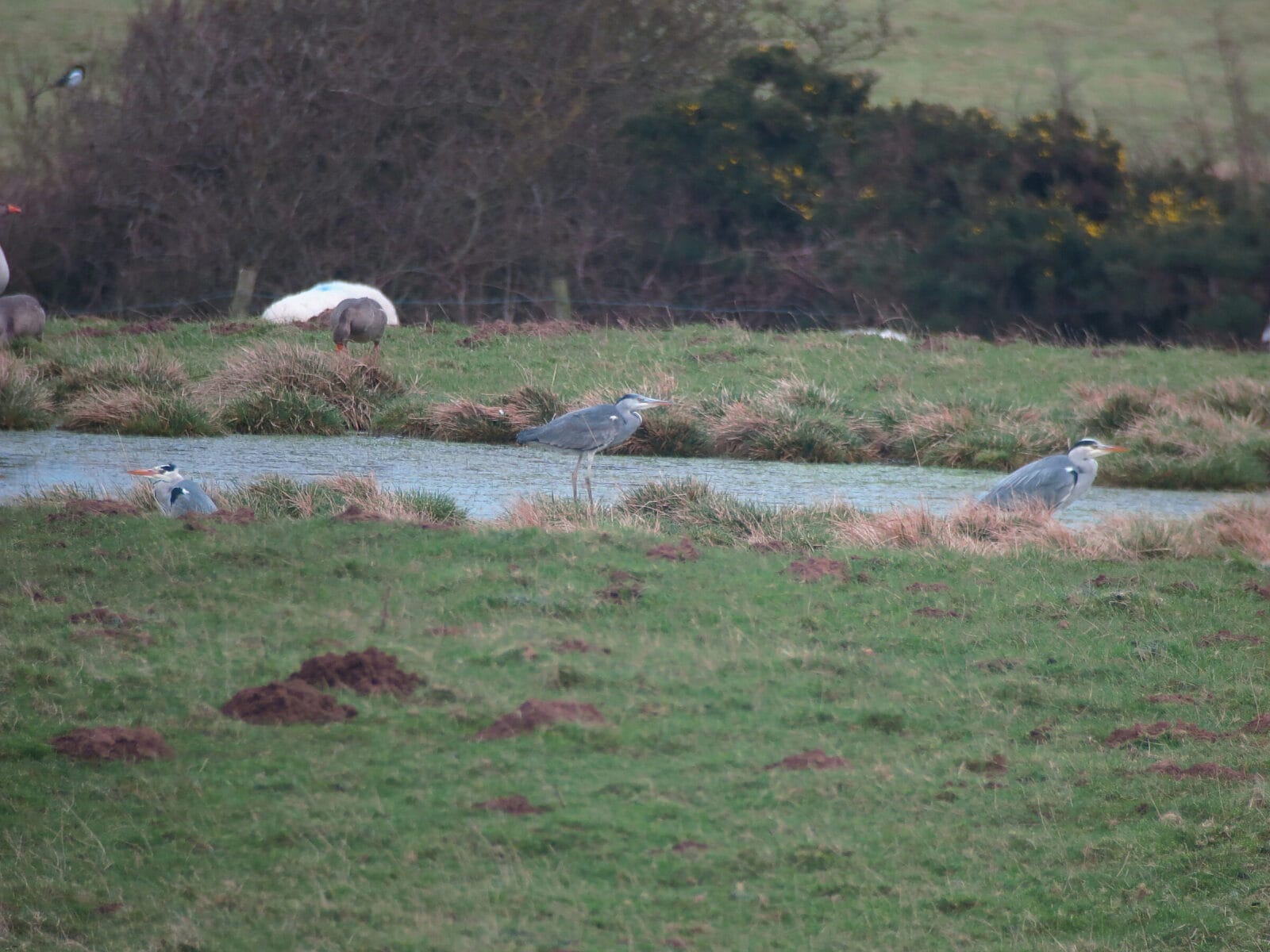
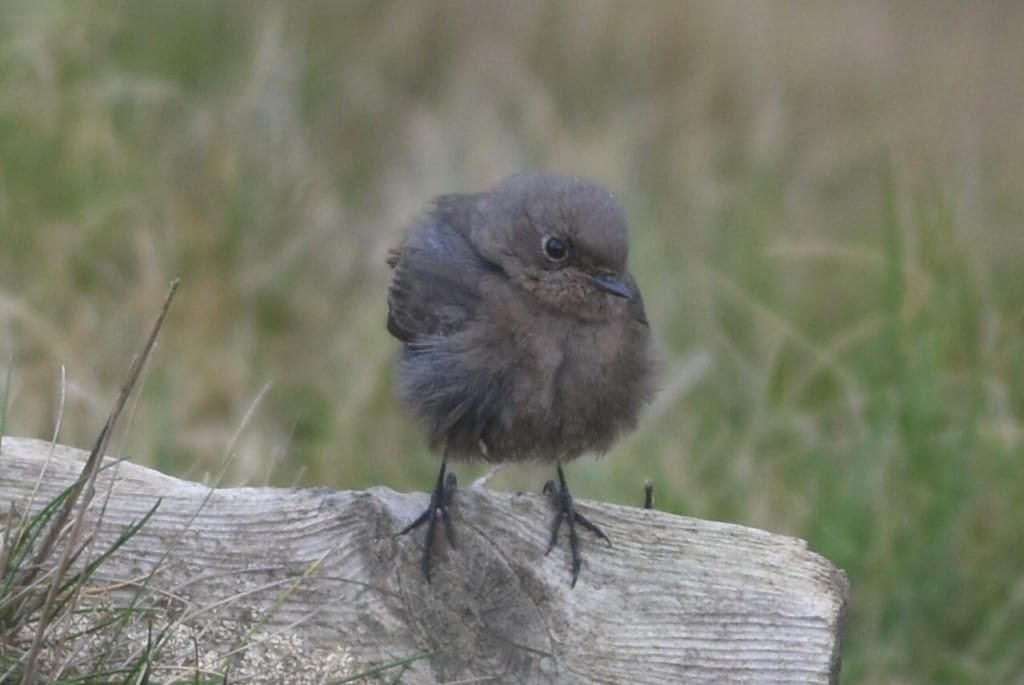
Four Grey Herons were recorded, along with a Common Buzzard, 55 Purple Sandpipers and one Stonechat. A Black Redstart was also located at the Fog Station.
Grey Herons, Flamborough, by Brett RichardsBlack Redstart, Fog Station, by Andy Hood
It was a wet day, with a light south-easterly wind switching to a strong south-south-westerly later. A seawatch from North Landing produced seven Red-throated Divers, 386 Gannets and 480 Razorbills. One Great Crested Grebe and 22 Teal were the only other noteworthy sightings.
A strong south-south-west wind prevailed all day, with increasing cloud after a sunny start. The seawatch was quiet, with five Red-throated Divers and three Common Scoter flying south. Illustrating the ephemeral appearances of the larger auks at this time of year, no Razorbills observed after 480 were recorded yesterday.
A Grey Heron and Common Buzzard frequented the Micklemires area. Two Richard’s Pipits again showed well in the field immediately east of North Landing and the Black Redstart again showed below the Fog Station. A Mistle Thrush at the latter site was relatively unusual and the sunshine prompted territorial Skylarks to sing. South Landing attracted a Treecreeper and 26 Tree Sparrows.
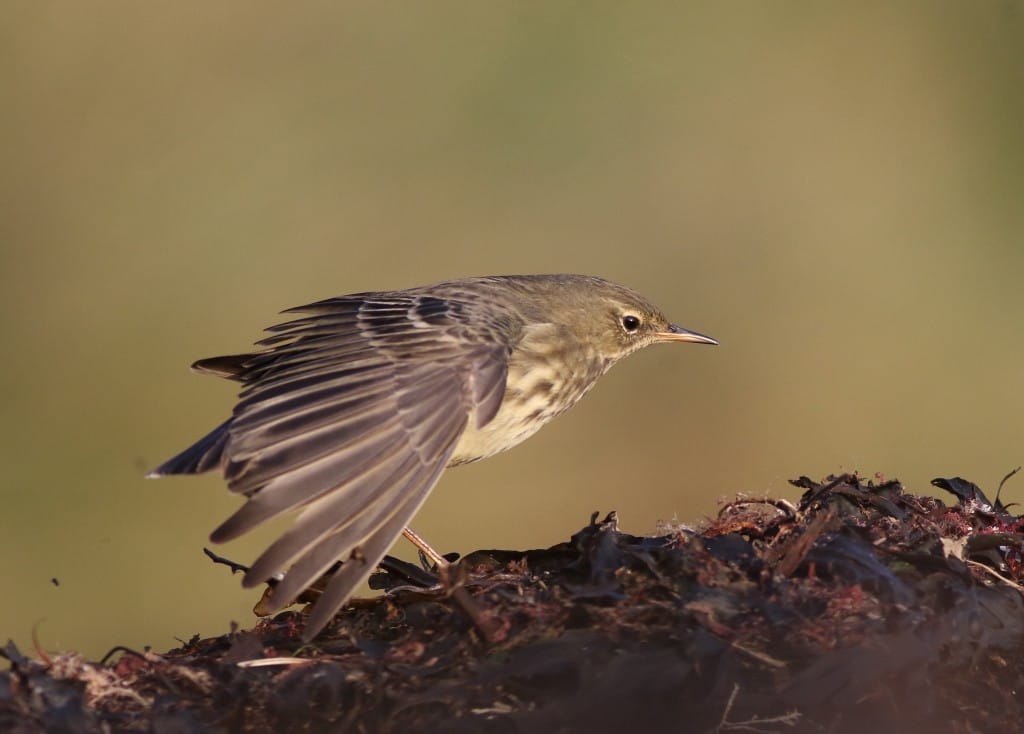
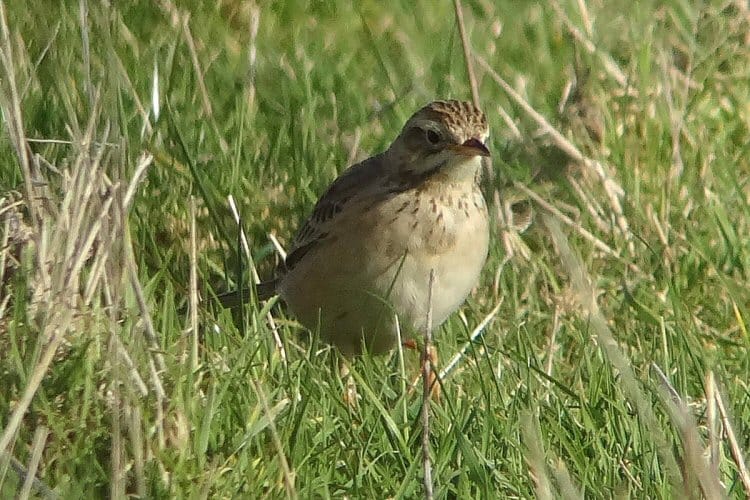
Rock Pipit, South Landing, by Craig ThomasRichard’s Pipit, North Landing, by Tony Dixon
Strong south-south-westerly winds continued throughout the day with light rain on and off throughout. During the seawatch, 36 Red-throated Divers flew south, together with four Blue Fulmars, an Eider and four Common Scoter. Passerine interest included four Mistle Thrushes at Beacon Hill and a pair of Stonechats at North Marsh.
The weather consisted moderate/strong south-westerly winds and bright, but generally overcast, skies. Seawatching was rewarded with 55 Pink-footed Geese and a single dark-bellied Brent Goose flying north, together with 42 Red-throated Divers in residence.
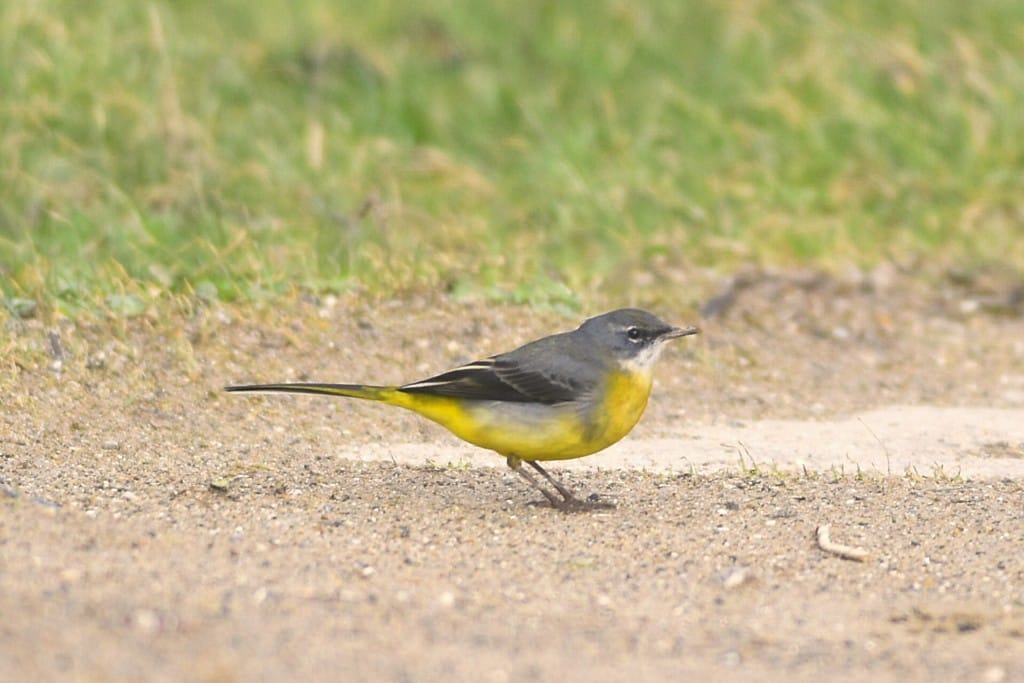
As well as the seawatch, sightings included three Gadwall on Thornwick Pools, 26 Teal, two Great Crested Grebes, seven Common Buzzards, a Merlin near Old Fall, 17 Curlew, a Stonechat, two Grey Wagtails and the two Richard’s Pipits (North Landing).
The weather featured moderate/strong north-north-westerly winds and overcast conditions initially, with winds dropping and brighter skies by the afternoon. Seawatching highlights included one Blue Fulmar and 412 Fulmars flying north and eight Common Scoter and a Bonxie heading south.
Sightings in Bridlington Bay included a drake Eider, 30 Common Scoters and four Great Crested Grebes. The two Richard’s Pipits remain at North Landing, with a pair of Grey Partridge and Stonechat near Thornwick. South Dykes hosted Tawny Owl, Treecreeper, Goldcrest and Grey Wagtail.
The day featured light south-west winds, sunny intervals and relatively low temperatures that peaked at 5 degrees C. During the seawatch, a Blue Fulmar, eighteen Common Scoter and four Goldeneye flew north.
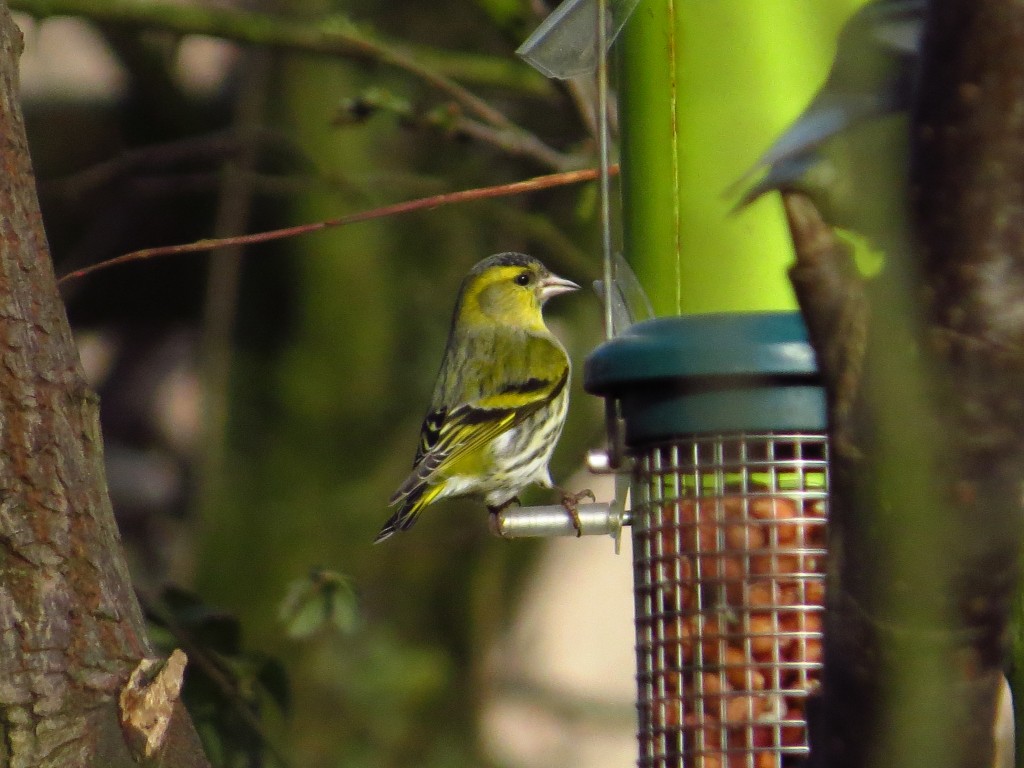
Further sightings included six Wigeon, 31 Teal, a Common Buzzard, 20 Curlew and five Lapwing. Six Mistle Thrush frequented Beacon Hill and Thornwick attracted a Stonechat. The two Richard’s Pipits remained in residence at North Landing, showing well in the field immediately east of the path leading from the chalets to the cliff top. South Landing hosted single Grey Wagtail and Siskin, whilst 15 Rock Pipits were on the beach there; one of the latter showing features consistent of ‘Scandinavian Rock Pipit’.
Bempton Cliffs RSPB attracted a Stonechat and six Siskin.
The day comprised light easterly winds, sunny intervals and temperatures peaking at 6 degrees C. Seawatching was rewarded with one Blue Fulmar flying north, together with seven Common Scoter and a Red-breasted Merganser, whilst an Eider headed south.
A Great Northern Diver was off South Landing and nine Ringed Plover were nearby. The Black Redstart re-appeared at the Fog Station, the two Richard’s Pipits remained in residence at North Landing and a Siskin frequented South Landing.
A moderate east-south-east wind, with rain for the first hour before brighter conditions later in the day. Three Shelduck and 11 Common Scoter flew north past South Landing, where a Great Crested Grebe was offshore.
The two Richard’s Pipits continued to show well in the first field east of North Landing.
The weather consisted of moderate north-easterly winds, sunny intervals and temperatures of 4 degrees C. The seawatch was very quiet, with 21 Red-throated Divers, 159 Fulmars, 11 Mallard and two Eider flying north.
Thornwick Pools hosted 22 Teal and two Coot.
Grey Seal with attendant gulls, Fog Station, by Craig Thomas
Another day of moderate northerly winds, occasional drizzle and temperatures of 4 degrees C. A seawatch at South landing produced 19 Red-throated Divers, three Eiders and four Common Scoters flying north and single Great Crested Grebe and Eider on the sea.
Sightings on the Headland included ten Wigeon, 44 Teal, 38 Mallard and a Grey Heron. The two Richard’s Pipits remained in their favoured field immediately east of the chalets at North Landing.
The weather consisted of moderate south-westerly winds and sunny intervals. Seawatching was again quiet, with ten Red-throated Divers, eight Wigeon, 45 Mallard and three Common Scoter. Thornwick Pools attracted three Gadwall, 26 Teal, 14 Mallard and three Coot.
Persistent rain featured throughout, along with moderate southerly winds. Birding was limited due to the inclement weather; a seawatch from North Landing produced 19 Red-throated Divers and 50 Razorbills.
Today’s weather was in stark contrast to yesterday’s, with clear blue skies and light north-westerly winds. Forty Red-throated Divers were recorded during the seawatch, whilst a Blue Fulmar and four Eiders flew north.
Elsewhere sightings included three Gadwall, 25 Teal, one Wigeon, a Grey Heron, one Great Crested Grebe and 50 Purple Sandpipers. South Dykes hosted a Tawny Owl and two Treecreepers; including one singing. The two Richard’s Pipits remained in their favoured field immediately north-east of the chalets.
Sunshine at the start of the day was replaced by cloud later, with rain arriving from mid-afternoon; a south-westerly wind increased in strength during the day. Two Shelduck flew south during the seawatch and a Peregrine cruised past the Fog Station.
Seventy Pink-footed Geese flew north early morning, the Common Buzzard was still present, whilst South Landing attracted 14 Curlew and four Mistle Thrushes; 950 Woodpigeons represented an above average count. The two Richard’s Pipits again frequented the field north-east of the chalets at North Landing.
It was a day of moderate south-westerly winds and overcast skies. During the seawatch a Blue Fulmar blogged about offshore, three Eiders flew north and five ‘argentatus’ Herring Gulls were recorded.
Single Great Northern Diver and Black-throated Diver were off South Landing, whilst ten Great Crested Grebes were on the sea between South Dykes and Sewerby Steps. Thornwick Pools attracted single Gadwall and Water Rail, the Common Buzzard remained just east of the village and the Black Redstart was seen again at the Fog Station.
A westerly wind gathered in strength during a heavily overcast day that featured sporadic rain; after relatively low temperatures of late, a peak of 14 degrees C occurred during the afternoon. The seawatch was exceptionally quiet, with 247 Gannets, three Kittiwakes and no more than 50 Guillemots recorded.
A pair of Shelduck returned to Thornwick Pools, with 22 Teal also present. Two Tawny Owls, two Coal Tit and two Treecreepers were also recorded in South Dykes.
The weather consisted moderate westerly winds and sunny intervals. During the seawatch a Blue Fulmar flew south, as did five Red-throated Divers and four Common Scoter. The Common Buzzard remained on the edge of the village and two Stonechats frequented the Lighthouse Grasslands.
Stonechat, Lighthouse Grasslands, by Brett Richards
Strong north-north-west winds were the feature of a largely sunny day, with light showers and temperatures that peaked at 6 degrees C. During the seawatch, a Great Northern Diver, one Blue Fulmar, 929 Fulmars and 1352 Gannets flew north, whilst four Eiders headed south.
Thornwick Pools attracted 25 Teal, the pair of Shelduck and a Grey Heron, with the Common Buzzard nearby. Passerine interest included two Stonechat, eight Siskin and a Lesser Redpoll.
A frosty start gave way to a day of sunshine, blue skies and a light north-westerly. North-bound birds on this morning’s seawatch, unless otherwise stated, saw five Red-throated Diver (19 south), a Great Northern Diver, 812 Fulmar, 1831 Gannet (725 south), two Common Scoter, two Velvet Scoter, the year’s first intermedius Lesser Black-back Gull and one Shelduck south.
A moderate north-westerly wind was associated with relatively low temperatures and broken cloud. During the seawatch, seven Eider flew north and the Black Redstart re-appeared near the Fog Station.
Two Shelduck, 21 Teal, two Grey Herons and the Common Buzzard were also recorded.
An overcast and cold day with very light winds that turned onshore during the afternoon. Seawatching produced ten Red-throated Divers and two Eider flying south, with three Blue Fulmars and 148 Fulmars heading north. Fifteen Purple Sandpipers were also in the vicinity of the Fog Station.
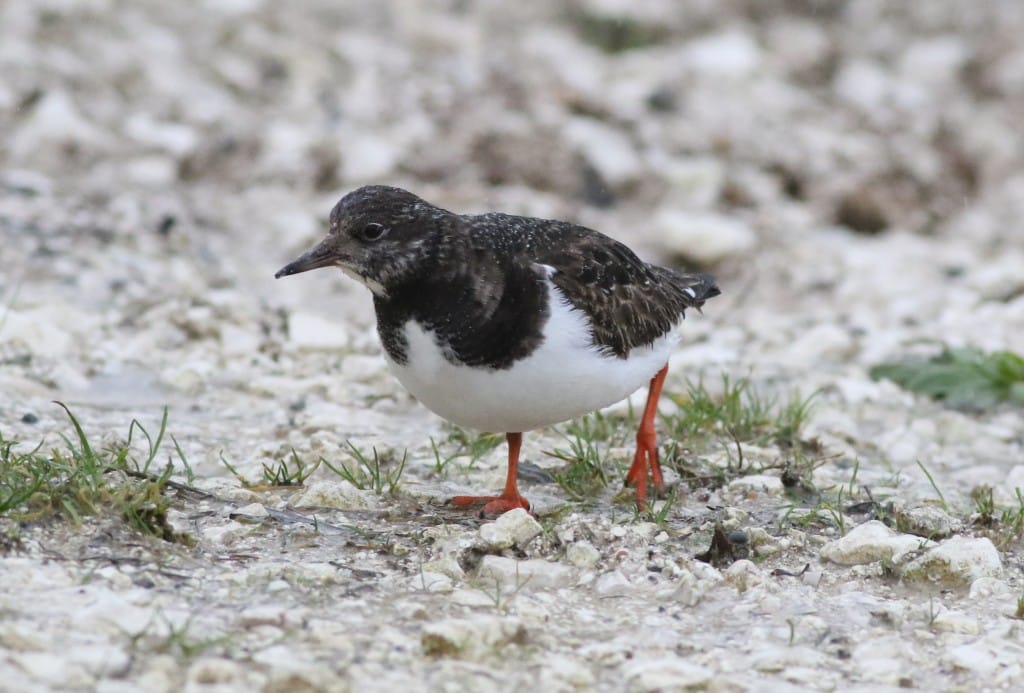
A Woodcock and two Tawny Owls were recorded at South Dykes. Better still a Red-necked Grebe was present off Sewerby Steps, where waders included 24 Turnstone, eight Ringed Plover and four Purple Sandpipers.
Another overcast day, with a light north-easterly wind and temperatures that peaked at five degrees C. During the seawatch, a Blue Fulmar flew north along with two Eider and seven Velvet Scoter.
A skein containing 57 Pink-footed Geese flew north over the Dykes. A Black Redstart was located near the cliff top south of Head Farm and two Stonechat frequented the Lighthouse Grasslands.
West of the Dykes, the Red-necked Grebe was again off Sewerby Steps, together with 30 Red-throated Divers and 60 Common Scoter.
A light/moderate north-easterly wind brought relatively low temperatures which rose to six degrees C from mid-morning when sunshine prevailed. Seawatching improved, with one Great Crested Grebe, seven Blue Fulmars, two Eider, 354 Herring Gulls, 60 Great Black-backed Gulls, 184 Kittiwakes and two Puffins flying north. However, better still, the first white-winged gull of the year was also recorded, with a juvenile Iceland Gull heading south early morning.
The Red-necked Grebe was still on the sea between South Dykes and Sewerby, with 64 Common Scoter and 12 (nine and three) Shelduck also present; in addition, the pair of Shelduck remained on Thornwick Pools. Late morning, the two Richard’s Pipits were again reported in the field immediately north-east of the chalets at North Landing.
Temperatures again struggled to five degrees C after an overnight frost, with sunny intervals and a light south-west wind. The seawatch was very quiet, with the undoubted highlights confined to the land.
The wetlands attracted 18 Teal, a Grey Heron, four Coot and 18 Curlew, whilst a pair of Grey Partridge on the Outer Head was notable. A Woodlark discovered in the Lighthouse Grasslands represented an excellent record of a less than annual migrant. One Richard’s Pipit was present at North Landing, whilst the identification of six Scandinavian Rock Pipits was more a reflection of their breeding plumage starting to show through.
Weather on the headland comprised cloud cover and light rain, with winds S-W force 5 and a temperature rising to 8c.
The morning seawatch produced three Red-throated Divers, 61 Fulmar south, including five Blue Fulmars, 551 Gannet south and a further 176 north, four Shoveler south, one Grey Plover south, 56 Great Black-backed Gulls south, 72 Kittiwake south and 67 Guillemot south.
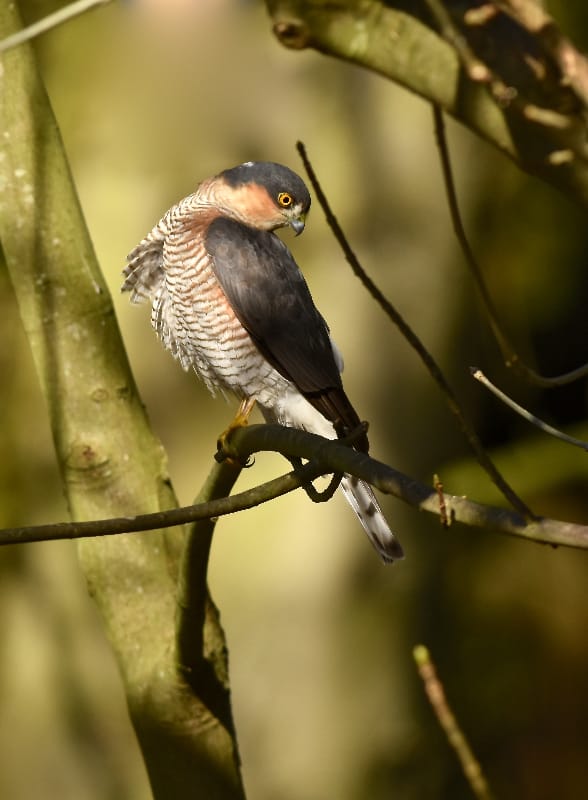
Land records included a Merlin west of Old Fall, 14 Teal at Thornwick Pools, Sparrowhawk at South Landing and at Oceanview; with 20 Tree Sparrow and Coal Tit also at Oceanview. TwoRichard’s Pipits remained at North Landing.
Another day of cloud cover, a force 4 SSW-SW wind, some rain and a low, raw temperature of 3 degrees C.
The morning seawatch produced 10 Red-throated Diver south, 30 Fulmar south (and 50 north), 515 Gannet south and 482 north, nine Common Scoter south, four Dunlin south, Curlew south and reasonable numbers of Kittiwake, Guillemot and Razorbill moving; 30 Shag were present, as were a single Peregrine and Rock Pipit.
At South Landing the highlights were two Red-legged Partridge, four Red-Throated Diver, Common Buzzard, seven Oystercatcher, Great Spotted Woodpecker, three Long-tailed Tit and three Bullfinch. Sightings at Oceanview included Barn Owl, Grey Heron, two Stock Dove and two Song Thrush.
Weather was sunny until mid-afternoon when skies became overcast. Wind was a light north-westerly.
Highlight of the day was a Bittern, found at Thornwick Pools during mid morning; it then slinked off into the reedbed by the Sand Martin bank before reappearing late afternoon. This represented only the third record for the outer head. Also on the land, the two Richards Pipits remained in the usual field east of North Landing and a total of 21 Teal were counted.
The seawatch produced a single intermedius Lesser Black-backed Gull, six Red-throated Diver, 251 Fulmar, nine Common Scoter, 550 Kittiwake and 75 Shag.
Heavy rain persisted throughout the day, with light easterly winds. As a consequence of the poor weather conditions, few reports were received.
There was no sign of the Bittern at Thornwick, though the Teal count remained unchanged at 21. A brief seawatch during the morning yeilded 3 Red-throated Divers, 69 Fulmar and 138 Gannet.
The wind was a moderate to strong north-easterly. Sunny spells were interspersed with frequent heavy rain showers.
The Bittern was seen twice during the day at Thornwick Pools; once in flight across the pool around midday and again just after 6pm roosting in the main reedbed. Two Richard’s Pipits remained in fields east of North Landing, whilst on the other side of the headland the Red-necked Grebe was offshore between Sewerby and South Dykes along with eight Great crested Grebes.
On the seawatch, 779 Fulmar also flew north, along with 1060 Gannet (plus 27 south) and 102 Kittiwake.
A moderate northerly wind persisted throughout the day. Weather was very mixed, with sunny spells during the morning and occasional hail showers. Conditions in the afternoon were overcast, with some sleet later on.
The Bittern showed again at Thornwick Pools, roosting high in the reeds just before dark. A female Black Redstart was at North Landing and may relate to the individual that has been seen sparodically in this area for over a month. Three Goosander (1 drake) were on the sea between Sewerby and South Dykes, though there was no sign of the Red-necked Grebe.
Highlights on the seawatch included 355 Fulmar, 7 Red-throated Diver, 3 Eider, 6 Common Scoter, 125 Shag and 25 Kittiwake.
The weather today was mainly cloud cover, a north wind force 5 and a temperature only reaching 4 degrees C.
An early two hours seawatch recorded few species, including six Red-throated Diver south, 339 Fulmar north and 23 Great Black-backed Gull north, with 30 Shag and 97 Black-headed Gull present off the Headland.
The Bittern showed again late evening at Thornwick Pools, along with a Water Rail and Grey Partridge. South Landing had the usual group of Rock Pipit, including one ‘littoralis’. Great Spotted Woodpecker and Treecreeper were recorded in Danes Dyke Woods.
Great Spotted Woodpecker by Tony Simpsonlittoralis Rock Pipit by Brett Richards
The weather today was full cloud cover and a light force 2/3 wind from a south-west direction, with a low temperature of 3c.
A two hour morning seawatch had 8 Red-throated Diver south, a large movement of Gannet with 370 south and 569 north, 21 Pink-footed Goose north, two Eider south, two Common Scoter north, an ‘argentatus‘ Herring Gull north, 25 Kittiwake south and 300 north and five Puffin north. Present at the Headland was 55 Shag, a female-type Black Redstart and two Rock Pipit.
There was some movement of Whooper Swans during the morning, with 22 flying north just outside the recording area; seven also flew west over the Living Seas Centre which were also recorded continuing over South Dykes.
At Thornwick Pools, the Bittern was still present and roosted there, with seven Wigeon, 19 Teal and a Water Rail also present. Oceanview had a Sparrowhawk, three Stock Dove, 200 Woodpigeon, 15 Tree Sparrow and a Coal Tit. Elsewhere on the headland were 13 Stock Dove, four Skylark, three Song Thrush, 18 Blackbird, three Stonechat and 10 Yellowhammer.
A poor weather day with heavy cloud and rain, wind NNE force 2 and the temperature up a little to 6c.
A short one hour sea-watch in the morning had few birds, including 60 Gannet north and four Common Scoter south. Present off the headland were six Oystercatcher, two Curlew and seven Redshank.
At Thornwick Pools, the Bittern was still present, along with 10 Teal and a Reed Bunting, with two Skylark and two Mistle Thrush nearby.
An overcast start gave way to a day of intermittent sunshine, light east-north-easterlies and temperatures reaching 7°C. Seawatching highlights consisted of six Red-throated Diver south, single Common Scoter south (five north), three Red-breasted Merganser north, 700 Gannet south (384 north) and 60 Kittiwake south (496 north).
At Thornwick Pools the Bittern was present again at dusk. A littoralis Rock Pipit was amongst the Rock and Meadow Pipits at Bempton RSPB, as well as a Fieldfare and Curlew over there, whilst seven Redwing were noted at Old Fall.
Morning fog quickly dissipated, leaving a day of sunshine and gentle south-westerlies across the headland. Wildfowl featured during the seawatch, with singles of Wigeon, Pochard and Tufted Duck south, a single Mallard and 11 Common Scoter north. In addition, 11 Red-throated Diver south (one north) and a Blue Fulmar lingered off the Fog Station.
The Bittern continued its stay at Thornwick, though remains elusive. Elsewhere, the two Richard’s Pipits still frequent the first field east of the North Landing car park.
A pleasant day with gentle to moderate southerly winds and temperatures reaching 9°C. Southbound birds during the morning seawatch included 17 Red-throated Diver (two north), eight Wigeon, two Gadwall, four Teal, 25 Mallard, two Eider (nine north) and singles of Dunlin and Grey Wagtail. A lone Pink-footed Goose flew north.
On the Outer Head, a Black Redstart frequented a private garden, a Woodcock was in the Thornwick Bay area and the Bittern remained at Thornwick Pool.
A Quail, of unknown origin, was discovered near the YWT Living Seas Centre at South Landing. Later scrutiny revealled features more consistent with Japanese Quail and therefore most certainly an escapee.
Escaped Quail sp most probably Japanese Quail, South Landing, by Tony DixonEscaped Quail sp, South Landing, by Lee Johnson
Continuing a reasonable run of weather, morning southerlies switched to south-easterlies delivering highs of 8°C and periods of sunshine. Three Red-throated Diver, 16 Mallard, three Eider, two Dunlin and a single Curlew moved south during the morning seawatch.
South Dykes produced 46 Turnstone, 9 Eider and three Red-throated Diver; nearby Sewerby held five Great Crested Grebe and 6 Red-throated Diver.
The two Richard’s Pipits were still in their favoured field near North Landing, the Bittern clocked up its tenth day stay at Thornwick Pools and a Brambling visited feeders at the YWT centre at South Landing. The escaped probable Japanese Quail was still present throughout the day at the latter site.
A day of sunshine and some cloud with the wind SSE force 2 to NE force 3 and the temperature up to 7c.
Fairly quiet on the sea, with the main highlights being three Red-throated Diver south and three north, 37 Fulmar north, one Eider south, six Common Scoter north, 29 Common Gull north (and eight south) and Puffins on the move, with 42 north.
The Bittern remained at Thornwick Pools, five Fieldfare and at least seven Redwing in the area and a Merlin at New Fall. Elsewhere were 37 Greylag Goose, Grey Heron, nine Curlew, 21 Blackbird, 20 Skylark, 10 Dunnock and 28 Linnet.
Oceanview had 225 Starling and the usual 15 Tree Sparrow.
A northerly wind and some early sun but mainly cloudy.
Seawatching was quiet, with two Red-throated Diver south, 50 Fulmar north and five south, three Common Scoter south (plus one north) and eight Puffin north.
The Bittern still present at Thornwick Pools although elusive in the reeds, with a female-type Black Redstart in Outer Head gardens. Other areas had 10 Greylag Goose, 13 Teal, six Wigeon, eight Oystercatcher, six Curlew, Tawny Owl, 44 Tree Sparrow and eight Skylark.
Yellowhammer, South Landing, by June & Malcolm Fox
A cloudy start to the day which improved to part sunshine, winds north force 2 and the temperature up to 8c.
Seawatching was again steady with two Red-throated Diver south and one north, 71 Fulmar north, two drake Eider south and 12 Puffin north. Present off the headland were 38 Shag, 30 Fulmar, two Curlew and two Rock Pipit.
South Landing had two Curlew, six Oystercatcher and a small number of Rock Pipits. At Thornwick Pools the Bittern was still in residence, along with a Water Rail and nine Teal. Elsewhere were 39 Greylag Goose, two Shelduck, two Grey Heron, three Mistle Thrush, four Fieldfare and 19 Redwing. The Quail noted a few days ago is now thought to be a Japanese Quail.
Overcast skies during the early morning gave way to sunny spells by late morning; the wind was a light northerly.
The Bittern was again seen roosting just before dark at Thornwick Pool. Nearby a Puffin was back on cliffs at Thornwick. Also on the land, three Treecreepers and two Goldcrest were noted between the village and South Dykes.
There was again little change from the last few days, with no sign of any summer migrants yet. The Bittern remained at Thornwick Pool, with the two Richard’s Pipits still in fields east of North Landing. Other birds on the land included 9 Wigeon, 21 Teal and a Buzzard. Twelve Puffin and 30 Shag were the main highlights on the seawatch.
A cloudy day, with occasional light rain showers and a moderate northerly wind. Two Woodlark were discovered in a weedy field south of Whelkie Wynds late morning; this represented the second record of the species this year, following several blank years. The Woodlarks were last seen flying north-east towards the outer head during mid afternoon. At Thornwick the Bittern remained, with Merlin and Brambling noted flying over. Nearby the two Richard’s Pipits were still at North Landing and a Woodcock was in Old Fall.
89 Fulmar and 11 Puffin were the seawatch highlights. West of the Dykes, 23 Common Scoter were off Sewerby, Bempton village held 6 Redwing and a roost of 1000 Starling, whilst a freshly plucked Snow Bunting was found at Bempton.
A bright sunny start to the day gave way to overcast conditions and light showers from late morning. Bird of the day was a 1st-winter Iceland Gull hanging around off the Fog Station early morning. Other highlights on the seawatch included 65 Shag, 2 Eider, 2 Common Scoter and 9 Wigeon.
On the land the two Richard’s Pipits were still east of North Landing. Thornwick Pools attracted a Jack Snipe, whilst the Bittern also remained. Elsewhere a minimum of four Grey Heron were around the headland, a littoralis Rock Pipit was near Breil Newk and two Lesser Redpoll were noted.
The weather consisted of light/moderate west-north-westerly winds and sunny intervals with cloud increasing during the day. During the seawatch, a Grey Heron flew south and ten Eider were recorded (six north, ten south), as were 40 Puffins.
Fifteen Teal, five Wigeon and two Shelduck frequented the Headland’s freshwaters, with four Grey Herons, two Common Buzzards and a Jack Snipe also present. Three White Wagtails were new arrivals, whilst the two Richard’s Pipits stayed in residence in the cliff top field at North Landing. Eight Redwing were present, with two migrant Goldcrests on the Outer Head.
Light north-westerlies again featured, with cloud building after a relatively sunny start. The seawatching highlight was a Blue Fulmar that flew north. A scan of the sea from the Outer Head to Thornwick produced 800 Puffins, all presumed to be local breeding birds.
An Australian Shelduck x Shelduck hybrid visited Thornwick Pools, whilst the two Richard’s Pipits were still present immediately east of North Landing. Additional sightings included two Common Buzzards, four Redwing, a Chiffchaff, one Goldcrest, two Siskins and a Brambling.
Female Shelduck x Australian Shelduck hybrid, Thornwick Pools, by Brett Richards
It was a day of light west-north-westerly winds, generally overcast skies and temperatures that reached 9 degrees C. Two Blue Fulmars attended a coble off the Headland, with a Common Buzzard flying north during the same seawatch. Single figures of Skylark, Meadow Pipit, Goldfinch and Linnet were also observed heading north.
A Tufted Duck at Thornwick Pools was newly arrived, the resident Common Buzzard remained on the edge of the village and the two Richard Pipits continued their sojourn at North Landing.
The weather consisted light/moderate south-westerly winds, overcast skies and occasional rain. During the seawatch, 41 Red-throated Divers flew south, four Blue Fulmars were recorded, whilst tens of thousands of auks flew south, mainly Guillemots, but with sizeable numbers of Razorbills and 100 Puffins.
A cloudy start soon cleared to give a sunny day, with light westerly winds and a temperature rising to 10c.
The morning seawatch produced 10 Red-throated Diver south and two north, 536 Fulmars flying north which included four Blue Fulmars, seven Common Scoter south and two north, five Meadow Pipit in off the sea and 10 Carrion Crow north. Present at the headland were 50 Shag, 20 Oystercatcher, two Purple Sandpiper, six Curlew, 13 Turnstone, 60 Common Gull, two Stonechat and the female-type Black Redstart near Bay Brambles.
Additional sightings included several Buzzard in the area, at least two Brambling, a Firecrest along North Marine Road, 10 Goldcrest, a Sand Martin through, one Woodcock in Holmes Gut and two Siskin. At least 50 Blackbirds were in the Thornwick Bay/Old Fall area.
At least 60 Shag roosted at Briel Newk and a number of both Redwing and Blackbird were passing over Bempton in the early evening, presumably attempting the North Sea crossing.