The day started bright and sunny with a moderate NW which veered to NE by evening with increasing cloud bringing rain after dusk.
The best of the seawatch saw 63 Pink-feet flying south. Velvet Scoter put in another appearance (1S,2N) while 70 of its congener Common Scoter also passed (19S, 51N). Few shearwaters were seen again with 6 Sooties and 19 Manx heading N while skuas were also in short supply (Arctic 3N and Great 1S, 4N) though there was a juvenile Pomarine.
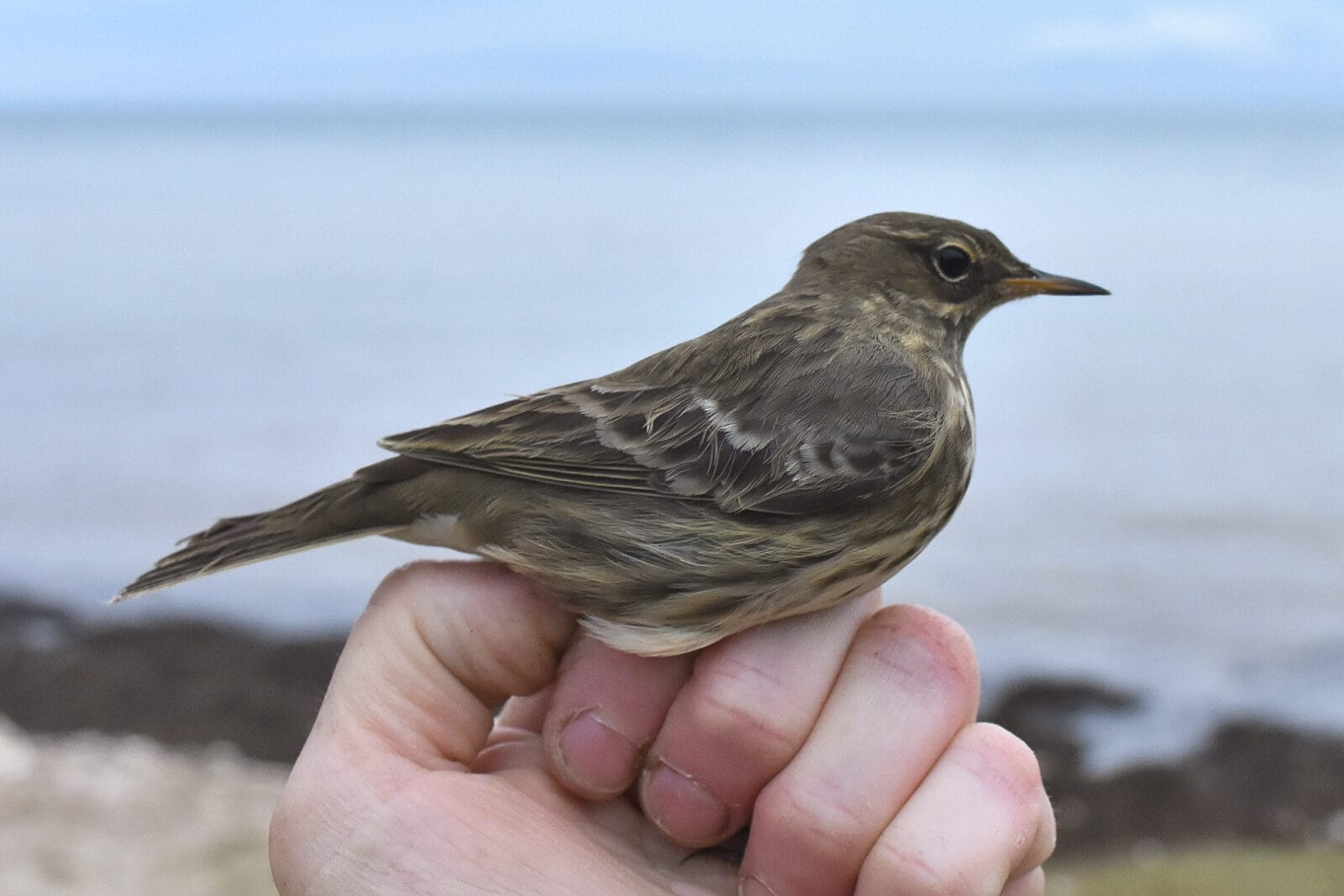
The main event of the day was land-based. Around Flamborough, Chiffchaffs seemed to be almost everywhere with 117 counted at various places, the best count for six years. This fall also included 8 Yellow-browed Warblers, a Grasshopper Warbler, 10 Blackcaps, 5 Lesser Whitethroats and 42 Goldcrests. Immigration of thrushes seems to be gaining momentum with 47 Redwings and Blackbirds being seen in greater numbers. Other passerines of note included the Cetti’s Warbler still present at South Landing, 6 Spotted Flycatchers, 2 Redstarts, 2 Wheatear, single Grey and Yellow Wagtails and a flyover Lapland Bunting at Old Fall. Geese were also moving with 38 Barnacles and 18 Pink-feet over the Outer Head. The colour-ringed Norwegian Rock Pipit present at South Landing last winter has returned.
Bempton and Buckton reflected the day’s theme with 30 Chiffchaffs, 38 Goldcrests, 2 Blackcaps, 2 Lesser Whitethroats, 4 Redwing, a Pied Flycatcher and a Redstart. Pink-feet (75S) and Barnacle Geese (17S) passed over while raptor interest included a Marsh Harrier and 9 Common Buzzards.