The start of this year’s Seawatch Festival inevitably brought a significant improvement in coverage, with an upsurge in interesting records despite the unassuming weather conditions. It was mainly overcast, with sunny skies from late afternoon, a moderate south-westerly wind and high of 19 degrees C.
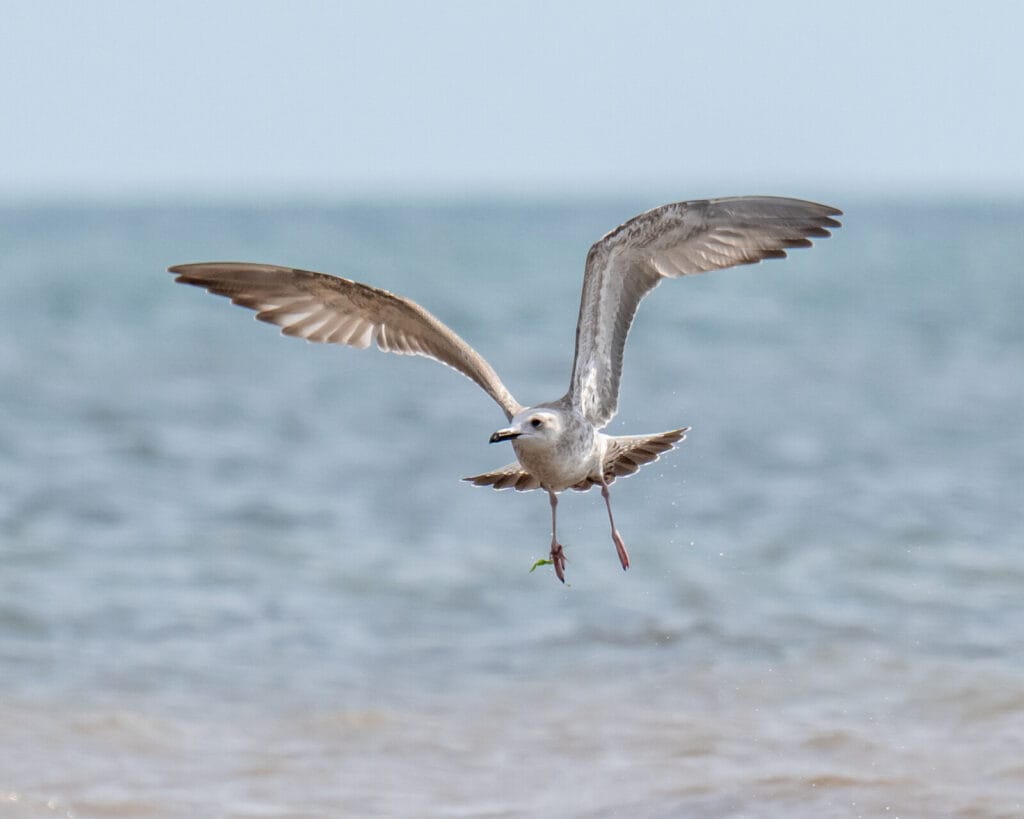
A Balearic Shearwater flew north mid-morning, while two Roseate Terns (adult & juvenile) did the same early afternoon. An increase in Manx Shearwaters was evident, with 291 south in the evening (following 47 north in the morning), while a lone Sooty Shearwater also flew north. A southerly passage of waders included a Little Stint, one Ruff, 52 Whimbrel and 164 Oystercatchers. A Common Sandpiper rested on the rocks below the Seawatch Observatory, while an impressive 62 Ringed Plovers and 16 Dunlin frequented South Landing beach. Five first calendar-year Yellow-legged Gulls flew south, as did 28 Lesser Black-backed Gulls and seven Little Gulls, while four first calendar-year Caspian Gulls remained in residence. A large pre-roost southerly movement of Commic Terns took place between 1900-2000hrs and involved 3300+ birds, the majority being Common.
Away from the sea, single Hobby and Merlin hunted the outer head, while passerine migrants included three Whinchat, a Common Redstart, one Spotted Flycatcher and six Yellow Wagtails.
The Garganey remained at Buckton Ponds. The wader passage was also witnessed at RSPB Bempton Cliffs, where 51 Oystercatchers, 20 Ringed Plover and 15 Turnstone moved south-east. Single Marsh Harrier and Merlin overflew the reserve, where 15 Willow Warblers were fresh arrivals together with four Yellow Wagtails and a Tree Pipit. A flock of 21 Yellow Wagtails were on the edge of Bempton village.