Ringing Report 2019

As from the 1st January 2019 all of the bird ringing operating throughout the historical area east of the Dykes and also at Bempton is carried out by The Flamborough Bird Observatory (FBO) ringing group.  Succeeding the now defunct East Yorkshire Ringing Group.

2019 was another year dominated by westerlies, denying us of even a modest period of easterlies in which to hope for numbers of grounded migrants.  We had some 15 registered ringers and trainees active at various times during the year in addition to a few visiting ringers. In the twelve month period there were 105 different ringing sessions during 82 days of ringing activity at our main headland ringing sites. We also benefited from regular trapping and ringing in Paul and Jenny Butterworth’s  garden and at Andy Hood’s residence, Ocean View, where the two sites amassed over 30% of the total birds ringed.  The importance of South Landing as our prime ringing and demonstration site was again in evidence, accounting for almost 40% of all birds ringed.

Another record breaking year on the Outer Head !   

3348 birds of 65 species which has comfortably passed last year’s record breaking Flamborough year of  2938 birds of 61 species.  We have now logged this as the 6th year in succession to record a year on year increase in ringing totals.  New additions to the species list were; Nuthatch, two birds were caught and ringed in South Dykes in March after taking up residency for several months and Cetti’s Warbler on 22nd April and 27th September.  It will be interesting to see whether Nuthatch establishes itself in the wooded areas and whether further sightings of this species are of ringed birds. 

The top 5 species ringed east of the dykes during 2018 were:   Starling 464, Goldcrest 268, Blackbird 232, Blue Tit 224 and Robin 175.  The ringing of migrant warblers has also continued to see increase.   434 migrant warblers ringed surpassed last year’s highest ever total at Flamborough by a margin of well over 100 birds. Lesser Whitethroat (20), Whitethroat (54) and Willow Warbler (38) maintained their healthy totals of 2018 and the Icterine and Wood Warblers were the first to be ringed since the inception of the Bird Observatory in 2002.  The Blackcap (150) and Chiffchaff (136) totals were both approximately twice their previous highest year totals!

The two most productive months were as usual September and October together accounting for 47% of all new birds ringed, nets being set on 15 days during each month.  The three best days’ ringing totals of 177, 158 and 146 were all achieved during the Ringing and Migration Week (October 12th – 20th) held in conjunction with our friends at Filey Bird Observatory. That week returned 728 birds ringed at Flamborough of 33 species, with birds caught and ringed on all 9 days, a sterling effort from all concerned, despite not having the best of weather.  

Ringing highlights of 2019, apart from the two new species already mentioned above would include Tree Pipit, the Icterine Warbler (the 20th to be ringed at Flamborough and the first since 1997), a Wood Warbler (the 15th for Flamborough and the first this century) and 5 Yellow-browed Warbler (somewhat disappointing after the previous two years).   The number of Goldfinch (112) ringed was again the highest year total since the Observatory was founded, whereas Lesser Redpoll were noticeable by their absence – a meagre 4 individuals caught during the whole of the autumn.   

Bird ringing to the west of the Dykes was carried out at Bempton and Buckton.

2019 marked the first full calendar year of ringing activities at Bempton Cliffs, which included the running of a whoosh net in a Bempton village garden. Between the two sites a combined total of 1490 new birds of 44 species were ringed from 51 ringing sessions during the 12-month period. 

The top five species ringed were Tree Sparrow 519, Starling 100, Goldcrest 72, Wren 65, and Robin 58. A Tree Sparrow nest record scheme project was continued for a third consecutive year where a remarkable 296 nestlings were ringed from nest boxes. Furthermore, 223 full grown birds were also ringed over the course of the year.  Star birds were Pallas’s Warbler,  Siberian, tristis race of Chiffchaff, Barred Warbler and a Yellow-browed Warbler.

In addition to the above mentioned, all ringing efforts for the Flamborough Bird observatory were supported by David Aitken, Phil Bone, Tony Corscadden, Ana Cowie, Jacob Davies, Jo Hood, Imogen Lloyd, Lucas Mander, Julia Wildi, Ian Marshall, Jim Morgan, John McEachen, Steve Westerberg, Tina Wiffen, Elliot Morley, Josh Saunders, Saskia Wischnewski, Sara Miller, Andy Jayes, Harriet Day, Michael Babcock and Will Scott.

At Buckton during 2019 a total of 1102 new birds were ringed by Mark Thomas, Ed Green, Dave Aitken and Richard Hearn. This represents the third highest total in the last 19 years. Highest species totals were Tree sparrow (147), Redwing (142), Yellowhammer (77), Robin (70) and Reed Bunting (67). Good numbers of buntings were attracted to seed and caught in the early part of the winter but following this, spring migration was rather disappointing. The breeding season was good with juvenile Kestrels, Barn Owls, Stock Doves, Swallows and Tree Sparrows all ringed. Autumn migration never really peaked although combined thrush numbers were excellent including three Ring Ouzel. Two Yellow-browed Warblers were caught along with four Siberian Lesser Whitethroats – all confirmed by DNA analysis.

There have been 27 reported movements of birds to or from Flamborough Head during 2019.   The highlights being;  Goldcrest from Flamborough to Norway and from Buckton to The Netherlands and Lesser Whitethroat from Belgium to Flamborough and from Buckton to Belgium.

Flamborough Headland Ringing Totals

SpeciesEast of DykesBemptonBucktonGrand Total
Sparrowhawk3148
Kestrel6814
Water Rail11
Moorhen22
Woodcock112
Herring Gull11
Kittiwake60161
Stock Dove113216
Woodpigeon265132
Collared Dove527
Barn Owl202628
Tawny Owl22
Great Spotted Woodpecker3328
Sand Martin11
Swallow1544463
Tree Pipit112
Meadow Pipit9050140
Rock Pipit1616
Pied Wagtail33
Wren1136433210
Dunnock1555233240
Robin1795670305
Redstart6129
Whinchat22
Stonechat2327
Wheatear33
Ring Ouzel235
Blackbird2466748361
Fieldfare22
Song Thrush511653120
Redwing9249142283
Mistle Thrush11
Cetti’s Warbler22
Grasshopper Warbler11
Sedge Warbler1631029
Reed Warbler91616
Icterine Warbler11
Barred Warbler11
Lesser Whitethroat2071138
Whitethroat544250146
Garden Warbler8311
Blackcap1504540235
Pallas’s Warbler11
Yellow-browed Warbler5128
Wood Warbler11
Chiffchaff1364225203
Willow Warbler40361187
Goldcrest2697136376
Spotted Flycatcher11
Pied Flycatcher2316
Firecrest33
Long-tailed Tit752410109
Coal Tit28129
Blue Tit2302826284
Great Tit12274133
Nuthatch22
Treecreeper102113
Magpie22
Jackdaw44
Rook55
Carrion Crow22
Starling476100576
House Sparrow343266
Tree Sparrow142504147793
Chaffinch46271184
Brambling51511
Greenfinch3334168
Goldfinch1125818188
Linnet1022124147
Lesser Redpoll44
Bullfinch39140
Yellowhammer23777107
Reed Bunting221167100
Corn Bunting44
Total3348144211025892
Species total65444974

Ringing Report 2020

The Flamborough Bird Observatory (FBO) ringing group comprises the historical recording area east of the Dykes on Flamborough Headland together with operations at Bempton, mainly at Bempton Cliffs RSPB Reserve. The purpose of the ringing group is to gather data on wild birds, especially migrants, which are found in the FBO area. The secondary purpose is to assist in the training of people in the techniques of trapping, handling and ringing wild birds.

The ringing programme was severely interrupted by the Covid lock-down, meaning that people were not allowed to travel from their homes to ring birds and as a result there was no ringing on our public headland sites for a period of over 3 months, from march through to July. Fortunately, we have resident ringers Paul & Jenny Butterworth, in the village and Andy Hood out at Ocean View, who kept the totals ticking over throughout the year and this really made the difference with the two sites accounting for 53% of all birds ringed. South Landing (32%) and Thornwick Bay (9%) accounted for the bulk of the remainder. Holmes Gut (3.5%) proved to be more difficult to work because of the presence of highland cattle for much of the year, despite the low total it still remains one of our important ringing sites on the headland. Offsetting that somewhat was the development of a new ringing site in the scrub near the entrance to Thornwick Bay Holiday Village. This site seems to have good potential and it is hoped that we can register this with The British Trust for Ornithology as a CES (constant effort site). The CES scheme is a national standardised ringing programme which helps provide valuable trend information on abundance of adults and juveniles, productivity and also adult survival rates for species of common songbird.

Once more, another record-breaking year on the outer head! 4626 birds of 67 species which has more than comfortably passed last year’s record breaking Flamborough year of 3348 birds of 65 species. We have now logged this as the 7th year in succession to record a year-on-year increase in ringing totals and the third year on the bounce that we have achieved a new Flamborough record. New addition to the species list was a Kingfisher caught at Ocean View in June, the very first to be ringed in the FBO area. Other highlights were a Common Crossbill, caught in July, also at Ocean View, which is the first to be caught since the formation of the bird observatory and also the first Grasshopper Warbler for 10 years.
A breakdown of birds ringed by month is given in the table below:

The Flamborough Bird Observatory (FBO) ringing group comprises the historical recording area east of the Dykes on Flamborough Headland together with operations at Bempton, mainly at Bempton Cliffs RSPB Reserve. The purpose of the ringing group is to gather data on wild birds, especially migrants, which are found in the FBO area. The secondary purpose is to assist in the training of people in the techniques of trapping, handling and ringing wild birds.

The ringing programme was severely interrupted by the Covid lock-down, meaning that people were not allowed to travel from their homes to ring birds and as a result there was no ringing on our public headland sites for a period of over 3 months, from march through to July. Fortunately, we have resident ringers Paul & Jenny Butterworth, in the village and Andy Hood out at Ocean View, who kept the totals ticking over throughout the year and this really made the difference with the two sites accounting for 53% of all birds ringed. South Landing (32%) and Thornwick Bay (9%) accounted for the bulk of the remainder. Holmes Gut (3.5%) proved to be more difficult to work because of the presence of highland cattle for much of the year, despite the low total it still remains one of our important ringing sites on the headland. Offsetting that somewhat was the development of a new ringing site in the scrub near the entrance to Thornwick Bay Holiday Village. This site seems to have good potential and it is hoped that we can register this with The British Trust for Ornithology as a CES (constant effort site). The CES scheme is a national standardised ringing programme which helps provide valuable trend information on abundance of adults and juveniles, productivity and also adult survival rates for species of common songbird.

Once more, another record-breaking year on the outer head! 4626 birds of 67 species which has more than comfortably passed last year’s record breaking Flamborough year of 3348 birds of 65 species. We have now logged this as the 7th year in succession to record a year-on-year increase in ringing totals and the third year on the bounce that we have achieved a new Flamborough record. New addition to the species list was a Kingfisher caught at Ocean View in June, the very first to be ringed in the FBO area. Other highlights were a Common Crossbill, caught in July, also at Ocean View, which is the first to be caught since the formation of the bird observatory and also the first Grasshopper Warbler for 10 years.
A breakdown of birds ringed by month is given in the table below:

The Flamborough Bird Observatory (FBO) ringing group comprises the historical recording area east of the Dykes on Flamborough Headland together with operations at Bempton, mainly at Bempton Cliffs RSPB Reserve. The purpose of the ringing group is to gather data on wild birds, especially migrants, which are found in the FBO area. The secondary purpose is to assist in the training of people in the techniques of trapping, handling and ringing wild birds.

The ringing programme was severely interrupted by the Covid lock-down, meaning that people were not allowed to travel from their homes to ring birds and as a result there was no ringing on our public headland sites for a period of over 3 months, from march through to July. Fortunately, we have resident ringers Paul & Jenny Butterworth, in the village and Andy Hood out at Ocean View, who kept the totals ticking over throughout the year and this really made the difference with the two sites accounting for 53% of all birds ringed. South Landing (32%) and Thornwick Bay (9%) accounted for the bulk of the remainder. Holmes Gut (3.5%) proved to be more difficult to work because of the presence of highland cattle for much of the year, despite the low total it still remains one of our important ringing sites on the headland. Offsetting that somewhat was the development of a new ringing site in the scrub near the entrance to Thornwick Bay Holiday Village. This site seems to have good potential and it is hoped that we can register this with The British Trust for Ornithology as a CES (constant effort site). The CES scheme is a national standardised ringing programme which helps provide valuable trend information on abundance of adults and juveniles, productivity and also adult survival rates for species of common songbird.

Once more, another record-breaking year on the outer head! 4626 birds of 67 species which has more than comfortably passed last year’s record breaking Flamborough year of 3348 birds of 65 species. We have now logged this as the 7th year in succession to record a year-on-year increase in ringing totals and the third year on the bounce that we have achieved a new Flamborough record. New addition to the species list was a Kingfisher caught at Ocean View in June, the very first to be ringed in the FBO area. Other highlights were a Common Crossbill, caught in July, also at Ocean View, which is the first to be caught since the formation of the bird observatory and also the first Grasshopper Warbler for 10 years.
A breakdown of birds ringed by month is given in the table below:

JanFebMarAprMayJunJulAugSepOctNovDec
3635881741143486615427861289422131

As is the norm, the bulk of our totals are achieved throughout the autumn months, with Aug/Sep/Oct comfortably exceeding 50% of all birds caught. Our annual celebration of migration – Migweek – from the 10th to the 18th October was a resounding success, despite the lack of public involvement due to Covid restrictions. Nets were successfully erected on all 9 days, which in itself is unusual with the October weather and an impressive 1200+ birds were ringed by the group, 963 on the outer head and 251 at Bempton Cliffs RSPB. A sterling effort by all involved!
We experienced our best autumn season for catching Meadow Pipits aided by the use of mp3. lures, mainly at South Landing and Ocean View. Virtually all birds ringed were between the 31st. August and 22nd. September when nets were deployed on 16 occasions. The total ringed on the outer head was 220, another highest total since the inception of the bird observatory.
Our Redwing totals (259) again surpassed any previous year. October, as always, was the peak month for this species, returning our best catches on the 13th/14th, when an unprecedented 71 and 51 birds respectively were caught and ringed.

The top 5 species ringed east of the dykes during 2020 were all migrants or partial migrants, namely: Starling (613), Blackbird (577), Goldcrest (278), Redwing (259) and Tree Sparrow (235). Meadow Pipit came a close sixth! As was the case last year, the ringing of migrant warblers has also continued to see increase. 588 migrant warblers ringed surpassed last year’s highest ever total at Flamborough by a margin of almost 150 birds. We achieved the highest totals ever for six species of warbler; Reed Warbler (17), Lesser Whitethroat (27), Whitethroat (67), Blackcap (181), Yellow-browed Warbler (20) and Willow Warbler (123). The Willow Warbler total is particularly gratifying as it is a species that seems to turn up in ever-decreasing numbers – may 2021 continue this upward trend!

We had some 16 registered ringers and trainees active at various times during the year in addition to a few visiting ringers. My thanks to the following for keeping the Observatory ringing group going: Dave Aitken, Paul & Jenny Butterworth, Tony Corscadden, Ana Cowie, Andy Hood, Jo Hood, Andy Jayes, Jamie Johnson, Jarred Johnson, Imogen Lloyd, Lucas Mander, Ian Marshall, Elliot Morley and Josh Saunders. In the twelve-month period, in addition to the garden ringing, we completed 75 different ringing sessions at our main headland ringing sites; South Landing, Holmes Gut, Thornwick Bay and Old Fall, which was a considerable achievement considering the ringing year comprised less than 9 months.

The three best days’ ringing totals on the outer head were 145 (28/9), 166 (13/10) and 216 (14/10), the latter two achieved during the MigWeek (October 10th – 18th).
Ringing highlights of 2020, apart from species already mentioned above would include Wryneck (the 6th one to be ringed on Flamborough Head, but the first one for over 30 years!), Tree Pipit and Wood Warbler (the 16th for Flamborough) for the second year running after a gap of almost 20 years. The aforementioned three species all caught at South Landing. The number of Goldfinch (215) continues its recent increase, again the highest year total since the Observatory was founded, and Lesser Redpoll (118) was another vast improvement on last year and indeed another record-breaking total for the FBO.
Our objective, as always, in 2021 is to maintain our recent year on year increase in number of birds ringed in addition to commencing our CES study at Thornwick Bay.

We are not a fully manned Observatory ringing station, but where possible, visiting licenced ringers can be hosted at our headland ringing sites.

If you would like to experience ringing on the headland then, in the first instance, contact the ringer-in-charge: Jim Morgan jimmygpz@hotmail.com or 07951 075045

Bird ringing to the west of the Dykes was carried out at Bempton and Buckton.
In 2020, ringing activities at Bempton Cliffs were mainly concentrated around the autumn months of August through to early November, with the exception of the Nest Record Scheme monitoring project. Despite missing the entire spring migration period due to the first national lockdown, a record number of birds were captured at this site, surpassing last year’s total. A total of 1132 new birds of 39 species were ringed from 26 ringing sessions, with an additional 303 pulli of 5 species.

The top five full grown species ringed were Tree Sparrow 368, Goldfinch 126, Goldcrest 88, Linnet 74 and Blackbird 59. The fourth year of a Tree Sparrow nest record scheme project was successfully completed which saw 282 nestlings ringed from 40 nest boxes.

There were several large catch days all concentrated in the month of August, with 103 new birds on 7th, 112 on 15th and 102 on 31st August. Several notable highlights occurred during the autumn period; two Whinchat on 20 August were the first to be ringed here, as was a Red-breasted Flycatcher on 17 September. On 10 October, a Blythi type Lesser Whitethroat was caught and later confirmed by DNA analysis as Siberian thanks to the good folk at Aberdeen University, it was then found wintering in a garden in York after being reported in January 2021. A Goldcrest on 14 October sporting a Norwegian was the first foreign control for this site, followed by a control Robin on 16 October which was originally ringed on Shetland two days prior. A tristis type Siberian Chiffchaff was also trapped on 16 October. A total of 8 Yellow-browed Warblers were caught between 17 September and 1 October marking another good autumn for this species on this stretch of the East Coast.

All ringing sessions at Bempton Cliffs were led by David Aitken with support from Will Scott, Poppy Rummery, Harriet Day, Ana Cowie, Geoff Carr, Julia Wildi, Andy Jayes, Imogen Lloyd and Jamie Johnson.
There was no ringing at Buckton until the Covid lockdown was lifted in late summer so no pulli ringing was undertaken. A total of 884 new birds were caught and ringed on 21 days between 13th June – 4th November. The majority of the ringing took place during good migrant arrival periods and accounted for excellent totals of 118 Robin, 113 Redwing, 101 Goldcrest, 7 Yellow-browed Warblers, 2 Dusky Warblers and single Icterine Warbler, Grasshopper Warbler and Black Redstart.

The Dusky Warblers were the standout highlight, being the first ever ringed at Buckton, the first one was only present for a day but the second was present from 15th to 28th October and had increased its weight by 3g when retrapped on the 23rd.

Ringing at Buckton was undertaken by Mark Thomas, Ed Green and Richard Hearn.
Flamborough Bird Observatory would like to thank the landowners on whose property the ringers set their nets; The Yorkshire Wildlife Trust, Bourne Leisure at Thornwick Bay Camp, Flamborough Head Golf Club and The East Riding of Yorkshire Council and the RSPB Bempton Cliffs. We would also like to thank individuals who gave donations during the ringing and migration week, with which we were able to buy some new equipment. At Buckton thanks go to land owners Buckton Hall Farm and Angus Wielkopolski.


Flamborough Headland Ringing Totals for 2020

SpeciesEast of DykesBemptonBucktonGrand Total
Sparrowhawk628
Kestrel1212
Moorhen44
Woodcock22
Herring Gull22
Kittiwake1919
Guillemot11
Stock Dove12214
Woodpigeon13114
Collared Dove55
Barn Owl17320
Tawny Owl22
Kingfisher11
Wryneck11
Great Spotted Woodpecker13114
Sand Martin11
Swallow18523
Tree Pipit11
Meadow Pipit2202445289
Rock Pipit55
Yellow Wagtail11
Grey Wagtail415
Pied Wagtail55
Wren1364033209
Dunnock1514934234
Robin18131118330
Redstart3126
Black Redstart11
Whinchat22
Stonechat325
Wheatear44
Ring Ouzel11
Blackbird5775971707
Fieldfare71311
Song Thrush761026112
Redwing25937113409
Grasshopper Warbler112
Sedge Warbler125118
Reed Warbler174122
Icterine Warbler11
Lesser Whitethroat274637
Whitethroat672812107
Garden Warbler18523
Blackcap1813239252
Yellow-browed Warbler208735
Dusky Warbler22
Wood Warbler11
Chiffchaff1221520157
Willow Warbler123309162
Goldcrest27888102468
Spotted Flycatcher213
Red-breasted Flycatcher11
Pied Flycatcher83213
Long-tailed Tit692493
Coal Tit401243
Blue Tit2392229290
Great Tit1131316142
Treecreeper1616
Magpie66
Jackdaw88
Rook22
Starling6131614
House Sparrow64569
Tree Sparrow23565041926
Chaffinch633215110
Brambling761427
Greenfinch334138
Goldfinch21512615356
Siskin617
Linnet307420124
Common Redpoll22
Lesser Redpoll11844126
Crossbill11
Bullfinch5151
Yellowhammer452956
Reed Bunting2193363
Total462614378916954
Species total67424476

Ringing Report 2021

The Flamborough Bird Observatory (FBO) ringing group comprises the historical recording area east of the Dykes on Flamborough Headland together with operations at Bempton, mainly at Bempton Cliffs RSPB Reserve.  Totals of ringed birds are also given for Buckton, however all ringing at that site is independent of the FBO ringing group.

The purpose of the ringing group will be to gather data on wild birds, especially migrants, which are found in the FBO area.  The secondary purpose will be to assist in the training of people in the techniques of trapping, handling and ringing wild birds. In 2021 we trialled a constant effort site (CES) in the scrub at the Thornwick Bay Holiday Camp.  The CES scheme is a national standardised ringing programme started in 1983 and now including c.150 different locations throughout Britain and Ireland.  The scheme provides valuable trend information on abundance of adults and juveniles, productivity and also adult survival rates for 24 species of common songbird.

Totals of new birds caught on the outer head were 3518 individuals of 57 species which is the second highest ever for the bird observatory, although one must take into account the unprecedented number of Starling which were ringed in a Flamborough garden. Indeed the two Flamborough gardens in the village and at Ocean View accounted for 72% of all birds ringed, leaving short of a thousand birds ringed ‘in the field’.  In fairness we experienced a year of low numbers in evidence for much of the season, with daily catches often below 20 new birds. The ‘waves’ of autumn migrants failed to materialise, which was no better illustrated than by the paltry total of Goldcrest caught, 17, as compared to our average of 300+ over the previous 5 years.

The top 5 species ringed east of the dykes during 2021 were:   Starling 1577, Redwing 227, Blackbird 230, Tree Sparrow 178 and Goldfinch 122.  Migrant warbler numbers were a somewhat disappointing total of 283 after a recent sequence of good years. Despite this Reed Warbler at 20 birds returned its best total in the history of the Bird Observatory and 27 Lesser Whitethroat equalled last year’s record-breaking total. The Blackcap (65) and Chiffchaff (38) totals were both extremely disappointing after their recent highest ever year totals!

Our now annual targeting of Meadow Pipit passage during September turned out to be a non-event with a paltry 33 birds eventually captured and 20 of these were on a single day, the 12th Sept. The use of mp3. bird lures is essential in order to catch this species in any meaningful numbers, as also seems to be the case for Redwing. The total for Redwing of 220 birds was the second-best annual total for the Observatory, added to which a Belgian-ringed bird of this species was captured in October.

A breakdown of birds ringed by month is given in the table below:

JanFebMarAprMayJunJulAugSepOctNovDec
733526139155818661424445455182104

The high totals for June, July and August were, in the main, the result of ‘whoosh-netting’ Starlings. 80% of all new birds caught in these months were of that species.

Aside from that, the two most productive months were as usual September and October, traditionally the months when the headland experiences its highest numbers of migrant birds. The Ringing and Migration Week (October 9th – 16th) held in conjunction with our friends at Filey Bird Observatory returned a disappointing 308 new birds of 29 species ringed on the outer head. 16 sessions at 4 sites over the 8 consecutive days, averaged less than 20 new birds each session.  The effort was there, but the birds weren’t! 

The bird of the year must surely be the Red-breasted Flycatcher caught at South Landing during Ringing and Migration Week.  The number of Goldfinch (122) ringed was again the highest year total since the Observatory was founded, whereas Lesser Redpoll and Yellow-browed Warbler were noticeable by their absence – a meagre 8 and 1 individual, respectively, caught during the whole of the autumn.  

 Flamborough Bird Observatory would like to thank the landowners on whose property the ringers set their nets;  The Yorkshire Wildlife Trust, Flamborough Head Golf Club and The East Riding of Yorkshire Council and the RSPB Bempton Cliffs.  We would also like to thank individuals who gave donations during the ringing and migration week, with which we were able to buy some new equipment.  

All ringing efforts of the Flamborough Bird Observatory group, East of the Dykes and at Bempton were supported by David Aitken, Sophie Bennett, Phil Bone, Jenny Butterworth, Paul Butterworth, Richard Cope, Tony Corscadden, Ana Cowie, Nathaniel Dargue, Harriet Day, Andy Hood, Jo Hood, Tony Hood, Andy Jayes, Jarrod Johnson, John McEachen, Jim Morgan, Elliot Morley, Poppy Rummery, Saskia Wischnewski, Graham Scott, Will Scott and our friends from the Stanford Ringing Group who stayed a week with us in September;  Stuart Heath, David Neal, Peter Norrie

Bird ringing to the west of the Dykes was carried out at Bempton and Buckton.

Bempton Cliffs RSPB 

Ringing totals were markedly lower at Bempton RSPB in 2021 when compared to the previous year.

The Tree Sparrow nest record scheme project continued into a fourth, successful consecutive year with 272 nestlings  ringed from the nest boxes. 

In addition 10 general netting sessions were carried out between May and October, averaging 34 new birds per visit.  This site has the potential to do so much better if we could increase the manpower.  The year’s highlight was the two Yellow-browed Warbler ringed in October. 

Buckton

Ringing undertaken by Mark Thomas and Ed Green took place at Buckton in 2021 with a total of 260 new birds of 36 species caught and ringed in the 12-month period. 

The figures for the year were well below the Buckton twenty-year average, due largely to unconducive autumn weather conditions with no falls of migrants of any significance except for a short spell in mid-August that produced a few days with good numbers of Willow Warblers.

The combined top five birds ringed for the year were: Willow Warbler 23, Wren 22, Tree Sparrow 20, Blackbird 18, Dunnock 17 and Meadow Pipit 17.

Two broods of both Barn Owl (5) and Kestrel (8) were ringed. 

Only one rare/scarce bird was ringed during the year, a Green Warbler on 9th September, a new species for Yorkshire.

Thanks are extended to landowners Angus Wielkopolski and the Makin family

Flamborough Headland Ringing Totals

SpeciesEast of DykesBemptonBucktonGrand Total
Storm Petrel11
Sparrowhawk22
Kestrel9817
Turnstone33
Kittiwake11
Woodpigeon516
Collared Dove11
Barn Owl16613
Long-eared Owl11
Great Spotted Woodpecker66
Swallow8311
House Martin11
Meadow Pipit3411752
Rock Pipit11
Grey Wagtail33
Pied Wagtail11
Wren814022143
Dunnock1102517152
Robin861412112
Redstart22
Whinchat11
Stonechat213
Wheatear11
Ring Ouzel22
Blackbird2311018259
Fieldfare1010
Song Thrush275335
Redwing2271410251
Sedge Warbler175830
Reed Warbler202527
Lesser Whitethroat27330
Whitethroat65181396
Garden Warbler516
Blackcap657880
Yellow-browed Warbler123
Chiffchaff3811958
Green Warbler11
Willow Warbler4462373
Goldcrest196227
Red-breasted Flycatcher11
Pied Flycatcher415
Long-tailed Tit392463
Coal Tit1818
Blue Tit11487129
Great Tit715985
Treecreeper44
Magpie33
Jackdaw11
Rook11
Carrion Crow11
Starling15771577
House Sparrow42143
Tree Sparrow17834420542
Chaffinch494457
Brambling516
Greenfinch361239
Goldfinch12242128
Siskin44
Linnet1641663
Lesser Redpoll88
Bullfinch36339
Yellowhammer252633
Reed Bunting1021022
Total35186162604394
Species total573234

Recoveries

During 2021 for all movements in excess of 5km, there were 21 reports of Flamborough and Bempton ringed birds moving to other localities together with 13 findings of birds which had been ringed previously elsewhere. There were four international exchanges involving, Cormorant, Blackbird, Redwing and Lesser Redpoll. 

Selected 2021 ringing recoveries involving the Flamborough Headland

Cormorant

291490               1       03/06/2021     Wasservogelreservat, Wallnau Germany    54046’N 11003’E        

                          VV    23/10/2021      Flamborough Head  540 7’N, 00 6’W     721 km W    163 days          

Barn Owl

GC97259           1        27/06/2019     Bempton Cliffs RSPB 

                          Inj      05/02/2021     Carnaby, Bridlington   10 km SW  589 days

Barn Owl are an often reported bird when ringed, however movements reflect their sedentary nature. The longest distance for a Flamborough ringed bird to figure in these reports is 25km.

Blackbird

LN15270          3F      28/11/2020    Flamborough Head    

                         Xf      24/02/2021    Hagg Wood, Kirkbymoorside, North Yorks   58km WNW    88days

LH06373          3F      09/11/2017    Flamborough Head  540 7’N, 00 6’W     

                         Xf      29/03/2021    Habet, Sandnes, Rogaland, Norway  58049’N 5043’E  633 km NE 1236 days

Redwing

10X22814         3       13/10/2020    Nijlen, Antwerpen,  Belgium  51008’N 4040’E 

                          R      12/10/2021    Flamborough Head  540 7’N, 00 6’W     461 km NW    364 days  

Lesser Whitethroat

AVN4543         3        10/10/2020    Bempton Cliffs RSPB

                        VV      18/01/2021    Elvington, York    57 km WSW   100 days

Re-sighted in a York garden in December, is the Lesser Whitethroat developing a habit of wintering in Britain?

Chiffchaff

KAN057          5        26/04/2020     Flamborough Head

                         R       01/05/2021     North Ronaldsay Bird Obs.  Orkney   601 km NNW   370 days         

NBL722           3J      24/08/2021     Flamborough Head

                          R      08/10/2021     Filey Brigg Country Park, Filey, N.Yorks    17 km NW    45 days

Great Tit

AFR2756        3J      05/08/2021    Marton, Sinnington, North Yorks

                         R      08/11/2021    Flamborough Head    53 km ESE    95 days

AVN5103       3M    17/09/2021    Bempton Cliffs RSPB 

                         R      09/102021    Filey Brigg Country park, North Yorks    10 km NW    22 days

ACN7259        3J     19/07/2020    Spennithorne, North Yorks

                          R     06/06/2021    Flamborough Head    112 km ESE    322 days.

Two exceptional movements for birds of this species.

Starling

LN16380         3J      13/06/2021     Flamborough Head

                        Xf      25/06/2021     Fourstones, Hexham, Newcastle     167 km NW    12 days

LN69646         3J       09/06/2020     York   

                         R        22/06/2021     Flamborough Head   70 km ENE   378 days

LL69564         3F      13/09/2019     Flamborough Head

                         R      02/06/2021     Osgodby, North Yorks    24 km NW   628 days 

LN08559         3J       13/06/2021    Osgodby, North Yorks

                         R       24/06/2021     Flamborough Head   24 km SE  11 days

In addition to these 2 latter records, there were 10 more individuals that moved between Flamborough Head and Osgodby or vice versa.

Tree Sparrow

TW84136            1        24/06/2021     Bempton Cliffs RSPB

                            R       11/11/2021     Kilnsea Clays, Spurn B.O.      65km SSE    140 days

AVN4884            2       12/10/2020     Flamborough Head

                            Xf      23/11/2021    Dunnington Common, York    60km WSW   407 days

Goldfinch

AKH9385         6M       15/04/2020    Flamborough Head

                           R         03/03/2021   Little Barningham, nr. Aylsham, Norfolk      164km SSE   322 days

Greenfinch

VZ05050           3M     05/10/2020    Filey Brigg Country Park

                          5M     01/02/2021    Flamborough Head  17 km SE    119 days

                            R      06/06/2021    Flamborough Head  17 km SE    244 days

Lesser Redpoll

APB9389          3M      14/11/2018     Flamborough Head

                            R       07/11/2020     nr. Hollesley Heath, Suffolk     252 km SSE   724 days

APB9422             3        30/09/2018      Flamborough Head 

                            R        07/03/2021     Beechamwell, Swaffam, Norfolk    173 km SSE    889 days 

AVN5336            3        28/09/2020     Flamborough Head

                             R       16/10/2020     Bambois, Namur, Belgium  50022’N 4042’E    528 km SE  18 days

AVN4855            3        10/102020      Flamborough Head

                             R        2204/2021     Brandon, Norfolk     192 km SSE   194 days

A pretty impressive set of re-captures involving a species for which in most years very few are caught at Flamborough.

Reed Bunting  

AED1942          3M      29/09/2020      Filey Brigg Country Park, North Yorks

                             R      09/01/2021      Flamborough Head     17 km SE   102 days

Key to symbols and terms used:

Age/Sex:Manner of recovery:
1   nestlingR   caught and released by a ringer
2   fully grown, year of hatching quite unknownVV  sight record
3   definitely hatched during current calendar yearXf   found freshly dead or dying
3J  still in partial juvenile plumageInj  found injured, later released
4   hatched before current calendar year, exact year unknown
5   hatched in the previous calendar year
6   hatched at least before last calendar years, exact year unknown
M   male
F   female
Age/Sex:Manner of recovery:
1   nestlingR   caught and released by a ringer
2   fully grown, year of hatching quite unknownVV  sight record
3   definitely hatched during current calendar yearXf   found freshly dead or dying
3J  still in partial juvenile plumageInj  found injured, later released
4   hatched before current calendar year, exact year unknown
5   hatched in the previous calendar year
6   hatched at least before last calendar years, exact year unknown
M   male
F   female

Ringing Report 2022

The Flamborough Bird Observatory (FBO) ringing group comprises the historical recording area east of the Dykes on Flamborough Headland together with operations at Bempton, mainly at Bempton Cliffs RSPB Reserve.   The purpose of the ringing group is to gather data on wild birds, especially migrants, which are found in the FBO area. The secondary purpose is to assist in the training of people in the techniques of trapping, handling and ringing wild birds. 

FBO also run a Constant Effort Site (CES) at Thornwick Bay between the months of May and August.  The CES scheme, administered by the British Trust for Ornithology, uses catches from standardised mist-netting to monitor key aspects of the demography of 24 common breeding songbirds.  Using 12 standard visits at 10 day intervals throughout the breeding season, targeting the capture and re-capture of individual birds over successive breeding seasons. There are 100-150 such CES sites operative in the U.K., which essentially help to monitor bird populations through time, in order to aid effective conservation.


We completed 10 out of the 12 sessions, and a total of 408 birds were caught with 221 of these newly ringed and 187 re-traps (which provide valuable information on the longevity and site fidelity of adult birds).
267 adult birds were caught alongside 141 juveniles, comprising 22 species
For comparison in 2021 we completed 9 sessions and caught 352 birds of 27 species of which 169 were new and 183 re-traps. (240 adults/112 juveniles)

Additional bird ringing to the east of the dykes was carried out at South Landing, Thornwick Bay, Ocean View Farm and in two Flamborough village gardens.

A more modest total of new birds ringed when compared to the last two years – 3084 birds of 58 species. No new additions to the species list were made in 2022.  Highlights were Cetti’s Warbler, caught in October at Thornwick Bay and South Landing, the third and fourth ringed for the observatory after a brace in 2019.  Also of note was a Pallas’s Warbler caught at South Landing (our first for 6 years) and 342 Redwing that easily surpassed our previous best total for this species and more surprisingly exceeded our Blackbird total for this year.

A breakdown of birds ringed by month is given in the table below:

JanFebMarAprMayJunJulAugSepOctNovDec
440125169207313190256250907436187

As can be seen from the above table, October was the dominant month accounting for 30% of all birds ringed, which is enhanced by the concentrated effort during Migration Week which sees intense activity with more ringers present on the headland.  Migweek – from the 8th to the 16th October was again a success, nets were successfully erected on all 9 days, garnering a total of 550 new birds ringed. It yet again proved to be a great interface with the public, particularly the youngsters, many of whom enjoyed such close experience with migrant species in the hand.

Bird ringing to the west of the Dykes was carried out at Bempton and Buckton.

Buckton 

A total of 728 new birds were caught and ringed on 33 days between 18 April – 14th November. The majority of the ringing took place during good UK passage of juvenile birds in late August and on just a few days that were suitable for migrant arrivals in September and October. Totals included 94 Redwing, 92 Goldcrest, 54 Robin, 24 Sedge Warbler, 7 Garden Warbler, 4 Yellow-browed Warbler, 2 Grasshopper Warbler, and single Ring Ouzel, Icterine, Pallas’s and Radde’s Warblers. The Radde’s Warbler being found in a net with a Yellow-browed Warbler! 

Pullus ringed included two brood of Kestrel and one brood of Barn Owls. 

Ringing was undertaken by Mark Thomas, Ed Green and Ian Marshall. Thanks again to Buckton Hall Farm and Angus Wielkopolski for site access. 

Flamborough Bird Observatory would like to thank the landowners on whose property the ringers set their nets;  The Yorkshire Wildlife Trust, Bourne Leisure at Thornwick Bay Camp, Flamborough Head Golf Club and The East Riding of Yorkshire Council and the RSPB Bempton Cliffs.  We would also like to thank individuals who gave donations during the ringing and migration week and at other times during the year. This is much appreciated and helps especially in replacing nets damaged by deer.  

Flamborough Headland Ringing Totals for 2022

SpeciesEast of DykesBemptonBucktonGrand Total
Storm Petrel11
Sparrowhawk66
Kestrel7613
Turnstone11
Black-headed Gull22
Great Black-backed Gull11
Kittiwake
Stock Dove44
Woodpigeon516
Collared Dove33
Barn Owl123116
Great Spotted Woodpecker112
Swallow12324
Meadow Pipit1086114
Rock Pipit1010
Yellow Wagtail11
Grey Wagtail415
Pied Wagtail11
Wren105322130
Dunnock131219152
Robin98854160
Redstart11
Stonechat11
Ring Ouzel11
Blackbird337258397
Fieldfare213
Song Thrush242448
Redwing34294436
Cetti’s Warbler22
Grasshopper Warbler22
Sedge Warbler42428
Reed Warbler15722
Icterine Warbler11
Lesser Whitethroat191727
Whitethroat2755587
Garden Warbler77
Blackcap8511197
Pallas’s Warbler112
Yellow-browed Warbler448
Radde’s Warbler11
Chiffchaff762886
Willow Warbler5222983
Goldcrest21792307
Firecrest22
Spotted Flycatcher22
Pied Flycatcher55
Long-tailed Tit6565
Coal Tit88
Blue Tit1445149
Great Tit649376
Treecreeper1212
Magpie33
Jackdaw33
Rook33
Starling5114515
House Sparrow109109
Tree Sparrow15022371444
Chaffinch371644
Brambling279
Greenfinch2727
Goldfinch137210149
Siskin1212
Linnet92213
Common Redpoll33
Lesser Redpoll8412
Bullfinch40242
Yellowhammer241126
Reed Bunting54045
Total30842677284079
Species total58164666

Recoveries

All movements in excess of 10km are shown below. In addition there were several local movements of birds between Flamborough, Bempton and Buckton. there were 19 reports of Flamborough and Bempton ringed birds moving to other localities together with 8 findings of birds which had been ringed previously elsewhere.  3 foreign reports of Buckton-ringed birds were also notable.

Selected 2022 ringing recoveries involving the Flamborough Headland

Dunnock

TW83820       3       12/10/2020     Flamborough Head

                       Xf     27/03/2022     Asbach, Neuwied, Koblenz, Germany  50040’N 7025’E    639 km SE 531 days

The majority of British born Dunnock will move less than a kilometre from their birth place. However, birds from northern and western Europe can migrate, sometimes substantial distances. This constitutes only the second foreign interchange since the formation of the Bird Observatory, since a Swedish ringed Dunnock was trapped at Flamborough in October 2010.

Blackbird

LN16155     3F      22/11/2020     Flamborough Head

                    Xf      09/02/2022     Bielside, West Barns, East Lothian  261 km NW    444 days

LN16342      3F      29/11/2020    Flamborough Head

                      R       16/05/2021    Lemland, Ahvenanmaa, Finland  59049’N 19055’E    1366km ENE  168days

A typical autumn ringed continental Blackbird, back to its southern Finland breeding grounds in May

LL66842       4M     30/12/2020    Harrington Airfield, Northamptonshire

                       R    25/06/2022      Flamborough Head   198 km NNE    542 days

Sedge Warbler

S702913      3J    06/07/2018     Flamborough Head

                     R    08/05/2022     Flamborough Head     1402 days

No movement involved here, but this bird has returned for its 4th breeding season since being first ringed as a juvenile bird.

Chiffchaff

NBL739      3       12/09/2021    Flamborough Head

                     R     16/07/2022   Woolston Eyes Sewage works, Warrington   180km WSW  307 days      

R330102      4      19/04/2021    Lagskar Bird Observatory, Lemland, Ahvenanmaa, Finland  59049’N 19055’E

                     R     16/04/2022    Flamborough Head    1367 km WSW   362 days   

NBL289       3      14/09/2021   Flamborough Head 

                     Xf    04/10/2022   Mouguerre,  Pyrenees-Atlantiques, France  43027’N 1025’W   1189 km 385days

R330102  came from the same place in Finland as the Blackbird above!  The two captures of this bird in April of successive years make it difficult to predict where this bird will end up breeding. 

Starling

LN16968          3J      12/06/2021     Flamborough Head

                          R      13/01/2022     Morecambe, Lancashire  182 km W     215 days

LN16081          3F     15/06/2021     Flamborough Head

                          R      01/05/2022     Strensall, York   62 km W  320 days                         

LR43367          3F      12/07/2021    Flamborough Head

                           R      07/05/2022    Strensall, York   62 km W  299 days                         

                           R      10/05/2022    Strensall, York   62 km W  302 days       

LR44121          3J       31/05/2022    Flamborough Head

                         Xf      24/06/2022    Hilderthorpe, Bridlington  10 km SW   24 days

LN08670          3J       20/06/2021   Osgodby, North Yorks

                           R       30/04/2022    Flamborough Head   24 km SE,  314 days

LR16098           3J       07/06/2021   Leeds, West Yorks

                           R       07/01/2022   Flamborough Head  98 km ENE  214 days  

LN69663           3J       11/06/2020   Beckfield Lane, York

                           R        01/06/2022  Flamborough Head  70 km ENE    720 days   

LL44955            3J       02/08/2019   Cromdale, Highland

                           R        01/06/2022   Flamborough Head    418 km SSE   1034 days

LR44132           3J       31/05/2022    Flamborough Head

                          Xf      07/09/2022    Terrington St. Clement, King’s Lynn, Norfolk  154 km S   99 days

71043743            1       16/05/2022    Halloh, Itzehoe, Schleswig-Holstein, Germany  53058’N 9030’E

                            R      22/12/2022    Flamborough Head    627 km W  220 days

The last recovery shows a young bird dispersing from the continent for its first winter in the U.K.

Tree Sparrow

ACP3893        2       11/11/2021   Spurn B. O., Kilnsea   

                        R      21/03/2022   Flamborough Head  60km NNW   130 days 

ACP2236         3J     12/09/2021   Spurn B. O. Kilnsea.

                         R      25/04/2022   Flamborough Head  58 km NNW   225 days

TW84411        1      19/05/2022   Bempton Cliffs RSPB

                        R     02/10/2022    Spurn B.O.  Kilnsea    63 km SSE    136 days

TW84404        1      19/05/2022  Bempton Cliffs RSPB

                        R     03/10/2022    Spurn B.O.  Kilnsea    63 km SSE    137 days

TW84309        1      19/05/2022  Bempton Cliffs RSPB

                        R     03/10/2022    Spurn B.O.  Kilnsea    63 km SSE    145 days

Five interchanges between Spurn and Flamborough Bird Observatories, emphasising the southerly autumnal movements of East Yorkshire Tree Sparrow.

Chaffinch   

D803150        3F      20/09/2015  Flamborough Head

                        R      01/05/2022  Bempton Cliffs RSPB  7km NW   2415 days

A good age for a Chaffinch, although they can achieve double figures.

Key to symbols and terms used

Age/Sex:Manner of recovery:
1   nestlingR   caught and released by a ringer
2   fully grown, year of hatching quite unknownXf   found freshly dead or dying
3   definitely hatched during current calendar year
3J  still in partial juvenile plumage
4   hatched before current calendar year, exact year unknown
M   male
F   female

Ringing Report 2023

The Flamborough Bird Observatory (FBO) ringing group comprises the historical recording area east of the Dykes on Flamborough Headland together with operations at Bempton, mainly at Bempton Cliffs RSPB Reserve.

The purpose of the ringing group will be to gather data on wild birds, especially migrants, which are found in the FBO area. The secondary purpose will be to assist in the training of people in the techniques of trapping, handling and ringing wild birds. In 2023 we completed the third consecutive year for our constant effort site (CES) in the scrub at the Thornwick Bay Holiday Camp. The CES scheme is a national standardised ringing programme started in 1983 and now including c.150 different locations throughout Britain and Ireland. The scheme provides valuable trend information on abundance of adults and juveniles, productivity and also adult survival rates for 24 species of common songbird.

Totals of new birds caught and ringed on the outer head were 3593 individuals of 56 species which is the third highest ever for the bird observatory, and was achieved despite a paucity of ringers at certain periods of time.

A breakdown of birds ringed by month is given in the table below:

JanFebMarAprMayJunJulAugSepOctNovDec
103256519932133833549827512661610

October is by far our busiest month, not least because of the Ringing and Migration Week, when we are active every day with an enhanced team of ringers.

Ringing at Bempton Cliffs RSPB is also carried out on behalf of the Flamborough Bird Observatory, and saw 969 birds of 30 species, augmenting the totals on the outer head.

As usual it was a year of mixed fortunes, the number of acrocephalus warblers was down, mainly a result of the ‘Roost’ not being worked during the year. Blackcap and Chiffchaff numbers were well up on the previous two years, whilst Willow warbler was the second best total this century. The main highlight, however was the highest ever observatory total for Whitethroat and also the continued rise in of the number of Redwing caught and ringed. For the third year in succession we have ringed more Redwing than Blackbird. Redwing also achieved the most spectacular of the ringing recoveries (see below).

For the Constant Effort Site (CES) we completed 9 out of the 12 sessions, and a total of 264 birds were caught with 172 of these newly ringed and 92 re-traps (which provide valuable information on the longevity and site fidelity of adult birds). The percentage of re-traps was significantly down on the previous two years.
For comparison in 2021/2022 we completed 9/10 sessions and caught 352/408 birds of which 169/221 were new and 183/187 re-traps.

Flamborough Bird Observatory would like to thank the landowners on whose property the ringers set their nets; The Yorkshire Wildlife Trust, Flamborough Head Golf Club and The East Riding of Yorkshire Council and the RSPB Bempton Cliffs. We would also like to thank individuals who gave donations during the ringing and migration week, with which we were able to buy some new equipment.

We are not a fully manned Observatory ringing station, but where possible, visiting licensed ringers can be hosted at one of our headland ringing sites. If you would like to experience ringing on the headland then, in the first instance, contact the ringer-in-charge: ringing@flamboroughbirdobs.org.uk

Flamborough Headland Ringing Totals

SpeciesFlamboroughBemptonGrand Total
Sparrowhawk628
Kestrel14
14
Woodcock1
1
Kittiwake19
19
Black-headed Gull1
1
Stock Dove3
3
Woodpigeon314
Collared Dove
11
Barn Owl6410
Great Spotted Woodpecker2
2
Swallow21416
Meadow Pipit32
32
Grey Wagtail4
4
Pied Wagtail6
6
Wren8938127
Dunnock11820138
Robin15329182
Red-flanked Bluetail1
1
Redstart213
Blackbird278105383
Fieldfare12214
Song Thrush572986
Redwing37247419
Cetti’s Warbler1
1
Sedge Warbler4
4
Reed Warbler8
8
Lesser Whitethroat31233
Whitethroat69271
Garden Warbler2
2
Blackcap12917146
Yellow-browed Warbler2
2
Chiffchaff1249133
Willow Warbler10911120
Goldcrest27652328
Pied Flycatcher1
1
Long-tailed Tit38442
Coal Tit14
14
Blue Tit26213275
Great Tit8318101
Treecreeper12
12
Magpie3
3
Jackdaw1
1
Carrion Crow2
2
Starling49465559
House Sparrow51
51
Tree Sparrow158425583
Chaffinch64569
Brambling12214
Greenfinch125
125
Goldfinch19337230
Siskin1
1
Linnet8816
Common Redpoll1
1
Lesser Redpoll50
50
Bullfinch49150
Yellowhammer34
34
Reed Bunting156
Total35939694562
Species total563057

Selected 2023 ringing recoveries

During 2023 for all movements in excess of 5km, there were 14 reports of Flamborough and Bempton ringed birds moving to other localities together with 12 findings of birds which had been ringed previously elsewhere. An excellent year involving eight international exchanges from six countries; Finland, Norway, Denmark, Germany, France and Spain.

Barn Owl

GY25235113/07/2023Bempton Cliffs RSPB

Xf21/08/2023Kirkburn, Driffield,
28 km WSW, 39 days

Barn Owl are an often reported bird when ringed, however movements reflect their sedentary nature. The previous longest distance for a Flamborough ringed bird to figure in these reports is 25km.

Sparrowhawk

DA421613M23/10/2022Bempton Cliffs RSPB

Xf23/02/2023Hedon, Hull
44km SSW, 123 days

Blackbird

LH063364M18/10/2017Flamborough Head

VV05/01/2023Strensall, York, North Yorks
62km W, 1905days
LL443925F11/02/2019Holland, North Ronaldsay, Orkney

R01/06/2022Flamborough Head
600 km SSE 1206 days

Redwing

AL03427410/10/2022Flamborough Head 54° 7’N, 0° 6’W

Xf15/01/2023 Bullas, Murcia, Spain 38°01’N 1°40’W
1791km S 97 days

By far our best recovery of the year. There have only been a handful of Redwing recovered this far south in Spain, and indeed the BTO ringing scheme has yet to record a movement of Redwing to North Africa.

Lesser Whitethroat

Z795880406/05/2019Buckton, East Riding of Yorks

R06/05/2023Flamborough Head
7 km SE, 1461 days

Ringed as an adult, this bird is presumably a local breeder, returning from Africa for its 5th season.

Whitethroat

AVR73413J01/08/2023Flamborough Head

Xf03/09/2023Peacehaven, East Sussex
369 km S, 33 days

Migrating south for the winter, on the south coast of the UK by the first week in September.

Blackcap

ET561843M13/10/2023Sore Merkeskog, Utsira, Rogaland, Norway 59°17’N 4°52’E

R27/10/2023Flamborough Head 54°7’N, 0°6’W
651 km SSW, 14 days

Goldcrest

U261383F23/09/2023Kabeltromlekrattet, Skagen, Nordjyllands Amt, Denmark 57°43’N 10°37’E

R19/10/2023Bempton Cliffs RSPB
781 km WSW, 26 days

Long-tailed Tit

LAB168209/10/2023Filey Brigg Country Park

R14/10/2023Flamborough Head,
16 km SE, 5 days

Blue Tit

Z794925305/12/2017Bempton Cliffs RSPB

Xf14/12/2023Bempton Cliffs RSPB
2200 days

Local recoveries of two individuals both living into their sixth year.

Starling

LL889403J19/06/2023Flamborough Head

Xf31/08/2023Werrington, Peterborough
167 km S, 73 days

The German bird was ringed as a nestling. Its very possible that it spent its first winter in the UK.

Chaffinch

D8036633M10/10/2016Flamborough Head

R02/04/2023Flamborough Head
2365 days

This individual is still going strong into its seventh year.

Greenfinch

VZ654663M30/11/2022Spurn Bird Observatory, Kilnsea

R05/05/2023Flamborough Head
58 km NNW, 156 days

Goldfinch

AVR69363J27/08/2023Flamborough Head

R12/10/2023Kilnsea Clays, Spurn Bird Observatory
60 km SSE, 46 days

Two individuals ringed in exactly the same location in northern France.

Siskin

AVR60155M21/03/2022Flamborough Head

R02/03/2023Llanfyllin, Powys
257 km SW, 346 days

We have caught very few Siskin over the years, it was exciting to get a distance recovery.

Lesser Redpoll

BLC0140309/10/2023Loch of Leys, near Banchory, Aberdeenshire

R11/11/2023Flamborough Head
361 km SSE, 33 days

Key to symbols and terms used:

Age/Sex:Manner of recovery:
1nestlingRcaught and released by a ringer
2fully grown, year of hatching quite unknownXffound freshly dead or dying
3definitely hatched during current calendar year

3Jstill in partial juvenile plumage

Mmale

Ffemale

Ringing Report 2024

The purpose of the ringing group will be to gather data on wild birds, especially migrants, which are found in the FBO area. The secondary purpose will be to assist in the training of people in the techniques of trapping, handling and ringing wild birds. In 2021 we trialled a constant effort site (CES) in the scrub at the Thornwick Bay Holiday Camp and this has continued to be operated in each subsequent year. The CES scheme is a national standardised ringing programme started in 1983 and now including c.150 different locations throughout Britain and Ireland. The scheme provides valuable trend information on abundance of adults and juveniles, productivity and also adult survival rates for 24 species of common songbird.

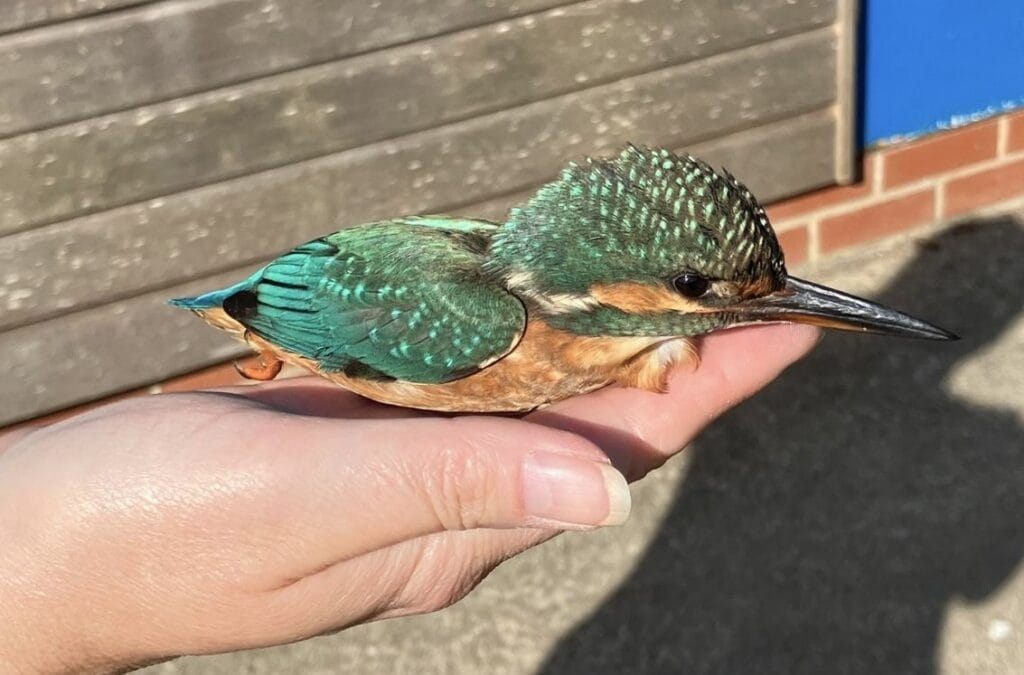
Kingfisher, South Landing, by Jo Hood

Totals of new birds caught during 2024 by the ringing group on Flamborough Headland were 4252 individuals of 60 species which is a respectable total considering that we are a relatively small team.

Disappointing to note that there was no new species to be ringed on the headland during 2024.

The Kingfisher at South Landing was the 2nd record after one at Oceanview in 2020 and the Cetti’s Warbler ringed at Thornwick was the 6th record of a series begun in 2019, highlighting the continual expansion of this species’ range.

However, the two birds of the year must surely be the Radde’s Warbler caught at South Landing, the 7th for the observatory and the first since 2004; followed by the Great Grey Shrike, also at South Landing, being the 5th for the observatory and only the second this century.

Radde’s Warbler, South Landing, by John McLoughlin
Great Grey Shrike, South Landing, by Andy Hood

The number of Goldfinch (204) was again (following 2023) the highest year total since the Observatory was founded.

The top 5 species ringed by the Flamborough Bird Observatory Ringing Group during 2024 were: Redwing 615, Starling 546, Tree Sparrow 401, Blackbird 313 and Goldfinch 204. The same five as last year but in a slightly different order. Who would have thought that Redwing could become our number one bird as up to 2018 the grand total ever caught was less than 600! Migrant warbler numbers were a decent upturn compared to last year’s meagre total, with over 500 caught. The Lesser Whitethroat total of 33 ringed was the highest ever and it was a more than satisfactory total for Yellow-browed Warbler with 25 caught, comparing well with the single individual caught last year.

The use of mp3. bird lures has now become common practice at all bird ringing stations in the U.K. and this has certainly aided the capture of a wide variety of species such as Meadow Pipit, Tree Sparrow and Redwing to name just three. Indeed our overall total for Redwing (615) during 2024 has completely smashed the previous year’s record total of 419.

The Ringing and Migration Week as normal was our busiest week of the year and it was also our chance to engage with the public and explain in more detail the work that we carry out on the study of bird migration. Our teams working at RSPB Bempton, South Landing, Thornwick, Flamborough Village and Ocean View managed to ring 706 new birds, a great improvement on 2023. The highlight of this week was the catching of Red-flanked Bluetail at Bempton, and it is always nice to show visitors such species as Yellow-browed Warbler, Grey Wagtail and Brambling.

Bempton Cliffs RSPB

Ringing activities at Bempton Cliffs focused on a nest box Nest Record Scheme project, a MOTUS tracking project on Blackcap, as well as standard mist netting during the months of August through to November. During that period a total of 876 birds were processed, of which 813 were new.

Red-flanked Bluetail, Bempton Cliffs, 17th October 2024 (Dave Aitken)

Early autumn saw good numbers of common migrants passing through the reserve and as such annual catch totals were exceeded for Redstart (4), Pied Flycatcher (5) and Garden Warbler (5). 76 Meadow Pipit was also a site record, following a concerted effort to target that species in September. A Barred Warbler on 3 October was the 4th for the site and later, a Red-flanked Bluetail on 17 October was the first to be ringed here.

Barred Warbler, Bempton Cliffs, 3rd October 2024 (Dave Aitken)

Other notable totals include 8 Yellow-browed Warbler, 89 Redwing (81 of which were caught on 15 October), 24 Blackcap and a Netherlands control Willow Warbler.

Yellow-browed Warbler, Bempton Cliffs, October 2024 (Dave Aitken)

Of the 24 Blackcap, 4 were fitted with MOTUS nano-tags, bringing the total number of Blackcap tagged at Bempton to 13 (9 were also deployed during the autumn of 2023). The results from these nano-tags contribute to a collaborative project on this species within the MOTUS network, looking at fine-scale temporal movement and behavioural ecology.

A Blackcap that we tagged on 5th October 2024 was detected 13 days later by a receiver in Southern Norway, on 18th October.

Blackcap movement to Norway, October 2024

This marks our third tagged Blackcap recovery from Bempton, following a bird that was tracked to Germany via the Netherlands in October/November 2023, and another earlier that same autumn which moved south and was detected in Dunwich on the Suffolk coast.

The Tree Sparrow nesting season produced just 168 successfully fledged chicks (165 ringed) from 39 active nestboxes, compared with 407 fledged (395 ringed) from 59 active nest boxes in 2023. The poor breeding season was mostly attributed to a prolonged wet and cold spring, coupled with higher than usual Weasel nest predation. In contrast, Swallow productivity fared much better with a total of 21 chicks fledged/ringed from 5 nests monitored.

Flamborough Headland Ringing Totals

Species2024 Total
Sparrowhawk7
Kestrel8
Kittiwake12
Stock Dove2
Woodpigeon3
Barn Owl10
Kingfisher1
Great Spotted Woodpecker2
Swallow34
Tree Pipit1
Meadow Pipit89
Rock Pipit7
Grey Wagtail2
Pied Wagtail3
Wren165
Dunnock179
Robin127
Red-flanked Bluetail1
Redstart4
Stonechat2
Blackbird313
Fieldfare2
Song Thrush68
Redwing615
Cetti’s Warbler1
Grasshopper Warbler1
Sedge Warbler2
Reed Warbler12
Barred Warbler2
Lesser Whitethroat33
Whitethroat59
Garden Warbler12
Blackcap137
Yellow-browed Warbler25
Radde’s Warbler1
Chiffchaff140
Willow Warbler82
Goldcrest148
Spotted Flycatcher3
Pied Flycatcher5
Long-tailed Tit67
Coal Tit28
Blue Tit122
Great Tit116
Treecreeper5
Great Grey Shrike1
Magpie4
Starling545
House Sparrow56
Tree Sparrow401
Chaffinch102
Brambling12
Greenfinch106
Goldfinch204
Siskin23
Linnet52
Lesser Redpoll6
Bullfinch36
Yellowhammer31
Reed Bunting14
Grand Total4252
Species Total60

Recoveries

There were fewer than normal recoveries/controls of birds encountered away from the headland in 2024, in fact one of our more disappointing years. During 2024 for all movements in excess of 5km, there were 14 reports of Flamborough and Bempton ringed birds moving to other localities together with only 7 findings of birds which had been ringed previously elsewhere. The only international exchanges were a Goldcrest to Germany and a Willow Warbler from the Netherlands, although the Redwing to the Channel Islands also could be considered a highlight.

Selected 2023 ringing recoveries

Blackbird

LR447683M22/10/2022Flamborough Head

Xf25/02/2024Worthen, Shropshire253 km SW 491 days

Redwing

RY27990419/10/2023Bempton Cliffs RSPB reserve

R02/11/2024Mannez Quarry, Alderney, Channel Islands
511 km SSW 380 days.

Willow Warbler

15272A416/09/2024Onderdendam, Bedum, Groningen, The Netherlands 53°19’N 6°34’E

R19/09/2024Bempton Cliffs RSPB 54°08’N 00°10’E
452 km WNW 3 days

Blackcap

AZZ94313F14/09/2023Hayling Golf Course, Hayling Island, Hampshire

R31/07/2024Flamborough Head
372 km N 321 days

Goldcrest

NVH0106F27/03/2022Flamborough Head

R28/03/2024Greifswalder Oie, Mecklenburg- Vorpommern, Germany 54°15’N 13°55’E 913 km E 732 days

Starling

LN160593J15/06/2021Flamborough Head

R31/01/2024Kilnsea, Spurn Bird Observatory 58 km SSE 960 days
LJ940313J18/06/2024Kilnsea, Spurn Bird Observatory

R09/07/2024Bempton Village
61km NNW 21 days
LR927203J01/06/2024Bempton Village

R20/07/2024Kilnsea, Spurn Bird Observatory
61km SSE 49 days.
LR920893J01/06/2024Flamborough Head

R11/06/2024Kilnsea, Spurn Bird Observatory
58 km SSE 10 days
LR921063J04/06/2024Flamborough Head

R16/06/2024Kilnsea, Spurn Bird Observatory
58 km SSE 12 days
LR921803J16/06/2024Flamborough Head

R04/08/2024Kilnsea, Spurn Bird Observatory
58 km SSE 49 days
LR927263J01/06/2024Bempton Village

R04/08/2024Kilnsea, Spurn Bird Observatory
61 km SSE 64 days
LJ944413J31/07/2024Kilnsea, Spurn Bird Observatory

R22/11/2024Flamborough Head
58 km NNW 114 days
LJ943693J21/07/2024Kilnsea, Spurn Bird Observatory

R26/11/2024Flamborough Bird Observatory
58 km NNW 128 days

9 recoveries/controls noted for this species, all of which flew between the two observatories of Flamborough and Spurn.

Tree Sparrow

PT47830124/05/2024Bempton Cliffs RSPB

R13/10/2024Kew Cottage, Kilnsea , Spurn Bird Observatory
62km SSE 142 days
AVR6878412/02/2023Flamborough Head

Xf30/10/2024Crayke, North Yorkshire
68 km W 626 days
AVR79513J22/07/2024Flamborough Head

R29/10/2024ilnsea Clays, Spurn Bird Observatory
59 km SSE 99 days

Chaffinch

D8036633M10/10/2016Flamborough Head

R07/01/2024Flamborough Head

This male bird still going strong at South Landing into its 9th year, but only its second recapture in all of that time!

Goldfinch

BKC58355F25/01/2024Kenwick, Lincolnshire.

R30/03/2024Flamborough Head
88 km N 65 days

Greenfinch

TW542983M05/10/2020Filey Brigg Country Park

R16/03/2024Flamborough Head
16 km SE 885 days

Mealy Redpoll

AVR76643M26/10/2023Flamborough Head

R29/03/2024Telford and Wrekin
224 km SW 155 days

Key to symbols and terms used:

Age/Sex:Manner of recovery:
1nestlingRcaught and released by a ringer
2fully grown, year of hatching quite unknownXfound freshly dead or dying
3definitely hatched during current calendar year

3Jstill in partial juvenile plumage

Mmale

Ffemale

Flamborough Bird Observatory would like to thank the landowners on whose property the ringers set their nets; The Yorkshire Wildlife Trust, Flamborough Head Golf Club and The East Riding of Yorkshire Council and the RSPB Bempton Cliffs. We would also like to thank individuals who gave donations during the ringing and migration week, with which we were able to buy some new equipment.

All ringing efforts of the Flamborough Bird Observatory group, East of the Dykes and at Bempton were supported by David Aitken, James Butcher, Jenny Butterworth, Paul Butterworth, Richard Cope, Ana Cowie, Nathaniel Dargue, Rebecca Durrant, Harriet Day, Andy Hood, Jo Hood, Tony Hood, Andy Jayes, Amy King, Jim Morgan, Elliot Morley, Poppy Rummery, Saskia Wischnewski, Lisa Scott, Graham Scott, Will Scott and additional sessions by visiting ringers.

We are not a fully manned Observatory ringing station, but where possible, visiting licensed ringers can be hosted at one of our headland ringing sites. If you would like to experience ringing on the headland then, in the first instance, contact the ringer-in-charge: ringing@flamboroughbirdobs.org.uk

Constant Effort Site Report 2025


The FBO Ringing Team run a CES site at Thornwick. CES (Constant Effort Site) is a BTO (British Trust for Ornithology) led project aimed at monitoring bird populations through time, in order to aid effective conservation. It seeks to monitor numbers of birds (abundance), the number of births (breeding success or productivity) and deaths, usually recorded as the number that don’t die (survival).

This data enables the BTO to calculate expected changes in numbers, and at what stage in their lifecycle birds may be affected by environmental changes. They can then try to find out causes for any decline in numbers.

The CES scheme uses comparisons of the numbers of birds caught each year to provide indices of population change, looking at twenty four species in particular. This is done by standardised mist-netting through the breeding season, consisting of twelve visits between May and August.

This year the team completed ten out of the twelve sessions, the table below shows the highlights of the last five years participating in this important project, the species in red are ones highlighted by the BTO as being of specific importance to the scheme.


20212022202320242025
Wood Pigeon02211
Meadow Pipit10000
Wren1320103423
Dunnock918122315
Robin2531412
Ring Ouzel10000
Blackbird71492612
Song Thrush65494
Redwing10200
Grasshopper Warbler00010
Sedge Warbler93011
Reed Warbler16168411
Lesser Whitethroat1620212911
Whitethroat262420249
Garden Warbler10100
Blackcap7191298
Chiffchaff710343370
Willow Warbler193715216
Long-tailed Tit8123144
Blue Tit1116142110
Great Tit831114
House Sparrow10000
Tree Sparrow30000
Chaffinch00474
Greenfinch4781111
Goldfinch416846
Linnet95552
Bullfinch1016212318
Yellowhammer10100
Spotted Flycatcher00010
Reed Bunting43020
Total caught203274218327284
New birds ringed169221173213181