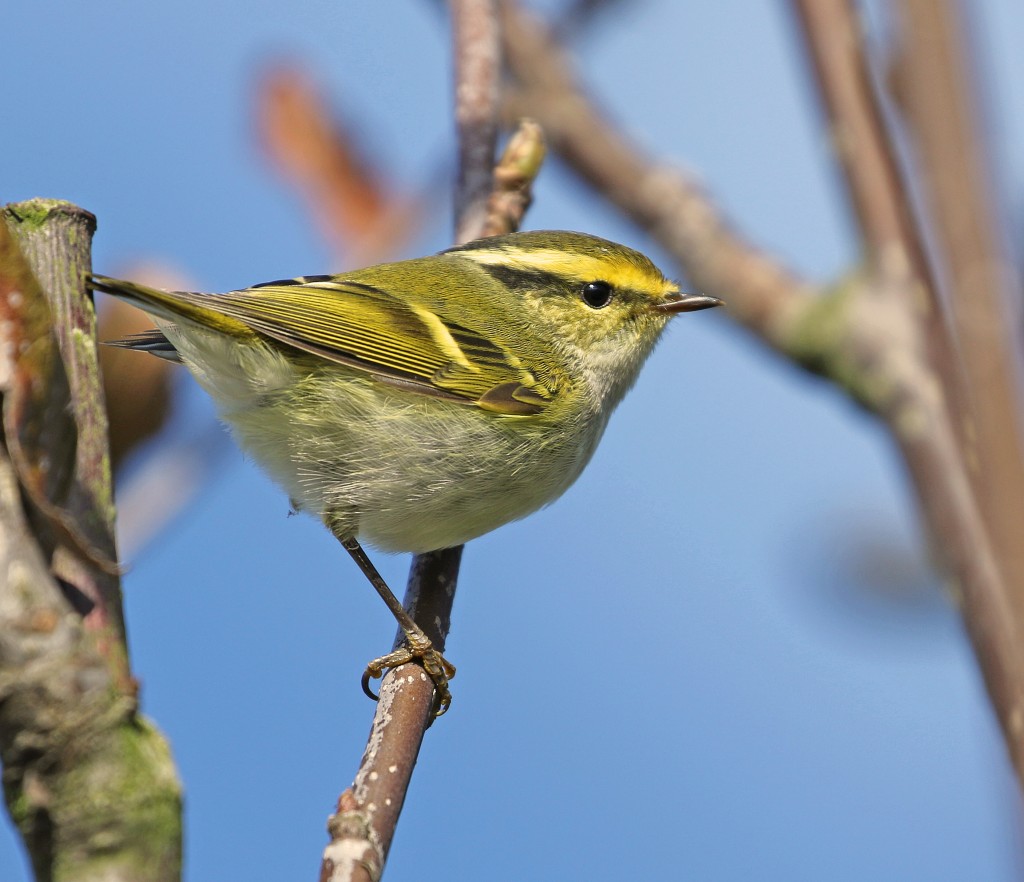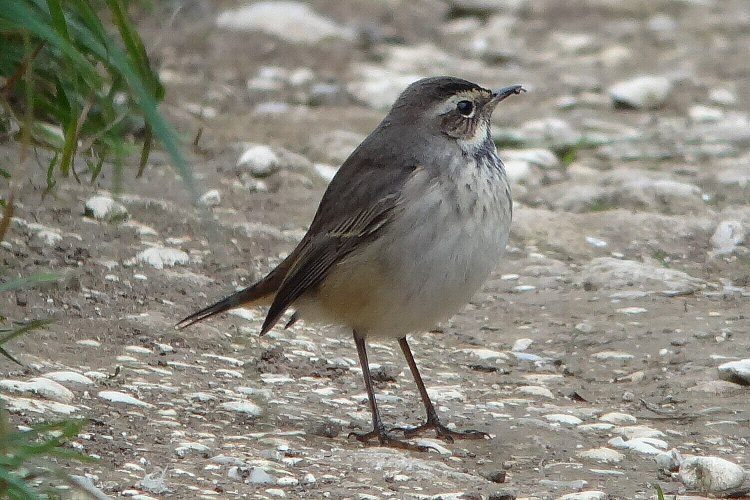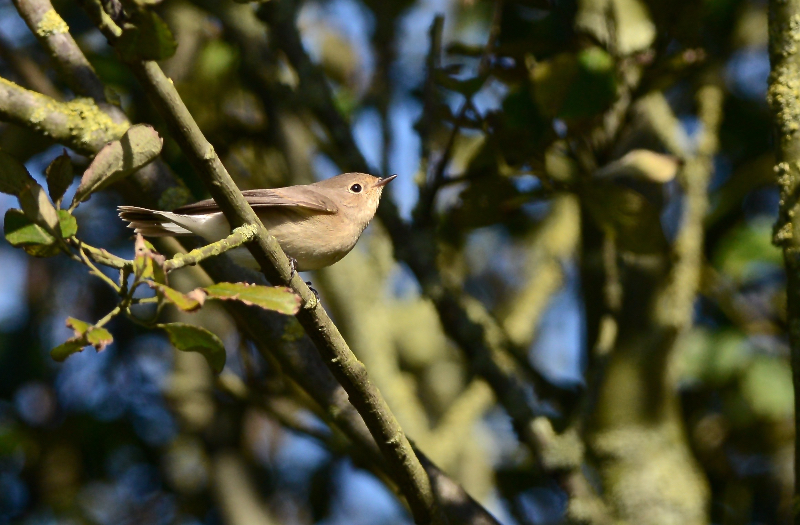
The weather consisted of light/moderate northerly winds and after an overcast morning, sunny skies dominated. Seawatching highlight included two dark-bellied and two pale-bellied Brent Geese north, three Barnacle Geese south, two Balearic Shearwaters, 260 Little Gulls, 17 Bonxies south, a juvenile Long-tailed Skua north and a Short-eared Owl south.
An Olive-backed Pipit was located along the permissive path south of the Lighthouse during the evening. Two Little Buntings included an individual along the cliff edge between South Landing and Booted Gully. The Dusky Warbler remained, whilst two Pallas’s Warblers were discovered: one at Thornwick Camp and the other near Highcliffe Manor, South Landing. The Great Grey Shrike again proved elusive in the Thornwick area, whilst 19 Yellow-browed Warblers remained east of the Dykes. Amongst significant numbers of common migrants were 690 Goldcrests.
West of the Dykes, Bempton Cliffs RSPB attracted a Woodcock, one Short-eared Owl that came in off the sea, single Arctic Warbler, Red-breasted Flycatcher, and Bluethroat, two Yellow-browed Warblers, a Spotted Flycatcher and 15 Chiffchaff, whilst another Yellow-browed Warbler appeared near Bempton village. Sightings from Buckton included a Little Owl, three Jack Snipe, three Yellow-browed Warblers, a Firecrest, a Black Redstart, one Redstart and five Lapland Buntings. A Yellow-browed Warbler and 30 Goldcrests were at Speeton church.