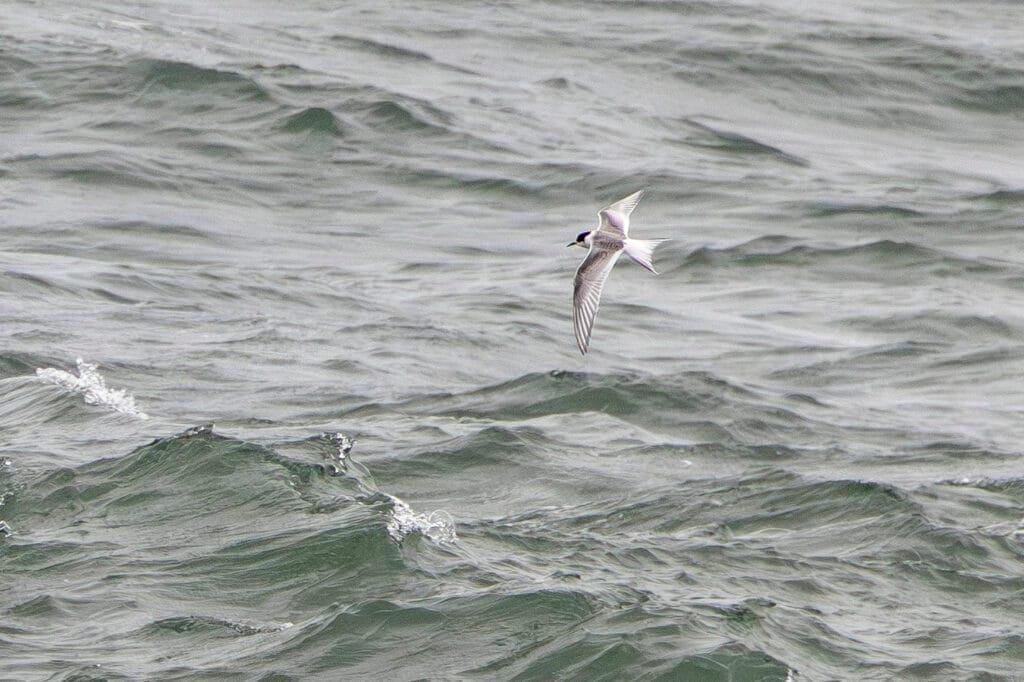
A day of two halves: the morning was overcast with light/moderate northerly winds while the afternoon was sunny with a light south-easterly breeze; temperatures peaked at 18 degrees C. Seawatching again stole the show, headlined by a very impressive 1743 Arctic Terns moving north; this represented the headland’s second highest ever count. A Cory’s Shearwater slowly flew north past the headland at 0814hrs. Additional sightings included 25 Teal, 236 Common Scoter, a Red-breasted Merganser, 105 Sandwich Terns, a Yellow-legged Gull, 11 Arctic Skuas, two adult Pomarine Skuas (both seen later at RSPB Bempton Cliffs), six Bonxies, 13 Sooty Shearwaters and 122 Manx Shearwaters. A Minke Whale was also seen off the outer head.
On the land, a Marsh Harrier overflew Mid Dykes and a juvenile Cuckoo remained in the Thornwick/Holmes Gut area. Willow Warblers were scattered across several locations and included seven at RSPB Bempton Cliffs.