Yesterday’s heavy rain and easterlies continued overnight and resulted in a good day’s birding, with interest both on the sea and land including a significant arrival of thrushes, especially Blackbirds. Generally light south-westerlies featured throughout a relatively overcast day, with temperatures peaking at 10 degrees C.
Wildfowl pushed south during the morning seawatch including six dark-bellied Brent Geese, three Whooper Swans, 87 Wigeon, 143 Teal, 37 Eider, seven Velvet Scoter, 410 Common Scoters, 16 Goldeneye, seven Goosanders and three Red-breasted Mergansers. Two Great Northern Divers headed north and a Manx Shearwater moved in the opposite direction. Larid enthusiasts were entertained with 48 Little Gulls, a Mediterranean Gull, a first-winter Caspian Gull, a first-winter Yellow-legged Gull and, by modern standards, an impressive 61 ‘Northern’ Herring Gulls moving south. A late Arctic Tern also flew south, along with 16 Little Auks, while 18 Puffins were also recorded.
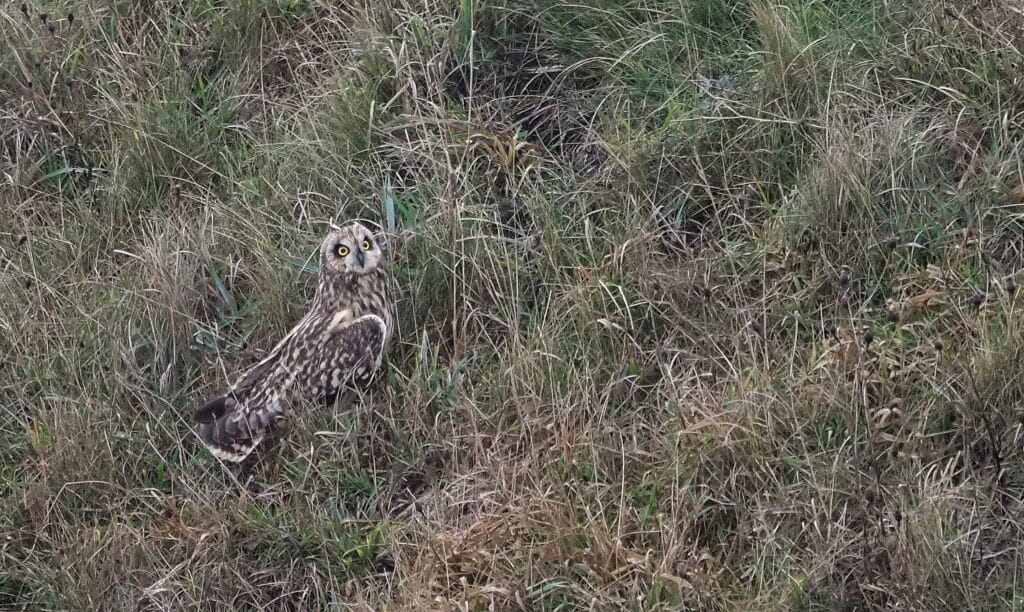
Nine Whooper Swans and three White-fronted Geese went south overland, two Short-eared Owls and 72 Lapwing flew in off the sea, while a ringtail Hen Harrier hunted the outer head. Grounded migrants included 12 Woodcock, a Water Rail, 2250 Blackbirds, 305 Fieldfares, 105 Redwing, 25 Song Thrush, four Waxwings in the village, nine Chiffchaffs, nine Blackcap, a Brambling and five Snow Buntings (incl. two in-off).
A vis mig watch of birds heading west over the Dykes late afternoon was rewarded with 1020 Blackbirds together with 16 Golden Plovers and 50 Redwing. Presumably the same ringtail Hen Harrier visited RSPB Bempton Cliffs in the morning.