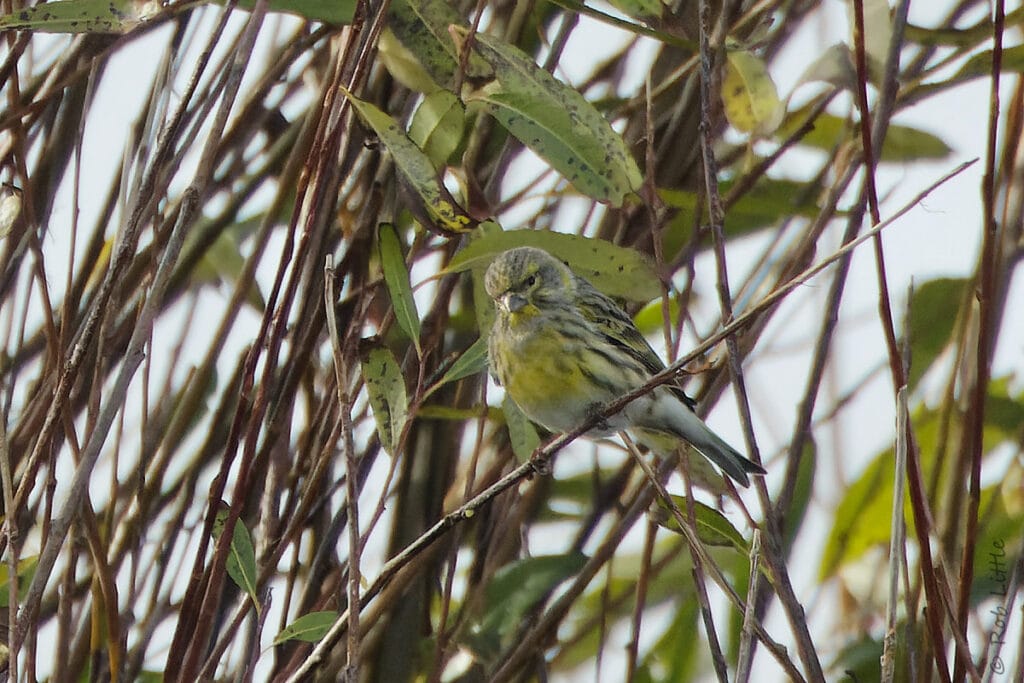
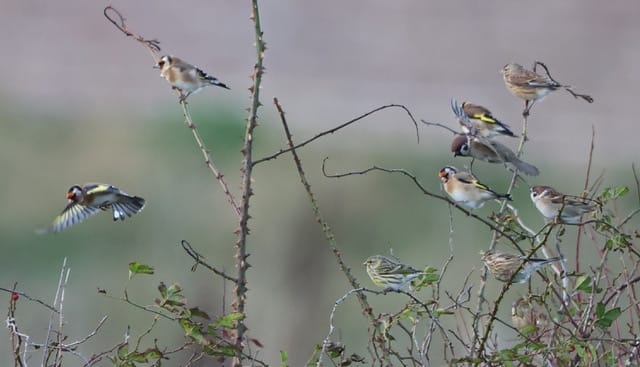
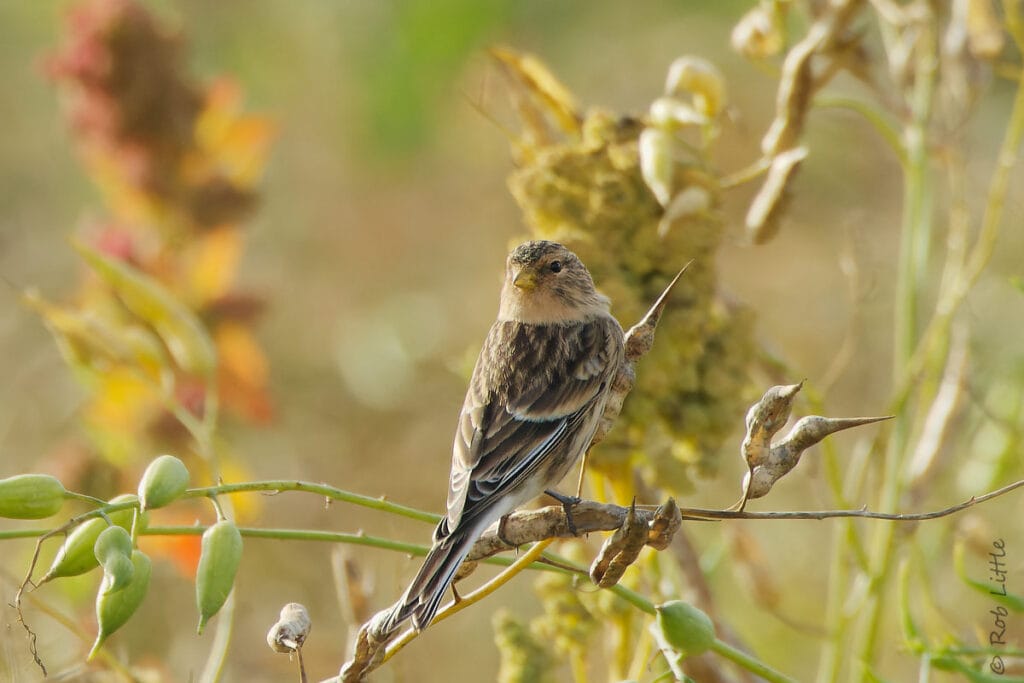
A relatively overcast start with brighter intervals later, moderate south-westerly winds and temperatures that peaked at 16 degrees C. Identification of autumn swifts can be confusing at the best of times, so evaluation of images was needed to help ascertain how many birds were involved: it appeared three Pallid Swifts were present, with a lone bird commuting between South Landing and the Old Lighthouse and two birds together over High Stacks which eventually drifted north-west; in addition, another individual was photographed that showed characteristics of Common Swift. The other highlight was the afternoon discovery of a Serin in the Lighthouse Cover Crop; the same finch flock also attracted a lone Twite.
Wildfowl interest away from the sea included 20 Whooper Swans south, 219 Pink-footed Geese and a lone Barnacle Goose. The ringtail Hen Harrier appeared over Cattlemere early morning, with the juvenile Merlin in the same area and another Merlin over the Dykes. A Pallas’s Warbler continued to show well at South Landing, with Siberian Chiffchaff and Firecrest in nearby Booted Gully. additional migrant records included three Yellow-browed Warblers, a Reed Warbler, two Black Redstarts, 13 Lesser Redpoll, 58 Siskin and five Brambling.
Single Gadwall and Pintail, three Goosanders, a Sooty Shearwater, a first-winter Yellow-legged Gull and six Arctic Skuas flew south during the morning’s seawatch. Two Pomarine Skuas flew north, while 109 Little Gulls were offshore.
On the edge of the recording area, a Ring-necked Parakeet was present at Marton.