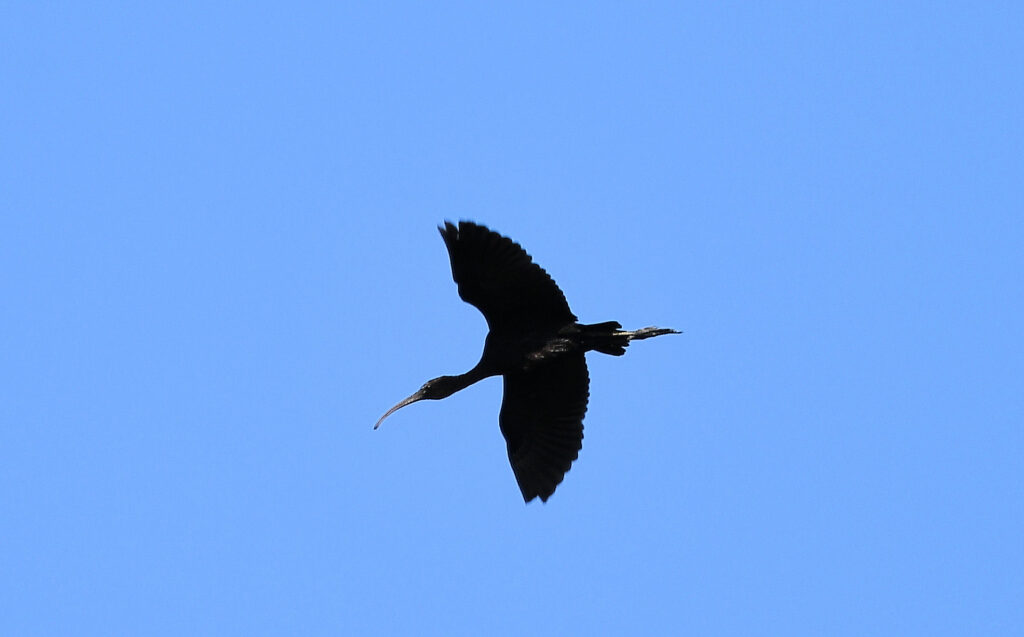
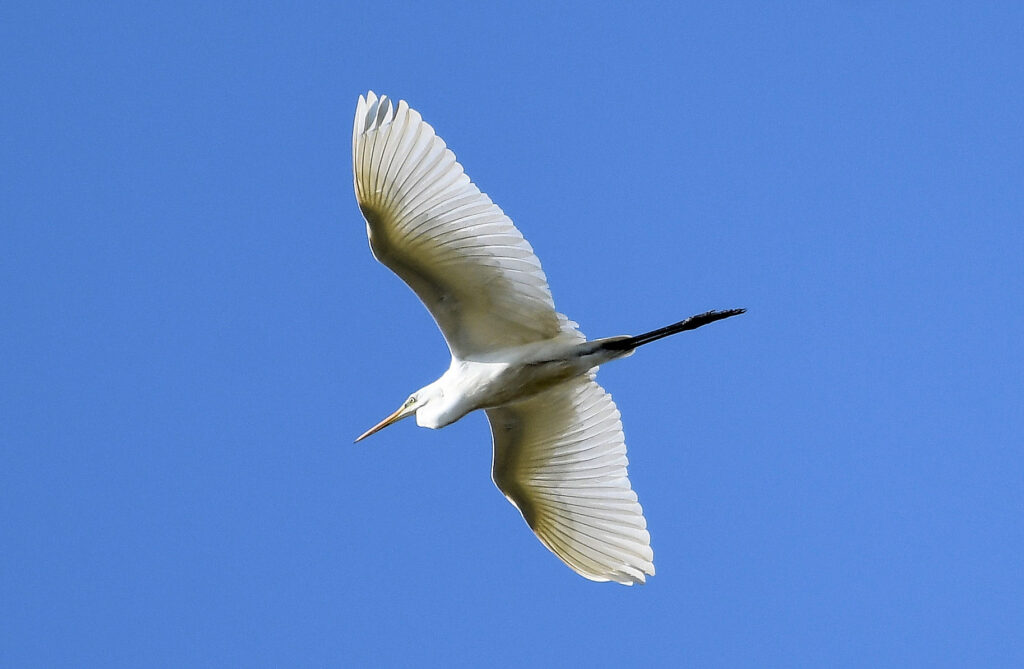
A sunny day, with light south-west winds and temperatures that reached an unseasonal high of 21 degrees C. Thirty-two Common Scoters flew north and 39 Red-throated Divers headed south during the morning’s seawatch. In the local context, the day’s most notable sighting related to a Glossy Ibis that flew north past the lighthouse; only the second record for the headland. Continuing the lanky bird theme, two Great White Egrets flew east over the headland. A total of 48 Pink-footed Geese moved south in two skeins, three Marsh Harriers overflew the headland and at least one first-winter Caspian Gull lingered, with sightings at South Landing and over Thornwick Pools.
First light revealed that the arrival of passerine migrants first witnessed mid-afternoon yesterday had continued. The year’s fifth Greenish Warbler was located at Thornwick Camp and shared the same few trees/adjacent hedgerow as two Yellow-browed Warblers; the latter part of an arrival of nine Yellow-browed Warblers. Two Barred Warblers remained in the Bay Brambles, with the Red-backed Shrike still in Chalet Hedge and viewable from Lighthouse Road. Additional passerine records included 23 Chiffchaff, a Willow Warbler, one Garden Warbler, a Common Whitethroat, four Lesser Whitethroats, two Pied Flycatchers, one Spotted Flycatcher, three Whinchat, nine Stonechat, a Redstart, nine Siskin, two Lesser Redpolls and a Lapland Bunting.
Thirty-six Pink-footed Geese and a Grey Plover flew south-east over RSPB Bempton Cliffs, where a Marsh Harrier, one Short-eared Owl, three Yellow-browed Warblers, the long-staying Red-breasted Flycatcher, a Pied Flycatcher, four Stonechats, three Lesser Redpolls and a Lapland Bunting frequented the reserve.